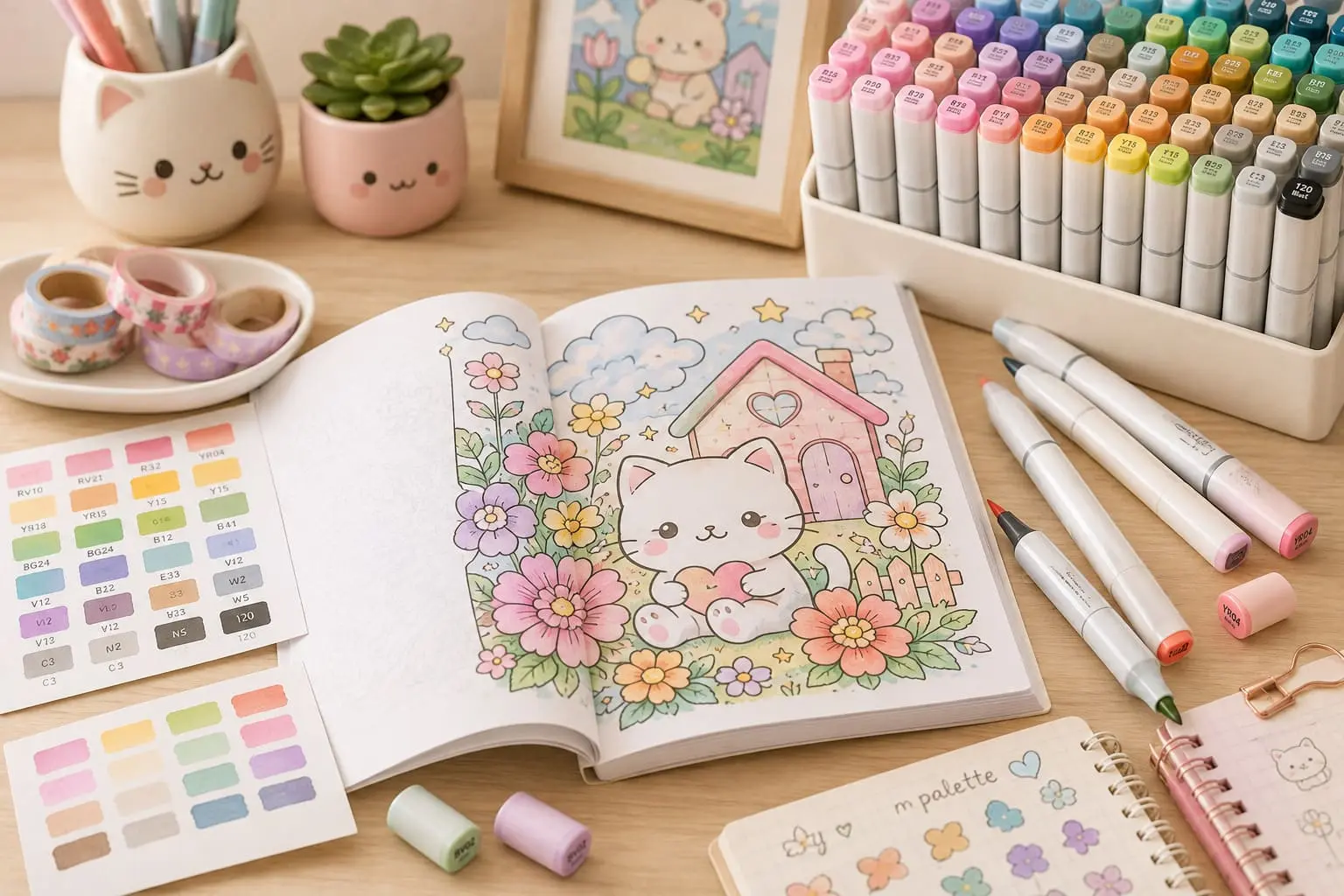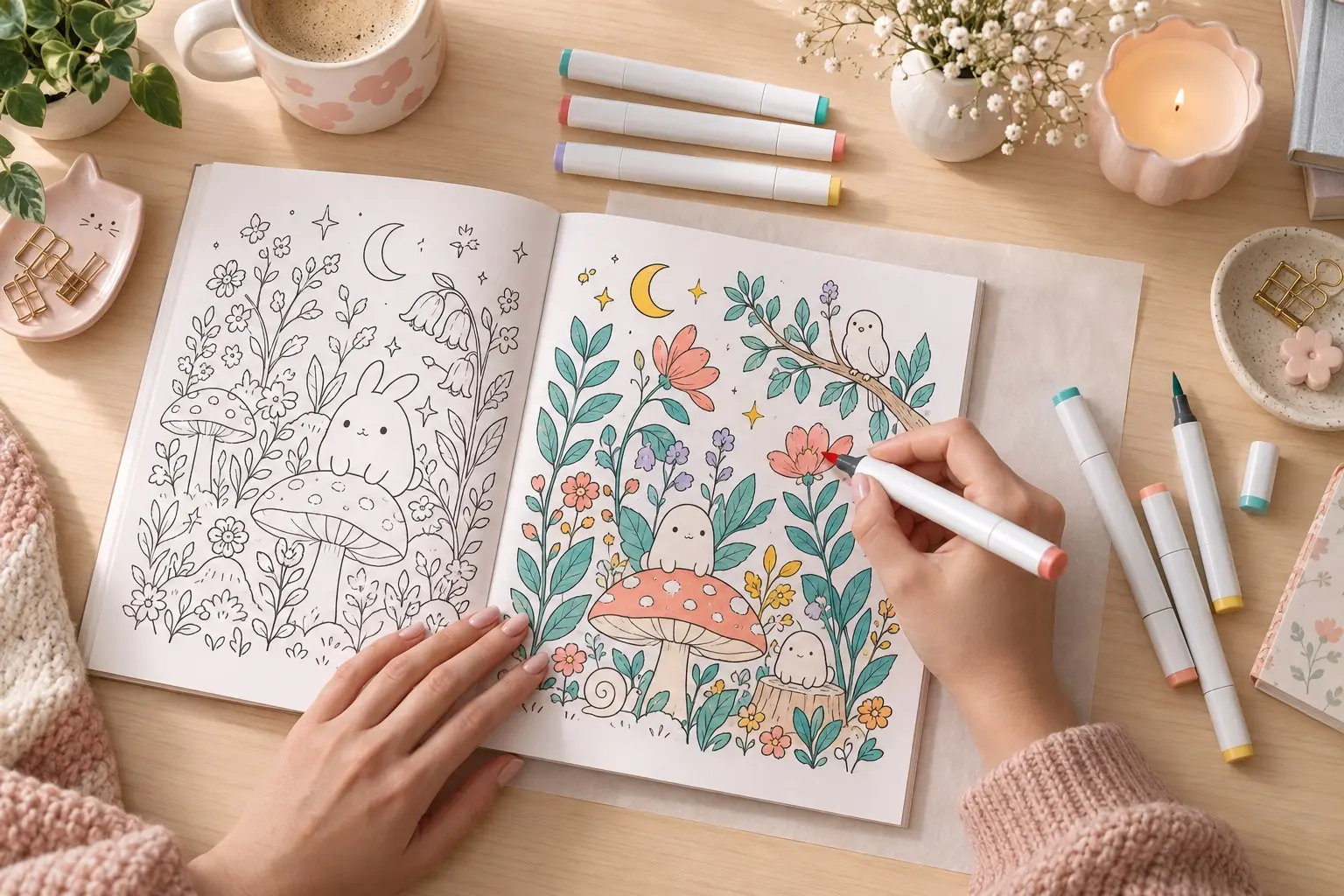
Best Brush Markers for Coloring Books: 10 Picks for Shading & Blending. Find the best brush markers for coloring books, including water-based and alcohol picks for shading, blending, fine details, and bold fills.. Type: Buying guide. Category: Coloring. Tags: brush-markers, coloring-books, adult-coloring, blending-markers, water-based-markers, alcohol-markers, shading, buying-guide, cluster-coloring-supplies.

Buying guide

Best Brush Markers for Coloring Books: 10 Picks for Shading & Blending

Our recommendation

The best brush markers for coloring books depend first on the paper. Our top research pick for typical coloring books is the Tombow Dual Brush Pens Pastel 10-Pack because its flexible water-based brush tip supports soft layering while the fine tip handles small details. If smooth marker-to-marker gradients are the priority and you are using single-sided pages, the Ohuhu Honolulu 72-color alcohol set is the stronger blending choice, but it is much more likely to bleed through ordinary paper. Shuttle Art 56 and ARTEZA 48 are better-value water-based options, while Copic Sketch is the premium refillable pick.

Quick picks

Top recommendations

  1. 1Tombow Dual Brush Pens Pastel 10-Pack — Best overallA flexible nylon brush tip and fine tip in a water-based 10-color pastel set that balances shading control with detail work
  2. 2Ohuhu Honolulu 72-Color Brush & Chisel Alcohol Markers — Best for smooth alcohol blendingA 72-color alcohol-marker set with a flexible brush tip for feathering and a chisel tip for faster coverage
  3. 3Shuttle Art Dual Brush Marker Pens 56 Colors — Best large water-based setFifty-six water-based colors with brush and fine tips for shading, fills, outlines, and small details
  4. 4Copic Sketch 12-Color Basic Set — Best premiumTwelve professional alcohol markers with Super Brush and Medium Broad nibs, plus refillable ink and replaceable tips
  5. 5ARTEZA Dual Tip Brush Markers 48-Pack — Best value dual-tip setA 48-color water-based set pairing a flexible brush tip with a documented 0.4 mm fine tip
  6. 6STAEDTLER Double-Ended Watercolour Brush Pens 36-Pack — Best watercolor effectThirty-six double-ended watercolor brush pens whose ink can be mixed with water for softer tonal effects
  7. 7Winsor & Newton ProMarker Brush Vibrant Tones 12-Pack — Best compact alcohol setTwelve vibrant alcohol markers with brush and broad chisel tips for layered color and faster fills
  8. 8Faber-Castell Pitt Artist Pen Brush Basic Tones 12-Pack — Best permanent pigment brush pensTwelve brush pens using highly pigmented India ink that becomes waterproof when dry
  9. 9Crayola Brush & Detail Dual Tip Marker Set — Best for teensSixteen dual-ended markers provide 32 complementary colors with a brush tip and ultra-fine detail tip
  10. 10Aen Art Dual Brush Markers 36-Pack — Best budget starter setThirty-six dual-tip markers with brush tips and 0.4 mm fineliners at an entry-level price point

Product comparison

ProductBest forWatch outPrice & shop
Tombow Dual Brush Pens Pastel 10-Pack (opens Amazon in a new tab)Tombow · 56187 Pastel 10-Pack
Best overallResearch-based review
Typical coloring books where controlled water-based shading matters more than maximum palette sizeThe 10-color pastel palette is small, and aggressive wet blending can roughen lightweight paper
Ohuhu Honolulu 72-Color Brush & Chisel Alcohol Markers (opens Amazon in a new tab)Ohuhu · Honolulu 72 Colors Brush & Chisel
Best for smooth alcohol blendingResearch-based review
Single-sided coloring pages and removable sheets where gradients are the priorityAlcohol ink is highly likely to bleed through standard coloring-book paper, making this a poor fit for most double-sided books
Shuttle Art Dual Brush Marker Pens 56 Colors (opens Amazon in a new tab)Shuttle Art · 56-Color Water-Based Dual Tip Set
Best large water-based setResearch-based review
Colorists who want many brush-marker colors without moving to alcohol inkWater-based gradients can show overlap more easily than alcohol blends, and heavy layering may roughen thin paper
Copic Sketch 12-Color Basic Set (opens Amazon in a new tab)Copic · SB12 Basic
Best premiumResearch-based review
Serious colorists who want a refillable, replaceable-nib alcohol marker systemThe 12-color set is expensive and alcohol ink can bleed through ordinary coloring-book pages
ARTEZA Dual Tip Brush Markers 48-Pack (opens Amazon in a new tab)ARTEZA · TwiMarkers 48
Best value dual-tip setResearch-based review
Detailed coloring pages that need both flexible shading and a true fine pointWater-based ink is less naturally seamless for large gradients than alcohol markers and can disturb thin paper if overworked
STAEDTLER Double-Ended Watercolour Brush Pens 36-Pack (opens Amazon in a new tab)STAEDTLER · 3001 TB36
Best watercolor effectResearch-based review
Stronger coloring paper where you want soft washes and water-reactive gradientsWater-reactive techniques can buckle, feather, or pill ordinary thin coloring-book paper
Winsor & Newton ProMarker Brush Vibrant Tones 12-Pack (opens Amazon in a new tab)Winsor & Newton · ProMarker Brush Vibrant Tones 12
Best compact alcohol setResearch-based review
Colorists who want professional alcohol blending in a smaller curated paletteTwelve colors limit the number of ready-made shade steps, and the alcohol ink can bleed through standard coloring pages
Faber-Castell Pitt Artist Pen Brush Basic Tones 12-Pack (opens Amazon in a new tab)Faber-Castell · Pitt Artist Pen Brush Basic Tones 12
Best permanent pigment brush pensResearch-based review
Illustration-style coloring, durable accents, shadows, and outlinesPermanent ink gives you less opportunity to lift or rework a blend once it dries, and the palette is limited to 12 tones
Crayola Brush & Detail Dual Tip Marker Set (opens Amazon in a new tab)Crayola · Signature 16 Markers / 32 Colors
Best for teensResearch-based review
Shared craft tables, teen coloring, and casual brush-marker practiceThe palette and marker system are less expandable than dedicated artist ranges
Aen Art Dual Brush Markers 36-Pack (opens Amazon in a new tab)Aen Art · 36 Dual Brush Markers
Best budget starter setResearch-based review
Beginners who want to try brush-tip coloring before investing in a premium systemIt is a value-focused set without the refillable ecosystem or long-term replacement options of premium markers

Selection and testing methodology

This is a research-based guide, not a hands-on ranking. We compared 10 brush-marker sets using current Amazon US product pages and listing information checked on August 9, 2026. We focused on ink type, brush-tip design, second-tip format, palette size, documented refillability, suitability for shading and blending, and the practical risk of bleed-through or paper damage in coloring books. We verified that the selected Amazon listings were active or had current purchase activity/offers when checked. KawaiiToons has not personally tested these exact sets yet, so we do not publish invented blending scores, measured bleed-through ratings, dry times, nib-durability rankings, or claims that one set is objectively smoother than another.

Detailed product sections

Best overallResearch-based review

Tombow Dual Brush Pens Pastel 10-Pack (opens Amazon in a new tab)

Tombow · 56187 Pastel 10-Pack

A flexible nylon brush tip and fine tip in a water-based 10-color pastel set that balances shading control with detail work

Why it fits this guide

Tombow's dual-tip format is one of the most practical brush-marker designs for coloring books because the brush tip can move from broad fill strokes to tapered shadows while the fine tip handles outlines and small printed sections. The water-based ink is also a more sensible starting point than alcohol ink for ordinary bound coloring books, provided you avoid oversaturating thin paper.

Honest drawback

The 10-color pastel palette is small, and aggressive wet blending can roughen lightweight paper

Best forTypical coloring books where controlled water-based shading matters more than maximum palette size

Pros

  • Flexible nylon brush tip supports variable-width strokes and layered shading
  • Fine tip improves control in intricate coloring-book details
  • Water-based ink is practical for many ordinary coloring pages

Cons

  • Only 10 pastel colors are included
  • Too much water or repeated layering can damage thin paper
Check price on Amazon (opens Amazon in a new tab)
Best for smooth alcohol blendingResearch-based review

Ohuhu Honolulu 72-Color Brush & Chisel Alcohol Markers (opens Amazon in a new tab)

Ohuhu · Honolulu 72 Colors Brush & Chisel

A 72-color alcohol-marker set with a flexible brush tip for feathering and a chisel tip for faster coverage

Why it fits this guide

Ohuhu's Honolulu brush-and-chisel format is the strongest choice here when you specifically want alcohol-marker blending without paying Copic prices. Seventy-two colors give you more neighboring values for shadows and gradients, while the brush tip can feather one shade into the next and the chisel nib handles broad areas more efficiently.

Honest drawback

Alcohol ink is highly likely to bleed through standard coloring-book paper, making this a poor fit for most double-sided books

Best forSingle-sided coloring pages and removable sheets where gradients are the priority

Pros

  • 72 colors provide useful shade range for gradients
  • Brush tip supports feathering and variable-width shading
  • Chisel tip is faster for larger fills

Cons

  • Likely to bleed through ordinary coloring-book paper
  • Best used with a protective sheet on single-sided pages
Check price on Amazon (opens Amazon in a new tab)
Best large water-based setResearch-based review

Shuttle Art Dual Brush Marker Pens 56 Colors (opens Amazon in a new tab)

Shuttle Art · 56-Color Water-Based Dual Tip Set

Fifty-six water-based colors with brush and fine tips for shading, fills, outlines, and small details

Why it fits this guide

Shuttle Art offers far more color variety than a small artist pack while keeping a paper-friendlier water-based format. The brush-and-fine combination is especially useful in coloring books because you can shade larger petals or clothing with one end, then switch to the fine tip for tiny pattern cells and outlines.

Honest drawback

Water-based gradients can show overlap more easily than alcohol blends, and heavy layering may roughen thin paper

Best forColorists who want many brush-marker colors without moving to alcohol ink

Pros

  • 56 unique colors provide broad palette coverage
  • Brush and fine tips suit mixed-size coloring areas
  • Water-based ink works for many standard coloring books

Cons

  • Layered gradients may show stroke overlap
  • Large set benefits from swatching before use
Check price on Amazon (opens Amazon in a new tab)
Best premiumResearch-based review

Copic Sketch 12-Color Basic Set (opens Amazon in a new tab)

Copic · SB12 Basic

Twelve professional alcohol markers with Super Brush and Medium Broad nibs, plus refillable ink and replaceable tips

Why it fits this guide

Copic Sketch earns the premium slot because the system is built for long-term use rather than a single disposable set. The Super Brush nib supports variable strokes and layered gradients, the Medium Broad nib handles wider fills, and both the ink supply and nibs can be renewed. That makes the high initial cost easier to justify for frequent marker users.

Honest drawback

The 12-color set is expensive and alcohol ink can bleed through ordinary coloring-book pages

Best forSerious colorists who want a refillable, replaceable-nib alcohol marker system

Pros

  • Refillable markers and replaceable nibs support long-term ownership
  • Super Brush nib is designed for blending and variable-width strokes
  • Basic set covers core colors for expanding later

Cons

  • Luxury-level cost for only 12 colors
  • Alcohol ink is unsuitable for many double-sided books
Check price on Amazon (opens Amazon in a new tab)
Best value dual-tip setResearch-based review

ARTEZA Dual Tip Brush Markers 48-Pack (opens Amazon in a new tab)

ARTEZA · TwiMarkers 48

A 48-color water-based set pairing a flexible brush tip with a documented 0.4 mm fine tip

Why it fits this guide

ARTEZA is a good middle ground when you want more color variety than a small artist pack but still need precision. The 0.4 mm tip is one of the clearest detail-oriented specifications in this shortlist, making it useful for mandalas, patterned clothing, florals, and other pages that shift constantly between broad and tiny shapes.

Honest drawback

Water-based ink is less naturally seamless for large gradients than alcohol markers and can disturb thin paper if overworked

Best forDetailed coloring pages that need both flexible shading and a true fine point

Pros

  • 48 colors balance variety with manageable storage
  • 0.4 mm fine tip is useful for micro-details
  • Flexible brush tip handles shading and wider strokes

Cons

  • Overlap can remain visible in broad flat fills
  • Heavy wet layering can stress thin pages
Check price on Amazon (opens Amazon in a new tab)
Best watercolor effectResearch-based review

STAEDTLER Double-Ended Watercolour Brush Pens 36-Pack (opens Amazon in a new tab)

STAEDTLER · 3001 TB36

Thirty-six double-ended watercolor brush pens whose ink can be mixed with water for softer tonal effects

Why it fits this guide

STAEDTLER is the most purpose-built option here for colorists who want their brush markers to behave more like portable watercolor. The ink is designed to mix with water, so you can soften a transition, pull pigment outward, or create a pale wash rather than relying only on direct marker strokes.

Honest drawback

Water-reactive techniques can buckle, feather, or pill ordinary thin coloring-book paper

Best forStronger coloring paper where you want soft washes and water-reactive gradients

Pros

  • 36 colors create a useful watercolor-style palette
  • Water-reactive ink supports washes and softened transitions
  • Double-ended format increases line-width flexibility

Cons

  • Best results require stronger paper than many coloring books use
  • Wet techniques need more control than ordinary dry coloring
Check price on Amazon (opens Amazon in a new tab)
Best compact alcohol setResearch-based review

Winsor & Newton ProMarker Brush Vibrant Tones 12-Pack (opens Amazon in a new tab)

Winsor & Newton · ProMarker Brush Vibrant Tones 12

Twelve vibrant alcohol markers with brush and broad chisel tips for layered color and faster fills

Why it fits this guide

ProMarker Brush is a sensible alternative to a much larger alcohol-marker case when you prefer a compact professional set. The brush tip handles tapered shadows and feathered transitions, while the broad chisel nib can fill backgrounds and larger shapes more quickly.

Honest drawback

Twelve colors limit the number of ready-made shade steps, and the alcohol ink can bleed through standard coloring pages

Best forColorists who want professional alcohol blending in a smaller curated palette

Pros

  • Brush and chisel tips cover shading and broad fills
  • Alcohol-based ink is designed for layering and blending
  • Compact 12-color palette is easier to organize

Cons

  • Limited shade depth compared with larger sets
  • High bleed-through risk on ordinary coloring-book paper
Check price on Amazon (opens Amazon in a new tab)
Best permanent pigment brush pensResearch-based review

Faber-Castell Pitt Artist Pen Brush Basic Tones 12-Pack (opens Amazon in a new tab)

Faber-Castell · Pitt Artist Pen Brush Basic Tones 12

Twelve brush pens using highly pigmented India ink that becomes waterproof when dry

Why it fits this guide

Faber-Castell Pitt Artist Pen Brush is different from both watercolor and alcohol markers. The permanent pigmented India ink is better suited to durable illustration-style marks, controlled shadows, outlines, and accents that you do not want to reactivate later. The brush nib can move between broad and narrow strokes depending on pressure.

Honest drawback

Permanent ink gives you less opportunity to lift or rework a blend once it dries, and the palette is limited to 12 tones

Best forIllustration-style coloring, durable accents, shadows, and outlines

Pros

  • Pigmented India ink is waterproof when dry
  • Brush nib supports broad, medium, and narrow strokes
  • Useful for strong shadows, outlines, and layered accents

Cons

  • Only 12 colors are included
  • Less forgiving for wet reworking than water-soluble brush pens
Check price on Amazon (opens Amazon in a new tab)
Best for teensResearch-based review

Crayola Brush & Detail Dual Tip Marker Set (opens Amazon in a new tab)

Crayola · Signature 16 Markers / 32 Colors

Sixteen dual-ended markers provide 32 complementary colors with a brush tip and ultra-fine detail tip

Why it fits this guide

Crayola's Signature set is approachable for colorists who want to experiment with brush pressure without jumping straight into expensive artist markers. The ultra-fine second tip is useful for compact coloring-book details, and the decorative storage tin keeps a smaller shared set organized.

Honest drawback

The palette and marker system are less expandable than dedicated artist ranges

Best forShared craft tables, teen coloring, and casual brush-marker practice

Pros

  • Brush and ultra-fine tips cover multiple coloring styles
  • Sixteen markers provide 32 complementary colors
  • Storage tin is convenient for shared tables

Cons

  • Smaller, less expandable palette
  • Not a refillable professional marker system
Check price on Amazon (opens Amazon in a new tab)
Best budget starter setResearch-based review

Aen Art Dual Brush Markers 36-Pack (opens Amazon in a new tab)

Aen Art · 36 Dual Brush Markers

Thirty-six dual-tip markers with brush tips and 0.4 mm fineliners at an entry-level price point

Why it fits this guide

Aen Art is the low-cost way to find out whether you actually enjoy brush markers in coloring books. The 36-color palette is large enough for varied pages, while the 0.4 mm fineliner gives beginners a fallback when the flexible brush tip feels too difficult to control inside tiny spaces.

Honest drawback

It is a value-focused set without the refillable ecosystem or long-term replacement options of premium markers

Best forBeginners who want to try brush-tip coloring before investing in a premium system

Pros

  • 36 colors provide a useful beginner palette
  • 0.4 mm fine tip helps with intricate areas
  • Brush tip introduces pressure-based shading

Cons

  • Not a refillable professional system
  • Blending consistency needs hands-on verification
Check price on Amazon (opens Amazon in a new tab)

How to choose

  • Start with your coloring-book paper, not the marker. Water-based brush markers are usually the safer starting point for ordinary pages, while alcohol markers are better reserved for single-sided books or removable pages with a protective sheet underneath.
  • Decide how you want to blend. Water-based markers can layer softly and some can be moved with water, but repeated wet passes may pill thin paper. Alcohol markers are designed for faster layer-to-layer blending and gradients but usually soak through standard coloring-book stock.
  • Match the brush tip to the artwork. A flexible brush nib can make broad fills, tapered shadows, feathered edges, and narrow strokes depending on pressure. A fine second tip helps with tiny spaces, while a chisel tip is faster for large backgrounds.
  • Compare palette depth, not only total marker count. Smooth shading is easier when a set includes neighboring light, mid and dark values rather than many unrelated bright colors.
  • Treat premium systems differently from disposable value sets. Copic Sketch costs much more upfront, but the markers are refillable and the nibs are replaceable; that matters only if you intend to keep using the system long term.

Common mistakes

  • Using alcohol brush markers on a double-sided coloring book without expecting bleed-through.
  • Flooding thin paper with water-based ink in an attempt to force a watercolor blend, then blaming the marker when the page pills or buckles.
  • Choosing a brush-only set for intricate line art when a fine secondary tip would make small printed spaces much easier to control.
  • Buying a large color count without checking whether the palette contains useful light-to-dark shade steps for blending.
  • Pressing hard on a flexible brush nib to fill faster, which can reduce control and may shorten tip life.

FAQ

What are the best brush markers for coloring books?

For typical bound coloring books, our top research pick is the Tombow Dual Brush Pens because the water-based flexible brush tip supports controlled layering while the fine tip handles small details. If you use single-sided pages and want stronger gradient blending, Ohuhu Honolulu 72 is the better alcohol-marker choice. Shuttle Art 56 and ARTEZA 48 are strong value options when you want a larger water-based palette.

Are alcohol brush markers good for coloring books?

They can be excellent for smooth gradients, shadows, and streak-resistant layered fills, but alcohol ink usually soaks through ordinary coloring-book paper. Use alcohol markers mainly on single-sided books, removable pages, or marker-friendly paper, and place a protective sheet underneath. Avoid them on double-sided books unless you are willing to sacrifice the artwork on the reverse.

Are water-based brush markers better for coloring books?

Water-based brush markers are generally the safer starting point for standard coloring books because they do not behave like highly penetrating alcohol ink. However, they can still show through or bleed on thin stock, and repeated wet layering can cause paper fibers to roughen or pill. Test the exact marker on the exact book before committing to a finished page.

What is the best brush tip for shading?

A flexible brush nib is useful because pressure changes the line width. The side of the nib can lay down a broader shadow, while the point can feather a narrow transition into an adjacent color. For precise coloring books, a marker that combines the brush nib with a fine second tip is often more versatile than a brush-only design.

How do you blend brush markers in a coloring book?

With water-based markers, start with light pressure and overlap neighboring colors while the first layer is still workable; use water only if the paper can handle it. With alcohol markers, work from light to dark and feather the edge of each color into the next before the area fully dries. In both cases, test on scrap or a hidden section first and avoid saturating thin paper.

Do brush markers bleed through coloring-book paper?

It depends on the ink and paper. Alcohol brush markers are especially likely to bleed through standard coloring-book stock. Water-based markers are often easier on ordinary pages but can still feather, show through, or soak through thin paper when heavily layered. A protective sheet behind the active page is useful whenever you are unsure.

Is a brush and fine tip better than a brush and chisel tip?

For intricate adult coloring books, brush plus fine is usually the more convenient combination because the fine end reaches small cells and outlines. Brush plus chisel is better when the page contains larger backgrounds, clothing, sky, or furniture because the chisel can cover space faster. Choose based on the artwork you color most often.

Are Copic markers worth it for coloring books?

Copic Sketch makes the most sense for frequent colorists who value refillable ink, replaceable nibs, and a long-term alcohol-marker system. The cost is difficult to justify if you color only occasionally, and the ink still has the same fundamental bleed-through problem as other alcohol markers on standard coloring-book pages.

Can kids use brush markers?

Some brush-marker sets are marketed for children or teens, but age guidance varies by product. Crayola states that its Brush & Detail markers are safe and nontoxic and ideal for ages 9 and up. Other sets in this guide are aimed more at teens or adults. Always follow the current manufacturer guidance and supervise younger children appropriately.

How many brush-marker colors do I need?

A 10- to 12-color set can be enough for accents, a specific pastel or vibrant palette, or learning basic blending. For full-page coloring, 36 to 72 colors give you more neighboring shades and make it easier to build light, midtone, and shadow combinations without repeatedly mixing or improvising.

Final recommendation

For most coloring-book users, start with Tombow Dual Brush Pens if you want a dependable water-based brush-and-fine-tip format and you are comfortable building your palette in smaller color families. Choose Shuttle Art 56 or ARTEZA 48 when you want many more water-based colors for less money. If your priority is the smoothest style of marker-to-marker gradients and you use single-sided pages, Ohuhu Honolulu 72 is the strongest value-oriented alcohol option in this shortlist, while Copic Sketch is the premium refillable system and Winsor & Newton ProMarker Brush offers a compact professional alternative. STAEDTLER is the better fit for watercolor-style effects, Faber-Castell Pitt Artist Pen Brush for permanent pigmented accents, Crayola for an approachable teen-friendly set, and Aen Art for a budget introduction to dual brush markers.

Choosing the best brush markers for coloring books starts with a question that matters more than brand: what kind of paper are you coloring on?

Brush markers can do something ordinary bullet-tip markers cannot. A flexible nib changes width with pressure, so the same marker can sweep color across a flower petal, taper into a shadow under a fold, feather one shade into another, and finish with a narrow stroke near the outline. That makes brush markers especially useful for shading, blending, gradients, hair, fur, leaves, clothing folds, skies, and larger cozy-coloring shapes.

The complication is ink. Water-based brush markers and alcohol brush markers may look similar in the case, but they behave very differently once they touch a coloring-book page. Water-based ink is generally the more practical starting point for ordinary paper, although too much layering can roughen or buckle thin stock. Alcohol ink is much easier to blend into smooth gradients, but it is also far more likely to soak straight through the page.

This guide is research-based. We checked current Amazon US listings for all 10 selections on August 9, 2026. KawaiiToons has not yet performed a controlled side-by-side test on identical coloring-book paper, so we do not claim measured bleed scores, dry times, nib longevity, or an objective “smoothest” marker. The recommendations are based on documented ink type, tip design, palette size, refillability, intended creative use, and the practical trade-offs each marker brings to coloring books.

The short version: which brush markers should you choose?

For a typical bound coloring book, our top research pick is the Tombow Dual Brush Pens Pastel 10-Pack. The flexible nylon brush tip gives you pressure-based control for shading and broader strokes, while the fine tip handles small printed details. More importantly, it uses water-based ink, which makes it a more sensible default for ordinary coloring-book paper than an alcohol marker.

If you want a much larger water-based palette, choose Shuttle Art Dual Brush Marker Pens 56 Colors. You get far more shade variety while keeping the useful brush-and-fine-tip format. ARTEZA Dual Tip Brush Markers 48 is another strong value option, particularly if tiny details matter because the second end is documented as a 0.4 mm fine tip.

If your priority is the most natural marker-to-marker blending, the recommendation changes. Ohuhu Honolulu 72 Brush & Chisel is our best value-oriented alcohol pick because the 72-color range creates more light-to-dark combinations for gradients, and the brush tip is designed for feathering and layering. Use it on single-sided pages with a protective sheet underneath, because alcohol ink is likely to bleed through standard coloring-book stock.

Copic Sketch 12 Basic is the premium choice. It is expensive, but the Super Brush and Medium Broad nibs are replaceable and the markers are refillable. That makes it a system rather than a disposable set. Winsor & Newton ProMarker Brush gives you another professional alcohol option in a smaller 12-color collection.

For specific styles, STAEDTLER Double-Ended Watercolour Brush Pens are the watercolor-effect pick, Faber-Castell Pitt Artist Pen Brush is the permanent pigmented-ink choice, Crayola Brush & Detail is the approachable option for teens and shared tables, and Aen Art 36 Dual Brush Markers is the budget starter set.

Why brush markers are useful for shading and blending

The main advantage of a brush marker is not simply that the tip is soft. It is that the tip changes the mark as you change pressure and angle.

Use the point lightly and you can create a narrow line. Lower the barrel and press more of the brush against the paper and the stroke becomes wider. Ease the pressure gradually and the line tapers. This lets you build shadows that feel more organic than a uniform bullet-tip line.

On a coloring page, that flexibility is especially useful for three jobs.

First, a brush tip can create directional shading. On a flower petal, you can pull a darker shade from the base toward the tip. On hair, you can follow the direction of the strands. On a dress or curtain, you can place darker strokes inside folds instead of filling the entire shape with one flat color.

Second, brush tips make feathering easier. Short, light strokes can extend one color into another so the boundary becomes less obvious. This works particularly well with alcohol ink, but water-based markers can also create softer transitions when the paper and ink remain workable.

Third, the side of the brush can fill medium and large shapes more efficiently than a tiny fine point. You still have more control than a huge broad marker, but you are not forced to build a background using hundreds of narrow parallel strokes.

The ideal brush marker for coloring books therefore gives you both flexibility and restraint: enough ink to shade smoothly, but enough control to stop at a printed outline.

Water-based vs alcohol brush markers for coloring books

This is the most important decision in the guide.

Water-based brush markers

Water-based markers such as Tombow Dual Brush Pens, Shuttle Art Dual Brush Markers, ARTEZA Dual Tip Brush Markers, and STAEDTLER Watercolour Brush Pens are the easier starting point for most ordinary coloring books.

They can be layered lightly for shadows, and some inks can be moved or softened with water. The trade-off is the paper itself. Every extra wet pass adds moisture. On thin, absorbent stock, too much blending can raise the fibers, create rough patches, feather beyond the outline, or make the page buckle.

That means water-based blending is usually best approached gradually. Use the lighter color first, add the darker shade where the shadow belongs, then overlap only enough to soften the transition. If the paper is not specifically designed for water media, resist the urge to soak the area.

Water-based markers also tend to make more sense in double-sided books than alcohol markers, but that is not the same as a no-bleed guarantee. Thin paper can still show color through to the reverse side, especially after multiple layers.

Alcohol brush markers

Alcohol markers such as Ohuhu Honolulu, Copic Sketch, and Winsor & Newton ProMarker Brush are built for a different coloring experience.

Their biggest advantage is blending. When two compatible shades are layered while the area remains workable, the boundary can soften into a much more gradual gradient. The ink also tends to cover larger areas with fewer obvious water-line edges than a heavily layered water-based marker.

The disadvantage is penetration. Alcohol ink is very likely to soak through ordinary coloring-book paper. It may also spread farther than expected if the paper is thin or absorbent.

For that reason, alcohol brush markers are best used when:

  • the coloring book is printed on one side only;
  • pages can be removed before coloring;
  • you are working on marker-friendly printable pages; or
  • you are willing to place a barrier sheet behind the active page and accept that the back side may be unusable.

If preserving every reverse-side illustration matters, water-based markers are usually the safer category to explore first.

Pigment and permanent brush ink

Faber-Castell Pitt Artist Pen Brush sits outside the simple water-versus-alcohol split. It uses highly pigmented India ink that becomes waterproof when dry.

That makes it useful for strong illustration-style shadows, permanent outlines, and accents you do not want to reactivate. It is less forgiving if you decide the blend is wrong after the ink has dried, but the permanent finish can be a creative advantage when you combine brush markers with other media.

Brush and fine tip vs brush and chisel tip

The second tip can matter almost as much as the brush.

A brush-and-fine-tip marker is usually the most versatile format for intricate coloring books. The brush end handles shading and larger fills, while the fine end reaches mandala cells, tiny leaves, patterned clothing, small lettering, and narrow decorative borders.

That is why Tombow, Shuttle Art, ARTEZA, Crayola, and Aen Art fit detailed coloring particularly well. ARTEZA and Aen Art both document a 0.4 mm fine tip, which is a useful size when printed spaces become too small for comfortable brush control.

A brush-and-chisel marker is more efficient when the page includes broad areas. Ohuhu Honolulu, Copic Sketch, and Winsor & Newton ProMarker Brush all pair their flexible brush side with a broader nib. The chisel or medium-broad end can cover furniture, backgrounds, walls, large clothing shapes, and sky much faster.

Neither format is automatically better. Look at the books you already own. If most pages are intricate, prioritize the fine tip. If they contain large open areas, brush plus chisel is likely to save more time.

How we chose these brush markers

We built the shortlist around actual coloring-book decisions rather than simply picking the 10 biggest marker packs on Amazon.

We compared each product across six practical factors.

  1. Ink type. Water-based, alcohol, watercolor-reactive, and permanent pigmented inks behave differently on coloring-book paper.
  2. Brush-tip design. A flexible tip should support both broad strokes and tapered shading rather than functioning only as a decorative lettering nib.
  3. Second tip. Fine tips favor intricate details; chisel and broad tips favor larger fills.
  4. Palette depth. Shading becomes easier when you have neighboring light, medium, and dark tones.
  5. Long-term system value. Refillability and replaceable nibs matter to frequent marker users even when the upfront price is higher.
  6. Coloring-book drawbacks. We kept bleed-through risk, paper stress, palette limits, and storage compromises visible beside every recommendation.

All 10 selections remain labeled research-based until KawaiiToons completes original testing.

What to look for before buying brush markers for coloring books

Start with the paper

Marker recommendations are meaningless if they ignore the page.

Thin double-sided coloring books are the hardest environment for brush markers. You need to control saturation and protect the reverse side. Water-based markers usually give you more room to work, but repeated layering can still cause show-through or paper damage.

Single-sided pages are much more flexible. If the back of each illustration is blank, you can place a plastic or cardstock sheet underneath and use alcohol markers without worrying about destroying another design.

Printable coloring pages give you even more control because you can choose the paper yourself. If brush-marker blending is a major goal, printing on a suitable marker or mixed-media stock can change the experience more than upgrading from one marker brand to another.

Choose enough neighboring shades

A huge marker count is useful only when the palette contains colors that work together.

For shading a blue dress, it helps to have a pale blue, medium blue, and deeper blue-violet. For skin, you may want several related warm neutrals. For leaves, multiple yellow-greens and deeper greens create more natural depth than one green plus many unrelated brights.

That is why Ohuhu’s 72-color set has an advantage for gradient work over a 10- or 12-color starter pack. More colors give you more possible transitions without requiring aggressive layering.

Small sets still make sense when you are deliberately buying a specific family. Tombow’s Pastel 10-Pack, for example, is a focused palette rather than an attempt to cover every color on one page.

Think about how much detail you color

A flexible brush nib can technically make a fine line, but controlling the very tip inside a 2 mm printed cell takes practice.

If your books are full of tiny shapes, choose a dual-tip marker with a separate fine end. Tombow, ARTEZA, Shuttle Art, Crayola, and Aen Art all solve this problem directly.

If your books use big cozy illustrations, a chisel end may be more useful than an ultra-fine point because it lets you fill broad walls, blankets, clothing, or skies without wearing out the brush nib.

Decide whether refillability matters

Premium marker systems cost more because you are not only paying for the initial ink.

Copic Sketch is refillable, and the nibs are replaceable. For someone who colors frequently, that can turn a high-priced 12-marker starter set into the beginning of a long-term system.

A value set may still be the smarter purchase for an occasional hobbyist. If you are unsure whether brush markers will become your main medium, spending less on Aen Art, Shuttle Art, or ARTEZA can teach you what you actually like before you invest in refillable professional markers.

Treat “blendable” as paper-dependent

A marker can be designed for blending and still perform poorly on the wrong page.

Alcohol inks may spread beyond the outline on very absorbent paper. Water-based inks may leave hard edges if one layer dries before the next. Watercolor-style brush pens may look beautiful on mixed-media stock but buckle a thin coloring-book sheet.

The marker provides the potential. The paper determines how much of that potential you can use.

Common mistakes when shading with brush markers

Starting too dark

Shadows are easier to deepen than to remove.

Begin with the lighter color across the full area, then introduce a midtone, then add the darkest shade only where the form actually turns away from the imagined light source. This creates more control and reduces the chance that the shadow becomes a hard stripe.

Pressing too hard on the brush tip

A brush nib gives you width through flexibility, not force.

Heavy pressure can make it harder to stop cleanly at outlines and may shorten the life of the tip. Let more of the side of the brush contact the page instead of pushing downward aggressively.

Overworking water-based ink

When a water-based blend refuses to become perfectly smooth, adding more and more passes can make the paper worse rather than the gradient better.

Thin coloring-book paper has a limit. Accept a slightly textured transition or switch to colored pencil for the final smoothing layer instead of saturating the same patch repeatedly.

Forgetting the back of the page

Alcohol markers can make a beautiful front-facing gradient and ruin the illustration printed behind it.

Before using any new marker, check whether the book is single- or double-sided. Put a sacrificial sheet behind the page. Test a small corner or a less important page. Do not wait until a finished spread to discover how far the ink travels.

Using only one dark color for every shadow

Good shading is usually more convincing when the darker color is related to the base color.

A deep blue shadow on light blue often looks more natural than black. A warm brown can deepen orange. A muted violet can shade some pinks. Larger palettes make these choices easier because they give you neighboring tones rather than forcing one universal shadow marker.

Best brush markers for adult coloring books

Adult coloring books vary enormously, so there is no single ideal brush-marker formula.

For detailed mandalas, botanical pages, and intricate decorative art, water-based dual-tip markers are the safest all-round recommendation. Tombow gives you a refined brush-and-fine design in a smaller palette. Shuttle Art and ARTEZA give you more colors and stronger value.

For cozy coloring books with large objects and simple outlines, a brush plus chisel combination becomes more attractive. You can use the brush to add soft shadows around furniture or clothing folds, then use the chisel to fill a larger wall or background.

For illustration-style adult coloring on single-sided paper, alcohol markers become much more interesting. Ohuhu Honolulu 72 gives you a large blending palette without entering Copic pricing, while Copic Sketch is the long-term professional system if refillability and replaceable nibs matter.

The best setup may ultimately combine more than one medium. A brush marker can create the base color and large shadow. A colored pencil can smooth or deepen the transition. A gel pen can add highlights. Using each tool where it is strongest is often more effective than forcing one marker to do everything.

Brush markers for kids and shared craft tables

Brush markers can be fun for older children and teens because the flexible tip makes visible changes in line width as pressure changes. That turns coloring into a useful exercise in hand control as well as a creative activity.

Crayola Brush & Detail is the clearest family-oriented option in this guide. Amazon’s current product information describes the markers as safe and nontoxic and ideal for ages 9 and up. The storage tin also makes a shared set easier to keep together.

For younger children, a flexible brush tip may be less forgiving than a broad washable marker. Kids who press very hard can flatten or damage delicate tips, and alcohol marker systems are usually a poor fit for casual shared-table use because of bleed-through and handling considerations.

Always follow the current age and safety guidance on the exact product you buy.

A simple brush-marker shading method for coloring pages

You do not need advanced illustration skills to make brush markers look dimensional.

Start by deciding where the light comes from. Imagine it entering from the top left, for example. The opposite side of an object will generally be darker.

Lay down the lightest color first. Keep the layer even and avoid oversaturating the page.

Add the middle shade to roughly one-third of the shape on the shadow side. Use the brush tip lightly and pull short strokes toward the lighter area.

Add the darkest shade only to the deepest part of the shadow: under a fold, behind an overlapping object, at the base of a petal, or along the edge farthest from the light.

Then soften the transitions. With alcohol markers, feather the lighter color back through the boundary while the ink is workable. With water-based markers, use fewer passes and lighter pressure; if the marker is water-reactive and the paper is strong enough, a controlled damp brush can soften the edge.

Stop before the paper looks glossy or overly wet. More blending is not always better.

Our final recommendation

For most coloring books, start with a water-based brush marker that includes a fine second tip.

That is why the Tombow Dual Brush Pens Pastel 10-Pack is our top research pick. The set is small, but the combination of a flexible brush and fine tip is exactly what detailed coloring needs, and the water-based format is more practical for ordinary pages than an alcohol marker.

If 10 colors are not enough, Shuttle Art 56 is the stronger large-palette choice, while ARTEZA 48 is particularly attractive for intricate designs because its fine end is documented at 0.4 mm.

If your coloring pages are single-sided and smooth blending is the main goal, choose Ohuhu Honolulu 72. It gives you much more shade depth for gradients and a brush-and-chisel layout that handles both shadows and broad fills. Just treat bleed-through as expected rather than exceptional.

Choose Copic Sketch 12 Basic when you want a premium refillable system with replaceable nibs, Winsor & Newton ProMarker Brush for a compact professional alcohol set, STAEDTLER for watercolor-style blending, Faber-Castell Pitt Artist Pen Brush for permanent pigmented accents, Crayola for an approachable teen-friendly set, and Aen Art when price matters more than building a long-term marker system.

The next meaningful upgrade to this guide is original testing. Once the same pages have been colored with identical stroke patterns, gradients, bleed-through checks, and nib-control exercises, we can replace research-based recommendations with measured evidence and make the ranking more definitive.