
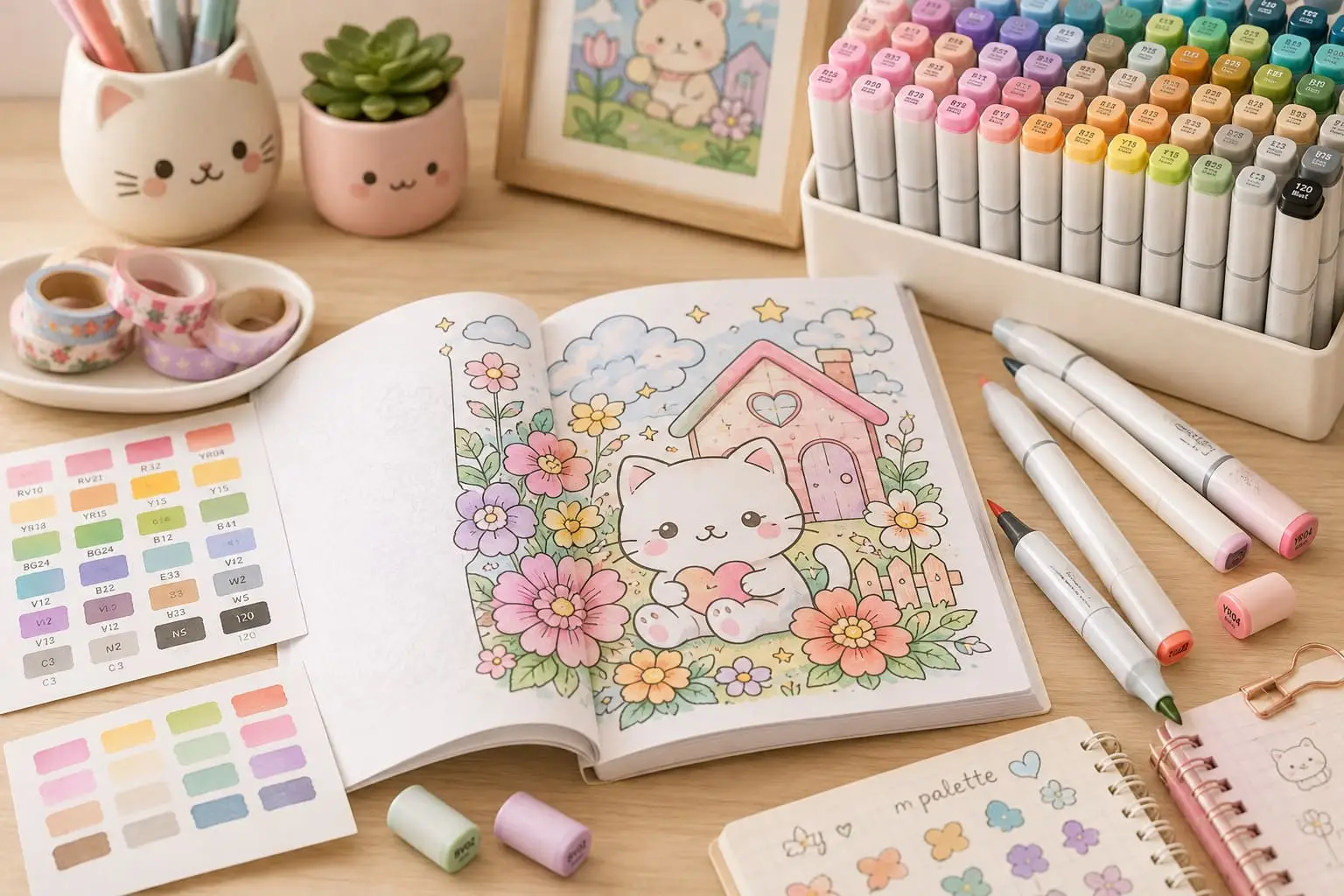
Quick picks
- Best large brush-tip setShuttle Art 121 Colors Brush Tip Alcohol Markers (opens Amazon in a new tab)
- Best budget starter setCaliart 41 Colors Brush & Fine Alcohol Markers (opens Amazon in a new tab)
- Best luxury setCopic Sketch 72pc Set A (opens Amazon in a new tab)


Product comparison
| Product | Best for | Watch out | Price & shop |
|---|---|---|---|
| Ohuhu Honolulu B 104-Color Alcohol Markers (opens Amazon in a new tab) Best overallResearch-based review | Adult colorists who want a large refillable brush-and-fine palette | The large case takes time to swatch and organize, and alcohol ink can bleed through ordinary coloring-book paper | |
| Shuttle Art 121 Colors Brush Tip Alcohol Markers (opens Amazon in a new tab) Best large brush-tip setResearch-based review | Colorists who want a very large brush-and-fine assortment | The 121-color case is bulky, and a backing sheet protects the next page but does not stop the active page itself from bleeding through | |
| Caliart 41 Colors Brush & Fine Alcohol Markers (opens Amazon in a new tab) Best budget starter setResearch-based review | Beginners testing alcohol markers before committing to a huge palette | Forty-one colors provide fewer close shade steps for gradients than the larger sets here | Budget-friendlyCheck price on Amazon (opens Amazon in a new tab) |
| Copic Sketch 72pc Set A (opens Amazon in a new tab) Best luxury setResearch-based review | Serious colorists who want a refillable, replaceable-nib marker system | The upfront cost is dramatically higher than mainstream hobby sets, and the Medium Broad end is less precise than a fine tip for tiny printed spaces | |
| Copic Ciao 72 Colors Set A (opens Amazon in a new tab) Best refillable step-upResearch-based review | Colorists who want the Copic system at a lower tier than Sketch | The set remains expensive versus hobby brands and does not include a dedicated fine-point nib | |
| Arrtx OROS 80 Colors Alcohol Markers (opens Amazon in a new tab) Best brush-and-chisel setResearch-based review | Colorists who prioritize gradients and faster coverage over a fine-point end | The lack of a dedicated fine end makes very small mandala cells and tight line art less convenient | |
| Bianyo 72 Colors Alcohol Markers Set (opens Amazon in a new tab) Best fine-and-chisel valueResearch-based review | Colorists who prefer firm nibs for controlled details and broad fills | A firm fine tip offers control but is less expressive for curved blending strokes than a flexible brush nib | Budget-friendlyCheck price on Amazon (opens Amazon in a new tab) |
| Ohuhu Honolulu B 48 Pastel Alcohol Markers (opens Amazon in a new tab) Best pastel setResearch-based review | Cozy coloring, florals and softer palettes | A pastel-only palette is not a complete substitute for darker neutrals, deep shadows and saturated accents | |
| Arrtx 36 Colors Skin Tone Alcohol Markers (opens Amazon in a new tab) Best skin-tone setResearch-based review | Portraits, people and character coloring | The specialist color range cannot cover scenery, clothing and other full-page subjects by itself | Budget-friendlyCheck price on Amazon (opens Amazon in a new tab) |
| AnyMark 80+1 Colors Brush Tip Alcohol Markers (opens Amazon in a new tab) Best value brush-and-chisel setResearch-based review | Budget-focused colorists who want a large brush-tip palette | Brush-and-chisel tips are versatile for fills but less convenient than brush-and-fine markers in micro-details | Budget-friendlyCheck price on Amazon (opens Amazon in a new tab) |
Detailed product sections
Ohuhu Honolulu B 104-Color Alcohol Markers (opens Amazon in a new tab)
A 104-color refillable alcohol-marker set that pairs a flexible brush tip with a fine end for coloring-book details

Why it fits this guide
Ohuhu's 104-color Honolulu B set gives coloring-book users the most balanced tool combination in this shortlist: a brush nib for gradients and variable-width strokes, a fine nib for outlines and compact shapes, and enough colors to build smoother transitions without constantly mixing distant shades. The current Amazon listing also identifies the markers as refillable and AP certified.
Honest drawback
The large case takes time to swatch and organize, and alcohol ink can bleed through ordinary coloring-book paper
Best forAdult colorists who want a large refillable brush-and-fine palette
Pros
- 104 colors provide broad palette coverage
- Brush and fine dual tips suit both blending and detailed line work
- Current listing identifies the markers as refillable and AP certified
Cons
- Large set takes more space to organize
- Alcohol ink can bleed through thin or double-sided coloring pages
Shuttle Art 121 Colors Brush Tip Alcohol Markers (opens Amazon in a new tab)
A 121-color dual-tip set with a brush end, fine end and an included protective backing sheet

Why it fits this guide
Shuttle Art is a strong choice when palette breadth matters more than keeping the case compact. The current listing specifies brush and fine tips and includes a transparent backing sheet intended to protect the page underneath, which is particularly relevant for alcohol-marker coloring because bleed-through is a normal risk on standard book paper.
Honest drawback
The 121-color case is bulky, and a backing sheet protects the next page but does not stop the active page itself from bleeding through
Best forColorists who want a very large brush-and-fine assortment
Pros
- Very large 121-color assortment
- Brush and fine tips cover broad strokes and smaller details
- Includes a transparent protective backing sheet
Cons
- Large case needs more storage and swatching
- Not suitable for preserving artwork on the reverse side of thin pages
Caliart 41 Colors Brush & Fine Alcohol Markers (opens Amazon in a new tab)
A compact 41-color brush-and-fine set that covers the two most useful nib styles for coloring books

Why it fits this guide
Caliart's 41-color set keeps the commitment lower while still offering a flexible brush tip and a fine point. That makes it a practical first alcohol-marker kit for learning layering, gradients and edge control before spending on a 100-plus-color collection. The listing itself warns that alcohol ink can bleed through regular coloring paper, which is a useful expectation to set before buying.
Honest drawback
Forty-one colors provide fewer close shade steps for gradients than the larger sets here
Best forBeginners testing alcohol markers before committing to a huge palette
Pros
- Smaller 41-color palette is easier for beginners to manage
- Brush tip supports variable-width strokes and blending
- Fine tip is useful for outlines and small printed shapes
Cons
- Less shade depth than 80- to 121-color sets
- Listing warns of bleed-through on regular coloring paper
Copic Sketch 72pc Set A (opens Amazon in a new tab)
A 72-piece premium set with refillable ink, replaceable Super Brush and Medium Broad nibs, and a broad multi-family palette

Why it fits this guide
Copic Sketch earns the premium-system slot because the marker is designed to be maintained rather than treated as disposable. Amazon's current listing identifies the Sketch nibs as Super Brush and Medium Broad and confirms that the markers are refillable with replaceable nibs. For a frequent colorist who also illustrates outside coloring books, that long-term system can matter more than headline color count.
Honest drawback
The upfront cost is dramatically higher than mainstream hobby sets, and the Medium Broad end is less precise than a fine tip for tiny printed spaces
Best forSerious colorists who want a refillable, replaceable-nib marker system
Pros
- Refillable markers support long-term reuse
- Super Brush and Medium Broad nibs are replaceable
- Set A includes colors from multiple color families
Cons
- Luxury-level upfront cost
- No dedicated fine-tip end for micro-details
Copic Ciao 72 Colors Set A (opens Amazon in a new tab)
A 72-color Copic set with Super Brush and Medium Broad nibs, refillable ink, replaceable nibs and a colorless blender

Why it fits this guide
Copic Ciao 72A is the more approachable way into Copic's refillable ecosystem. The listing specifies a Super Brush and Medium Broad nib, replaceable nibs, refillable ink and an included colorless blender. It is still a premium purchase, but it makes sense for colorists who expect to keep replacing ink and nibs rather than buying an entirely new set when favorite colors run dry.
Honest drawback
The set remains expensive versus hobby brands and does not include a dedicated fine-point nib
Best forColorists who want the Copic system at a lower tier than Sketch
Pros
- Refillable markers with replaceable nibs
- Super Brush and Medium Broad dual-nib design
- Includes a colorless blender
Cons
- Premium price compared with starter sets
- Medium Broad tip is not ideal for the smallest coloring-book details
Arrtx OROS 80 Colors Alcohol Markers (opens Amazon in a new tab)
An 80-color set pairing a flexible brush nib with a chisel tip for blending, edges and medium-to-large fills

Why it fits this guide
Arrtx OROS is a useful alternative to brush-and-fine markers when your coloring books have larger shapes. The brush end can handle curved strokes and transitions, while the chisel end covers more paper and can follow straight borders efficiently. That combination is especially appealing for cozy coloring pages, florals and illustrations with generous open areas.
Honest drawback
The lack of a dedicated fine end makes very small mandala cells and tight line art less convenient
Best forColorists who prioritize gradients and faster coverage over a fine-point end
Pros
- 80 colors provide useful shade variety
- Brush tip is suited to flexible strokes and gradients
- Chisel end covers larger shapes more efficiently
Cons
- No dedicated fine tip
- Alcohol ink still needs bleed-through protection
Bianyo 72 Colors Alcohol Markers Set (opens Amazon in a new tab)
A 72-color classic set with fine and chisel tips in a portable black carrying case

Why it fits this guide
Bianyo takes the traditional dual-tip approach: a fine end for line work and small shapes plus a chisel end for larger fills. That can be easier for users who prefer a firmer point rather than the softer movement of a brush nib. The 72-color palette is large enough to feel versatile without reaching the bulk of the 100-plus-color cases.
Honest drawback
A firm fine tip offers control but is less expressive for curved blending strokes than a flexible brush nib
Best forColorists who prefer firm nibs for controlled details and broad fills
Pros
- 72 classic colors cover a broad everyday palette
- Fine and chisel tips divide detail and coverage tasks clearly
- Carry case keeps the set organized
Cons
- No flexible brush tip
- Thin coloring-book paper can still bleed through
Ohuhu Honolulu B 48 Pastel Alcohol Markers (opens Amazon in a new tab)
Forty-eight pastel alcohol colors plus a colorless blender with brush-and-fine dual tips

Why it fits this guide
The Sweetness palette solves a common problem in large general sets: not having enough pale neighboring shades for gentle transitions. Amazon lists 48 pastel colors plus a colorless blender, with brush and fine tips and refillable markers. It works best as a focused soft-color set for cozy pages, florals, skies, clothing and light backgrounds.
Honest drawback
A pastel-only palette is not a complete substitute for darker neutrals, deep shadows and saturated accents
Best forCozy coloring, florals and softer palettes
Pros
- 48 pastel shades provide a focused soft palette
- Brush and fine dual tips cover gradients and detail work
- Includes a colorless blender and is listed as refillable and AP certified
Cons
- Needs darker colors from another set for full tonal range
- Alcohol ink still requires bleed-through precautions
Arrtx 36 Colors Skin Tone Alcohol Markers (opens Amazon in a new tab)
A focused 36-color skin-tone set with fine and broad tips for faces, hair-adjacent shading and larger portrait areas

Why it fits this guide
General marker sets often devote only a small part of the palette to skin and portrait colors. This Arrtx set concentrates 36 shades in that category, making it easier to build multi-step transitions across faces, hands and character art. It is most useful as a companion to a general palette rather than as the only marker set on the table.
Honest drawback
The specialist color range cannot cover scenery, clothing and other full-page subjects by itself
Best forPortraits, people and character coloring
Pros
- 36 skin-tone shades expand portrait options
- Fine tip helps with facial and character details
- Broad end speeds up larger portrait sections
Cons
- Specialist palette needs a general set alongside it
- No flexible brush nib on this exact set
AnyMark 80+1 Colors Brush Tip Alcohol Markers (opens Amazon in a new tab)
An 80+1 color alcohol-marker set with brush and chisel tips and a carrying case

Why it fits this guide
AnyMark provides a large brush-and-chisel assortment for users who want flexible strokes and quicker fills without moving into premium pricing. The current Amazon listing presents it as an 80+1 color set and positions it for drawing and adult coloring. Its strongest use case is pages with medium and large shapes where a fine nib is less important.
Honest drawback
Brush-and-chisel tips are versatile for fills but less convenient than brush-and-fine markers in micro-details
Best forBudget-focused colorists who want a large brush-tip palette
Pros
- Large 80+1 color assortment
- Brush tip supports varied line width and blending
- Chisel end is useful for larger coloring areas
Cons
- No dedicated fine-point end
- Large case needs swatching to make shade selection efficient
Related guides
Best Brush Markers for Coloring Books: 10 Picks for Shading & Blending
Find the best brush markers for coloring books, including water-based and alcohol picks for shading, blending, fine details, and bold fills.
Best Colored Pencils for Adult Coloring Books: 10 Smooth, Blendable Sets
Compare 10 colored-pencil sets for adult coloring books by core feel, color range, detail control, layering, paper fit, storage and replacement options.
Best Coloring Books for Alcohol Markers: Thick, Single-Sided Picks
Six research-based coloring books for alcohol markers, compared by single-sided layout, documented paper stock, perforations, binding and artwork detail.
Best Coloring Books for Colored Pencils: Paper That Layers Well
Six research-based coloring books for colored pencils, compared by paper tooth, page format, binding, artwork detail and room for layered shading.


