Best Reverse Coloring Books: Draw the Lines, Not the Colors. Five research-based reverse coloring books compared by artwork style, prompt count, page format, paper disclosure and creative freedom.. Type: Buying guide. Category: Coloring. Tags: reverse-coloring-books, adult-coloring-books, watercolor-art, doodling, line-art, fineliner-pens, creative-gifts, buying-guide, cluster-coloring-supplies.

Buying guide

Best Reverse Coloring Books: Draw the Lines, Not the Colors

Our recommendation

Kendra Norton's original Reverse Coloring Book is our best research-based starting point because its fifty varied watercolor prompts, single-sided printing and perforated pages explain the format without locking you into one subject. Through the Seasons adds a clear year-long progression, while Mindful Journeys leans into abstract blues, greens, circles and flowing forms. Search Press's newer Flowers and Gardens books each provide seventy themed artworks on documented 140 gsm uncoated paper. All five exact editions were available to buy on Amazon.com when checked, but KawaiiToons has not drawn in these copies or tested their paper.

Quick picks

Top recommendations

  1. 1The Reverse Coloring Book: The Book Has the Colors, You Draw the Lines! — Best overallFifty varied watercolor paintings on large single-sided perforated pages leave the subject and line style open to you
  2. 2The Reverse Coloring Book: Through the Seasons — Best seasonal varietyFifty watercolors move through bright spring, green-blue summer, vivid autumn and muted winter palettes
  3. 3The Reverse Coloring Book: Mindful Journeys — Best for abstract patternsFifty prompts feature circles, flowing water, mandala-like arrangements, symbols and other compositions designed for unhurried line work
  4. 4Reverse Coloring: Flowers — Best for flowersSeventy expressive flower paintings offer obvious natural shapes to outline, extend and embellish on documented 140 gsm paper
  5. 5Reverse Coloring: Gardens — Best for garden scenesSeventy dreamlike garden watercolors provide more environmental structure than simple flower studies while leaving the line work unfinished

Product comparison

ProductBest forWatch outPrice & shop
The Reverse Coloring Book: The Book Has the Colors, You Draw the Lines! (opens Amazon in a new tab)Workman Publishing Company · 9781523515271
Best overallResearch-based review
First-time reverse colorists who want the broadest introduction to the formatIts freedom is also the challenge; ambiguous washes can create more blank-page hesitation than a flower or garden prompt with obvious forms
The Reverse Coloring Book: Through the Seasons (opens Amazon in a new tab)Workman Publishing Company · 9781523515288
Best seasonal varietyResearch-based review
Artists who want a recognizable progression without repeating one subjectThe calendar-like theme may encourage literal flowers, leaves and snow shapes, making it feel less open-ended than the original assortment
The Reverse Coloring Book: Mindful Journeys (opens Amazon in a new tab)Workman Publishing Company · 9781523518074
Best for abstract patternsResearch-based review
Adults who enjoy slow contours, repeated marks and calm blue-green compositionsYin-yang, hamsa and other specific printed symbols make this a less neutral gift, and the meditative framing will not suit every buyer
Reverse Coloring: Flowers (opens Amazon in a new tab)Search Press · 9781800924482
Best for flowersResearch-based review
Botanical colorists who prefer recognizable petals, leaves and stemsSeventy related botanical artworks provide less subject variety than the mixed and seasonal Kendra Norton volumes, and the pages are not advertised as perforated
Reverse Coloring: Gardens (opens Amazon in a new tab)Search Press · 9781800924499
Best for garden scenesResearch-based review
Garden lovers who want to build paths, foliage and imagined depth into painted environmentsLayered foliage and garden depth can feel busier than abstract washes, and Search Press does not describe the pages as removable or perforated

Selection and testing methodology

This is a research-based buying guide, not a hands-on paper, ink or drawing test. On September 23, 2026, we opened each exact Amazon.com detail page in a US delivery context, confirmed the ISBN-derived ASIN, a current in-stock purchase path with add-to-cart and buy-now controls, and the matching direct Amazon CDN cover image. We cross-checked prompt count, themes, dimensions, page construction, perforations and published paper details against current Hachette/Workman, Search Press and Penguin Random House pages. KawaiiToons has not drawn in these books or measured paper weight, ink drying, feathering, show-through, bleed-through, erasing, perforation strength or binding life. Rankings therefore use documented formats and meaningful creative differences, not invented performance scores or promised therapeutic effects.

Detailed product sections

Best overallResearch-based review

The Reverse Coloring Book: The Book Has the Colors, You Draw the Lines! (opens Amazon in a new tab)

Workman Publishing Company · 9781523515271

Fifty varied watercolor paintings on large single-sided perforated pages leave the subject and line style open to you

Why it fits this guide

The original volume makes the strongest first purchase because it does not impose a season, botanical category or meditative symbol set. Kendra Norton's fifty unfinished watercolor artworks can become figures, landscapes, patterns or purely abstract line studies. Workman documents sturdy single-sided perforated paper and an 8.5-by-11-inch, 104-page paperback. That combination gives a beginner physical room to rotate or remove the artwork while discovering whether tracing edges, inventing shapes or adding repeated marks feels most natural.

Honest drawback

Its freedom is also the challenge; ambiguous washes can create more blank-page hesitation than a flower or garden prompt with obvious forms

Specifications

  • Exact Amazon ASIN 1523515279 was in stock with add-to-cart and buy-now controls on September 23, 2026
  • Fifty original watercolor artworks in a 104-page, 8.5-by-11-inch paperback
  • Publisher documents sturdy single-sided perforated pages

Best forFirst-time reverse colorists who want the broadest introduction to the format

Pros

  • Broadest subject variety in the comparison
  • Perforated pages can be removed and turned freely
  • Mixed prompts support several line-making styles

Cons

  • Least structured option for someone who wants a prescribed subject
  • No exact gsm figure is published
Check price on Amazon (opens Amazon in a new tab)
Best seasonal varietyResearch-based review

The Reverse Coloring Book: Through the Seasons (opens Amazon in a new tab)

Workman Publishing Company · 9781523515288

Fifty watercolors move through bright spring, green-blue summer, vivid autumn and muted winter palettes

Why it fits this guide

Through the Seasons adds just enough direction to reduce the first-mark problem. The fifty abstract watercolors follow the visual flow of the year, so a page can suggest blossoms, sun, leaves, branches, rain or frost without printing a finished outline. Its construction matches the original Workman volume: 104 pages, an 8.5-by-11-inch trim, single-sided artwork and perforations. It fits buyers who enjoy seasonal palettes but still want freedom to invent what appears inside them.

Honest drawback

The calendar-like theme may encourage literal flowers, leaves and snow shapes, making it feel less open-ended than the original assortment

Specifications

  • Exact Amazon ASIN 1523515287 was in stock with add-to-cart and buy-now controls on September 23, 2026
  • Fifty dreamy watercolor prompts arranged through the four seasons
  • 104-page, 8.5-by-11-inch paperback with single-sided perforated artwork

Best forArtists who want a recognizable progression without repeating one subject

Pros

  • Seasonal sequence gives every section a starting mood
  • Four palette families create more variety than one botanical theme
  • Removable pages are easy to rotate while drawing

Cons

  • Less surprising than a fully mixed assortment
  • Publisher does not state paper weight in gsm
Check price on Amazon (opens Amazon in a new tab)
Best for abstract patternsResearch-based review

The Reverse Coloring Book: Mindful Journeys (opens Amazon in a new tab)

Workman Publishing Company · 9781523518074

Fifty prompts feature circles, flowing water, mandala-like arrangements, symbols and other compositions designed for unhurried line work

Why it fits this guide

Mindful Journeys is the most deliberately abstract Workman volume. Hachette describes calming blues and greens, showers of circles, flower-like mandala patterns, waves, a curling peacock feather and spiritual symbols. Those forms naturally support dots, parallel lines, hatching and repeated contours. The same single-sided perforated construction makes pages easy to reposition. We treat the mindfulness language as editorial framing, not a promise that drawing will produce a particular health result.

Honest drawback

Yin-yang, hamsa and other specific printed symbols make this a less neutral gift, and the meditative framing will not suit every buyer

Specifications

  • Exact Amazon ASIN 1523518073 was in stock with add-to-cart and buy-now controls on September 23, 2026
  • Fifty new abstract watercolors in a 104-page, 8.5-by-11-inch paperback
  • Publisher documents sturdy single-sided perforated pages

Best forAdults who enjoy slow contours, repeated marks and calm blue-green compositions

Pros

  • Flowing forms invite repeatable marks and pattern experiments
  • Cooler palette emphasis distinguishes it from the seasonal volume
  • Pages can be removed for easier handling or display

Cons

  • Contains specific spiritual imagery
  • Mindfulness theme is narrower than the original book's mixed prompts
Check price on Amazon (opens Amazon in a new tab)
Best for flowersResearch-based review

Reverse Coloring: Flowers (opens Amazon in a new tab)

Search Press · 9781800924482

Seventy expressive flower paintings offer obvious natural shapes to outline, extend and embellish on documented 140 gsm paper

Why it fits this guide

Flowers is the easier bridge from conventional botanical coloring. Élise Demozay's seventy watercolor artworks already suggest blooms, foliage, jungles and spring growth, so the first line can follow a petal or create a new plant rather than inventing a subject from a completely abstract field. Search Press specifies 140 gsm uncoated paper and explicitly suggests black or gold pens, markers and colored pencils. We have not independently tested that stock or the publisher's bleed-through claim.

Honest drawback

Seventy related botanical artworks provide less subject variety than the mixed and seasonal Kendra Norton volumes, and the pages are not advertised as perforated

Specifications

  • Exact Amazon ASIN 1800924488 had a current in-stock purchase path with add-to-cart and buy-now controls on September 23, 2026
  • Seventy flower-focused watercolor artworks across eighty pages
  • Search Press documents 140 gsm uncoated paper and an approximately 8.1-by-10.25-inch format

Best forBotanical colorists who prefer recognizable petals, leaves and stems

Pros

  • Highest prompt count, tied with Gardens
  • Recognizable botanical forms reduce first-mark uncertainty
  • Exact paper weight is published

Cons

  • Single subject can feel repetitive
  • No perforation claim on the publisher page
Check price on Amazon (opens Amazon in a new tab)
Best for garden scenesResearch-based review

Reverse Coloring: Gardens (opens Amazon in a new tab)

Search Press · 9781800924499

Seventy dreamlike garden watercolors provide more environmental structure than simple flower studies while leaving the line work unfinished

Why it fits this guide

Gardens moves from isolated botanical forms toward small environments. Sarah Van Der Linden's seventy paintings invite you to refine foliage, layer plants, add flowers or completely reinterpret the scene. The documented 140 gsm uncoated paper and eighty-page format match Flowers, making subject the important choice between them. Gardens offers more room for paths, foregrounds and depth, but those spatial decisions can take longer than embellishing one bloom.

Honest drawback

Layered foliage and garden depth can feel busier than abstract washes, and Search Press does not describe the pages as removable or perforated

Specifications

  • Exact Amazon ASIN 1800924496 had a current in-stock purchase path with add-to-cart and buy-now controls on September 23, 2026
  • Seventy dreamlike garden watercolors across eighty pages
  • Search Press documents 140 gsm uncoated paper and an approximately 8.1-by-10.25-inch format

Best forGarden lovers who want to build paths, foliage and imagined depth into painted environments

Pros

  • Natural scenes supply recognizable anchors without fixed outlines
  • Seventy prompts create a substantial themed collection
  • Exact paper weight is documented

Cons

  • Busier scenes may demand more planning
  • Pages are not documented as perforated
Check price on Amazon (opens Amazon in a new tab)

How to choose

  • Decide whether you want ambiguity or a recognizable subject. Abstract washes invite invented figures and patterns; flowers and gardens provide clearer shapes to trace, extend or reinterpret.
  • Compare prompt count with usable variety. Fifty mixed or seasonal paintings may offer more range than seventy pages devoted to one botanical subject.
  • Choose how much structure helps. The original Workman book is broad, Through the Seasons supplies a year-long sequence, and the two Search Press books stay inside a single theme.
  • Check page handling. Workman's three volumes are single-sided and perforated, while Search Press documents heavier 140 gsm uncoated paper but does not advertise perforations.
  • Match line width to the image. A 0.3 or 0.5 mm fineliner is a forgiving start; very fine tips suit dense marks, while thicker nibs can quickly dominate pale watercolor shapes.
  • Test every pen on a less important area. Paper weight alone cannot predict feathering, show-through, drying or whether a wet line will transfer when the page is closed.
  • Ignore temporary price gaps. Compare the exact ISBN, artist, prompt count and construction because Amazon offers change.

Common mistakes

  • Expecting reverse coloring to remove all decisions; the colors are supplied, but you still choose what the shapes become and when the page feels complete.
  • Outlining every color edge immediately, which can flatten soft watercolor transitions and make the page feel crowded.
  • Beginning with the darkest or thickest pen before trying a small contour, dot cluster or repeated line.
  • Assuming sturdy or 140 gsm paper guarantees compatibility with every marker, wet pen or repeated pass.
  • Buying a floral book because the cover is attractive when abstract prompts or seasonal variety would better match the recipient.
  • Treating mindfulness, relaxation or stress-relief language as a guaranteed medical or mental-health outcome.
  • Copying the sample marks exactly instead of using them as permission to make an individual drawing.

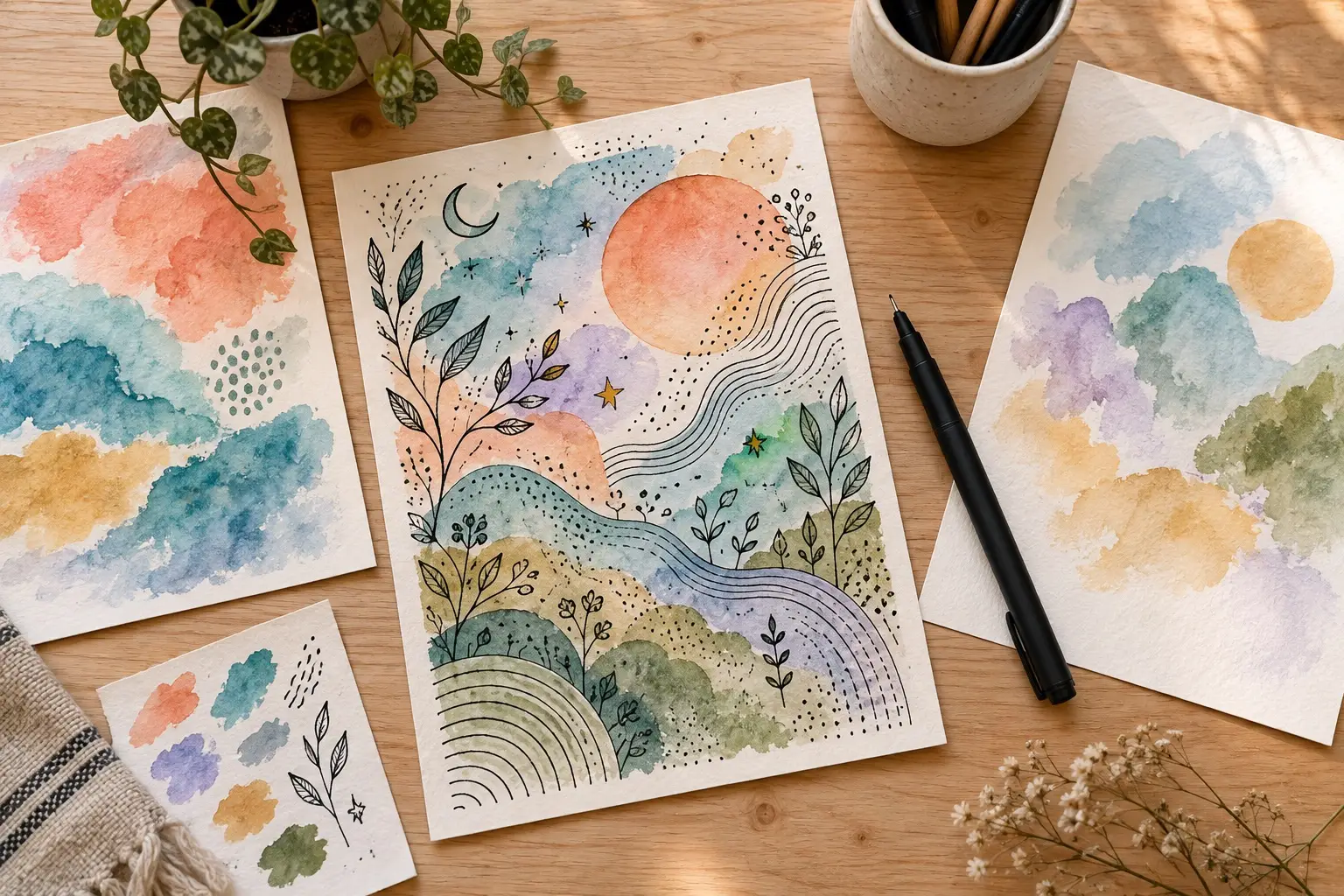
Reverse coloring begins after the color is already on the page. Instead of filling a printed outline, you look at a watercolor wash and decide what its edges, gaps and overlaps might become. A blue-green bloom can be a pond, a leaf, a shadow or nothing representational at all. The line is your contribution.

That reversal changes the hard part. There is no palette to choose and no border to stay inside, but there is also no finished drawing telling you where to begin. The best book therefore depends less on conventional illustration complexity and more on how much visual prompting you want.

This guide compares five exact books that were available from Amazon.com when checked. The recommendations use current publisher documentation and exact listing evidence. We have not drawn in these copies, tested their paper or compared pen behavior side by side.

Quick guide to the five picks

  • The Reverse Coloring Book: the best first purchase, with fifty varied, open-ended watercolors on perforated pages.
  • Through the Seasons: the structured pick, moving from spring colors through winter’s quieter palette.
  • Mindful Journeys: the abstract-pattern pick, with circles, waves, mandala-like forms and cooler colors.
  • Reverse Coloring: Flowers: the focused botanical book, with seventy prompts on documented 140 gsm uncoated paper.
  • Reverse Coloring: Gardens: the scene-building choice, with seventy dreamlike natural environments on the same published paper stock.

We do not publish live Amazon prices. Offers can change quickly, especially for newly released books, so compare the exact title and ISBN rather than relying on a temporary discount.

Reverse coloring is drawing with a prompt, not coloring backward

A conventional coloring page solves the composition before you arrive. The objects, borders and spaces are printed; your main choices concern color, texture and shading.

A reverse coloring page solves the color first. Its watercolor blooms suggest boundaries without fixing them. You can:

  • trace the edge of a wash;
  • turn a color patch into a plant, creature, hill or cloud;
  • add parallel contours through several colors;
  • build texture with dots, hatching or tiny repeated shapes;
  • draw across an edge rather than obeying it;
  • leave a quiet area completely untouched.

The final option matters. A page does not need black lines around every patch. Outlining everything can erase the softness that made the watercolor interesting.

This is also why reverse coloring differs from books that reveal a hidden picture by tracing preprinted white paths. Both begin with color, but a hidden-path book already knows the final image. The five books here leave the interpretation substantially open.

The most important choice is how much subject you want

Choose mixed prompts for maximum freedom

Kendra Norton’s original volume contains fifty original watercolor artworks without one binding subject. That makes it the most representative introduction: one page may suggest plants, another a landscape, another a pattern and another a completely abstract network of marks.

The advantage is range. The drawback is decision load. If a soft color field does not immediately suggest an image, you have to accept a small uncertain first mark.

Choose a sequence when you want a starting mood

Through the Seasons organizes fifty watercolors around the year. Bright florals lead toward summer greens and blues, vivid autumn colors and muted winter tones.

The structure supplies ideas without printing literal outlines. Spring can suggest shoots and petals; autumn can invite seed heads, wind lines or leaf-like contours. You are still drawing freely, but the palette gives the page a mood before the pen arrives.

Choose abstract forms for repetitive line work

Mindful Journeys uses fifty new paintings built around blues, greens, circles, waves, flower-like patterns and several spiritual symbols. These compositions readily support repeated dots, rings, hatching and flowing parallel lines.

The publisher frames the book around mindfulness. That may describe the intended pace, but it is not a guaranteed mental-health result. Choose the volume because the images and style of mark-making appeal to you.

Choose flowers when recognition helps

Reverse Coloring: Flowers provides seventy artworks by Élise Demozay. The washes already suggest petals, foliage, jungles, exotic blooms and spring growth, making the first line easier to place than it is on a fully abstract page.

It is the most direct transition for someone who already colors botanical books. You can follow a petal edge, invent a second leaf layer or draw a stem through several color patches without designing an entire subject from scratch.

Choose gardens when you want to build a scene

Reverse Coloring: Gardens also includes seventy artworks, this time by Sarah Van Der Linden. The dreamlike paintings invite added foliage, flowers, paths, boundaries and depth.

Gardens provides more environmental structure than Flowers. That makes it rewarding for someone who thinks in little scenes, but it can also involve more decisions about foreground, background and how plants overlap.

Paper construction changes how you work

The three Workman books share a documented 104-page, 8.5-by-11-inch format with fifty single-sided perforated artworks. Single-sided printing means there is no second image on the reverse, and perforations let you remove a page, rotate it freely or place it on a firmer drawing surface.

Workman calls the paper sturdy but does not publish an exact gsm figure. We therefore do not claim that it resists a particular marker or pen.

Search Press specifies 140 gsm uncoated paper for Flowers and Gardens. Both books contain seventy artworks across eighty pages in an approximately 8.1-by-10.25-inch format. The publisher promotes several media and makes a bleed-through claim, but no paper works identically with every ink, nib, pressure and repeated pass. We have not independently confirmed the claim.

The Search Press pages are not advertised as perforated. If easy removal matters more than a published paper weight, the Workman volumes have the clearer documented advantage.

A simple way to begin the first page

Reverse coloring becomes easier when the first session has a small rule.

  1. Turn the page in all four directions. A shape that feels meaningless upright may look like a leaf, hill or animal profile from another angle.
  2. Choose one anchor area. Look for a strong edge, repeated color or small gap that already suggests a mark.
  3. Use one line language. Try contours, dots, short hatching or leaves for five minutes instead of mixing every idea immediately.
  4. Repeat before expanding. Echo the same mark in two nearby places so it feels intentional.
  5. Pause while color still breathes. Put the book across the room or take a photo. Add more only if an empty area genuinely feels unfinished.

You do not need to discover a hidden picture. A network of abstract marks is a complete response to an abstract wash.

Choosing a pen without overpowering the watercolor

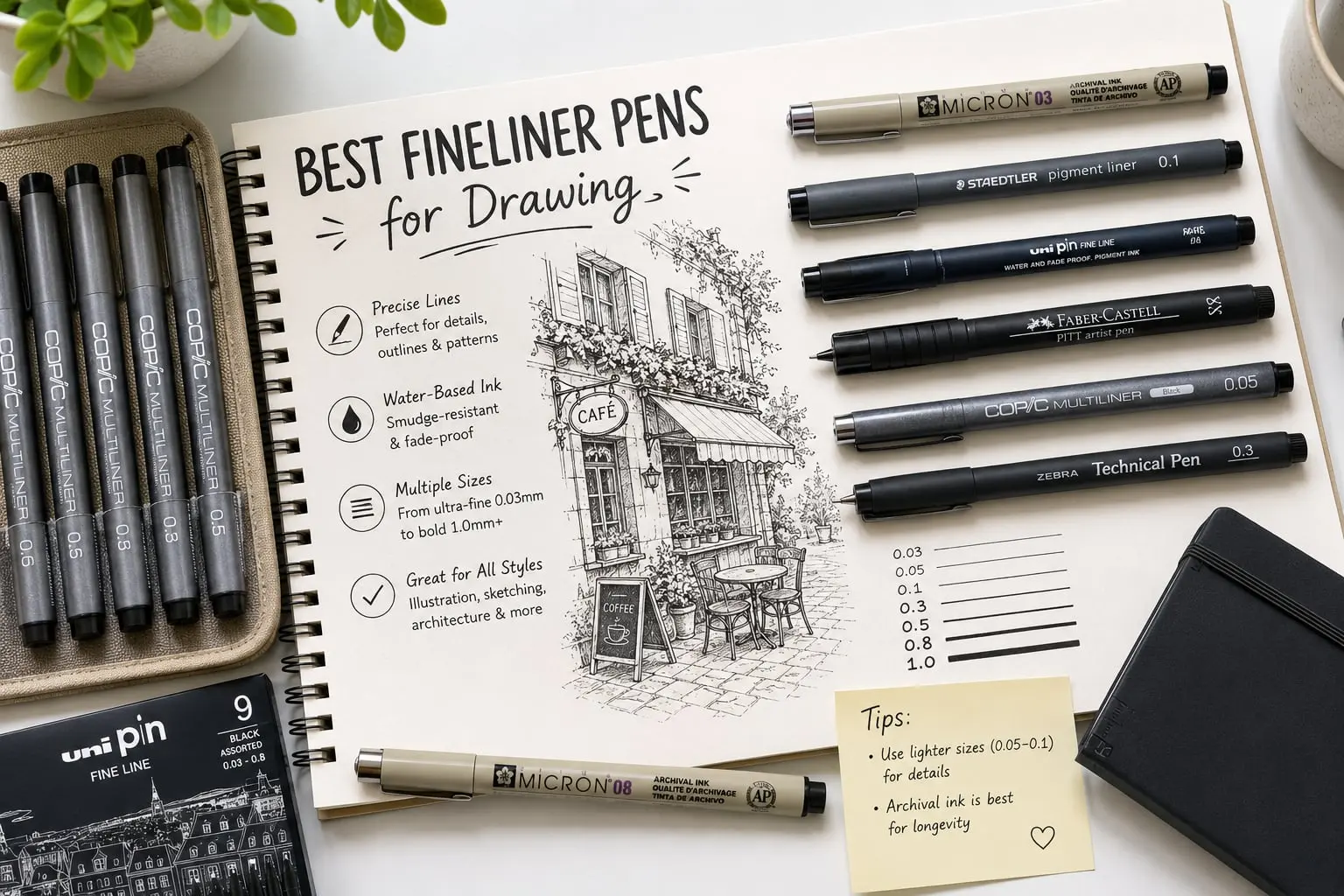
A medium-fine black fineliner around 0.3 or 0.5 mm is the safest conceptual starting point. It can define a shape without turning every transition into a heavy border. Our fineliner guide explains tip sizes and ink types in more detail.

Use a finer nib when you want tiny veins, hair, texture or dense stippling. Move to a thicker line only for a focal contour or deliberate hierarchy. If every mark has the same heavy weight, pale watercolor areas can disappear beneath the drawing.

Gold or white gel pen can add accents, especially over darker color, but opacity and drying vary. The gel-pen guide compares formats, while the book still needs its own swatch test.

Colored pencil can soften edges, deepen a shadow or add texture without committing to another ink line. It changes the premise slightly—you are adding color as well as lines—but there is no rule against that. Use light pressure so the printed watercolor remains visible.

Four line-making approaches worth trying

Follow the edge

Trace only the most interesting side of a color bloom. Let the opposite edge dissolve. This preserves watercolor softness and teaches you that a shape does not need a complete outline.

Build a contour field

Draw one curved line, then echo it at regular intervals. Allow the lines to pass through several colors. The result can suggest topographic maps, wind, water or fabric without becoming a literal object.

Add a tiny visual vocabulary

Choose three marks—perhaps leaves, dots and stars—and repeat them at different scales. A limited vocabulary makes a page cohesive even when the underlying colors are varied.

Invent one figure, then support it

Turn the strongest color patch into a creature, flower, vessel or landscape feature. Use quieter marks around it rather than converting every patch into a competing subject.

Which book makes the best gift?

The original Kendra Norton book is the safest gift when you know the recipient enjoys doodling but do not know their favorite subject. It demonstrates the format with the broadest mix, and it is also the doodler’s pick in our guide to coloring books for teens.

Through the Seasons suits someone who notices changes in weather, gardens and seasonal color. Mindful Journeys fits a person who already enjoys mandala coloring books, abstract pattern, flowing lines or repeated marks.

Flowers is the obvious choice for a botanical colorist. Gardens works better for someone who enjoys composing small environments and imagining paths, layered planting or hidden spaces.

Do not market the gift as effortless. Reverse coloring removes palette selection but adds interpretation. A recipient who wants clear instructions may prefer a beginner adult coloring book with finished outlines.

Our reverse-coloring checklist

Before ordering, confirm:

  • The Amazon page shows the exact ISBN/ASIN named in this guide.
  • Abstract, seasonal, floral or garden imagery matches the recipient’s interests.
  • Fifty varied prompts or seventy themed prompts feels like the better kind of value.
  • Perforated removal matters—or documented 140 gsm paper matters more.
  • The page size fits the intended desk, lap board or travel surface.
  • A suitable fineliner or other tested tool is already available.
  • The buyer understands that printed color reduces palette decisions, not drawing decisions.
  • The first page can be practice rather than a finished artwork worth protecting.

The best reverse coloring book is not the one that promises the calmest outcome. It is the one whose color fields make you curious enough to draw the first line.

Sources checked

Relevant supporting guide

Best Fineliner Pens for Drawing and Line ArtCompare 10 fineliner pens for drawing by tip size, pigment ink, waterproofing and color sets, with picks for line art, manga, sketching and journaling.
FAQ

What is a reverse coloring book?

A reverse coloring book starts with printed color—usually watercolor washes—and asks you to add the lines. You can trace color boundaries, invent figures, add patterns, draw contours or leave large areas untouched. It is closer to guided drawing over color than to filling a conventional printed outline.

Do I need to know how to draw?

No formal drawing skill is required, but the format still asks you to make visible choices. Begin by following one edge, adding a dot cluster or repeating a simple leaf shape. Recognizable flower and garden prompts can feel easier than fully abstract pages when making the first mark is difficult.

What pen is best for reverse coloring?

A black 0.3 or 0.5 mm fineliner is a versatile starting point because it is visible without overwhelming pale color. Test the pen first and let it dry before closing the book. Add a finer nib for tiny details or a thicker nib only after you know how the paper and printed color respond.

Are reverse coloring books the same as ink-tracing books?

Not always. Open-ended reverse coloring gives you painted color fields and lets you decide where lines belong. Some ink-tracing books print hidden white paths or a nearly finished image for you to reveal. The five recommendations here emphasize the more open-ended draw-on-color format.

Can I use markers or colored pencils?

Search Press explicitly suggests pens, markers and colored pencils for its Flowers and Gardens books. Workman says its books need only a pen. Whatever the publisher suggests, test the exact tool on an inconspicuous area, use a barrier sheet with wet media and avoid assuming that sturdy or 140 gsm paper is universally bleed-proof.

Are the pages removable?

Workman documents single-sided perforated pages in the three Kendra Norton books. Search Press documents 140 gsm uncoated paper for Flowers and Gardens but does not describe those pages as perforated, so buy them for the subject and heavier published stock rather than easy page removal.

Final recommendation

Start with Kendra Norton's original Reverse Coloring Book if you want the clearest all-round introduction: its fifty varied prompts and removable pages leave room to try contours, figures, dots and patterns without a fixed theme. Choose Through the Seasons when seasonal palettes supply welcome direction, or Mindful Journeys when flowing abstract forms and repetitive marks are the main appeal. Reverse Coloring: Flowers is the focused choice for blooms and foliage, while Gardens expands the same seventy-prompt, 140 gsm format into fuller natural scenes. Whichever book you choose, begin with one small area and a medium-fine pen; the page does not need every color boundary outlined to feel finished.