
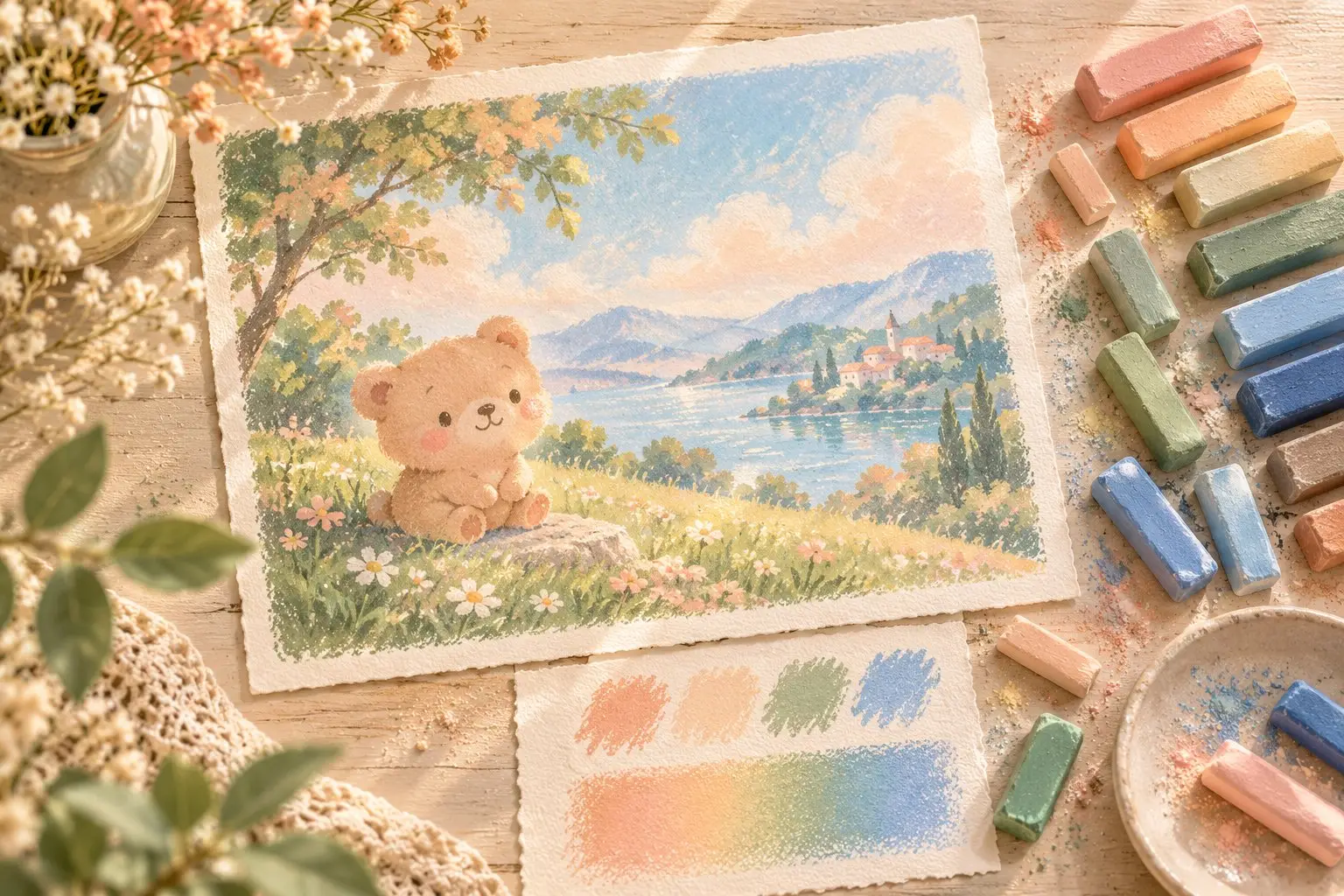
Quick picks
- First artist-range paletteRembrandt General Selection 30 Half Pastels (opens Amazon in a new tab)
- Compact tin storageMont Marte Signature Soft Pastels 24-Piece Tin (opens Amazon in a new tab)
- Small landscape paletteUnison Colour Landscape 16 Half-Stick Soft Pastels (opens Amazon in a new tab)


Product comparison
| Product | Best for | Watch out | Price & shop |
|---|---|---|---|
| Rembrandt General Selection 30 Half Pastels (opens Amazon in a new tab) Research-based review | First artist-range palette | Half sticks give you less material per color than full sticks. A general assortment will still need additions if your work repeatedly calls for closely spaced skin tones or greens. | |
| Faber-Castell Creative Studio 24 Half-Length Soft Pastels (opens Amazon in a new tab) Research-based review | Small-box exploration | The short sticks provide a smaller grip and less material than full sticks. Creative Studio pastels do not have individual lightfastness ratings in the manufacturer FAQ, so do not assume archival performance. | |
| Mungyo 64-Color Square Soft Pastels (opens Amazon in a new tab) Research-based review | Broad square-stick practice palette | Sixty-four colors can obscure the more useful beginner skill of seeing light and dark. This entry does not establish an individual pigment or lightfastness rating for each color. | |
| Mont Marte Signature Soft Pastels 24-Piece Tin (opens Amazon in a new tab) Research-based review | Compact tin storage | A tin does not prevent sticks from breaking if they move around inside. Twenty-four colors also leave fewer ready-made intermediate shades than the larger Signature assortment. | |
| Mont Marte Signature Soft Pastels 48-Piece Tin (opens Amazon in a new tab) Research-based review | Larger tin assortment | The larger palette takes more sorting and may duplicate colors you already own. The tin is a storage convenience rather than evidence of impact protection. | |
| Faber-Castell Creative Studio 72 Half-Length Soft Pastels (opens Amazon in a new tab) Research-based review | Many hues in half-stick form | More colors do not establish better pigment quality or permanence than the smaller Creative Studio box. Short sticks and the lack of individual lightfastness ratings remain relevant limitations. | |
| Rembrandt Deluxe General Selection 60 Half Pastels (opens Amazon in a new tab) Research-based review | Expanding a general palette | This is a substantial starting assortment if you are unsure whether you like dry pastel. It can overlap with an existing Rembrandt set, and half sticks still have limited material per color. | |
| Sennelier Extra Soft 40 Assorted Half Pastels (opens Amazon in a new tab) Research-based review | Extra-soft finishing practice | Extra-soft pastels call for careful handling and light pressure. This listing includes inconsistent generic bullets, so confirm the box says 40 assorted half pastels and dry Pastels à l’Écu rather than oil pastels. | |
| Jack Richeson Hand Rolled Vibrant 20 Soft Pastels (opens Amazon in a new tab) Research-based review | Vibrant color studies | A vibrant assortment is less versatile than a general selection for subdued subjects. Do not confuse Vibrant 20 with the brand’s other 20-stick color groups. | |
| Unison Colour Landscape 16 Half-Stick Soft Pastels (opens Amazon in a new tab) Research-based review | Small landscape palette | Sixteen landscape colors are intentionally limited. Unison displays a CL caution label for this set, so read the specific handling instructions and do not treat it as a children’s craft supply. |
Detailed product sections
Rembrandt General Selection 30 Half Pastels (opens Amazon in a new tab)
A manageable general selection for learning color relationships without starting with a huge box.

Why it fits this guide
Thirty half sticks make this a sensible first artist-range set if you already know you want to learn dry pastel. The general selection is more adaptable than a subject-specific landscape or vibrant assortment. Royal Talens documents the pigment-and-kaolin formulation and identifies the included colors, which helps when planning later additions. Choose it for small still lifes, simple characters and landscape studies; this is an editorial fit assessment, not a claim that we compared its blending in person.
Honest drawback
Half sticks give you less material per color than full sticks. A general assortment will still need additions if your work repeatedly calls for closely spaced skin tones or greens.
Specifications
- 30 half pastels
- General Selection
- Manufacturer lists included color codes
Best forFirst artist-range palette
Pros
- Manageable number of colors
- Documented general-purpose assortment
Cons
- Half-stick quantities
- Not a specialized portrait palette
Faber-Castell Creative Studio 24 Half-Length Soft Pastels (opens Amazon in a new tab)
A compact 24-color introduction for deciding whether powdery pastel drawing suits you.

Why it fits this guide
A small box keeps the first session focused on marks, values and layering rather than choosing among dozens of similar colors. Faber-Castell identifies this exact set as 24 half-length sticks and describes blending with fingers, paper wipers or a pastel brush. It suits occasional practice and small drawings. Start with a few colors from the box and save the rest for later studies rather than trying to use every color on the first page.
Honest drawback
The short sticks provide a smaller grip and less material than full sticks. Creative Studio pastels do not have individual lightfastness ratings in the manufacturer FAQ, so do not assume archival performance.
Specifications
- 24 half-length sticks
- Manufacturer item 128224
Best forSmall-box exploration
Pros
- Simple starter selection
- Compact half-stick format
Cons
- Short grip
- No individual lightfastness ratings stated
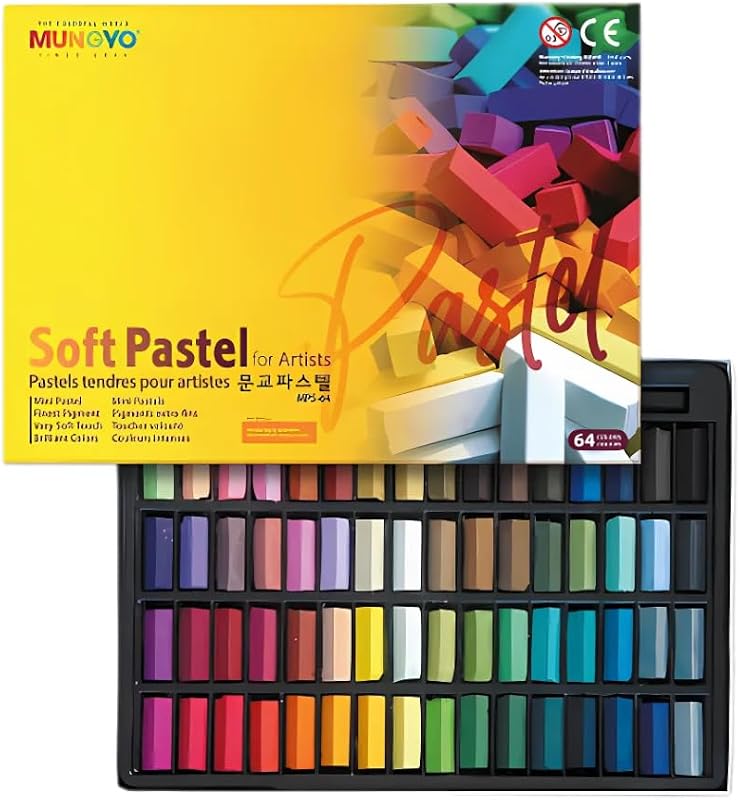
Mungyo 64-Color Square Soft Pastels (opens Amazon in a new tab)
A 64-color square-stick assortment for exploring hues and broad side-of-stick marks.
Why it fits this guide
Choose this exact 64-color square set when variety matters more than keeping your starting palette small. Square sticks offer corners for lines and sides for wider marks, making the format useful for swatch exercises and blocked-in backgrounds. Mungyo distinguishes its Standard Square Pastels from its other pastel ranges; this recommendation is for the square dry-pastel listing, not an oil-pastel or differently formulated gallery set. Sorting a working handful by value will make the broad assortment less distracting.
Honest drawback
Sixty-four colors can obscure the more useful beginner skill of seeing light and dark. This entry does not establish an individual pigment or lightfastness rating for each color.
Specifications
- 64 colors
- Square dry soft-pastel sticks
Best forBroad square-stick practice palette
Pros
- Many color choices
- Corners and sides offer different marks
Cons
- Large palette for a first lesson
- Individual permanence ratings not established here
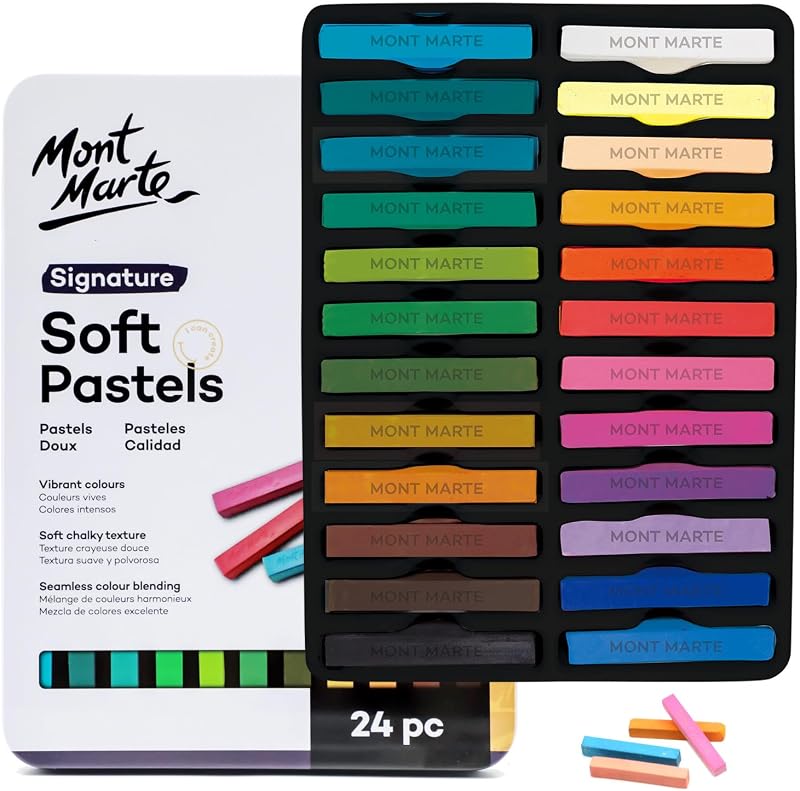
Mont Marte Signature Soft Pastels 24-Piece Tin (opens Amazon in a new tab)
A 24-piece Signature assortment for a small creative desk with a dedicated storage box.
Why it fits this guide
The practical reason to choose this set is the combination of a modest color count and a tin. It gives an occasional pastel learner a defined place to return the sticks after a session. Mont Marte identifies the product as its Signature 24-piece soft pastels in a tin, so keep that range name in mind when comparing listings. Pair it with a small pastel pad and use the box as storage, rather than assuming the metal case makes loose pastels travel-proof.
Honest drawback
A tin does not prevent sticks from breaking if they move around inside. Twenty-four colors also leave fewer ready-made intermediate shades than the larger Signature assortment.
Specifications
- 24 pieces
- Signature range
- Manufacturer item MMPT0017
Best forCompact tin storage
Pros
- Manageable color count
- Included tin for storage
Cons
- Limited intermediate shades
- Still needs careful handling
Mont Marte Signature Soft Pastels 48-Piece Tin (opens Amazon in a new tab)
The Signature 48-piece tin for hobbyists who prefer more ready-made color choices.

Why it fits this guide
This is the larger Signature option for someone already making regular pastel drawings and wanting more hues in the same kind of storage format. The manufacturer identifies 48 pieces and a tin. Choose it over the 24-piece version because you want a larger palette, not because this research proves a difference in pigment strength or blending quality. Amazon also offers similarly named variants; the linked selection is Signature Multicolor 48, not the Premium assortment.
Honest drawback
The larger palette takes more sorting and may duplicate colors you already own. The tin is a storage convenience rather than evidence of impact protection.
Specifications
- 48 pieces
- Signature range
- Manufacturer item MMPT0030
Best forLarger tin assortment
Pros
- More color choices than the 24-piece set
- Included tin
Cons
- More decisions for a new learner
- Not the similarly named Premium variant
Faber-Castell Creative Studio 72 Half-Length Soft Pastels (opens Amazon in a new tab)
A broad Creative Studio assortment for learners who enjoy organized swatch charts.

Why it fits this guide
Seventy-two half-length sticks offer a wide range without requiring seventy-two full sticks. This is a reasonable alternative to the 24-color Creative Studio box for a hobbyist who already enjoys pastel and wants more ready-made hues. The manufacturer identifies the exact 72-stick set and half-length format. Make a labeled swatch chart before starting a drawing, and pull out a limited working palette; the extra colors are options rather than a requirement to use them all.
Honest drawback
More colors do not establish better pigment quality or permanence than the smaller Creative Studio box. Short sticks and the lack of individual lightfastness ratings remain relevant limitations.
Specifications
- 72 half-length sticks
- Manufacturer item 128272
Best forMany hues in half-stick form
Pros
- Broad hue assortment
- Half-stick format
Cons
- Large initial palette
- No individual lightfastness ratings stated
Rembrandt Deluxe General Selection 60 Half Pastels (opens Amazon in a new tab)
A 60-half-stick general assortment for committed beginners who want more color options.

Why it fits this guide
Choose the Deluxe General Selection when you have moved beyond a trial box and want a broader artist-range assortment for varied subjects. Royal Talens identifies 60 half pastels and publishes the set contents. The larger selection can reduce how often you need to improvise an intermediate hue, but learning values and restrained layering still matters more than owning a bigger box. Compare the manufacturer color list with anything you already have before upgrading.
Honest drawback
This is a substantial starting assortment if you are unsure whether you like dry pastel. It can overlap with an existing Rembrandt set, and half sticks still have limited material per color.
Specifications
- 60 half pastels
- Deluxe General Selection
Best forExpanding a general palette
Pros
- Broad general assortment
- Manufacturer publishes set contents
Cons
- Potential overlap with existing pastels
- More than needed for a first experiment
Sennelier Extra Soft 40 Assorted Half Pastels (opens Amazon in a new tab)
The 40 assorted half-pastel set for learning restrained touches and soft color passages.

Why it fits this guide
Sennelier describes its extra-soft dry pastels as pigment with a natural transparent binder. The 40 assorted half-pastel box is appealing when your priority is exploring this extra-soft range rather than buying a large full-stick collection. Use it as a first set if that feel is specifically what you want to learn, or as an addition for finishing passages. Our recommendation follows the documented range and exact packaging; it does not claim a measured softness ranking against the other sets.
Honest drawback
Extra-soft pastels call for careful handling and light pressure. This listing includes inconsistent generic bullets, so confirm the box says 40 assorted half pastels and dry Pastels à l’Écu rather than oil pastels.
Specifications
- 40 assorted half pastels
- Extra Soft dry-pastel range
- Manufacturer general assortment N132230
Best forExtra-soft finishing practice
Pros
- Access to the extra-soft range
- Half-stick assortment for exploration
Cons
- Careful handling needed
- Check exact packaging because listing bullets conflict
Jack Richeson Hand Rolled Vibrant 20 Soft Pastels (opens Amazon in a new tab)
A focused 20-stick vibrant assortment to complement quieter colors.

Why it fits this guide
The manufacturer maps item 422950 to Vibrant 20 in its Color Wheel handrolled range. That makes this a deliberate color-focused choice rather than a general-purpose starter box. It suits bright character backgrounds, flower studies and exercises in pairing saturated colors. If your existing set feels limited in vivid hues, this can be a useful addition; if you are buying your only pastel set, inspect the pictured colors against the light, middle and dark values your planned subjects need.
Honest drawback
A vibrant assortment is less versatile than a general selection for subdued subjects. Do not confuse Vibrant 20 with the brand’s other 20-stick color groups.
Specifications
- 20 handrolled pastels
- Vibrant selection
- Manufacturer item 422950
Best forVibrant color studies
Pros
- Focused vivid-color selection
- Exact assortment documented by maker
Cons
- Specialist rather than general palette
- Other Color Wheel assortments look similar
Unison Colour Landscape 16 Half-Stick Soft Pastels (opens Amazon in a new tab)
A 16-half-stick landscape selection for learners with a clear subject in mind.

Why it fits this guide
Unison describes this exact landscape set as 16 half sticks and positions it for beginners exploring pastel. Its smaller, subject-led palette is useful if you want to practice skies, land and simple scenic compositions instead of collecting a broad rainbow first. The maker identifies the pastels as handmade in the UK. Choose it for its landscape focus; it is less logical as a first box for bright character illustration or a wide mix of portrait and floral subjects.
Honest drawback
Sixteen landscape colors are intentionally limited. Unison displays a CL caution label for this set, so read the specific handling instructions and do not treat it as a children’s craft supply.
Specifications
- 16 half sticks
- Landscape selection
- Manufacturer identifies UK handmade production
Best forSmall landscape palette
Pros
- Focused subject palette
- Small assortment encourages selective choices
Cons
- Limited for unrelated subjects
- CL caution label requires attention
Related guides
Best Charcoal Sticks for Drawing: Vine, Willow and Compressed Picks
Compare four research-based vine, willow and compressed charcoal picks for gesture drawing, value studies, varied line widths and deep dark accents.
Best Colored Pencils for Drawing and Sketching
Compare six current colored-pencil sets for drawing and sketching by core feel, point control, palette size, paper fit, storage and lightfastness.
Best Oil Pastels for Beginners: 10 Smooth and Blendable Sets
Compare 10 beginner oil pastel sets by palette, range and storage, with research-based picks, exact Amazon US variants and practical blending advice.
Best Charcoal Pencils for Drawing: 10 Picks for Beginners & Shading
The best charcoal pencils for drawing and shading, compared for beginners, portraits, soft gradients, white highlights, woodless coverage and value.


