Best Charcoal Sticks for Drawing: Vine, Willow and Compressed Picks. Compare four research-based vine, willow and compressed charcoal picks for gesture drawing, value studies, varied line widths and deep dark accents.. Type: Buying guide. Category: Drawing. Tags: charcoal-sticks, vine-charcoal, willow-charcoal, compressed-charcoal, charcoal-drawing, gesture-drawing, drawing-supplies, buying-guide.

Buying guide

Best Charcoal Sticks for Drawing: Vine, Willow and Compressed Picks

Our recommendation

The Winsor & Newton Medium Vine Charcoal 12-pack is our best research-based starting pick because its general-purpose grade suits construction lines, gesture drawing and value studies. Choose the Soft Vine 12-pack for looser, more easily lifted marks, the assorted Willow box when varied stick widths matter, or Pacific Arc Soft Compressed Charcoal when dense dark values are the goal. All four exact products were available to order on Amazon.com when checked, but KawaiiToons has not drawn with or physically compared them.

Quick picks

Top recommendations

  1. 1Winsor & Newton Artist Vine Charcoal Sticks, Medium, Box of 12 — Best starting vine charcoalA 12-stick medium vine box is the most adaptable entry here for light placement, loose lines and broad gray masses
  2. 2Winsor & Newton Artist Vine Charcoal Sticks, Soft, Box of 12 — Best for loose, liftable marksTwelve soft vine sticks suit sweeping gesture, soft shadow mapping and drawings designed to be adjusted with a kneaded eraser
  3. 3Winsor & Newton Artists' Willow Charcoal, Assorted, Box of 12 — Best assorted natural widthsThe assorted 12-stick willow box trades exact uniformity for useful natural diameter variation
  4. 4Pacific Arc Compressed Charcoal Sticks, Soft, 12 Pack — Best for deep dark accentsTwelve matching soft compressed sticks create a more deliberate dark-value tool than the natural charcoal boxes in this guide

Product comparison

ProductBest forWatch outPrice & shop
Winsor & Newton Artist Vine Charcoal Sticks, Medium, Box of 12 (opens Amazon in a new tab)Winsor & Newton
Best starting vine charcoalResearch-based review
Beginners and life-drawing students who want a balanced natural charcoal for gesture and value studiesNatural vine charcoal is fragile and its dark gray mark will not replace compressed charcoal when the drawing needs a dense black accent
Winsor & Newton Artist Vine Charcoal Sticks, Soft, Box of 12 (opens Amazon in a new tab)Winsor & Newton
Best for loose, liftable marksResearch-based review
Gesture drawing and expressive first layers where smoky soft marks are more useful than firm edgesA soft vine stick can feel too vague for small controlled contours, and it will not create the deepest compressed-charcoal black
Winsor & Newton Artists' Willow Charcoal, Assorted, Box of 12 (opens Amazon in a new tab)Winsor & Newton
Best assorted natural widthsResearch-based review
Artists who want one natural-charcoal box for both fine linear marks and wider side strokesNatural pieces are not manufactured to identical dimensions, so the exact diameter mix and wear will be less predictable than a rectangular compressed set
Pacific Arc Compressed Charcoal Sticks, Soft, 12 Pack (opens Amazon in a new tab)Pacific Arc · CCS-S
Best for deep dark accentsResearch-based review
Artists who already know they want a soft compressed stick for dense passages and broad gestural strokesA 12-pack of one soft compressed grade is a poor first purchase if you still need pale construction, easy erasing or a mixed firmness range

Selection and testing methodology

This is a research-based buying guide, not a hands-on darkness, smoothness, breakage, dust, blendability, erasability or fixative test. On October 8, 2026, we opened the exact Amazon.com page for every recommendation in a US delivery context, confirmed its ASIN, selected grade and pack size, an active add-to-cart purchase path, and a matching direct Amazon CDN main image. We cross-checked stick type, count, grade and intended marks against current manufacturer pages from Winsor & Newton and Pacific Arc. KawaiiToons has not used these sticks, measured their diameters, compared how black they draw, tested how cleanly they erase or evaluated breakage in transit. The picks are organized by documented format and use case, not temporary prices, star ratings or invented first-hand experience.

Detailed product sections

Best starting vine charcoalResearch-based review

Winsor & Newton Artist Vine Charcoal Sticks, Medium, Box of 12 (opens Amazon in a new tab)

Winsor & Newton

A 12-stick medium vine box is the most adaptable entry here for light placement, loose lines and broad gray masses

Why it fits this guide

Medium vine charcoal sits in the useful middle of this comparison. The exact Amazon listing identifies a box of 12 medium sticks, while Winsor & Newton describes this grade as a general-purpose dark gray charcoal. That makes it the clearest first purchase for someone who wants to establish a pose, map a shadow and lift corrections without beginning with the denser commitment of a soft compressed block.

Honest drawback

Natural vine charcoal is fragile and its dark gray mark will not replace compressed charcoal when the drawing needs a dense black accent

Specifications

  • Exact Amazon ASIN B00251CL1S showed an active add-to-cart and buy-now purchase path on October 8, 2026
  • Selected Amazon variant was Medium, Box of 12
  • Winsor & Newton identifies the set as 12 medium vine charcoal sticks and describes medium as a general-purpose dark gray grade

Best forBeginners and life-drawing students who want a balanced natural charcoal for gesture and value studies

Pros

  • Medium grade is easier to position as an all-purpose starting point than a specialized extra-soft stick
  • Natural vine format supports light, broad and easily adjusted early marks
  • Twelve-stick box provides replacements for a fragile consumable medium

Cons

  • Less densely black than compressed charcoal
  • Slender natural sticks need protective storage and gentle pressure
Check price on Amazon (opens Amazon in a new tab)
Best for loose, liftable marksResearch-based review

Winsor & Newton Artist Vine Charcoal Sticks, Soft, Box of 12 (opens Amazon in a new tab)

Winsor & Newton

Twelve soft vine sticks suit sweeping gesture, soft shadow mapping and drawings designed to be adjusted with a kneaded eraser

Why it fits this guide

The soft variant is a deliberate step away from firm detail. Its exact Amazon page identifies a box of 12 soft sticks, and the current Winsor & Newton range separates soft from medium, hard and extra-soft vine grades. Choose it when you want the first layer to stay loose: long arcs through a pose, lightly massed shadows and edges that can be softened or lifted before a denser tool enters the drawing.

Honest drawback

A soft vine stick can feel too vague for small controlled contours, and it will not create the deepest compressed-charcoal black

Specifications

  • Exact Amazon ASIN B0021IK626 was in stock with an active add-to-cart purchase path on October 8, 2026
  • Selected Amazon variant was Soft, Box of 12
  • Winsor & Newton lists soft as a distinct grade in its current 12-stick Artist Vine Charcoal range

Best forGesture drawing and expressive first layers where smoky soft marks are more useful than firm edges

Pros

  • Purposeful soft grade for quick gesture and smoky value placement
  • Natural charcoal is a useful companion to denser compressed sticks
  • Twelve matching sticks simplify replenishment for repeated drawing sessions

Cons

  • Soft marks are not the best choice for crisp tiny details
  • Fragile sticks and loose dust make travel less convenient
Check price on Amazon (opens Amazon in a new tab)
Best assorted natural widthsResearch-based review

Winsor & Newton Artists' Willow Charcoal, Assorted, Box of 12 (opens Amazon in a new tab)

Winsor & Newton

The assorted 12-stick willow box trades exact uniformity for useful natural diameter variation

Why it fits this guide

Width changes how a charcoal stick meets paper. A thin piece can place a small contour or hatch, while a thicker piece gives more side area for a broad passage. Winsor & Newton's exact Amazon product is an assorted box of 12, and the manufacturer identifies the pack as 12 assorted willow charcoal sticks. It is the most direct pick here for artists who value that range of natural mark widths in one box.

Honest drawback

Natural pieces are not manufactured to identical dimensions, so the exact diameter mix and wear will be less predictable than a rectangular compressed set

Specifications

  • Exact Amazon ASIN B0049B38CS showed an active add-to-cart and buy-now purchase path on October 8, 2026
  • Exact listing title identifies assorted willow charcoal in a box of 12
  • Winsor & Newton lists 12 assorted charcoal sticks and describes its willow as correctly baked for consistent intensity

Best forArtists who want one natural-charcoal box for both fine linear marks and wider side strokes

Pros

  • Assorted natural widths expand line and side-stroke choices
  • Willow provides a different natural-charcoal option from the two vine grades
  • Box of 12 is useful for a breakable, consumable medium

Cons

  • Exact natural diameters can vary
  • Not the controlled choice for identical repeated blocks or a labeled hardness range
Check price on Amazon (opens Amazon in a new tab)
Best for deep dark accentsResearch-based review

Pacific Arc Compressed Charcoal Sticks, Soft, 12 Pack (opens Amazon in a new tab)

Pacific Arc · CCS-S

Twelve matching soft compressed sticks create a more deliberate dark-value tool than the natural charcoal boxes in this guide

Why it fits this guide

Pacific Arc documents the CCS-S as a 12-stick soft open-stock box and describes compressed charcoal as suited to dense dark lines and broad gestural strokes. That makes this the finishing and emphasis pick: use natural charcoal to place and adjust the drawing, then reserve a compressed edge or side for the dark shapes that anchor it. The bulk single grade also suits artists who already know soft is the grade they consume most often.

Honest drawback

A 12-pack of one soft compressed grade is a poor first purchase if you still need pale construction, easy erasing or a mixed firmness range

Specifications

  • Exact Amazon ASIN B08L8JKP72 was in stock with an active add-to-cart purchase path on October 8, 2026
  • Exact Amazon listing identifies 12 soft compressed charcoal sticks
  • Pacific Arc model CCS-S is documented as a 12-stick soft open-stock box

Best forArtists who already know they want a soft compressed stick for dense passages and broad gestural strokes

Pros

  • Compressed format is designed for dense lines and broad gestural strokes
  • Rectangular edges provide several contact widths without relying on a natural twig diameter
  • Twelve matching sticks make sense for artists who already prefer soft compressed charcoal

Cons

  • Less forgiving for pale planning and repeated lifting
  • Single soft grade does not teach the differences among hard, medium and soft compressed charcoal
Check price on Amazon (opens Amazon in a new tab)

How to choose

  • Start with medium vine charcoal if you want a forgiving general-purpose tool for gesture, placement and value studies.
  • Choose soft vine charcoal when loose, smoky marks and easy lifting matter more than a firm edge.
  • Choose assorted willow charcoal when several natural diameters would help you move between thin lines and broad side strokes.
  • Choose compressed charcoal when dense black accents and bold coverage matter more than easy correction.
  • Buy a single-grade 12-pack only when that grade matches the work you plan to do; it offers replenishment, not a hardness range.
  • Plan for dust: work over a cleanable surface, avoid blowing particles into the air and follow the maker's safety guidance.

Common mistakes

  • Treating vine, willow and compressed charcoal as interchangeable because all three are sold as black drawing sticks.
  • Pressing fragile natural charcoal hard when the side of the stick or a softer repeated pass would make the mark more safely.
  • Buying soft compressed charcoal for a first construction layer and then expecting it to lift as cleanly as vine charcoal.
  • Choosing a bulk single-grade pack before learning which firmness and stick width suit the paper and drawing scale.
  • Fixing a drawing before testing the spray on a scrap made with the same charcoal and paper.
  • Blowing charcoal dust off the page instead of tapping the sheet gently or using an appropriate controlled cleanup method.

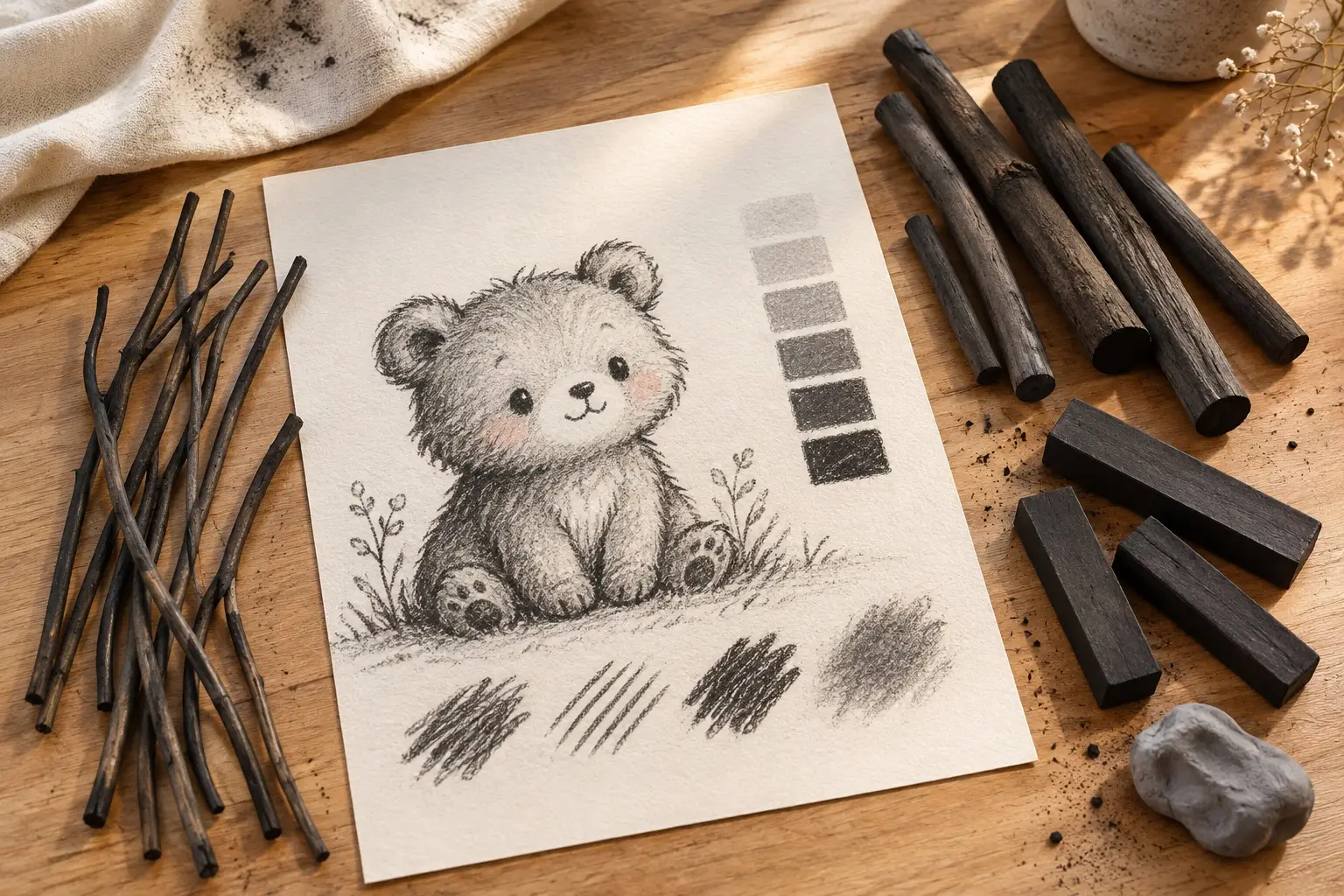
Charcoal sticks make drawing feel immediate. Turn a natural stick on its side and a pale shape appears in seconds; touch down with an edge and the same tool can locate a shoulder or sharpen a shadow. A compressed block can then add a dark anchor that natural charcoal may never reach.

That range is also why “charcoal stick” is not one simple shopping category. Vine, willow and compressed charcoal differ in structure, predictability and the kind of correction they invite. The best first box is not automatically the blackest one.

This guide compares four exact products that were available to order on Amazon.com when checked. Every pick is research-based. We verified the selected variant, ASIN, current purchase path and matching product image, then cross-checked the core specifications with the manufacturers. We did not draw with the sticks or rank their feel from customer ratings.

The best charcoal sticks at a glance

  • Winsor & Newton Medium Vine Charcoal, 12 sticks: best starting vine charcoal for gesture, construction and general value studies.
  • Winsor & Newton Soft Vine Charcoal, 12 sticks: best for loose, smoky first layers that are intended to remain adjustable.
  • Winsor & Newton Assorted Willow Charcoal, 12 sticks: best natural assortment when varied stick diameters are part of the appeal.
  • Pacific Arc Soft Compressed Charcoal, 12 sticks: best for dense dark accents and broad gestural coverage after the drawing is established.

We do not publish live prices. Stock, sellers and offers can change, so confirm the exact ASIN, grade and pack size before ordering.

Vine, willow and compressed charcoal are different tools

Vine charcoal is the forgiving planner

Vine charcoal begins as natural vine material that is carefully carbonized. It keeps an irregular twig-like shape and does not behave like a perfectly uniform manufactured block. Its lighter, dark-gray range makes it useful for a first pass: a gesture line, an envelope around a subject or a shadow shape that may move as the drawing develops.

This is the charcoal to choose when adjustment is part of the process. A kneaded eraser can lift and soften a light vine layer, though no charcoal is guaranteed to disappear completely from every paper. Toothier paper holds more particles; hard pressure can drive them deeper into the surface.

Willow charcoal offers natural width variation

Willow charcoal is also a carbonized natural stick. The practical distinction in this comparison is the assorted box: several natural diameters let you reach for a thinner piece for line work or a thicker piece for side shading. The sticks are not machined into identical dimensions, and that variation is the point rather than a defect.

Winsor & Newton describes its willow charcoal as correctly baked for a consistent line intensity and sells it in several sizes and packs. The exact recommendation here is the assorted box of 12, not a single-width thin, medium or thick variant.

Compressed charcoal is the dark-value specialist

Compressed charcoal is made into a consistent block or stick rather than remaining in a natural twig form. It is the clearest choice here for a dense accent, a bold silhouette or a broad dark passage. A rectangular block also gives you a corner, a narrow edge and a wide side without changing tools.

That density is a trade-off. A soft compressed mark is not the best place to begin when you expect to redraw the pose several times. Establish the structure with a lighter tool, then introduce compressed charcoal when the dark shape has earned its place.

The best charcoal sticks in detail

Winsor & Newton Medium Vine Charcoal — best starting vine charcoal

The Medium Vine Charcoal box is the most balanced first purchase in this group. The exact product is a 12-stick box, and Winsor & Newton describes medium vine charcoal as a general-purpose dark gray grade. It can map a pose, block a middle value and test the paper without beginning at the deepest end of the scale.

Use the tip for a searching contour, then lay the stick lower to cover a larger shadow. Keep the pressure light during the first pass. A charcoal drawing often becomes clearer when the artist builds value through repeated layers instead of forcing one hard stroke into the page.

This is not the pick for an immediate velvety black. Its role is flexibility. Pair it with a kneaded eraser and, later, a small piece of compressed charcoal if the drawing needs a darker focal point.

Winsor & Newton Soft Vine Charcoal — best for loose, liftable marks

The Soft Vine Charcoal box is for an artist who wants the beginning of the drawing to stay visibly loose. The exact Amazon variant is Soft, Box of 12, distinct from the medium recommendation above.

Soft vine charcoal suits long gesture arcs, broad atmospheric value and edges that may be rubbed back or lifted. It can be especially useful in short pose studies, where committing to a precise outline too early slows the drawing down. Draw through the form, let several searching lines coexist, then select the line that carries the pose.

The drawback is control. A soft natural stick is a clumsy choice for a tiny eye, crisp architectural corner or tidy travel kit. For precision, a wood-cased option from our charcoal pencil guide is easier to protect and sharpen.

Winsor & Newton Assorted Willow Charcoal — best assorted natural widths

The assorted Willow Charcoal box earns a separate place because width changes the drawing experience. A narrow stick can make a quick contour without much preparation. A wider stick can lay down a plane, create a broken textured edge or bridge a larger paper format more comfortably.

The exact recommendation contains 12 assorted sticks. Do not expect every piece to match: these are natural sticks, and the diameter can vary. Sort the box before drawing. Reserve one slim piece for small turns, one medium piece for everyday marks and the broadest piece for the largest value masses.

This is the most exploratory natural-charcoal choice here, but it is not a labeled hardness set. If you want predictable soft, medium and hard compressed grades, buy a documented mixed-grade compressed set rather than assuming diameter equals hardness.

Pacific Arc Soft Compressed Charcoal — best for deep dark accents

Pacific Arc’s Soft Compressed Charcoal is the deliberate dark tool. The exact CCS-S product contains 12 soft sticks. Pacific Arc describes its compressed charcoal as capable of dense dark lines and broad gestural strokes, with open-stock boxes available in soft, medium and hard.

The rectangular shape is useful. Drag a corner for a narrower stroke, use an edge for a firmer band or turn the broad face onto the paper for a large value. Sanding can create another profile, but do it over a controlled surface and avoid sending fine particles into the air.

A bulk soft box is not a complete beginner range. It makes sense for artists who already know they use soft compressed charcoal or for a studio that consumes dark sticks regularly. If you are still learning what each grade does, a mixed set is the more educational purchase.

How to choose the right charcoal stick

Choose by the stage of the drawing

The first marks should be easy to revise. Medium or soft vine charcoal is well suited to placement, gesture and the first shadow map. Assorted willow can do the same work while offering a wider choice of natural diameters.

Compressed charcoal belongs later in the process when the darkest shapes are clear. It can also lead an intentionally bold sketch, but that is a conscious stylistic decision rather than the safest general-purpose workflow.

Choose by paper size

A slender natural stick feels at home in a sketchbook or on a modest sheet. A wider willow stick or rectangular compressed block becomes more valuable as the drawing grows. Large paper asks for tools that can cross it without hundreds of tight pencil-like strokes.

Paper tooth matters too. Smooth paper preserves a cleaner edge but can reveal every smudge. Toothier paper catches charcoal and creates texture, though it may resist complete erasing. Our sketchbook guide for pencil drawing explains surface and binding trade-offs that also matter for dry media; always test charcoal on the actual sheet before committing to a finished piece.

Choose by correction style

If you like to draw, lift and redraw, begin with natural charcoal and a kneaded eraser. If you prefer to build decisive dark shapes, compressed charcoal is more direct. Neither workflow is more advanced; they simply place commitment at different moments.

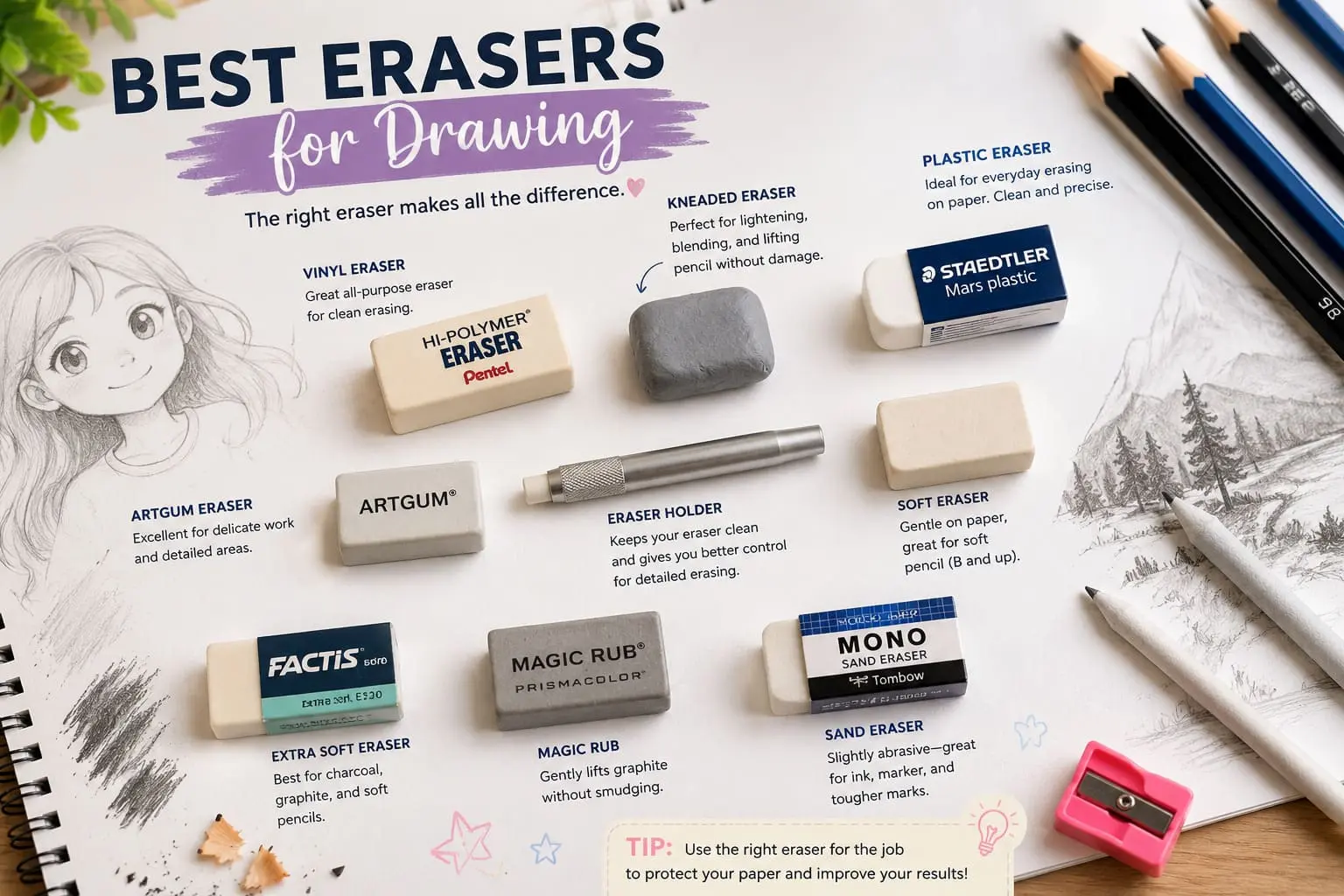
Use an eraser as a drawing tool rather than only a repair tool. A pinched kneaded eraser can lift a highlight, a block eraser can clean a margin and a precision eraser can cut a narrow light. Our drawing eraser guide compares those formats.

Choose a set size you will actually use

Charcoal breaks and wears down, so replacement sticks are useful. Still, a 12-pack of one grade is best when you already understand that grade’s role. A beginner who wants to compare firm and soft compressed charcoal should seek a verified mixed-grade set instead of buying three bulk boxes at once.

A simple charcoal workflow for beginners

1. Protect the table and make a value strip

Work over a cleanable board or spare sheet. On a corner of the drawing paper, make five blocks from barely touching the surface to the darkest comfortable pressure. Repeat with the side of the stick. This reveals the usable range on that paper without relying on a package description.

Do not blow dust away. Gently tap loose particles onto a controlled surface and clean according to the product and workspace guidance. Wash hands after the session and keep food away from the drawing area.

2. Place the whole subject lightly

Use medium or soft vine charcoal to find the top, bottom and widest points. For a figure, draw the main action line before describing limbs. For a still life, compare the overall height and width before drawing the small edges of each object.

Keep this layer pale. If the placement is wrong, lift it with a kneaded eraser and try again. A successful charcoal drawing often contains evidence of searching; it does not need a perfectly clean first outline.

3. Group the shadows

Turn the stick on its side and connect the main shadow shapes. Avoid filling every small dark spot independently. A few connected value masses make the drawing easier to read from across the room.

Step back before adding more. Charcoal looks different at arm’s length than it does when your face is close to the page.

4. Add compressed charcoal selectively

When the structure works, add soft compressed charcoal to the deepest accents: a cast-shadow contact, a dark fold, the center of the hair mass or the space behind the focal edge. Leave some natural-charcoal gray nearby so the deepest black has something to contrast with.

Using compressed charcoal everywhere can flatten the value hierarchy. A small dark accent often carries more weight than a page covered in the same black.

5. Lift lights and sharpen only a few edges

Pinch a kneaded eraser into a small wedge and lift a highlight. Clean the eraser by stretching and folding it before moving to the next area. Use a firmer eraser only after a scrap test confirms that the paper surface tolerates it.

Sharpen the focal edge and let secondary edges stay quiet. Charcoal’s atmosphere comes from the relationship between hard, soft and lost edges, not from outlining every form.

Storage, breakage and dust control

Natural charcoal sticks deserve a rigid box. Keep them in their original packaging or a shallow tin with soft padding; do not let them rattle loose under heavier tools. A broken stick is still usable, but predictable storage prevents needless waste.

Separate compressed blocks from clean paper and fabric. A small paper sleeve or divided case reduces transfer. Carry a kneaded eraser in its own wrapper so it does not collect charcoal crumbs from the bottom of the pouch.

Fixative is optional and deserves caution. It can shift values, change surface sheen or behave differently across papers. Use a product intended for the medium, follow its ventilation instructions and test on a separate charcoal swatch first. Glassine interleaving is a simple dry storage option when you do not want to spray a drawing.

Final take

Choose Winsor & Newton Medium Vine Charcoal if you want the most versatile starting box for learning gesture, placement and charcoal value. It is the recommendation that asks for the fewest assumptions about how you will draw.

Move to the Soft Vine box when loose, smoky construction is the purpose. Choose the assorted Willow box when natural stick width is a creative variable. Add Pacific Arc Soft Compressed Charcoal when the drawing needs a dedicated dark-value tool and you already know a bulk soft grade will be used.

The strongest charcoal kit is usually a small conversation between tools: one forgiving natural stick, one dense compressed stick and one eraser that can lift rather than scrub. Start light, build the large shapes and save the darkest mark for where it matters.

Sources checked

Relevant supporting guide

Best Charcoal Pencils for Drawing: 10 Picks for Beginners & ShadingThe best charcoal pencils for drawing and shading, compared for beginners, portraits, soft gradients, white highlights, woodless coverage and value.
FAQ

Is vine or willow charcoal better for beginners?

Both can be beginner-friendly. A medium vine charcoal is a practical starting point for light construction, gesture and value studies. An assorted willow box is more useful when you specifically want several natural stick widths. Paper, pressure and the exact grade affect the result, so make a small value strip before starting a finished drawing.

What is the difference between vine charcoal and compressed charcoal?

Vine charcoal is made from carbonized vine sticks and generally creates lighter, more easily adjusted marks. Compressed charcoal is manufactured from charcoal material with a binder and is shaped into consistent sticks or blocks; it generally suits denser darks but can be harder to erase cleanly. Exact behavior varies by product and paper.

Does willow charcoal draw darker than vine charcoal?

Willow is often described as a rich black natural charcoal while vine is commonly described as dark gray, but grade, pressure, stick diameter and paper all influence the visible value. Neither should be assumed to match the density of a soft compressed charcoal without a direct swatch on the same paper.

Do charcoal drawings need fixative?

Fixative can reduce transfer, but it may alter values or surface appearance. Test the exact fixative on scrap paper with the same charcoal first, follow its ventilation and safety instructions, and consider interleaving glassine for storage. KawaiiToons did not test fixatives with these products.