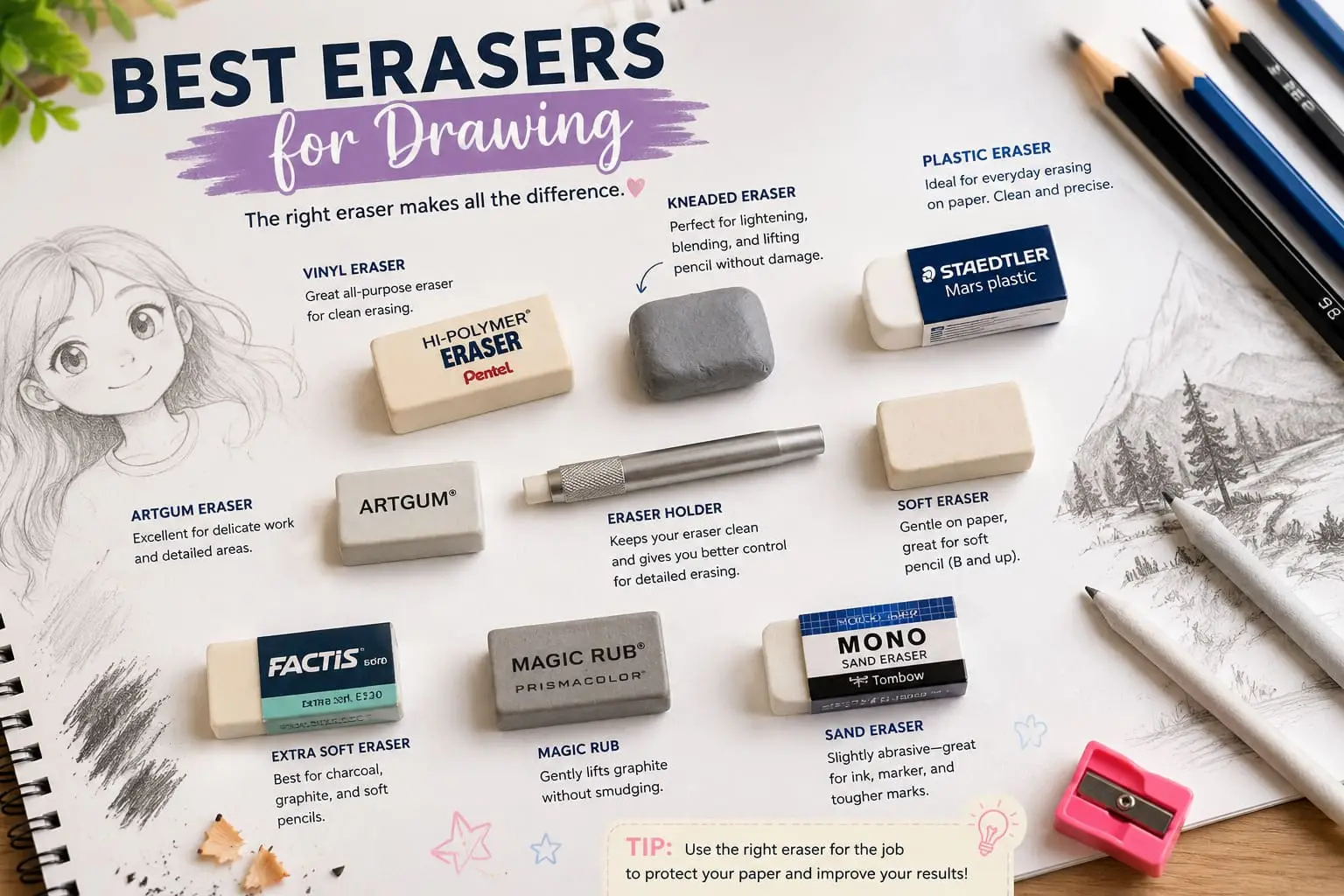
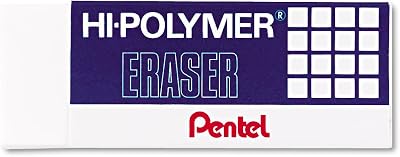
Best Erasers for Drawing: 10 Picks for Graphite, Charcoal & Detail Work. The best erasers for drawing, from kneaded and vinyl blocks to precision and electric picks for graphite, charcoal, highlights, and detail work.. Type: Buying guide. Category: Drawing. Tags: drawing-erasers, graphite-erasers, charcoal-erasers, kneaded-erasers, precision-erasers, electric-erasers, sketching-supplies, buying-guide, cluster-drawing-supplies.

Buying guide

Best Erasers for Drawing: 10 Picks for Graphite, Charcoal & Detail Work

Our recommendation

The best eraser for drawing depends on what you need to remove. Our top research pick for everyday graphite is the Pentel Hi-Polymer Block Eraser because its large latex-free block is designed to erase lead with light pressure while still giving you usable corners for smaller corrections. For charcoal and value lifting, choose the Faber-Castell Kneadable Eraser; for tiny highlights and edge cleanup, the Tombow MONO Zero's 2.3 mm round tip is the most precise manual option here. The Derwent Battery Operated Eraser is the specialist pick when you want motorized speed for small highlights, while Tombow MONO Dust Catch is useful when loose eraser debris is the problem you want to solve.

Quick picks

Top recommendations

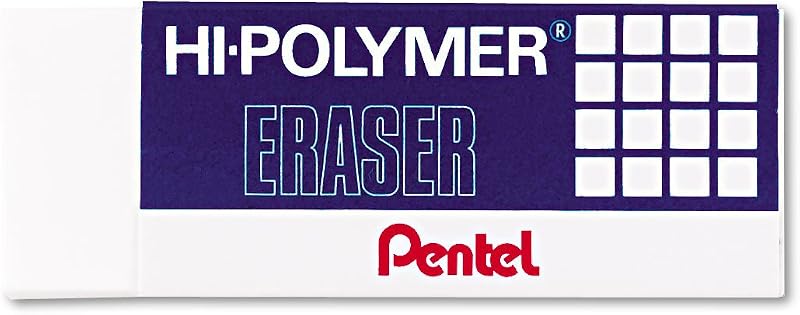
  1. 1Pentel Hi-Polymer Block Eraser, Large, Pack of 3 — Best overallA dependable large latex-free block eraser designed to remove pencil lead with light pressure and handle both corners and broad areas
  2. 2Faber-Castell Kneadable Eraser for Artists in Storage Case — Best for charcoalA soft moldable kneaded eraser that can be pinched into points or flattened for controlled value lifting
  3. 3Tombow MONO Zero Eraser and Refill Value Pack, Round 2.3 mm — Best manual detail eraserA refillable pen-style eraser with a 2.3 mm round tip for corrections too small for a normal block
  4. 4Derwent Battery Operated Eraser 2301931 — Best electric eraserA battery-powered artist eraser designed to remove media quickly from small localized areas
  5. 5Sakura SumoGrip Premium Block Eraser B80, 3-Pack — Best for heavy graphite cleanupA black foam block eraser designed to grab graphite particles and gather eraser waste into strands
  6. 6Tombow MONO Dust Catch Eraser 57334 — Best low-mess eraserA tacky polymer block designed to hold onto its own eraser residue instead of scattering crumbs around the drawing
  7. 7Tombow MONO Light Eraser 57333 — Best for delicate paperA firm light-touch block eraser designed to remove graphite without requiring as much pressure on the paper
  8. 8STAEDTLER Mars Plastic Vinyl Erasers 526 50, 2-Pack — Best classic vinyl eraserA German-made white vinyl eraser built around clean graphite removal with minimal crumbling
  9. 9Faber-Castell Eraser Pencils, 2-Pack — Best sharpenable detail eraserA wood-cased eraser you can sharpen like a pencil whenever you need a fresh narrow point
  10. 10General's Artist Gum Eraser 136EBP — Best traditional gum eraserA classic artist gum block intended for pencil marks and described for graphite, charcoal, and pastel use

Product comparison

ProductBest forWatch outPrice & shop
Pentel Hi-Polymer Block Eraser, Large, Pack of 3 (opens Amazon in a new tab)Pentel · ZEH10BP3-K6
Best overallResearch-based review
Everyday graphite sketching, broad corrections, and beginnersIts corners become rounded with use, so it cannot stay as precise as a dedicated pen-style or pencil-style detail eraser
Faber-Castell Kneadable Eraser for Artists in Storage Case (opens Amazon in a new tab)Faber-Castell · 127220 Kneadable Art Eraser
Best for charcoalResearch-based review
Lifting charcoal, soft graphite, pastel, and building highlights graduallyIt is better for lifting and lightening than for quickly scrubbing a broad dark graphite area back to clean white paper
Tombow MONO Zero Eraser and Refill Value Pack, Round 2.3 mm (opens Amazon in a new tab)Tombow · 57315 MONO Zero Round 2.3 mm Value Pack
Best manual detail eraserResearch-based review
Eye highlights, hair strands, tiny graphite corrections, and crisp edgesThe tiny tip is deliberately slow for large corrections, so this works best beside a normal block eraser rather than replacing one
Derwent Battery Operated Eraser 2301931 (opens Amazon in a new tab)Derwent · 2301931 Battery Operated Eraser
Best electric eraserResearch-based review
Fast pinpoint corrections and bright detail highlightsIt needs two AAA batteries and careful control; holding a spinning tip in one area too long can remove more than you intended
Sakura SumoGrip Premium Block Eraser B80, 3-Pack (opens Amazon in a new tab)Sakura · 50258 SumoGrip B80
Best for heavy graphite cleanupResearch-based review
Graphite sketchers who want a firm foam block that picks up fine particles from paper textureIt remains a block eraser, so even strong graphite pickup does not give it the micro-control of a 2.3 mm pen tip
Tombow MONO Dust Catch Eraser 57334 (opens Amazon in a new tab)Tombow · 57334 MONO Dust Catch
Best low-mess eraserResearch-based review
Sketchbooks and desks where loose eraser crumbs can smear graphite or clutter the pageIt improves cleanup rather than fine-detail control, so artists who draw tiny highlights will still want a precision eraser as a second tool
Tombow MONO Light Eraser 57333 (opens Amazon in a new tab)Tombow · 57333 MONO Light
Best for delicate paperResearch-based review
Light-pressure graphite correction on thinner or easily dented sketchbook paperIts block shape is still too broad for very thin highlight lines once the original corners have worn down
STAEDTLER Mars Plastic Vinyl Erasers 526 50, 2-Pack (opens Amazon in a new tab)STAEDTLER · 526 50BK2
Best classic vinyl eraserResearch-based review
Graphite drawing, drafting, and artists who prefer a firm traditional blockIt is a broad correction tool first; preserving a sharp corner is necessary if you want any meaningful detail control
Faber-Castell Eraser Pencils, 2-Pack (opens Amazon in a new tab)Faber-Castell · Perfection-Style Eraser Pencils, 2-Pack
Best sharpenable detail eraserResearch-based review
Fine highlight lines and controlled graphite or charcoal edge cleanupSharpening consumes both wood and eraser material, so it wears faster and creates more waste than a refillable mechanical detail eraser
General's Artist Gum Eraser 136EBP (opens Amazon in a new tab)GENERAL'S · 136EBP Artist Gum Eraser
Best traditional gum eraserResearch-based review
Broad cleanup, smudge removal, and artists who prefer a softer crumbly eraserThe traditional gum formula creates more crumbs, so it is the opposite of the low-mess Tombow Dust Catch

Selection and testing methodology

This is a research-based guide, not a hands-on eraser test. We compared 10 drawing erasers using current Amazon US product information checked on August 11, 2026, focusing on eraser type, intended drawing media, tip or block shape, whether the tool is refillable or powered, residue management, precision, and the practical job each product is designed to handle. We also prioritized live Amazon listings rather than discontinued collector items. KawaiiToons has not personally tested these exact erasers yet, so we do not publish invented rankings for erasing force, paper abrasion, graphite removal percentage, charcoal lift, residue quantity, or durability. Recommendations will remain labeled research-based until original side-by-side testing is added.

Detailed product sections

Best overallResearch-based review

Pentel Hi-Polymer Block Eraser, Large, Pack of 3 (opens Amazon in a new tab)

Pentel · ZEH10BP3-K6

A dependable large latex-free block eraser designed to remove pencil lead with light pressure and handle both corners and broad areas

Why it fits this guide

Pentel's Hi-Polymer is the easiest starting recommendation because it solves the most common drawing-erasing job without extra technique, batteries, or refills. The large block is built for graphite removal, while its rectangular shape gives you broad faces for clearing larger areas and fresh corners for smaller corrections.

Honest drawback

Its corners become rounded with use, so it cannot stay as precise as a dedicated pen-style or pencil-style detail eraser

Best forEveryday graphite sketching, broad corrections, and beginners

Pros

  • Designed to erase lead with very little pressure
  • Block format handles both broad areas and smaller corners
  • Three-pack is practical for regular sketching

Cons

  • Corners lose precision as the block wears
  • Not designed for pinpoint highlight work
Check price on Amazon (opens Amazon in a new tab)
Best for charcoalResearch-based review

Faber-Castell Kneadable Eraser for Artists in Storage Case (opens Amazon in a new tab)

Faber-Castell · 127220 Kneadable Art Eraser

A soft moldable kneaded eraser that can be pinched into points or flattened for controlled value lifting

Why it fits this guide

A kneaded eraser behaves differently from a block: instead of relying on repeated rubbing, you can dab, roll, press, and reshape it to lift drawing media selectively. Faber-Castell specifically positions this version for correcting and lightening charcoal, graphite, and pastel, and the included storage case is useful because kneaded erasers collect dust when left exposed.

Honest drawback

It is better for lifting and lightening than for quickly scrubbing a broad dark graphite area back to clean white paper

Best forLifting charcoal, soft graphite, pastel, and building highlights gradually

Pros

  • Made for charcoal, graphite, and pastel correction
  • Can be shaped for both broad lifting and small highlights
  • Reusable case protects it between drawing sessions

Cons

  • Slower than a firm block for complete removal
  • Needs regular kneading as it becomes loaded with drawing media
Check price on Amazon (opens Amazon in a new tab)
Best manual detail eraserResearch-based review

Tombow MONO Zero Eraser and Refill Value Pack, Round 2.3 mm (opens Amazon in a new tab)

Tombow · 57315 MONO Zero Round 2.3 mm Value Pack

A refillable pen-style eraser with a 2.3 mm round tip for corrections too small for a normal block

Why it fits this guide

The MONO Zero earns its place because its erased footprint is the feature. A 2.3 mm round tip can target a tiny patch of graphite without forcing you to carve a corner into a larger eraser, making it useful for reflected highlights, small negative spaces, whiskers, strands of hair, and clean edges around detailed forms.

Honest drawback

The tiny tip is deliberately slow for large corrections, so this works best beside a normal block eraser rather than replacing one

Best forEye highlights, hair strands, tiny graphite corrections, and crisp edges

Pros

  • 2.3 mm round precision tip
  • Refillable push-button pen-style body
  • Value pack includes replacement erasers

Cons

  • Inefficient for broad areas
  • Requires compatible refills over time
Check price on Amazon (opens Amazon in a new tab)
Best electric eraserResearch-based review

Derwent Battery Operated Eraser 2301931 (opens Amazon in a new tab)

Derwent · 2301931 Battery Operated Eraser

A battery-powered artist eraser designed to remove media quickly from small localized areas

Why it fits this guide

Derwent's powered eraser is the specialist choice when you want the tip to do the repetitive motion for you. The listing describes it as a precision tool for small areas and highlights, and it includes eight replaceable erasers. That makes it particularly relevant for detailed graphite work where you repeatedly pull small lights back out of a dark passage.

Honest drawback

It needs two AAA batteries and careful control; holding a spinning tip in one area too long can remove more than you intended

Best forFast pinpoint corrections and bright detail highlights

Pros

  • Motorized tip speeds up small corrections
  • Includes eight replacement erasers
  • Top-mounted button works for right- and left-handed users

Cons

  • Batteries are not included
  • More technique-sensitive than a manual eraser
Check price on Amazon (opens Amazon in a new tab)
Best for heavy graphite cleanupResearch-based review

Sakura SumoGrip Premium Block Eraser B80, 3-Pack (opens Amazon in a new tab)

Sakura · 50258 SumoGrip B80

A black foam block eraser designed to grab graphite particles and gather eraser waste into strands

Why it fits this guide

Sakura uses an open-cell foam structure in the SumoGrip B80 and markets it around graphite pickup with minimal pressure. That makes it a useful alternative to a standard white vinyl block when your drawings use soft, dark graphite and you want an eraser designed to collect fine particles from the paper surface.

Honest drawback

It remains a block eraser, so even strong graphite pickup does not give it the micro-control of a 2.3 mm pen tip

Best forGraphite sketchers who want a firm foam block that picks up fine particles from paper texture

Pros

  • Open-cell foam is designed to grab erased graphite
  • Black body stays visually cleaner during use
  • Erasure waste forms into strands for easier disposal

Cons

  • Limited precision once corners wear down
  • Three-pack may be excessive for occasional use
Check price on Amazon (opens Amazon in a new tab)
Best low-mess eraserResearch-based review

Tombow MONO Dust Catch Eraser 57334 (opens Amazon in a new tab)

Tombow · 57334 MONO Dust Catch

A tacky polymer block designed to hold onto its own eraser residue instead of scattering crumbs around the drawing

Why it fits this guide

Loose crumbs are more than a tidiness issue on a graphite drawing: brushing them away with your palm can drag graphite across clean paper. The MONO Dust Catch addresses that specific problem by using a tacky formula that makes eraser residue stick to the block as you work.

Honest drawback

It improves cleanup rather than fine-detail control, so artists who draw tiny highlights will still want a precision eraser as a second tool

Best forSketchbooks and desks where loose eraser crumbs can smear graphite or clutter the page

Pros

  • Residue is designed to stick to the eraser
  • Helps reduce loose crumbs around illustrations and technical drawings
  • Protective sleeve has rounded corners

Cons

  • Conventional block shape limits micro-detail work
  • Low-mess design is less valuable if you already use a dedicated drawing brush
Check price on Amazon (opens Amazon in a new tab)
Best for delicate paperResearch-based review

Tombow MONO Light Eraser 57333 (opens Amazon in a new tab)

Tombow · 57333 MONO Light

A firm light-touch block eraser designed to remove graphite without requiring as much pressure on the paper

Why it fits this guide

Paper condition matters when you plan to redraw over an erased area. The MONO Light is designed around light-pressure erasing, which makes it a logical pick for sketchbooks where you want to avoid unnecessary rubbing, indentation, or disruption of the paper surface while correcting graphite.

Honest drawback

Its block shape is still too broad for very thin highlight lines once the original corners have worn down

Best forLight-pressure graphite correction on thinner or easily dented sketchbook paper

Pros

  • Designed to erase with light pressure
  • Straightforward block needs no accessories
  • Useful when protecting delicate paper matters

Cons

  • Corners become blunt with use
  • Less suitable for charcoal lifting than a kneaded eraser
Check price on Amazon (opens Amazon in a new tab)
Best classic vinyl eraserResearch-based review

STAEDTLER Mars Plastic Vinyl Erasers 526 50, 2-Pack (opens Amazon in a new tab)

STAEDTLER · 526 50BK2

A German-made white vinyl eraser built around clean graphite removal with minimal crumbling

Why it fits this guide

STAEDTLER Mars Plastic is the conventional drafting-style choice in this guide. The current listing emphasizes precise graphite erasing, low crumbling, and a latex- and phthalate-free formula. It is a sensible alternative to Pentel for artists who prefer the feel and dimensions of a traditional full-size vinyl block.

Honest drawback

It is a broad correction tool first; preserving a sharp corner is necessary if you want any meaningful detail control

Best forGraphite drawing, drafting, and artists who prefer a firm traditional block

Pros

  • Designed for clean graphite removal
  • Minimal-crumbling positioning helps keep the workspace manageable
  • Latex- and phthalate-free

Cons

  • Broad block is not ideal for pinpoint highlights
  • Less versatile with charcoal than a kneaded eraser
Check price on Amazon (opens Amazon in a new tab)
Best sharpenable detail eraserResearch-based review

Faber-Castell Eraser Pencils, 2-Pack (opens Amazon in a new tab)

Faber-Castell · Perfection-Style Eraser Pencils, 2-Pack

A wood-cased eraser you can sharpen like a pencil whenever you need a fresh narrow point

Why it fits this guide

Eraser pencils are useful when you like the hand position of a normal drawing pencil but need an erasing point instead of graphite. This two-pack is listed for fine-point erasing and for black-lead pencil and charcoal, making it especially relevant for narrow highlight marks, textured fur, hair, and crisp corrections around detailed shapes.

Honest drawback

Sharpening consumes both wood and eraser material, so it wears faster and creates more waste than a refillable mechanical detail eraser

Best forFine highlight lines and controlled graphite or charcoal edge cleanup

Pros

  • Can be sharpened to a fresh point
  • Listing specifies black-lead pencil and charcoal use
  • Familiar pencil grip is easy to place accurately

Cons

  • Requires sharpening
  • More consumable waste than a refillable pen-style eraser
Check price on Amazon (opens Amazon in a new tab)
Best traditional gum eraserResearch-based review

General's Artist Gum Eraser 136EBP (opens Amazon in a new tab)

GENERAL'S · 136EBP Artist Gum Eraser

A classic artist gum block intended for pencil marks and described for graphite, charcoal, and pastel use

Why it fits this guide

General's Artist Gum gives you a deliberately different erasing behavior from dense vinyl or polymer blocks. Gum erasers crumble as they work, which carries loosened drawing material away from the paper. That can be useful for broad cleanup and smudges when pinpoint precision is not the goal.

Honest drawback

The traditional gum formula creates more crumbs, so it is the opposite of the low-mess Tombow Dust Catch

Best forBroad cleanup, smudge removal, and artists who prefer a softer crumbly eraser

Pros

  • Traditional artist gum formula
  • Product description covers graphite, charcoal, and pastel
  • Good fit for broad cleanup and smudge removal

Cons

  • Produces plenty of crumbs
  • Poor choice for tiny controlled highlights
Check price on Amazon (opens Amazon in a new tab)

How to choose

  • Match the eraser to the task. A polymer or vinyl block is the easiest general-purpose choice for graphite, while a kneaded eraser is better for lifting charcoal and building highlights gradually.
  • Use a precision eraser when the erased shape matters as much as the correction. Pen-style, pencil-style, and electric erasers are better for eye highlights, hair strands, narrow reflected light, and edge cleanup than a broad block.
  • Think about whether you want to erase completely or lift value. Kneaded erasers are especially useful for reducing tone without automatically taking an area back to clean white paper.
  • Protect the paper surface. Heavy rubbing can burnish, roughen, or dent sketchbook paper, particularly when working over soft graphite or on thinner sheets.
  • Consider cleanup. Traditional gum erasers can generate plenty of crumbs, while products such as Tombow MONO Dust Catch are specifically designed to keep residue attached to the eraser.

Common mistakes

  • Using one eraser type for every drawing problem instead of pairing a broad block with a kneaded or precision eraser.
  • Scrubbing aggressively at charcoal when gentle dabbing or lifting with a kneaded eraser would give more control.
  • Letting the corners of a block eraser round over and then expecting it to create thin highlight lines.
  • Holding an electric eraser in one place too long and removing more graphite or paper surface than intended.
  • Rubbing loose eraser crumbs across a graphite drawing with your hand instead of brushing them away cleanly.

FAQ

What is the best eraser for drawing?

For everyday graphite drawing, a quality polymer or vinyl block is the most useful first eraser because it can remove larger areas efficiently while still giving you corners for smaller corrections. Our top research pick is the Pentel Hi-Polymer Block Eraser. Most artists benefit from adding a kneaded eraser for tonal lifting and a precision eraser such as the Tombow MONO Zero when they start working on small highlights.

What eraser is best for charcoal drawing?

A kneaded eraser is usually the most versatile option for charcoal because it can be dabbed, rolled, pressed, or shaped to lift charcoal gradually instead of simply scrubbing a passage away. The Faber-Castell Kneadable Eraser is our charcoal-focused pick here. A sharpenable eraser pencil can then help with narrow light lines and edge cleanup.

What is the difference between a kneaded eraser and a normal eraser?

A normal block eraser is rubbed across the paper to remove graphite mechanically. A kneaded eraser is soft and moldable, so you can press or dab it into graphite, charcoal, or pastel to lift media and reduce value. It is especially useful for highlights and subtle corrections, while a firm block is generally faster for erasing a whole area.

Can an eraser damage drawing paper?

Yes. Repeated hard rubbing can roughen, polish, thin, or dent paper, especially on lightweight sketchbook sheets. Use the least pressure that works, brush debris away instead of rubbing it across the page, and stop if the paper surface begins to change. A light-touch eraser can be useful when the sheet is delicate.

What eraser is best for tiny highlights in graphite?

A precision eraser is much easier to control than a full-size block. The Tombow MONO Zero Round uses a 2.3 mm tip, while sharpenable eraser pencils can create an even narrower point depending on how they are sharpened. Electric erasers are another option when you want quick small highlights in dense graphite.

Are electric erasers worth it for drawing?

They can be useful if you frequently pull small highlights out of dark graphite or charcoal. The rotating tip handles the repetitive rubbing, which can make small corrections faster. They are less necessary for casual sketching, and they require a lighter touch because a powered tip can remove more material than intended if held in place.

Is a black eraser better than a white eraser?

Color alone does not determine erasing quality. Black erasers can look cleaner as they pick up graphite, and products such as Sakura SumoGrip use a black foam formulation designed for graphite pickup. White polymer and vinyl erasers remain excellent general-purpose choices. The eraser formula and shape matter more than color by itself.

What is a gum eraser used for in drawing?

A traditional gum eraser is useful for broad cleanup, pencil smudges, and general removal where fine precision is not required. Gum erasers tend to crumble as they work, which carries loosened material away from the surface. That behavior creates more debris than a dust-catching polymer eraser but is part of how the tool functions.

Should beginners buy more than one type of eraser?

Two erasers are enough for most beginners: a reliable block eraser for ordinary graphite corrections and a kneaded eraser for lifting shadows and creating soft highlights. Add a precision eraser only when your drawings begin to include tiny reflected lights, hair strands, eye details, or narrow negative spaces that a block cannot reach cleanly.

How do you keep eraser crumbs from smearing a graphite drawing?

Avoid sweeping crumbs away with the side of your hand because that can drag graphite across clean paper. Lift the page slightly, use a clean soft drawing brush, or choose an eraser designed to gather its own residue. Tombow MONO Dust Catch is specifically designed so eraser waste sticks to the eraser while you work.

Final recommendation

For most beginner graphite drawers, start with the Pentel Hi-Polymer Block Eraser because it covers the broadest everyday correction needs at a low cost. Add the Faber-Castell Kneadable Eraser if you work with charcoal, soft graphite, or tonal shading, because its moldable form is better suited to lifting and highlighting than a conventional block. For tiny controlled highlights, the Tombow MONO Zero 2.3 mm is the best manual precision pick, while the Derwent Battery Operated Eraser is worth considering when you want faster powered detail work. Choose the Sakura SumoGrip when graphite pickup is the priority, Tombow MONO Dust Catch when cleanup matters, Tombow MONO Light for light-pressure corrections on delicate paper, STAEDTLER Mars Plastic for a classic drafting-style block, Faber-Castell Eraser Pencils for sharpenable details, and General's Artist Gum when you prefer a traditional crumbly gum eraser for broad drawing cleanup.

Choosing the best erasers for drawing is not as simple as buying the whitest block in the stationery aisle. Graphite, charcoal, shading, highlights, edge cleanup, and tiny detail corrections all ask the eraser to do different jobs. A block eraser may be excellent at clearing construction lines but awkward for pulling one bright strand through a dark pencil drawing. A kneaded eraser can lift charcoal gently, yet it may feel slow when you want to erase half a sketch and start again.

That is why artists often keep more than one eraser within reach. The most useful beginner setup is usually a dependable polymer or vinyl block for normal graphite corrections, plus a kneaded eraser for lifting values and shaping highlights. As your drawings become more detailed, a pen-style, pencil-style, or electric eraser can add the precision that a worn block simply cannot provide.

This guide is research-based. We checked current Amazon listings for all 10 selections on August 11, 2026, focusing on each eraser’s design, intended media, shape, residue behavior, refill or power requirements, and practical drawing role. KawaiiToons has not personally tested these exact products side by side, so we do not claim measured erasing power, paper abrasion scores, residue weights, or durability results that we have not produced ourselves.

The short version: which drawing eraser should you choose?

If you mostly draw with graphite and want one reliable eraser to start with, choose the Pentel Hi-Polymer Block Eraser. It is a simple, large latex-free block designed to remove pencil lead with very little pressure. That combination makes it useful for ordinary sketch corrections, construction lines, and larger areas without forcing a beginner to learn a special technique first.

If charcoal, soft graphite, or tonal drawing is a major part of your work, add the Faber-Castell Kneadable Eraser. A kneaded eraser can be pressed and lifted rather than rubbed aggressively, making it better suited to softening shadows, pulling reflected light back into a dark passage, and cleaning edges without automatically erasing everything to white.

For tiny details, the Tombow MONO Zero Round 2.3 mm is the most targeted manual option in this shortlist. Its pen-style tip can reach eye highlights, thin gaps, strands of hair, whiskers, and small negative spaces that are difficult to isolate with a full-size eraser.

The Derwent Battery Operated Eraser is the specialist powered pick. It uses a small motorized eraser tip to make localized removal faster, which can be useful when repeatedly creating highlights in dense graphite. It is more tool than most beginners need, but it solves a real problem once you start doing highly rendered work.

Other picks solve narrower issues. Sakura SumoGrip focuses on graphite pickup, Tombow MONO Dust Catch focuses on keeping debris off the page, Tombow MONO Light is built around light-pressure erasing, STAEDTLER Mars Plastic is the classic drafting-style vinyl block, Faber-Castell Eraser Pencils can be sharpened for narrow detail work, and General’s Artist Gum gives you a traditional crumbly gum eraser for broad cleanup.

Why the best drawing eraser depends on the job

An eraser is not only a correction tool. In finished drawing, it can act like a second drawing instrument.

With graphite, you may use an eraser to remove construction lines, clean the white around a subject, sharpen the edge of a cast shadow, or cut a thin reflected highlight back into a dark region. Those tasks demand different amounts of force and precision.

With charcoal, the difference becomes even more obvious. Charcoal sits on and inside the paper texture, so erasing often means lifting value rather than restoring untouched paper. A kneaded eraser can press into a charcoal field and remove part of the tone, creating softer light transitions. A sharpenable or electric eraser can then carve a smaller, brighter accent into that softened area.

The practical lesson is that the word eraser hides several tool categories. Choosing by category first is more useful than choosing by brand first.

Block, kneaded, gum, precision, or electric?

Polymer and vinyl block erasers

Block erasers are the default choice for graphite because they are fast, simple, and easy to control over medium and large areas. Pentel Hi-Polymer, Sakura SumoGrip, Tombow MONO Dust Catch, Tombow MONO Light, and STAEDTLER Mars Plastic all fall into this broad family even though their formulas and design priorities differ.

The main advantage is surface area. A broad face can remove construction lines quickly, while a fresh rectangular corner can handle a smaller mark. The weakness appears as the eraser wears: those crisp corners become rounded, reducing the ability to erase a thin shape without touching nearby graphite.

For a beginner building a sketching kit, a good block eraser is still the first one to buy.

Kneaded erasers

Kneaded erasers are soft, moldable, and almost clay-like. They can be rolled, folded, pinched, flattened, or torn into smaller pieces. Instead of always rubbing back and forth, you can press them onto graphite or charcoal and lift pigment from the page.

That makes the Faber-Castell Kneadable Eraser especially useful for shading work. You can flatten it to lift a broad patch, form a wedge for an edge, or pinch it into a point for a smaller highlight.

Kneaded erasers are also convenient because they do not create the same normal pile of crumbs as a block eraser. As the surface becomes dirty, you fold and knead the used area back into the mass. The trade-off is that they gradually become loaded with drawing media and are not the fastest way to erase a large dense area completely.

Gum erasers

A traditional gum eraser such as General’s Artist Gum behaves almost opposite to a dust-catching polymer eraser. It is intentionally crumbly. As you rub, the eraser sheds material, and those crumbs help carry lifted graphite, charcoal, or pastel away.

That can be useful for broad cleaning and smudge removal, but it is messy. If you dislike eraser debris, a gum eraser is unlikely to be your favorite. If you like a softer traditional artist eraser and do not mind brushing crumbs away, it remains a useful option.

Pen-style and pencil-style precision erasers

Precision erasers exist because a normal block is physically too large for some marks.

The Tombow MONO Zero uses a 2.3 mm round refill in a pen-style body. You advance the eraser with a button and place it much like a mechanical pencil. It is a strong fit for tiny corrections and narrow highlights because the erased area stays localized.

Faber-Castell Eraser Pencils use a different approach. The eraser sits inside a wood casing and can be sharpened like a pencil. That gives you a point without a mechanical holder and can feel natural if you already spend most of your drawing session holding pencils.

The trade-off is speed. Both are detail tools, not broad correction tools.

Electric erasers

An electric eraser such as the Derwent Battery Operated Eraser spins a small eraser tip for you. Instead of rubbing your hand repeatedly, you position the tip and let the motor provide the movement.

This can be valuable for pulling small bright accents from dark graphite, cleaning tiny edges, and correcting detailed rendered work. It also introduces a new risk: the motor keeps removing material while the tip stays in contact. A heavy hand can over-erase quickly, especially on softer paper.

Electric erasers make the most sense after you already understand what a kneaded and manual precision eraser can do.

How we chose these erasers

We built this shortlist around drawing jobs, not simply Amazon popularity.

We compared the 10 products across six practical factors:

  1. Primary media. We looked for whether the current listing explicitly targets graphite, charcoal, pastel, or general pencil use.
  2. Erasing shape. Broad blocks, moldable kneaded erasers, gum blocks, pen-style tips, sharpenable pencils, and motorized tips all create different erased marks.
  3. Control. We considered whether the product is better for complete removal, gradual lifting, broad cleanup, or pinpoint detail.
  4. Paper interaction. Products designed to work with low pressure received credit for situations where protecting the paper surface matters.
  5. Residue behavior. Some erasers create crumbs, some gather waste into strands, and Tombow Dust Catch is designed to keep residue attached to the block.
  6. Consumables and maintenance. Refillable precision tools and powered erasers can be useful, but they also require replacement erasers or batteries that a simple block does not.

All 10 remain labeled research-based until we test them on the same paper with the same graphite and charcoal samples.

What to look for before buying an eraser for drawing

Start with the medium you use most

For ordinary HB to 6B graphite sketching, a good polymer or vinyl block is the safest first purchase. Pentel Hi-Polymer and STAEDTLER Mars Plastic are straightforward examples because they are designed around pencil marks and broad correction.

If you spend more time with charcoal or very soft graphite, prioritize a kneaded eraser. Charcoal drawing often depends on gradual value control rather than binary erase-or-not-erase decisions. A moldable eraser gives you more ways to lift without flattening every shadow into white paper.

Decide whether you need removal or lifting

This distinction matters more than beginners expect.

If a construction line is wrong, you probably want it gone. A firm block eraser handles that job efficiently.

If a cheek, cloud, fabric fold, or reflected-light area is slightly too dark, you may only want to reduce the value. A kneaded eraser can dab away some graphite or charcoal while leaving enough tone for a smooth transition.

That is why experienced drawers often keep both types on the desk.

Match precision to your drawing style

Look at the scale of the details you normally draw.

Portrait eyes, animal fur, strands of hair, jewelry highlights, texture, and small reflected lights are difficult to target with a blunt block. A Tombow MONO Zero or Faber-Castell Eraser Pencil can remove a much narrower mark.

If your work is loose gesture drawing or large sketchbook studies, that extra precision may not matter. Spend the money on better paper or pencils instead.

Think about paper pressure

Erasing is friction. Even a good eraser can alter paper if you press hard enough for long enough.

Thin sketchbook sheets can buckle or dent. Softer papers can become fuzzy. Smooth drawing paper can become polished in a heavily rubbed patch, which may change how graphite lays down when you redraw over it.

Use light pressure first. Let the eraser do the work. Products such as Tombow MONO Light are specifically designed around light-pressure correction, but technique still matters with every eraser here.

Plan for debris

Graphite and eraser crumbs can make a clean drawing dirty very quickly.

Do not automatically sweep crumbs away with your palm. That motion can smear loose graphite across untouched paper. A soft drawing brush is safer, and a residue-focused eraser such as Tombow MONO Dust Catch can reduce the amount of loose debris in the first place.

If you choose a traditional gum eraser, accept that crumbs are part of the experience and keep a brush nearby.

Common mistakes when erasing drawings

Rubbing harder instead of changing eraser type

If a kneaded eraser is not removing a construction line completely, that does not necessarily mean you should press harder. It may simply be the wrong tool for the job.

Switch to a polymer or vinyl block for full removal, then return to the kneaded eraser for tonal lifting. Matching the tool to the task protects the paper better than forcing one eraser to do everything.

Using a dirty kneaded eraser surface

A kneaded eraser works by picking up drawing media. If you repeatedly press the same dirty surface into a light area, you reduce its ability to lift and may transfer material back onto the page.

Fold, stretch, and knead the used surface inward so a cleaner section comes to the outside. Replace the eraser when it becomes uniformly loaded and stops behaving predictably.

Destroying the useful corners of a block

The corners of a block eraser are valuable precision tools. If you always attack broad areas with the same edge, you round that corner quickly.

Use the flat face for broad removal and reserve a fresh corner for smaller work. Once the whole block becomes rounded, add a precision eraser rather than trying to carve delicate highlights with a blunt shape.

Brushing debris away with your hand

This is one of the easiest ways to turn a clean graphite margin gray. Your hand presses eraser crumbs and graphite particles across the page at the same time.

Use a clean soft brush, tilt the sketchbook, or lift the debris carefully. Keeping the side of your drawing hand off finished graphite also helps reduce accidental smudging.

Treating an electric eraser like a drill

An electric eraser does not need heavy downward pressure. The motor already creates movement.

Touch the area briefly, check the result, then repeat if necessary. This is especially important on softer paper where prolonged contact can roughen the surface before you realize how much material has been removed.

Best eraser for graphite drawing

For most graphite artists, the best first eraser is still a quality block.

The Pentel Hi-Polymer Block Eraser gets our top research recommendation because its current product information is straightforward: it is latex-free, designed to remove lead with little pressure, and shaped to handle both large areas and corners. Beginners do not need special technique to understand it, and a three-pack keeps a spare available when one gets dirty or worn.

The STAEDTLER Mars Plastic is the classic alternative. Its current Amazon listing emphasizes clean graphite erasing with minimal crumbling, and its full-size vinyl format is familiar to artists, students, and drafters.

The Sakura SumoGrip B80 is more specialized. Sakura describes an open-cell foam structure intended to pick up micro-graphite particles from the paper surface. That makes it particularly interesting for dark graphite drawing, although we would need controlled swatches before claiming that it removes more graphite than Pentel or STAEDTLER in identical conditions.

Best erasers for charcoal and shading

Charcoal is where a kneaded eraser earns its space in the pencil case.

The Faber-Castell Kneadable Eraser is our research pick because it is specifically positioned for correcting and lightening charcoal, graphite, and pastel. You can press it into a dark passage to lift a cloud of light, roll it across a gradient to soften a value, or pinch a small point for a localized correction.

The General’s Artist Gum Eraser is another charcoal-capable option, but its purpose is different. It is a traditional gum block that crumbles as you erase. That makes it better for broad cleanup and smudges than for sculpting subtle tonal transitions.

For narrow charcoal highlights, the Faber-Castell Eraser Pencils add a third behavior: a sharpenable point. The current Amazon listing explicitly mentions black-lead pencils and charcoal, which is why the set makes sense for line-like highlights after the larger values are established.

Best erasers for detail work and highlights

Detail work is where shape beats raw erasing power.

The Tombow MONO Zero Round 2.3 mm is the most precise manual option here because its tip diameter is defined and refillable. Instead of hoping a block corner is still sharp enough, you always work with a narrow eraser column.

The Faber-Castell Eraser Pencil is more organic. Sharpen it to the point you want, use the edge of that point to pull a narrow highlight, then sharpen again when it dulls. It is especially appealing if you like drawing textures with pencil-like strokes.

The Derwent Battery Operated Eraser takes precision in a different direction. The tip is small, but the motor makes it fast. That can help when you want multiple bright accents across a dark graphite drawing. It is also the option most likely to punish an impatient heavy hand, which is why we see it as an upgrade rather than a first eraser.

When a low-mess eraser is worth buying

Eraser debris becomes annoying when you are working on detailed graphite because every crumb is something you need to remove without smearing the surrounding drawing.

Tombow MONO Dust Catch is built around that exact workflow problem. Its tacky polymer is designed so the residue sticks to the eraser as you erase. That can make a crowded desk or sketchbook easier to manage and reduce how often you need to brush the surface clean.

By contrast, General’s Artist Gum intentionally creates more crumbs as it works. Neither design is automatically better. The choice depends on whether you value a traditional gum feel or a cleaner working surface.

A simple eraser kit for beginners

You do not need all 10 products to start drawing.

A practical three-tool setup is enough for most people:

  1. Pentel Hi-Polymer Block Eraser for construction lines, mistakes, and broad graphite cleanup.
  2. Faber-Castell Kneadable Eraser for lifting shadows, charcoal, and soft highlights.
  3. Tombow MONO Zero 2.3 mm only when you begin drawing details that a normal block cannot isolate cleanly.

That combination covers broad removal, tonal lifting, and fine corrections without adding batteries or specialized equipment.

If you later find yourself repeatedly carving highlights into heavily shaded work, the Derwent Battery Operated Eraser becomes a more logical upgrade.

Our final recommendation

For most people searching for the best eraser for drawing, start with the job you perform most often rather than the most advanced tool.

Our top research pick is the Pentel Hi-Polymer Block Eraser because a dependable graphite block belongs in almost every beginner drawing kit. It is simple, inexpensive, and useful across ordinary sketch corrections without demanding a new technique.

The most important companion is the Faber-Castell Kneadable Eraser. If you shade with soft graphite, charcoal, or pastel, its ability to lift value and change shape gives you creative control a normal block cannot reproduce.

Add the Tombow MONO Zero 2.3 mm when detail becomes the limiting factor. Choose the Derwent Battery Operated Eraser if powered precision genuinely saves time in your drawing style. Pick Sakura SumoGrip for a graphite-focused foam block, Tombow MONO Dust Catch for residue control, Tombow MONO Light for gentle correction on delicate paper, STAEDTLER Mars Plastic for a traditional drafting block, Faber-Castell Eraser Pencils for sharpenable highlight lines, and General’s Artist Gum for classic gum-erasing behavior.

The next step for this guide should be a controlled test on identical paper. Once we have matched graphite swatches, charcoal value strips, debris measurements, close-up paper-surface photos, and repeatable precision tests, we can replace manufacturer-based distinctions with original KawaiiToons evidence and make the ranking more definitive.