
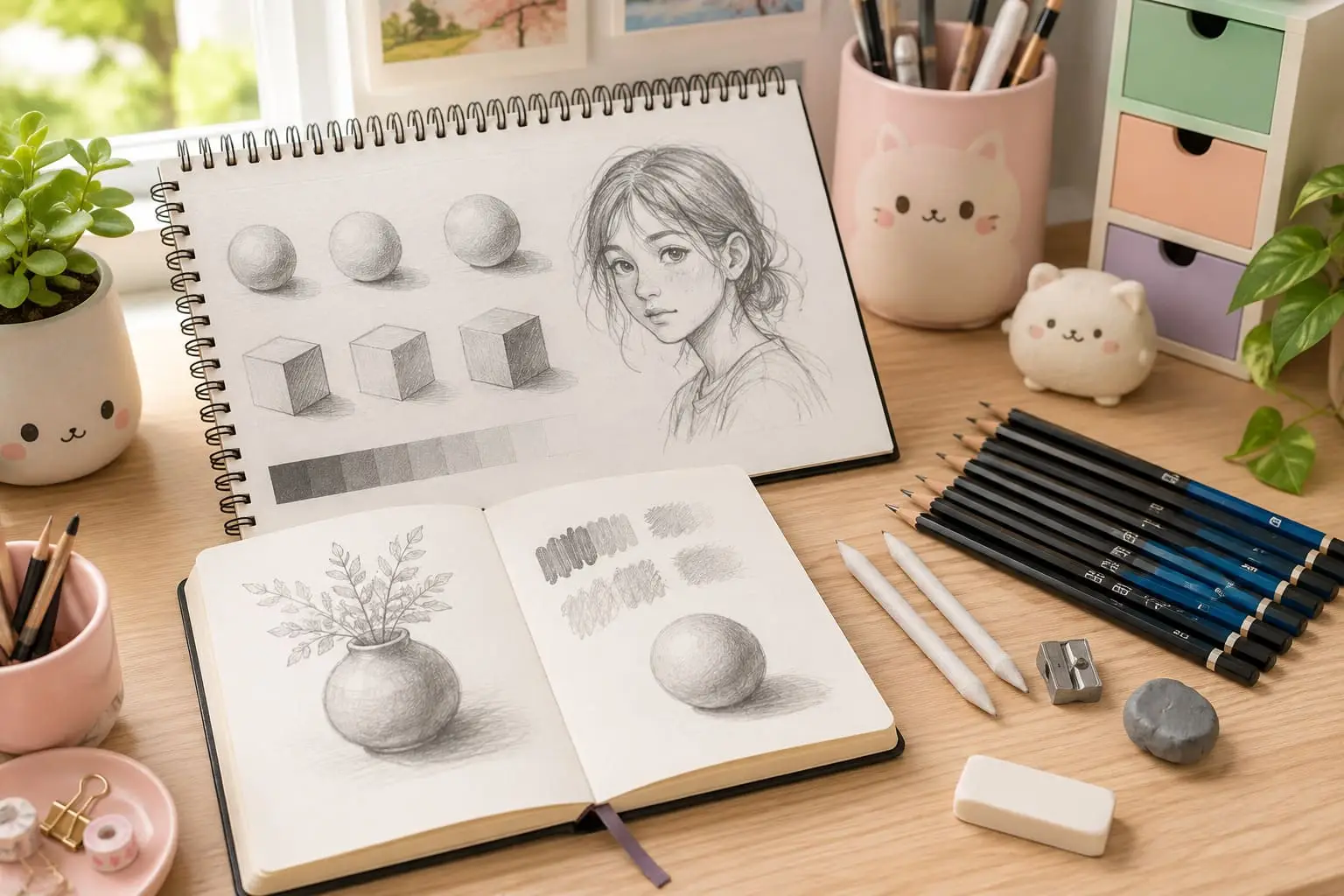
Quick picks
- Best budget practice padCanson XL Sketch Pad 9 x 12 (opens Amazon in a new tab)


Product comparison
| Product | Best for | Watch out | Price & shop |
|---|---|---|---|
| Strathmore 400 Series Sketch Pad 9 x 12 (opens Amazon in a new tab) Best overallResearch-based review | Graphite artists who want a versatile full-size pad for regular sketching and shading | The full-size wire-bound format is more cumbersome in a travel bag than a compact hardbound or journal-style sketchbook | |
| Canson XL Sketch Pad 9 x 12 (opens Amazon in a new tab) Best budget practice padResearch-based review | Beginners and students who expect to fill many pages while learning | The 50 lb / 74 gsm paper is lighter than the premium books here, so heavy erasing and aggressive layering should be approached more carefully | Budget-friendlyCheck price on Amazon (opens Amazon in a new tab) |
| Strathmore 300 Series Sketch Pad 9 x 12 (opens Amazon in a new tab) Best for beginnersResearch-based review | New artists who want a simple, familiar pad for line, form and shading drills | The 50 lb paper is lighter and less substantial than heavyweight premium sketchbook stock | Budget-friendlyCheck price on Amazon (opens Amazon in a new tab) |
| ARTEZA Sketch Book 9 x 12, 2 Pack (opens Amazon in a new tab) Best bulk valueResearch-based review | Frequent sketchers who want heavier practice paper and a large total sheet count | A two-pad bundle takes more storage and is excessive for someone who only sketches occasionally | |
| Stillman & Birn Alpha Series Softcover Sketchbook 5.5 x 8.5 (opens Amazon in a new tab) Best premium paperResearch-based review | Artists developing more finished graphite drawings on heavyweight paper | With only 48 sheets, it is much less economical for warm-ups and throwaway drills than a 100- or 125-sheet pad | |
| Moleskine Art Plus Sketchbook Large (opens Amazon in a new tab) Best hardbound sketchbookResearch-based review | Artists who want a durable visual journal rather than removable practice sheets | The bound format is inconvenient if you routinely remove drawings for framing, scanning, classroom critique, or portfolio assembly | |
| Pentalic Traveler Pocket Sketchbook 6 x 8 (opens Amazon in a new tab) Best for travelResearch-based review | Urban sketchers, commuters, and travelers who want pencil paper that fits easily in a day bag | The smaller page can feel restrictive for portraits, figure drawing, or any exercise that benefits from larger arm movement | |
| Strathmore 400 Series Toned Tan Sketch Pad 9 x 12 (opens Amazon in a new tab) Best toned paperResearch-based review | Portrait, figure, and value studies that use the paper as a middle tone | Graphite alone cannot produce a true light highlight on tan stock, so the full three-value workflow usually requires a separate white drawing tool | |
| Bachmore Sketchpad 9 x 12 (opens Amazon in a new tab) Best top-bound padResearch-based review | Left- and right-handed artists who dislike a side spiral under the drawing hand | Like other large flexible pads, it offers less protection in a backpack than a hardbound sketchbook | Budget-friendlyCheck price on Amazon (opens Amazon in a new tab) |
| Castle Art Supplies Sketchbook 9 x 12, 2 Pack (opens Amazon in a new tab) Best two-pack for learnersResearch-based review | Students who want a large supply of full-size paper for repeated graphite and dry-media exercises | The twin-pack format prioritizes quantity over portability and premium paper weight |
Detailed product sections
Strathmore 400 Series Sketch Pad 9 x 12 (opens Amazon in a new tab)
A 9 x 12 artist sketch pad with 100 sheets and a fine-textured surface designed to grip graphite and other dry media

Why it fits this guide
Strathmore's 400 Series is the most balanced pencil-focused option in this shortlist. The paper is presented for graphite and dry media with a fine texture, while the 9 x 12 format gives enough space for portraits, objects, value scales, perspective studies, and longer shading exercises. Wire binding and micro-perforation also make it practical when you want a page to stay flat during drawing and come out cleanly afterward.
Honest drawback
The full-size wire-bound format is more cumbersome in a travel bag than a compact hardbound or journal-style sketchbook
Best forGraphite artists who want a versatile full-size pad for regular sketching and shading
Pros
- Fine-textured sketch paper is designed to hold graphite and dry media
- 100 sheets support both practice and more developed studies
- Wire binding and removable pages suit desk-based drawing
Cons
- 9 x 12 size is less portable than a pocket sketchbook
- Sketch paper is primarily a dry-media choice rather than a heavy wet-media surface
Canson XL Sketch Pad 9 x 12 (opens Amazon in a new tab)
A 125-sheet 9 x 12 pad with 50 lb / 74 gsm medium-tooth acid-free paper for high-volume dry-media practice

Why it fits this guide
Canson XL Sketch is the easiest recommendation here for volume. One hundred twenty-five sheets make gesture drills, thumbnails, value scales, perspective exercises, and repeated attempts feel less precious, which is exactly what many beginners need. The medium-tooth paper is marketed for pencil and other dry media, giving it a clear purpose as a practice pad rather than a luxury journal.
Honest drawback
The 50 lb / 74 gsm paper is lighter than the premium books here, so heavy erasing and aggressive layering should be approached more carefully
Best forBeginners and students who expect to fill many pages while learning
Pros
- 125 sheets give beginners room to practice frequently
- Medium-tooth acid-free paper is intended for pencil and dry media
- 9 x 12 page size provides useful room for foundational exercises
Cons
- Light paper has less body than 100 to 165 gsm alternatives
- Large spiral-pad form is less convenient for everyday carry
Strathmore 300 Series Sketch Pad 9 x 12 (opens Amazon in a new tab)
A straightforward 100-sheet 9 x 12 wire-bound sketch pad built for regular student practice

Why it fits this guide
The 300 Series earns its place because beginners often benefit more from drawing a lot than from preserving every sheet. Its 100-sheet count and wire-bound format create a low-friction place to practice contours, boxes, cylinders, simple portraits, hatching, and value transitions before moving to more expensive paper.
Honest drawback
The 50 lb paper is lighter and less substantial than heavyweight premium sketchbook stock
Best forNew artists who want a simple, familiar pad for line, form and shading drills
Pros
- 100 sheets encourage frequent practice
- 9 x 12 format gives beginners useful drawing room
- Wire binding keeps the working page accessible
Cons
- 50 lb paper is relatively light
- Full-size pad is not ideal for carrying everywhere
ARTEZA Sketch Book 9 x 12, 2 Pack (opens Amazon in a new tab)
Two 9 x 12 spiral pads providing 200 total sheets of 68 lb / 100 gsm paper with perforated pages

Why it fits this guide
ARTEZA bridges the gap between very light student paper and pricier premium books. The two-pack supplies 200 total sheets, while the documented 68 lb / 100 gsm weight gives each page more body than many entry-level practice pads. Perforation also makes the bundle practical for artists who want to scan, share, pin up, or keep selected drawings separately.
Honest drawback
A two-pad bundle takes more storage and is excessive for someone who only sketches occasionally
Best forFrequent sketchers who want heavier practice paper and a large total sheet count
Pros
- 200 total sheets across two pads
- 68 lb / 100 gsm paper offers useful body for dry-media drawing
- Perforated pages are convenient for removing selected work
Cons
- Two full-size pads require more storage
- Spiral format is bulkier than a travel journal
Stillman & Birn Alpha Series Softcover Sketchbook 5.5 x 8.5 (opens Amazon in a new tab)
A compact 5.5 x 8.5 softcover sketchbook with 48 sheets of 150 gsm white medium-grain paper

Why it fits this guide
Stillman & Birn Alpha is the upgrade pick when the page itself matters more than maximum sheet count. Its 150 gsm paper is substantially heavier than typical student sketch stock, and the medium-grain surface gives graphite a purposeful drawing texture. The smaller format also keeps the book portable enough for studies while still feeling more substantial than a disposable practice pad.
Honest drawback
With only 48 sheets, it is much less economical for warm-ups and throwaway drills than a 100- or 125-sheet pad
Best forArtists developing more finished graphite drawings on heavyweight paper
Pros
- 150 gsm heavyweight paper
- Medium-grain white surface suits developed dry-media work
- Compact dimensions balance working space and portability
Cons
- Only 48 sheets
- Premium paper costs more per drawing than student pads
Moleskine Art Plus Sketchbook Large (opens Amazon in a new tab)
A 5 x 8.25 hard-cover sketchbook with 104 pages of 165 gsm paper for drawing, illustration, and dry media

Why it fits this guide
Moleskine makes the most sense when the sketchbook itself is part of the habit. Instead of tearing pages out, you keep drawings in sequence and build a visual record over time. The hard cover protects that record in a bag, while the 165 gsm paper gives graphite studies a more substantial base than ordinary notebook paper.
Honest drawback
The bound format is inconvenient if you routinely remove drawings for framing, scanning, classroom critique, or portfolio assembly
Best forArtists who want a durable visual journal rather than removable practice sheets
Pros
- 165 gsm paper gives the pages substantial body
- Hard cover protects drawings in storage and transit
- Compact large format works well as a long-term visual journal
Cons
- Pages are not optimized for clean tear-out
- Higher cost per page than basic spiral sketch pads
Pentalic Traveler Pocket Sketchbook 6 x 8 (opens Amazon in a new tab)
A 6 x 8 travel sketchbook with 160 pages of acid-free 74 lb / 120 gsm recycled paper, an elastic closure, and a ribbon marker

Why it fits this guide
The Pentalic Traveler is the pick for drawing somewhere other than a desk. Its 6 x 8 page is large enough for quick architecture, café, object, and people studies but still easier to pack than a 9 x 12 pad. The elastic closure, ribbon marker, rear pocket, and 120 gsm paper also make it feel like a purpose-built field journal rather than loose drawing paper.
Honest drawback
The smaller page can feel restrictive for portraits, figure drawing, or any exercise that benefits from larger arm movement
Best forUrban sketchers, commuters, and travelers who want pencil paper that fits easily in a day bag
Pros
- 160 pages of 74 lb / 120 gsm acid-free sketch paper
- Compact 6 x 8 format is practical for field work
- Elastic closure, ribbon marker, and rear pocket improve portability
Cons
- Less room for large studies
- Bound pages are harder to remove cleanly
Strathmore 400 Series Toned Tan Sketch Pad 9 x 12 (opens Amazon in a new tab)
A 50-sheet 9 x 12 pad of 80 lb tan toned paper designed for light and dark drawing media

Why it fits this guide
Toned Tan changes the way you build a drawing. Instead of beginning at the brightest value, the warm paper starts in the middle; graphite can push forms darker while a white pencil or chalk can pull selected highlights lighter. That makes the pad particularly useful for portraits, figure studies, fabric folds, still lifes, and value training.
Honest drawback
Graphite alone cannot produce a true light highlight on tan stock, so the full three-value workflow usually requires a separate white drawing tool
Best forPortrait, figure, and value studies that use the paper as a middle tone
Pros
- Tan ground provides an immediate middle value
- 80 lb paper is more substantial than lightweight practice stock
- 9 x 12 format gives value studies useful room
Cons
- Toned paper changes contrast and is not a direct substitute for white paper
- Bright highlights generally require white pencil, chalk, or similar media
Bachmore Sketchpad 9 x 12 (opens Amazon in a new tab)
A 9 x 12 top-spiral pad with 100 sheets of 68 lb / 100 gsm paper

Why it fits this guide
Bachmore solves a small ergonomic annoyance that can matter during long sessions. Because the spiral sits at the top, neither left- nor right-handed artists have to rest the drawing hand against side binding while working across the page. The 100 gsm paper and 100-sheet capacity also make it a practical general-purpose graphite pad.
Honest drawback
Like other large flexible pads, it offers less protection in a backpack than a hardbound sketchbook
Best forLeft- and right-handed artists who dislike a side spiral under the drawing hand
Pros
- Top binding stays away from either drawing hand
- 100 sheets provide strong practice capacity
- 68 lb / 100 gsm paper offers useful body for dry media
Cons
- Full-size pad is not pocket-friendly
- Flexible cover protects pages less than a hard cover
Castle Art Supplies Sketchbook 9 x 12, 2 Pack (opens Amazon in a new tab)
Two 9 x 12 spiral sketchbooks with 200 total sheets of 90 gsm cartridge paper

Why it fits this guide
Castle Art Supplies is another quantity-first option, but its appeal is specifically to learners who want enough paper for structured practice. Two 100-sheet pads give you room to separate exercises by topic, keep one at home and one in class, or simply draw often without rationing pages.
Honest drawback
The twin-pack format prioritizes quantity over portability and premium paper weight
Best forStudents who want a large supply of full-size paper for repeated graphite and dry-media exercises
Pros
- 200 total sheets across two full-size pads
- 90 gsm cartridge paper is marketed for graphite and other dry media
- Spiral binding and perforated pages support regular practice
Cons
- Two 9 x 12 pads take more storage
- Less portable and protective than a compact hardbound journal
Related guides
Best Charcoal Pencils for Drawing: 10 Picks for Beginners & Shading
The best charcoal pencils for drawing and shading, compared for beginners, portraits, soft gradients, white highlights, woodless coverage and value.
Best Drawing Kits for Beginners: 10 Starter Sets That Are Actually Useful
The best drawing kits for beginners, with useful graphite, charcoal, blending and sketching tools instead of filler. Compare 10 practical starter sets.
Best Drawing Pencils for Beginners: 10 Sets for Sketching & Shading
Compare the best drawing pencils for beginners for sketching and shading, including graphite grades, starter tools, accessories, and practical trade-offs.
Best Drawing Supplies for Kids: 10 Easy Starter Picks for Young Artists
Best drawing supplies for kids, from washable markers and crayons to pencils, paper and art kits. Compare age guidance, grip, mess and value.


