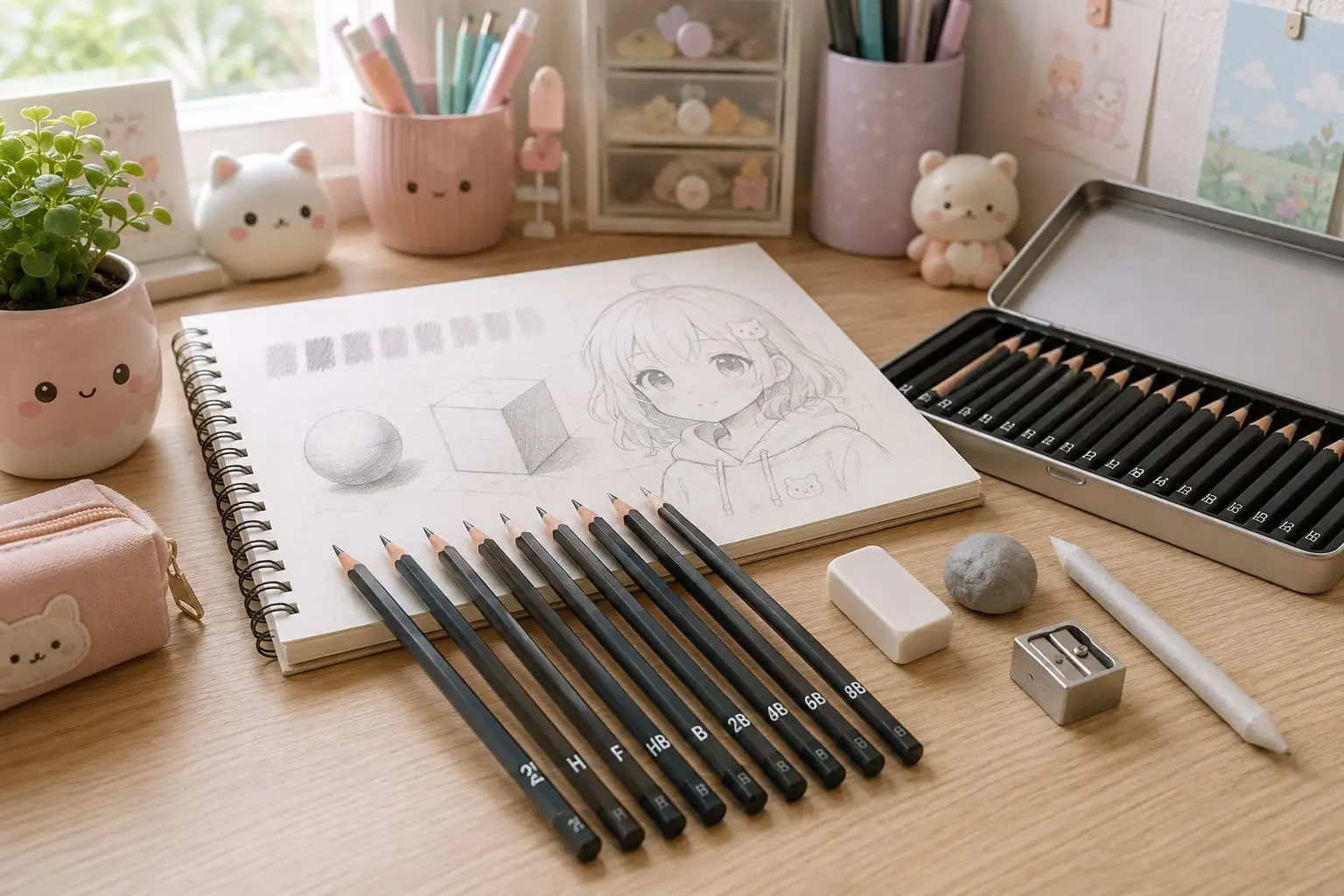
Best Drawing Pencils for Beginners: 10 Sets for Sketching & Shading. Compare the best drawing pencils for beginners for sketching and shading, including graphite grades, starter tools, accessories, and practical trade-offs.. Type: Buying guide. Category: Drawing. Tags: drawing-pencils, graphite-pencils, sketching-pencils, shading-pencils, beginner-drawing, art-supplies, buying-guide, cluster-drawing-supplies.

Buying guide

Best Drawing Pencils for Beginners: 10 Sets for Sketching & Shading

Our recommendation

The best drawing pencils for beginners should make it easy to practice light construction lines, mid-tone sketching, dark shadows, and smooth value changes without burying you in unnecessary tools. Our top research pick is the STAEDTLER Mars Lumograph 12 Pencil Set because its 6H-to-8B range covers the core grades a beginner can grow into and it includes a sharpener and eraser. Faber-Castell 9000 is our classic artist-grade-style pencil-only choice, KALOUR is the most complete beginner shading kit because it adds a kneaded eraser and blending stump, and MARKART is the budget pick for a wide graphite range. If you also want to experiment with charcoal, PANDAFLY is the more useful mixed-media starter kit, while Castle Art Supplies' 60-piece set is better reserved for beginners who genuinely want a larger studio-style collection.

Quick picks

Top recommendations

  1. 1STAEDTLER Mars Lumograph 12 Pencil Set — Best overallA 12-pencil 6H-to-8B graphite range with a sharpener and eraser that covers the main grades a beginner can grow into
  2. 2Faber-Castell 9000 Graphite Sketch Pencil Set — Best classic graphite setA focused 12-pencil set from 8B to 2H that gives beginners a practical progression from light sketching to dark graphite
  3. 3Tombow MONO Drawing Pencil Set, 12-Pack — Best compact starter setA compact 6B-to-4H MONO pencil set with an eraser and sharpener for straightforward beginner practice
  4. 4Derwent Graphic Drawing Pencils, Medium, 12 Count — Best for tonal studiesA focused 12-pencil medium graphite assortment in a metal tin for structured drawing exercises and tonal work
  5. 5Prismacolor Premier Graphite Drawing Set, 18 Piece — Best for exploring graphite techniquesAn 18-piece graphite set that goes beyond ordinary graded pencils with woodless and water-soluble options
  6. 6MARKART Professional Drawing Sketching Pencil Set, 14 Pieces — Best budget graphite setFourteen graphite pencils from 12B to 4H provide a broad beginner practice range at a budget price band
  7. 7KALOUR 18-Piece Professional Sketch Pencil Set — Best beginner shading kitFourteen graphite grades plus the core erasing and blending accessories used in beginner shading exercises
  8. 8Mr. Pen Sketch Pencils for Drawing, 14 Pack — Best low-cost pencil-only setA budget 14-pencil range from 6H to 10B for broad grade experimentation without extra accessories
  9. 9PANDAFLY Drawing Sketching Pencil Set, 22 Piece — Best graphite and charcoal starter kitA 22-piece kit combining eight graphite pencils with black and white charcoal, charcoal sticks, blending stumps, and erasers
  10. 10Castle Art Supplies 60 Piece Drawing & Sketching Set — Best complete drawing kitA large 60-piece case for beginners who expect to explore several drawing media rather than staying with graphite alone

Product comparison

ProductBest forWatch outPrice & shop
STAEDTLER Mars Lumograph 12 Pencil Set (opens Amazon in a new tab)STAEDTLER · Mars Lumograph 12-Pencil Set
Best overallResearch-based review
Beginners learning sketching, value scales, line control, and graphite shading with one balanced setSeveral hard grades may see only occasional use in casual sketching, and the set does not include a kneaded eraser or blending stump
Faber-Castell 9000 Graphite Sketch Pencil Set (opens Amazon in a new tab)Faber-Castell · Castell 9000 12-Pencil Set, 8B-2H
Best classic graphite setResearch-based review
Beginners who want an organized artist-style pencil tin with more emphasis on softer shading gradesThe set does not include the sharpener, eraser, or blending tools that a first-time buyer may still need
Tombow MONO Drawing Pencil Set, 12-Pack (opens Amazon in a new tab)Tombow · 51523 MONO Drawing Pencil Set
Best compact starter setResearch-based review
Beginners who want graded pencils plus the two basic tools needed to sharpen and correct a sketchThe range stops at 6B, so artists who like very soft graphite may eventually add an 8B or softer pencil
Derwent Graphic Drawing Pencils, Medium, 12 Count (opens Amazon in a new tab)Derwent · Graphic Medium 12, 34214
Best for tonal studiesResearch-based review
Beginners practicing value transitions, observational drawing, portraits, and controlled graphite layersYou still need to supply erasers, a sharpener, and any blending tools separately
Prismacolor Premier Graphite Drawing Set, 18 Piece (opens Amazon in a new tab)Prismacolor · Premier Graphite Drawing Set, 18 Piece
Best for exploring graphite techniquesResearch-based review
Beginners who want to try conventional pencils, broad woodless graphite, and water-soluble graphiteThe added graphite formats create more technique choices than a true first-day beginner needs
MARKART Professional Drawing Sketching Pencil Set, 14 Pieces (opens Amazon in a new tab)MARKART · 14-Piece Graphite Drawing Pencil Set, 12B-4H
Best budget graphite setResearch-based review
Beginners who want to experiment with a very wide grade range without spending much on a premium tinThe extreme grades can be more distracting than useful until you learn pressure control and layering with a smaller core group
KALOUR 18-Piece Professional Sketch Pencil Set (opens Amazon in a new tab)KALOUR · 18-Piece Sketching Kit with 14 Graphite Pencils
Best beginner shading kitResearch-based review
New artists who need pencils, a kneaded eraser, a vinyl eraser, a sharpener, and a blending stump in one purchaseThe 5H-to-14B range is much wider than a beginner needs for most drawings, and KawaiiToons has not yet tested the accessory quality side by side
Mr. Pen Sketch Pencils for Drawing, 14 Pack (opens Amazon in a new tab)Mr. Pen · 14-Pack Graphite Sketch Pencils, 6H-10B
Best low-cost pencil-only setResearch-based review
First-time sketchers who want to learn the difference between H, HB, and B pencils before buying premium suppliesThe base set does not include a sharpener, kneaded eraser, or blending stump, so a completely new artist may need separate accessories
PANDAFLY Drawing Sketching Pencil Set, 22 Piece (opens Amazon in a new tab)PANDAFLY · 22-Piece Pro Art Pencil Kit
Best graphite and charcoal starter kitResearch-based review
Beginners who want to compare clean graphite sketching with darker, more expressive charcoal techniquesCharcoal adds smudging, cleanup, and technique complexity, so the kit is less focused for someone who only wants graphite fundamentals
Castle Art Supplies 60 Piece Drawing & Sketching Set (opens Amazon in a new tab)Castle Art Supplies · 60 Piece Drawing & Sketching Set
Best complete drawing kitResearch-based review
Committed beginners who want one organized case for graphite, charcoal, pastel, water-soluble pencils, and related sketching toolsThe premium price and 60-piece variety are excessive if your immediate goal is simply to learn basic pencil sketching and shading

Selection and testing methodology

This is a research-based guide, not a hands-on pencil ranking. We compared 10 beginner drawing-pencil sets using current Amazon US product information checked on August 11, 2026, focusing on graphite grade range, whether the set is pencil-only or includes useful beginner tools, the balance of hard and soft grades, included erasers and sharpeners, blending accessories, mixed-media extras, storage, and the practical learning value for sketching and shading. KawaiiToons has not personally tested these exact sets yet, so we do not publish invented smoothness scores, measured darkness values, point-retention tests, breakage rates, erasability rankings, or live prices. All recommendations remain labeled research-based until original side-by-side testing is completed.

Detailed product sections

Best overallResearch-based review

STAEDTLER Mars Lumograph 12 Pencil Set (opens Amazon in a new tab)

STAEDTLER · Mars Lumograph 12-Pencil Set

A 12-pencil 6H-to-8B graphite range with a sharpener and eraser that covers the main grades a beginner can grow into

Why it fits this guide

STAEDTLER is the most balanced starting point in this shortlist because the set spans hard construction grades, flexible mid-range pencils, and soft pencils for darker shading without turning into a mixed-media toolbox. A beginner can practice with HB, 2B, 4B, and 6B first, then bring in the harder and softer grades when a drawing actually calls for them.

Honest drawback

Several hard grades may see only occasional use in casual sketching, and the set does not include a kneaded eraser or blending stump

Best forBeginners learning sketching, value scales, line control, and graphite shading with one balanced set

Pros

  • Broad 6H-to-8B range supports both sketching and shading practice
  • Includes a sharpener and eraser for an easy starter setup
  • Pencil-focused assortment is simpler to learn than a large mixed-media kit

Cons

  • Several hard grades may feel redundant for casual sketching
  • No kneaded eraser or blending stump included
Check price on Amazon (opens Amazon in a new tab)
Best classic graphite setResearch-based review

Faber-Castell 9000 Graphite Sketch Pencil Set (opens Amazon in a new tab)

Faber-Castell · Castell 9000 12-Pencil Set, 8B-2H

A focused 12-pencil set from 8B to 2H that gives beginners a practical progression from light sketching to dark graphite

Why it fits this guide

Faber-Castell 9000 works well for learners who would rather buy a clean pencil set than a case full of accessories. The 8B-to-2H range concentrates on grades that suit observational drawing, portraits, value studies, and general sketching, while the tin keeps each hardness easy to find and compare.

Honest drawback

The set does not include the sharpener, eraser, or blending tools that a first-time buyer may still need

Best forBeginners who want an organized artist-style pencil tin with more emphasis on softer shading grades

Pros

  • Useful 8B-to-2H range for value studies and general drawing
  • Metal tin keeps grades organized
  • Pencil-only format avoids unnecessary beginner clutter

Cons

  • Core set does not include a sharpener or eraser
  • Fewer very hard grades than broader technical graphite sets
Check price on Amazon (opens Amazon in a new tab)
Best compact starter setResearch-based review

Tombow MONO Drawing Pencil Set, 12-Pack (opens Amazon in a new tab)

Tombow · 51523 MONO Drawing Pencil Set

A compact 6B-to-4H MONO pencil set with an eraser and sharpener for straightforward beginner practice

Why it fits this guide

Tombow keeps the setup small enough to understand while still covering the hard-to-soft range needed for construction lines, contour work, middle values, and dark shading. The included eraser and sharpener also remove two small purchases from a first beginner setup.

Honest drawback

The range stops at 6B, so artists who like very soft graphite may eventually add an 8B or softer pencil

Best forBeginners who want graded pencils plus the two basic tools needed to sharpen and correct a sketch

Pros

  • 6B-to-4H range covers common beginner sketching needs
  • Includes an eraser and sharpener
  • Compact set is easy to swatch and learn

Cons

  • Does not extend into the softest 8B-to-14B grades
  • No kneaded eraser or blending stump included
Check price on Amazon (opens Amazon in a new tab)
Best for tonal studiesResearch-based review

Derwent Graphic Drawing Pencils, Medium, 12 Count (opens Amazon in a new tab)

Derwent · Graphic Medium 12, 34214

A focused 12-pencil medium graphite assortment in a metal tin for structured drawing exercises and tonal work

Why it fits this guide

Derwent Graphic Medium is appealing when the goal is to learn graphite as a drawing medium rather than collect accessories. The organized tin makes it easy to compare grades, build a value scale, and deliberately choose a harder or softer pencil as the drawing develops.

Honest drawback

You still need to supply erasers, a sharpener, and any blending tools separately

Best forBeginners practicing value transitions, observational drawing, portraits, and controlled graphite layers

Pros

  • Focused graphite assortment suits value scales and observational drawing
  • Hexagonal barrels are practical for controlled desk work
  • Metal tin makes grade organization simple

Cons

  • Does not provide a complete beginner accessory bundle
  • Mixed-media beginners will need separate charcoal or specialty tools
Check price on Amazon (opens Amazon in a new tab)
Best for exploring graphite techniquesResearch-based review

Prismacolor Premier Graphite Drawing Set, 18 Piece (opens Amazon in a new tab)

Prismacolor · Premier Graphite Drawing Set, 18 Piece

An 18-piece graphite set that goes beyond ordinary graded pencils with woodless and water-soluble options

Why it fits this guide

Prismacolor is the more experimental graphite choice here. In addition to graded pencils, the set introduces woodless graphite for broader marks and water-soluble graphite for techniques that can be altered with water. That makes it useful for a beginner who already knows they want to explore more than standard pencil shading.

Honest drawback

The added graphite formats create more technique choices than a true first-day beginner needs

Best forBeginners who want to try conventional pencils, broad woodless graphite, and water-soluble graphite

Pros

  • Mixes conventional, woodless, and water-soluble graphite tools
  • Includes sharpening and point-maintenance accessories
  • Gives a beginner room to explore broad marks and wet graphite effects

Cons

  • More complex than a simple graded-pencil tin
  • Less direct for learning grade-by-grade differences alone
Check price on Amazon (opens Amazon in a new tab)
Best budget graphite setResearch-based review

MARKART Professional Drawing Sketching Pencil Set, 14 Pieces (opens Amazon in a new tab)

MARKART · 14-Piece Graphite Drawing Pencil Set, 12B-4H

Fourteen graphite pencils from 12B to 4H provide a broad beginner practice range at a budget price band

Why it fits this guide

MARKART gives a new sketcher many hardness choices without turning the purchase into a large accessory kit. The 12B-to-4H range is wider than most beginners strictly need, but it is useful if you want to swatch the full progression and discover which four or five grades fit your own drawing style.

Honest drawback

The extreme grades can be more distracting than useful until you learn pressure control and layering with a smaller core group

Best forBeginners who want to experiment with a very wide grade range without spending much on a premium tin

Pros

  • Wide 12B-to-4H range for experimenting with graphite darkness
  • Budget price band is approachable for first-time buyers
  • Pencil-only format keeps the purchase focused on drawing basics

Cons

  • Several extreme grades may be used infrequently
  • No eraser, sharpener, blending stump, or case included
Check price on Amazon (opens Amazon in a new tab)
Best beginner shading kitResearch-based review

KALOUR 18-Piece Professional Sketch Pencil Set (opens Amazon in a new tab)

KALOUR · 18-Piece Sketching Kit with 14 Graphite Pencils

Fourteen graphite grades plus the core erasing and blending accessories used in beginner shading exercises

Why it fits this guide

KALOUR earns the starter-kit spot because its extra pieces directly support graphite practice rather than simply inflating the item count. A kneaded eraser can lift graphite for highlights, the vinyl eraser handles ordinary corrections, the blending stump gives you a clean tool for soft transitions, and the sharpener keeps points usable.

Honest drawback

The 5H-to-14B range is much wider than a beginner needs for most drawings, and KawaiiToons has not yet tested the accessory quality side by side

Best forNew artists who need pencils, a kneaded eraser, a vinyl eraser, a sharpener, and a blending stump in one purchase

Pros

  • Includes 14 graphite pencils spanning hard through very soft grades
  • Kneaded and vinyl erasers support different correction and highlight techniques
  • Blending stump and sharpener create a practical first shading kit

Cons

  • Extreme grades increase complexity for a new artist
  • Accessory durability remains untested by KawaiiToons
Check price on Amazon (opens Amazon in a new tab)
Best low-cost pencil-only setResearch-based review

Mr. Pen Sketch Pencils for Drawing, 14 Pack (opens Amazon in a new tab)

Mr. Pen · 14-Pack Graphite Sketch Pencils, 6H-10B

A budget 14-pencil range from 6H to 10B for broad grade experimentation without extra accessories

Why it fits this guide

Mr. Pen is a straightforward way to learn what the hardness scale means in practice. You can build a swatch chart, compare point behavior and darkness, and identify the grades you actually reach for before spending more on individual artist pencils or a premium tin.

Honest drawback

The base set does not include a sharpener, kneaded eraser, or blending stump, so a completely new artist may need separate accessories

Best forFirst-time sketchers who want to learn the difference between H, HB, and B pencils before buying premium supplies

Pros

  • Fourteen grades span 6H through 10B
  • Budget price band is suitable for experimentation
  • Pencil-only set makes hardness comparisons easy

Cons

  • No core shading accessories included
  • Hardest and softest grades may see limited everyday use
Check price on Amazon (opens Amazon in a new tab)
Best graphite and charcoal starter kitResearch-based review

PANDAFLY Drawing Sketching Pencil Set, 22 Piece (opens Amazon in a new tab)

PANDAFLY · 22-Piece Pro Art Pencil Kit

A 22-piece kit combining eight graphite pencils with black and white charcoal, charcoal sticks, blending stumps, and erasers

Why it fits this guide

PANDAFLY is a better fit than a pure graphite tin when you already know you want to try charcoal. The kit keeps enough graphite for normal sketching but adds pencils and sticks for broader, darker work, plus the blending and erasing tools needed to experiment with each medium.

Honest drawback

Charcoal adds smudging, cleanup, and technique complexity, so the kit is less focused for someone who only wants graphite fundamentals

Best forBeginners who want to compare clean graphite sketching with darker, more expressive charcoal techniques

Pros

  • Includes graphite pencils plus black and white charcoal tools
  • Blending stumps and two eraser types support shading practice
  • Lets beginners compare two major monochrome drawing media

Cons

  • More complex and messier than a graphite-only starter set
  • Smaller dedicated graphite selection than the 12- and 14-pencil sets here
Check price on Amazon (opens Amazon in a new tab)
Best complete drawing kitResearch-based review

Castle Art Supplies 60 Piece Drawing & Sketching Set (opens Amazon in a new tab)

Castle Art Supplies · 60 Piece Drawing & Sketching Set

A large 60-piece case for beginners who expect to explore several drawing media rather than staying with graphite alone

Why it fits this guide

Castle Art Supplies is the broadest creative kit in this guide. It can reduce the number of separate early purchases for a learner who already wants to move between graphite, charcoal, pastel, water-soluble tools, and other dry-media techniques, and the carry case helps keep the collection together.

Honest drawback

The premium price and 60-piece variety are excessive if your immediate goal is simply to learn basic pencil sketching and shading

Best forCommitted beginners who want one organized case for graphite, charcoal, pastel, water-soluble pencils, and related sketching tools

Pros

  • Large mixed drawing set supports several sketching media
  • Carry case keeps a broad tool collection organized
  • Useful for beginners who know they want to explore beyond graphite

Cons

  • Premium price band is harder to justify for casual first-time use
  • Many included tools go beyond the needs of a basic graphite course
Check price on Amazon (opens Amazon in a new tab)

How to choose

  • Start with the grades you will actually use. HB, 2B, 4B, and 6B cover a large share of beginner sketching and shading practice, while a harder H or 2H pencil is useful for light construction lines.
  • Do not assume a 14B pencil automatically makes a set better. Very soft grades are useful for dark accents, but pressure control, layering, paper texture, and observation matter more than owning the softest label available.
  • Choose a pencil-only set if you already own a sharpener and eraser. Choose a starter kit if a kneaded eraser, blending stump, or storage case would otherwise be a separate purchase.
  • Keep graphite and charcoal separate in your mind. Charcoal can make darker, broader, more easily smudged marks, but it adds a different handling style that may distract from basic graphite lessons.
  • Prioritize a manageable grade progression over a giant accessory count. A small set you can swatch, label, and understand is often more useful than a 50-piece case filled with unfamiliar media.
  • Plan to test pencils on the paper you actually use. Tooth, smoothness, thickness, and surface sizing affect how graphite layers, erases, blends, and reflects light.

Common mistakes

  • Buying the largest grade range and then trying to use every pencil in every drawing instead of learning pressure and layering with a smaller core set.
  • Pressing hard with HB or 2B to force a dark value, which can dent the paper and make later blending or erasing harder.
  • Smudging graphite with a fingertip and transferring skin oils to the page when a clean blending stump, tissue, or deliberate hatching would give more control.
  • Using very hard pencils for repeated heavy shading, which can create shiny or indented areas instead of a clean dark value.
  • Choosing a huge mixed-media kit when the real goal is simply to learn line, shape, proportion, value, and basic graphite shading.

FAQ

What drawing pencils should a beginner start with?

A beginner can do a surprising amount with just HB, 2B, 4B, and 6B. HB works for general sketching and light structure, 2B and 4B cover a useful middle-to-dark range, and 6B helps with deeper shadows. Adding H or 2H gives you a lighter construction pencil. Larger 12- or 14-pencil sets are useful when you want to learn the full hardness progression, but you do not need every grade to begin drawing.

What is the best pencil grade for sketching?

HB or 2B is the most practical starting point for general sketching because each can make both lighter and darker marks by changing pressure. Use H or 2H when you want very light construction lines and move to 4B or 6B when you need softer, darker shading. The best grade depends on the paper, your hand pressure, and the amount of contrast in the drawing.

Are H pencils or B pencils darker?

B pencils are generally softer and capable of darker graphite marks, while H pencils are harder and typically make lighter, finer marks. HB sits between the two families. A higher number increases the direction of the grade: 6B is softer than 2B, while 4H is harder than 2H.

What pencil is best for shading?

2B, 4B, and 6B are a useful beginner shading trio. A 2B can establish middle values, 4B can deepen form shadows, and 6B can push selected dark accents. You can still create several values with one pencil by changing pressure and layering, so technique matters more than constantly switching grades.

Do beginners need 10B, 12B, or 14B pencils?

No. Very soft pencils can be useful for dark accents and broad expressive shading, but they are not required to learn drawing. Most beginner exercises can be completed with HB through 6B plus one harder pencil. If a set includes 10B, 12B, or 14B, treat those grades as optional tools to explore rather than a reason to press every drawing toward maximum darkness.

Is a pencil set or a drawing kit better for beginners?

Choose a pencil set if you already own a good sharpener and eraser and want to focus on graphite fundamentals. Choose a starter kit if it adds tools you will genuinely use, especially a kneaded eraser, vinyl eraser, blending stump, or useful storage. Avoid judging value only by piece count because a large kit can include media that do not help your current lessons.

Do I need a blending stump for pencil shading?

No. You can build excellent shading with hatching, cross-hatching, controlled layering, and careful pencil pressure. A blending stump is useful when you want smoother transitions without rubbing the drawing directly with your finger. It should be treated as one technique rather than the default way to make every shaded area smooth.

What is a kneaded eraser used for in drawing?

A kneaded eraser is useful for lifting graphite gradually, creating highlights, softening an area, and correcting without always removing a hard-edged block of tone. It is especially helpful in portraits, spheres, reflective objects, and other drawings where highlights are shaped rather than simply erased cleanly.

Is graphite or charcoal better for a beginner?

Graphite is usually the simpler place to start because it is familiar, easy to sharpen, and available in a clear hardness scale. Charcoal can create broad, dark, expressive marks quickly, but it smudges more easily and behaves differently on paper. Beginners interested in both can start with graphite fundamentals and add charcoal once they are comfortable controlling value and edges.

How many drawing pencils does a beginner really need?

Four to six well-chosen grades are enough to begin. A set of 12 or 14 pencils is useful mainly because it lets you compare a wider hardness range and grow into new techniques. Owning more grades does not automatically improve a drawing; observation, proportion, edge control, pressure, and value relationships matter more.

Final recommendation

For most beginners, the STAEDTLER Mars Lumograph 12 Pencil Set is the strongest all-around research pick because its 6H-to-8B range covers light sketching through dark shading and the included sharpener and eraser keep the setup simple. Choose Faber-Castell 9000 if you want a classic pencil-focused tin with an 8B-to-2H range, Tombow MONO for a compact 6B-to-4H set with basic accessories, and Derwent Graphic Medium for controlled graphite studies in an organized tin. MARKART and Mr. Pen are the budget choices for experimenting with many grades. KALOUR is the better beginner kit when you still need a kneaded eraser, vinyl eraser, sharpener, and blending stump. Prismacolor Premier is more exploratory because it adds woodless and water-soluble graphite, while PANDAFLY is the better route into graphite plus charcoal. Castle Art Supplies' 60-piece case offers the broadest media selection here, but its higher price and complexity make more sense after you know you want to explore beyond basic graphite.

Choosing the best drawing pencils for beginners is less about finding the biggest box and more about learning what a few different graphite grades can do. A beginner needs pencils that make light construction lines, flexible mid-tones, and darker shadows without forcing every sketch into a complicated 40-piece art kit.

That is why this guide focuses first on graphite grade range, useful beginner accessories, and learning value. A pencil labeled HB can handle general sketching. A 2B or 4B helps you build richer shadows. A 6B can push darker accents. An H or 2H can keep early construction lines light. Once you understand those differences, a larger set becomes useful because you know why you are reaching for a particular grade rather than simply following the number printed on the barrel.

The same principle applies to accessories. A kneaded eraser can be genuinely useful for lifting highlights. A blending stump can help create smooth transitions. A sharpener is essential. But a beginner does not automatically become better equipped because a case contains 50 or 60 pieces. Extra charcoal, pastel, water-soluble pencils, and specialty tools only add value when you want to learn those media.

This guide is research-based. We checked current Amazon US product information for all 10 selections on August 11, 2026, but KawaiiToons has not personally tested these exact pencil sets yet. We therefore do not publish invented smoothness rankings, measured darkness scores, core-breakage tests, point-retention results, or erasability claims.

The short version: which drawing pencils should a beginner choose?

For most beginners, start with the STAEDTLER Mars Lumograph 12 Pencil Set. Its 6H-to-8B range is broad enough to cover light construction, normal sketching, layered shading, and darker finishing values, while the included eraser and sharpener keep the setup simple. You do not need to use all 12 grades immediately. Start with HB, 2B, 4B, and 6B, then add H or 2H for lighter lines and 8B when you want a softer dark.

If you prefer a classic artist-style pencil tin, the Faber-Castell 9000 Graphite Sketch Pencil Set is the cleanest alternative. Its 8B-to-2H range puts more emphasis on the softer grades beginners commonly use for drawing and shading rather than filling the case with many very hard pencils.

The Tombow MONO 12-Pack is another compact choice, especially if you want a 6B-to-4H range with a basic eraser and sharpener already included. Derwent Graphic Medium 12 is the more deliberate tonal-study choice for learners who want a focused graphite tin and plan to buy their preferred erasers and sharpener separately.

For price-sensitive buyers, MARKART’s 14-piece graphite set and Mr. Pen’s 14-pack let you experiment with a wide hardness range without committing to a premium set. They make the most sense when you already own basic accessories.

If you need those accessories, the KALOUR 18-piece set is our beginner shading-kit pick because it adds a kneaded eraser, vinyl eraser, sharpener, and blending stump to 14 graphite pencils. Prismacolor Premier’s 18-piece graphite set is more experimental, adding woodless and water-soluble graphite techniques.

For mixed media, PANDAFLY’s 22-piece kit is the more focused graphite-plus-charcoal option. Castle Art Supplies’ 60-piece drawing and sketching set goes much further, but it is better for a committed beginner who specifically wants a larger organized case with several drawing media.

What do H, HB, and B pencil grades mean?

The graphite grading system can look more technical than it really is.

The H side of the scale is harder. Harder graphite usually makes a lighter, finer mark and keeps a sharp point longer under normal drawing pressure. A 2H pencil is useful for faint guidelines, perspective construction, early proportions, and places where you do not want a dark line trapped under later shading.

The B side is softer. Softer pencils can deposit more graphite and reach darker values more easily. A 2B is a versatile sketching pencil, 4B is useful for richer middle and dark values, and 6B can create stronger shadow accents without requiring the same pressure you would need from HB.

HB sits near the middle. If you have only one pencil, HB is perfectly capable of starting a drawing. You can create a useful value range simply by changing pressure, changing the angle of the pencil, layering gradually, and using hatching instead of trying to force one flat tone.

The number increases the degree of hardness or softness. A 4H is harder than a 2H. A 6B is softer than a 2B. That does not mean a higher number is automatically better. It simply means the pencil occupies a more extreme part of the scale.

Which pencil grades do beginners actually need?

A complete beginner does not need 14 different pencils for the first lesson.

A practical core set is:

  1. H or 2H for light construction and guidelines.
  2. HB for general drawing and initial contour work.
  3. 2B for flexible sketching and early shading.
  4. 4B for deeper form shadows and stronger contrast.
  5. 6B for selected dark accents and softer shading.

That five-pencil progression can teach most of what a beginner needs to understand about hardness, pressure, layering, and value.

A 12- or 14-pencil set becomes useful because it lets you explore the spaces between those grades. You might discover that 3B is your favorite everyday pencil, that you enjoy 8B for loose figure sketching, or that 2H works better than H on the smooth paper you use.

What matters is not collecting every label. What matters is learning to predict the mark a pencil will make before it touches the drawing.

Why a balanced set matters more than the softest pencil

Amazon drawing kits often compete by advertising extremely soft grades such as 10B, 12B, or 14B. Those pencils can be useful, but their presence should not decide the purchase by itself.

A very soft graphite pencil can make a dark, broad mark with relatively little pressure. That is helpful for deep shadows, expressive sketches, large value masses, and some portrait techniques. It can also smudge more easily, lose a sharp point faster, and create a shinier graphite surface if layered heavily on smooth paper.

For beginners, the more important skill is learning to build value gradually. Start light. Add layers. Compare one area to another. Reserve the darkest value for places that actually need it.

A set such as STAEDTLER Mars Lumograph or Faber-Castell 9000 works because it gives you enough range to learn that progression. MARKART and KALOUR extend further into very soft grades, which is useful for experimentation but not essential to the basic curriculum.

Pencil-only sets versus beginner drawing kits

There are two sensible ways to buy beginner pencils.

The first is a pencil-only or mostly pencil-focused set. STAEDTLER, Faber-Castell, Tombow, Derwent, MARKART, and Mr. Pen all stay close to that model. This is ideal when your priority is understanding graphite grades and you already have a decent eraser and sharpener.

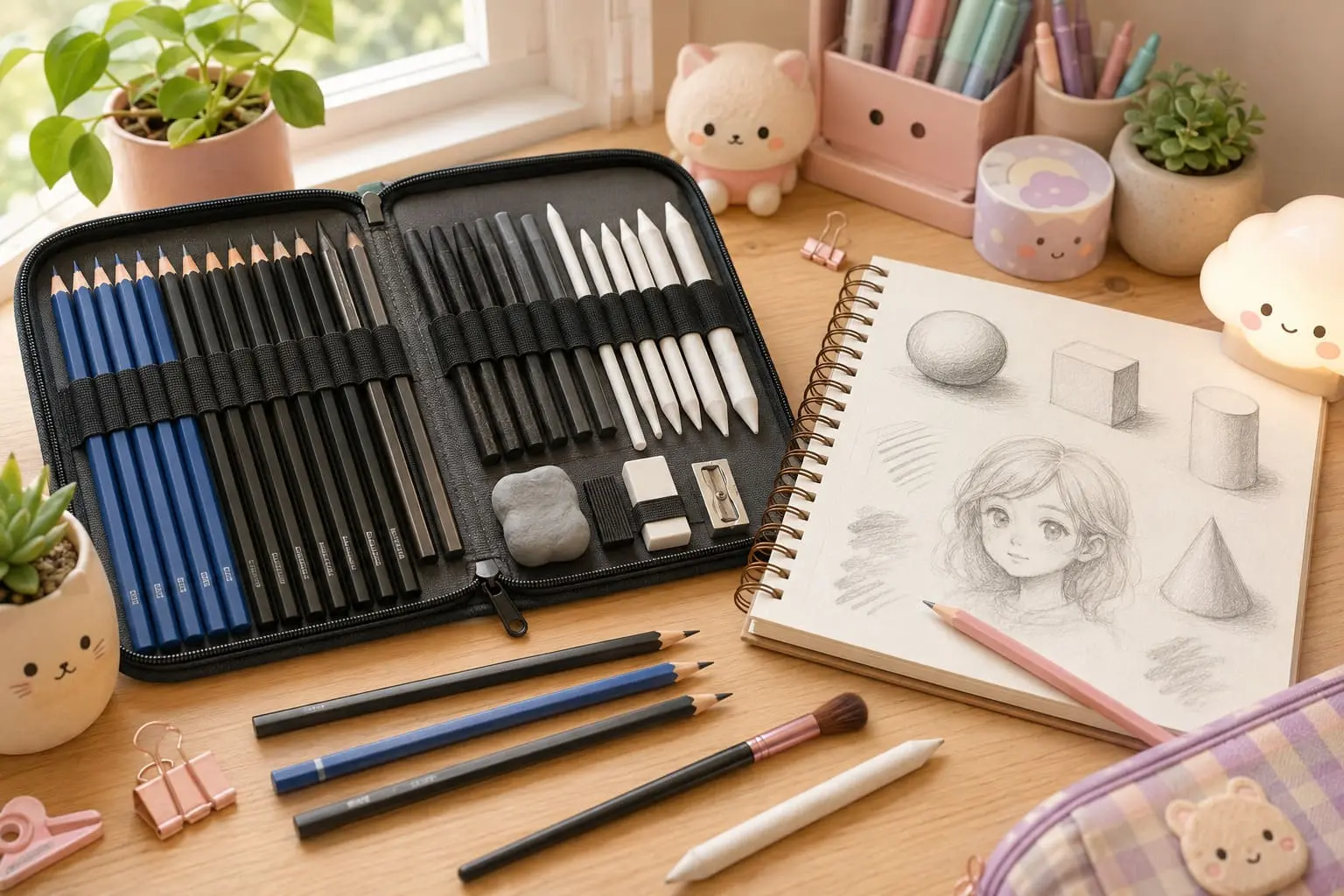
The second is a starter kit. KALOUR adds a kneaded eraser, vinyl eraser, sharpener, and blending stump. Those are logical accessories because each one directly supports sketching and shading. PANDAFLY adds charcoal, so it becomes a mixed-media learning kit. Castle Art Supplies goes broader again with a much larger set of drawing media and tools.

The mistake is assuming the second category is automatically better value. A 60-piece set may have a lower cost per item, but that does not help if 30 of those items sit untouched while you practice HB and 2B contour drawings.

Buy the kit that matches the next skills you plan to learn.

Do you need a kneaded eraser and blending stump?

Neither tool is mandatory, but both can be useful.

A kneaded eraser can be shaped and pressed into graphite to lift value gradually. Instead of erasing a hard white patch, you can soften a shadow, pull a highlight from hair, brighten the top of a sphere, or reduce a construction line without removing every trace of it. That makes it especially helpful when learning portraits and three-dimensional form.

A vinyl or plastic eraser is better for more direct correction when you want to remove a line or clear an area more decisively. Many beginners eventually keep both types nearby because they solve different problems.

A blending stump is a rolled-paper tool used to move and soften graphite without rubbing the drawing directly with your finger. It can help when you want a smoother transition, but it should not replace pencil control. Hatching, cross-hatching, layered strokes, and controlled pressure teach you more about form than simply smearing every shadow smooth.

This is why KALOUR is a useful beginner kit: its accessory mix aligns with real graphite exercises rather than merely increasing the piece count.

Graphite versus charcoal for beginners

Graphite and charcoal are both monochrome drawing media, but they behave differently enough that a beginner should treat them as separate skills.

Graphite is generally the easier starting point. It is familiar, easy to sharpen, relatively clean to handle, and organized into a clear H-to-B grade system. It works for controlled line drawing, gradual shading, detailed studies, architectural sketches, portraits, and casual sketchbooks.

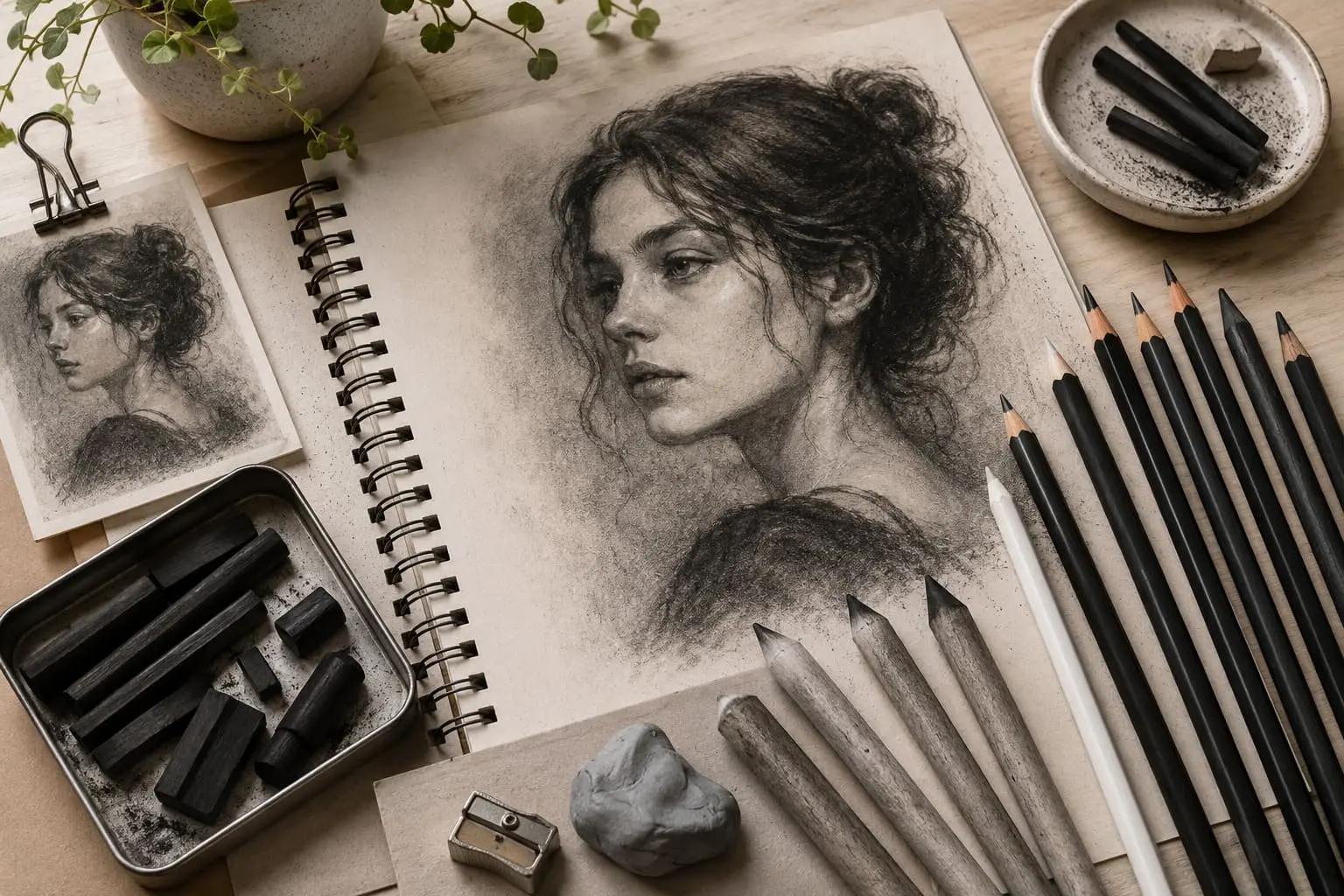
Charcoal is more immediate and expressive. It can create broad dark masses quickly and responds well to blending, lifting, and loose gestural marks. The trade-off is that it can smudge readily and needs more deliberate page handling.

If your goal is simply to learn drawing, begin with graphite. If you already know you like bold tonal drawing, figure sketching, dramatic portraits, or expressive studies, a kit such as PANDAFLY gives you both graphite and charcoal without jumping all the way to a 60-piece case.

The Castle Art Supplies 60 Piece Drawing & Sketching Set makes sense when you want to explore several media from the start, but its breadth is a feature only if you intend to use it.

How we chose these drawing pencils

We began with one practical question: what will this set help a beginner learn?

That shifted the ranking away from headline piece counts and toward useful differences in the actual learning experience.

We compared the 10 sets across six factors:

  1. Graphite grade range. Does the set cover light lines, flexible middle grades, and softer shading pencils without obvious gaps?
  2. Beginner simplicity. Can a new artist understand what the set is for, or does the case introduce too many unrelated tools at once?
  3. Useful accessories. We gave more weight to kneaded erasers, vinyl erasers, sharpeners, blending tools, and organized storage than to filler accessories.
  4. Technique range. Woodless graphite, water-soluble graphite, and charcoal can add value when they teach a distinct technique rather than duplicate the same function.
  5. Storage and organization. Grade labels are more useful when the pencils stay easy to identify and compare.
  6. Visible drawbacks. Every recommendation includes a reason not to buy it, because the best beginner set depends on what you already own and what you want to learn next.

All 10 products remain labeled research-based. We have not yet completed controlled side-by-side testing on identical drawing paper.

What to look for before buying drawing pencils

Start with your learning goal

If you are learning from a basic drawing course, look at the first few exercises. Do they teach contour, proportion, simple shapes, perspective, and value scales? If so, a straightforward graphite set is enough.

If the course includes portraits with lifted highlights, a kneaded eraser becomes more useful. If it introduces charcoal, buy a mixed set. If it includes wash effects or water-soluble graphite, Prismacolor’s broader graphite toolkit becomes more relevant.

Do not buy for a hypothetical future skill if it makes your current setup harder to understand.

Check the actual grade progression

A beginner-friendly set should include several grades around the middle of the scale, not only extreme hard and soft pencils.

HB, 2B, 4B, and 6B are especially useful. H or 2H adds a lighter construction option. If the set includes 8B, 10B, 12B, or 14B, consider those bonus tools rather than essential requirements.

Decide whether accessories save you a real purchase

A kit is more useful when the accessories are things you would otherwise buy immediately.

A sharpener: essential.

A normal eraser: essential for most beginners.

A kneaded eraser: very useful for shading and highlights.

A blending stump: useful but optional.

Charcoal sticks, pastel pencils, water-soluble graphite, fineliners, and specialty tools: useful only if your lessons or interests call for them.

This is the difference between a thoughtful starter kit and a large case that simply looks impressive on the product page.

Think about how you will store the pencils

Graphite grades become frustrating when you cannot find the pencil you want. A metal tin such as Faber-Castell 9000 or Derwent Graphic Medium keeps the progression visible. A large case such as Castle Art Supplies organizes more tools but also takes more room.

For a pencil-only budget set, a small pencil case or desk tray may be enough.

Match the pencil to the paper

Graphite is sensitive to paper texture. Smooth paper can preserve fine lines and tiny details, while paper with more tooth can accept more visible layers and broken texture. Very soft graphite can behave differently on each surface.

That is why a future KawaiiToons hands-on test should use the same paper across all sets. Until then, we avoid claiming that one brand is universally smoother, darker, easier to erase, or less prone to shine.

Common mistakes beginners make with drawing pencils

Pressing too hard too early

Darkness should come from a combination of pencil softness, layering, pressure, and value planning. If you press hard with HB at the start, you can dent the paper and make later correction difficult.

Use a lighter hand first. Build the drawing gradually. Save the strongest pressure and softest graphite for the places that truly need the darkest values.

Switching grades instead of learning pressure control

A 12-pencil set can tempt you to change pencils constantly. That is not necessary.

Try making a five-step value scale with a single 2B pencil. Then make the same scale with 4B. You will learn more from that exercise than from automatically assigning a different pencil to every square.

Blending everything smooth

Smooth shading is only one visual language. Hatching, cross-hatching, directional strokes, scribble shading, and visible pencil texture can describe form just as effectively.

Use a blending stump deliberately. Do not let it erase the structure of your marks simply because it is included in the kit.

Using very hard pencils for heavy shading

Hard pencils are useful for light, crisp marks, but pressing aggressively with them can score the paper. Once the surface is indented, softer graphite may settle unevenly around those grooves.

Use hard grades lightly. Move to B grades when you want darker values.

Buying a studio kit before you know what you enjoy

A large kit can be motivating, and there is nothing wrong with buying one if you know you want variety. But beginners often learn faster when the tool choices stay limited enough that they can connect cause and effect: this pressure made this value; this grade changed the edge; this eraser lifted this highlight.

That learning loop matters more than having the most pieces.

Best drawing pencils for beginner sketching

For general sketching, HB to 4B is the most useful part of the range.

HB handles initial lines and everyday sketchbook work. 2B adds flexibility and a slightly softer feel for loose drawing. 4B deepens shadows and lets you emphasize a focal area without needing very heavy pressure.

The STAEDTLER Mars Lumograph 12 Pencil Set is the easiest all-around recommendation because those core grades sit inside a larger range you can use as your skills grow. Tombow MONO is another practical choice because the set remains compact and includes the basic sharpening and erasing tools.

If you want the least expensive route into grade comparison, MARKART and Mr. Pen give you wide ranges at a budget price band. We would not choose them because they include the biggest numbers; we would choose them because they let you discover which middle grades you prefer before spending more on replacements or individual artist pencils.

Best drawing pencils for beginner shading

Shading adds a second requirement: you need enough softness to reach convincing dark values without pressing the page aggressively.

A 2B, 4B, and 6B progression is a strong starting point. Use 2B for early layers and middle values, bring in 4B where form turns away from light, and reserve 6B for deeper shadows and accents. You can still vary each pencil dramatically with pressure and layering.

The KALOUR 18-Piece Professional Sketch Pencil Set is the most complete shading-focused kit here because the included kneaded eraser and blending stump support common beginner exercises. Faber-Castell 9000 is the cleaner pencil-only option if you already own those tools.

For a tonal-study approach, Derwent Graphic Medium keeps the emphasis on graphite rather than accessories. For experimental techniques, Prismacolor Premier adds woodless and water-soluble graphite, which can broaden the type of value marks you practice.

Best drawing pencils for beginner portraits

Portraits reward a controlled value range more than they reward an enormous pencil collection.

Start with light construction so you can adjust proportions. Use HB or H for the early placement, 2B and 4B for most modeling, and 6B for the darkest areas around pupils, nostrils, hair masses, cast shadows, or clothing where the reference genuinely supports that contrast.

A kneaded eraser becomes particularly useful because highlights are often gradual. You can press or roll it into graphite to lift light from the bridge of a nose, forehead, cheek, lip, or hair rather than erasing a hard white hole.

For that reason, KALOUR is the easiest portrait-ready beginner kit in this shortlist. If you already own a kneaded eraser, STAEDTLER, Faber-Castell, or Derwent provide cleaner pencil-focused foundations.

Drawing pencils for teens, students, and shared art tables

For school-age artists and shared family art spaces, simplicity and organization matter almost as much as the grade range.

A compact tin is easier to keep together than a large case with dozens of loose tools. An included sharpener and eraser can also reduce the number of separate supplies that disappear between sessions.

Always check the current manufacturer age guidance for the exact product and supervise younger children around sharpened pencil points, small sharpeners, removable caps, charcoal dust, and other small accessories. The recommendations here are about drawing use, not a substitute for the safety guidance printed on the current package.

If the set will be shared, consider whether a huge graphite range is actually helpful. Several students may get more value from multiple HB, 2B, and 4B pencils than from one each of 6H, 5H, 4H, and other specialist grades.

How to make your first pencil value scale

A value scale is one of the fastest ways to learn what your pencils can do.

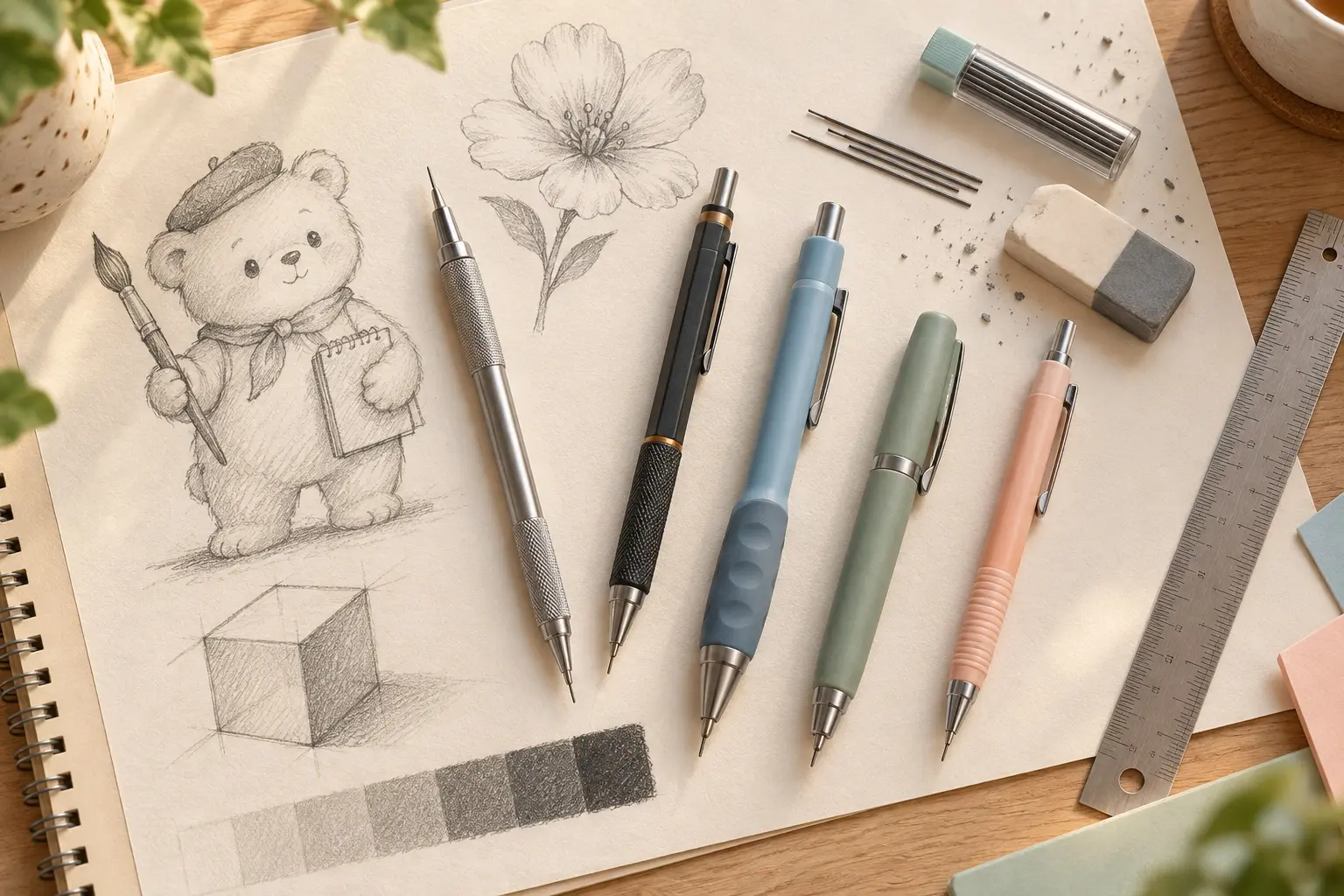
Draw five or seven equal boxes. Leave the first box nearly white. Fill the last box as dark as you can without damaging the paper. Then create evenly spaced steps between those two extremes.

Try the exercise first with one 2B pencil. Change only pressure and layering.

Next, repeat it using HB, 2B, 4B, and 6B. Notice how each grade reaches a different dark value with different pressure. Also notice whether the paper becomes shiny when heavily layered and whether the edge of the pencil stays sharp enough for the mark you want.

This exercise immediately turns a pencil set from a collection of labels into a set of tools you understand.

Our final recommendation

If you are buying your first drawing-pencil set, choose the tool that makes the next 20 practice sessions easier, not the package with the largest number printed on the front.

Our top research pick is the STAEDTLER Mars Lumograph 12 Pencil Set. Its 6H-to-8B range covers the practical progression from light construction through dark graphite, and the included eraser and sharpener make it easier to start immediately. It gives a beginner enough room to grow without mixing in unrelated media.

Choose Faber-Castell 9000 if you want a classic 12-pencil tin with an 8B-to-2H range and already own accessories. Choose Tombow MONO if you want a compact 6B-to-4H starter set with an eraser and sharpener. Choose Derwent Graphic Medium if your focus is structured graphite studies and tonal drawing.

On a tighter budget, MARKART gives you a wide 12B-to-4H range, while Mr. Pen covers 6H to 10B. Treat the extreme grades as optional experiments rather than requirements.

For a true all-in-one shading starter kit, KALOUR is the better fit because the kneaded eraser, vinyl eraser, blending stump, and sharpener are directly useful. Prismacolor Premier is the exploratory graphite choice, PANDAFLY is the better graphite-plus-charcoal kit, and Castle Art Supplies 60 Piece Drawing & Sketching Set is the broad studio-style option for beginners who know they want to try several media.

The next step for this guide should be original side-by-side testing. Once we can swatch identical grades on the same paper, sharpen every core under the same conditions, measure how well marks erase after equal layering, compare point retention, photograph graphite shine, and record breakage from real use, we can replace research-based recommendations with stronger first-hand evidence.