Quick picks
- Best alcohol markersOhuhu Alcohol Markers, Honolulu 2B 48 Colors (opens Amazon in a new tab)
- Best premium colored pencilsFaber-Castell Polychromos Artists' Color Pencils, 60 Tin (opens Amazon in a new tab)
- Best value colored pencilsCastle Art Supplies 72 Colored Pencils (opens Amazon in a new tab)
- Best gel pen varietyShuttle Art 120 Unique Colors Gel Pens (opens Amazon in a new tab)


Product comparison
| Product | Best for | Watch out | Price & shop |
|---|---|---|---|
| Prismacolor Premier Soft Core Colored Pencils, 72 Count (opens Amazon in a new tab) Best overallResearch-based review | Adult colorists who want one versatile supply for detail, layering, shading, and most ordinary coloring-book paper | Soft cores need regular sharpening and are slower than broad markers when the page contains large open backgrounds | |
| Ohuhu Alcohol Markers, Honolulu 2B 48 Colors (opens Amazon in a new tab) Best alcohol markersResearch-based review | Single-sided adult coloring books where fast coverage and marker-style blending matter | Alcohol ink can bleed through thin paper, so a protective sheet and page testing are essential | |
| Faber-Castell Polychromos Artists' Color Pencils, 60 Tin (opens Amazon in a new tab) Best premium colored pencilsResearch-based review | Experienced adult colorists who prioritize detail, durable leads, and controlled layering | The premium price is difficult to justify for casual coloring or anyone who mainly wants the largest possible shade count | |
| Castle Art Supplies 72 Colored Pencils (opens Amazon in a new tab) Best value colored pencilsResearch-based review | Adult colorists who want a broad soft-core pencil palette at a more approachable price than premium artist sets | Soft pencils still require sharpening and remain slower than markers for very large areas | |
| Tombow Dual Brush Pen Art Markers, 10-Pack, Retro (opens Amazon in a new tab) Best water-based brush markersResearch-based review | Colorists who want expressive brush strokes plus a fine tip without committing to alcohol markers | Ten colors are limiting for a standalone adult-coloring palette, and the brush tip needs practice in tiny spaces | |
| Crayola Super Tips Washable Markers 100 Count (opens Amazon in a new tab) Best budget marker setResearch-based review | Casual adult colorists who want a large washable palette without spending heavily on artist markers | The general-purpose washable design does not offer the same blending behavior or specialized dual tips as artist-focused marker systems | Budget-friendlyCheck price on Amazon (opens Amazon in a new tab) |
| Shuttle Art 120 Unique Colors Gel Pens (opens Amazon in a new tab) Best gel pen varietyResearch-based review | Adult colorists who want a huge palette for intricate details, glitter, metallics, pastels, neons, and finishing effects | Fine gel tips are slow for large backgrounds and the different specialty inks may require different stroke speeds | |
| Sakura Gelly Roll Stardust Gel Pens (opens Amazon in a new tab) Best glitter gel pensResearch-based review | Sparkling highlights, borders, jewelry, stars, and decorative finishing | The 12-color glitter-only palette is too specialized for large flat fills or an entire everyday coloring setup | |
| STAEDTLER Triplus Fineliner, 0.3 mm, 10-Pack (opens Amazon in a new tab) Best for tiny detailsResearch-based review | Intricate mandalas, patterned pages, outlines, and very small enclosed shapes | Ten colors and a 0.3 mm line make this a detail tool, not an efficient choice for filling medium or large shapes | Budget-friendlyCheck price on Amazon (opens Amazon in a new tab) |
| Derwent Inktense Pencils, 24 Tin (opens Amazon in a new tab) Best water-soluble pencilsResearch-based review | Adult colorists who want dry pencil control with optional painterly effects on paper that can handle water | Water can buckle or damage ordinary coloring-book paper, so activation should never be assumed safe without a paper test |
Detailed product sections
Prismacolor Premier Soft Core Colored Pencils, 72 Count (opens Amazon in a new tab)
A 72-color soft-core pencil set that balances palette breadth with controlled layering and detailed placement

Why it fits this guide
Prismacolor Premier Soft Core is the easiest all-around recommendation in this mixed-supply guide because colored pencils work on more coloring-book paper types than wet media and can move from tiny details to gradual gradients without needing a separate bleed-protection workflow. The 72-color count is broad enough for serious adult coloring without becoming difficult to organize.
Honest drawback
Soft cores need regular sharpening and are slower than broad markers when the page contains large open backgrounds
Best forAdult colorists who want one versatile supply for detail, layering, shading, and most ordinary coloring-book paper
Pros
- Seventy-two colors provide a broad everyday palette
- Soft cores are suited to layering, shading, and gradual transitions
- Pencil format gives strong control in detailed printed areas
Cons
- Soft cores can require frequent sharpening
- Large backgrounds take longer to fill than with markers
Ohuhu Alcohol Markers, Honolulu 2B 48 Colors (opens Amazon in a new tab)
A 48-color alcohol-marker set with brush and fine tips plus a protective sheet and organizer

Why it fits this guide
Ohuhu is the strongest marker-first choice here because the brush-and-fine dual tips let you move between wider fills and smaller printed details without switching marker sets. Alcohol ink is especially useful when you want smooth-looking marker transitions, but it changes the paper requirements: this is a much better fit for single-sided pages than for thin double-sided books.
Honest drawback
Alcohol ink can bleed through thin paper, so a protective sheet and page testing are essential
Best forSingle-sided adult coloring books where fast coverage and marker-style blending matter
Pros
- Brush and fine dual tips cover both broader shapes and smaller details
- Forty-eight colors form a practical starter-to-intermediate palette
- Current set includes a bleed-prevention sheet, swatch cards, blender, and carrying case
Cons
- Alcohol ink can bleed through thin or double-sided paper
- Forty-eight colors offer less shade depth than larger marker cases
Faber-Castell Polychromos Artists' Color Pencils, 60 Tin (opens Amazon in a new tab)
A premium 60-pencil artist set built around bonded 3.8 mm leads and precise layered color

Why it fits this guide
Polychromos earns the premium slot because its appeal is not a giant headline color count but control. The bonded leads, 3.8 mm core format, and artist-oriented construction make sense for intricate pages where you sharpen frequently, build several layers, and care more about precision than the lowest cost per pencil.
Honest drawback
The premium price is difficult to justify for casual coloring or anyone who mainly wants the largest possible shade count
Best forExperienced adult colorists who prioritize detail, durable leads, and controlled layering
Pros
- Sixty artist-focused colors provide a strong premium palette
- Bonded leads are designed for durability and detailed work
- Oil-based pencil format suits controlled layering and fine areas
Cons
- Significantly more expensive than hobby-oriented pencil sets
- Sixty colors offer less immediate variety than some value collections
Castle Art Supplies 72 Colored Pencils (opens Amazon in a new tab)
Seventy-two arranged and identified soft-core colors for layering, shading, and everyday adult coloring

Why it fits this guide
Castle Art Supplies fills the gap between inexpensive classroom-style pencils and premium artist sets. The 72 colors are organized in families and give adult colorists enough shade depth for gradients, flowers, skin, scenery, and decorative pages while keeping the familiar control of a sharpenable pencil.
Honest drawback
Soft pencils still require sharpening and remain slower than markers for very large areas
Best forAdult colorists who want a broad soft-core pencil palette at a more approachable price than premium artist sets
Pros
- Seventy-two colors are arranged in color families
- Soft-core format suits layering and blended pencil effects
- Metal tin keeps a large pencil collection organized
Cons
- Soft cores can require frequent sharpening
- Large backgrounds are slower than with broad markers
Tombow Dual Brush Pen Art Markers, 10-Pack, Retro (opens Amazon in a new tab)
Ten water-based dual-tip markers combining a flexible nylon brush with a smaller fine point

Why it fits this guide
Tombow Dual Brush Pens give adults a very different marker experience from an alcohol set. The flexible brush tip can vary line width and cover medium shapes, while the fine tip is more controlled around borders and smaller details. The Retro pack is best treated as a focused palette or companion set rather than a complete 60- or 100-color solution.
Honest drawback
Ten colors are limiting for a standalone adult-coloring palette, and the brush tip needs practice in tiny spaces
Best forColorists who want expressive brush strokes plus a fine tip without committing to alcohol markers
Pros
- Flexible nylon brush tip supports varied stroke widths
- Fine tip helps with outlines and smaller spaces
- Water-based format complements pencil and gel-pen setups
Cons
- Only ten colors are included
- Brush tip requires more control in micro-details
Crayola Super Tips Washable Markers 100 Count (opens Amazon in a new tab)
One hundred washable colors with a versatile tip that can make broader and finer strokes

Why it fits this guide
Crayola Super Tips are the pragmatic budget option. The value is the combination of a very large color count, washable ink, and a tip shape that can make different stroke widths. They are not positioned as premium art markers, but they make sense for relaxed coloring, shared family tables, bold-line books, and anyone who values variety over specialist blending performance.
Honest drawback
The general-purpose washable design does not offer the same blending behavior or specialized dual tips as artist-focused marker systems
Best forCasual adult colorists who want a large washable palette without spending heavily on artist markers
Pros
- One hundred colors provide exceptional variety for the price tier
- Tip design supports thicker and thinner strokes
- Washable format is practical for shared craft spaces
Cons
- Not designed for alcohol-marker-style blending
- Tip precision is less specialized than brush-and-fine art markers
Shuttle Art 120 Unique Colors Gel Pens (opens Amazon in a new tab)
A 120-pen collection presented as 120 unique colors across seven standard and specialty effect families

Why it fits this guide
Shuttle Art is the most complete gel-pen companion in this guide because the 120 count represents unique pen colors rather than a package total that includes matching refills. The mix spans glitter, neon glitter, metallic, neon, pastel, swirl, and standard inks, giving you many ways to finish patterned details after pencils or markers have done the larger fills.
Honest drawback
Fine gel tips are slow for large backgrounds and the different specialty inks may require different stroke speeds
Best forAdult colorists who want a huge palette for intricate details, glitter, metallics, pastels, neons, and finishing effects
Pros
- One hundred twenty unique colors provide extensive shade and effect variety
- Seven effect families cover everyday colors and decorative finishes
- Fine gel format works well in printed details and small shapes
Cons
- Fine tips are inefficient for broad backgrounds
- Different specialty inks may not feel identical on the same paper
Sakura Gelly Roll Stardust Gel Pens (opens Amazon in a new tab)
A focused 12-color glitter set that adds visible sparkle without buying another giant mixed-media case

Why it fits this guide
Gelly Roll Stardust is the specialist choice when glitter is the effect you actually want. It is easier to justify as a finishing tool beside pencils or markers than as a full-page coloring system, and the compact palette avoids paying for dozens of standard gel colors you may already own.
Honest drawback
The 12-color glitter-only palette is too specialized for large flat fills or an entire everyday coloring setup
Best forSparkling highlights, borders, jewelry, stars, and decorative finishing
Pros
- Twelve dedicated glitter colors create visible decorative effects
- Compact set pairs easily with pencils and markers
- Useful for finishing details where sparkle is intentional
Cons
- Only twelve colors are included
- Glitter ink is less versatile for broad flat fills
STAEDTLER Triplus Fineliner, 0.3 mm, 10-Pack (opens Amazon in a new tab)
A 10-color fineliner set with a 0.3 mm line for places where ordinary marker tips feel too large

Why it fits this guide
The Triplus Fineliner earns its place because some adult coloring books contain details that are simply easier with a 0.3 mm point. The narrow line gives you controlled placement inside tiny cells, botanical veins, patterned clothing, and borders where a brush marker can feel oversized.
Honest drawback
Ten colors and a 0.3 mm line make this a detail tool, not an efficient choice for filling medium or large shapes
Best forIntricate mandalas, patterned pages, outlines, and very small enclosed shapes
Pros
- 0.3 mm line width is useful for intricate coloring details
- Triangular barrel is designed for an ergonomic grip
- Stand-up wallet keeps the ten assorted colors accessible
Cons
- Only ten colors are included
- Very fine line is slow for larger areas
Derwent Inktense Pencils, 24 Tin (opens Amazon in a new tab)
Twenty-four firm-core pencils that can be used dry or activated with water for a more fluid effect

Why it fits this guide
Derwent Inktense expands an adult-coloring kit beyond ordinary dry media. You can use the pencils conventionally for controlled placement, then activate selected areas with water when the paper is thick enough. That makes the set especially interesting for loose botanical, fantasy, landscape, and mixed-media coloring styles.
Honest drawback
Water can buckle or damage ordinary coloring-book paper, so activation should never be assumed safe without a paper test
Best forAdult colorists who want dry pencil control with optional painterly effects on paper that can handle water
Pros
- Can be used dry or activated with water
- Firm 4 mm cores support controlled placement before activation
- Adds a painterly option to an adult-coloring toolkit
Cons
- Water activation is risky on thin coloring-book paper
- Twenty-four colors form a smaller ready-made palette
Related guides
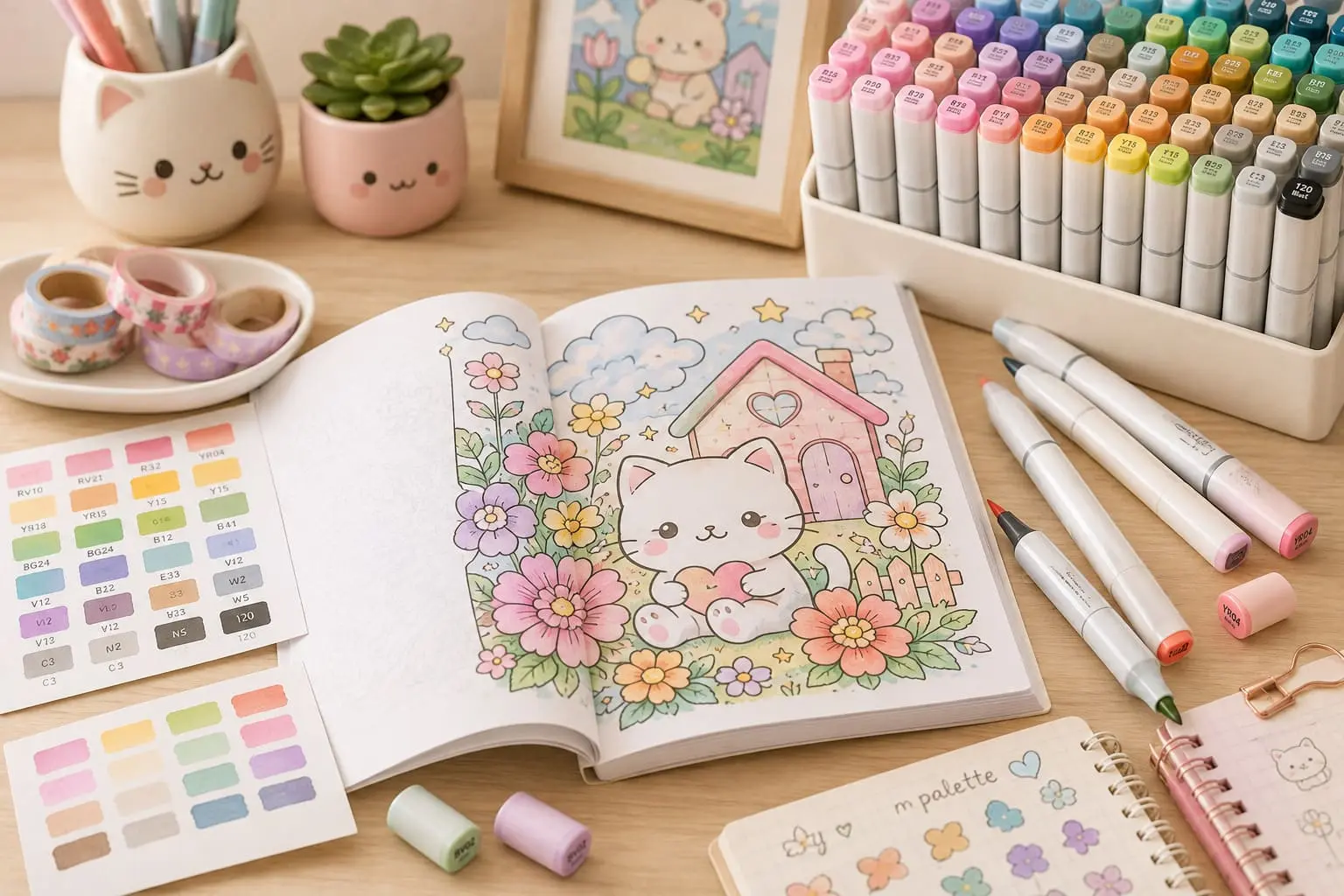
Best Alcohol Markers for Coloring Books: 10 Sets for Smooth Blending
The best alcohol markers for coloring books, from brush-tip starter sets to refillable Copic options. Compare tips, colors, blending, and bleed-through.
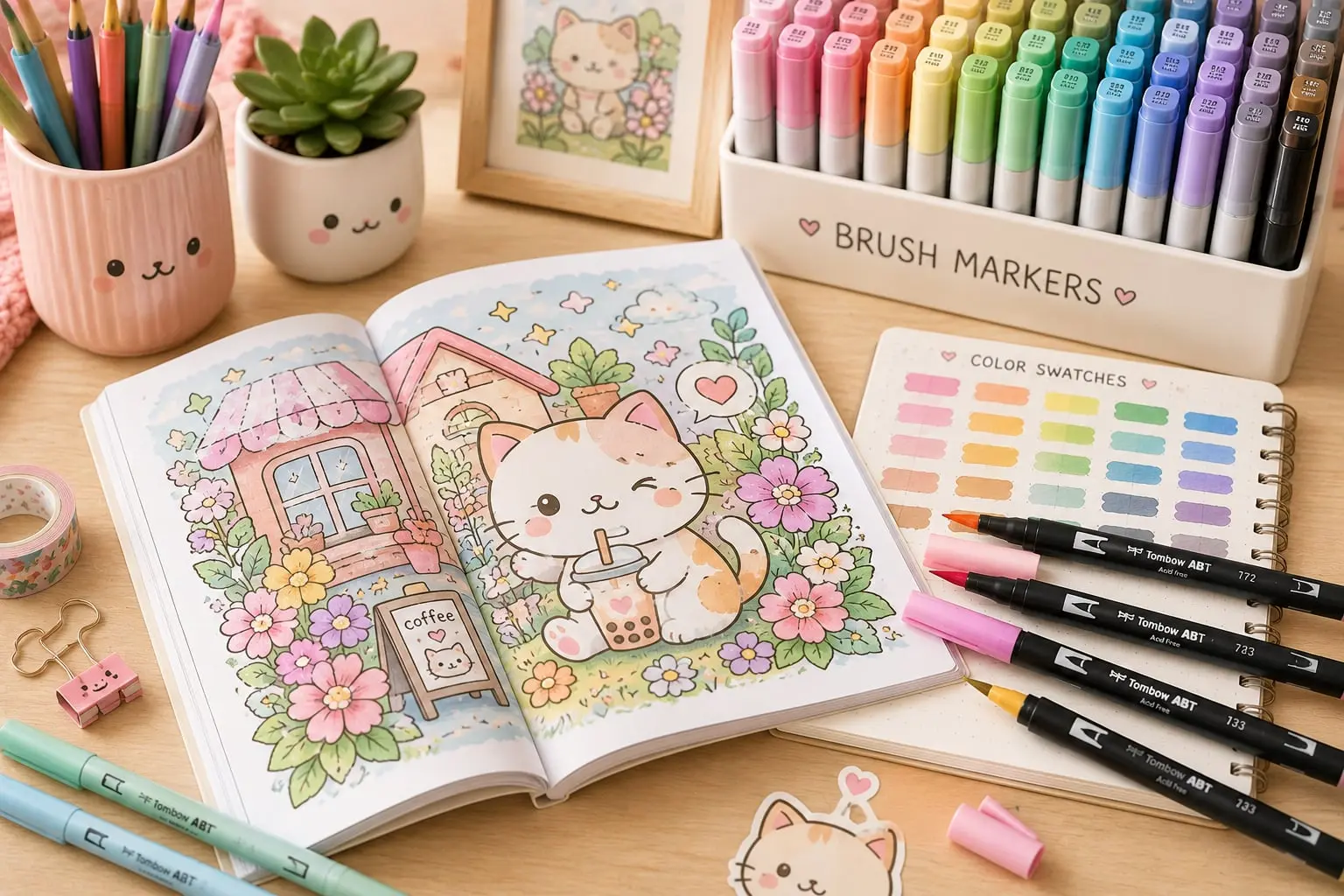
Best Brush Markers for Coloring Books: 10 Picks for Shading & Blending
Find the best brush markers for coloring books, including water-based and alcohol picks for shading, blending, fine details, and bold fills.
Best Colored Pencils for Adult Coloring Books: 10 Smooth, Blendable Sets
Compare 10 colored-pencil sets for adult coloring books by core feel, color range, detail control, layering, paper fit, storage and replacement options.
Best Coloring Books for Alcohol Markers: Thick, Single-Sided Picks
Six research-based coloring books for alcohol markers, compared by single-sided layout, documented paper stock, perforations, binding and artwork detail.


