Best Fine Tip Markers for Coloring Books: 10 Picks for Small Details. Best fine tip markers for coloring books, from 0.3 mm fineliners to dual-tip sets. Compare precision, color range, ink type, and paper use.. Type: Buying guide. Category: Coloring. Tags: fine-tip-markers, fineliners, coloring-books, adult-coloring, detail-coloring, water-based-markers, dual-tip-markers, buying-guide, cluster-coloring-supplies.

Buying guide

Best Fine Tip Markers for Coloring Books: 10 Picks for Small Details

Our recommendation

The best fine tip markers for coloring books give you a narrow, predictable point for tiny shapes without forcing you to use the same tip on every part of the page. Our top research pick is the STAEDTLER Triplus Fineliner Johanna Basford 36-Color Set because its 0.3 mm metal-clad tip is specifically suited to precise coloring and its 36-color water-based palette is broad enough for detailed adult pages. STABILO point 88 is the classic 0.4 mm alternative, ARTEZA Inkonic gives you 48 fine-only colors, and Tombow TwinTone pairs a 0.3 mm detail tip with a 0.8 mm bullet tip. If you also need faster coverage, Ohuhu, Aen Art, Caliart, and Artecho combine 0.4 mm fine tips with brush tips.

Quick picks

Top recommendations

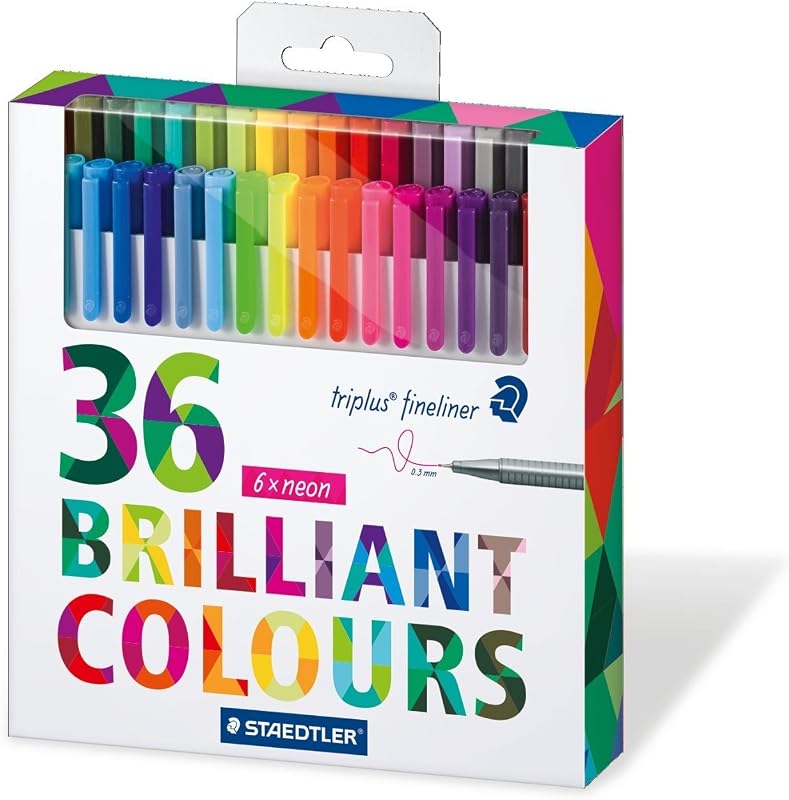
  1. 1STAEDTLER Triplus Fineliner Johanna Basford 36-Color Set — Best overallA 36-color water-based fineliner set with a 0.3 mm metal-clad tip built for very precise page work
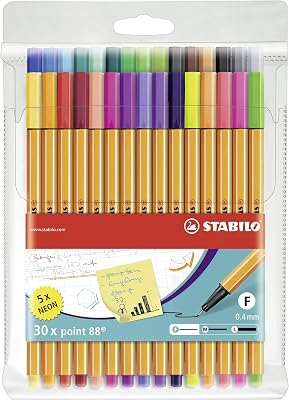
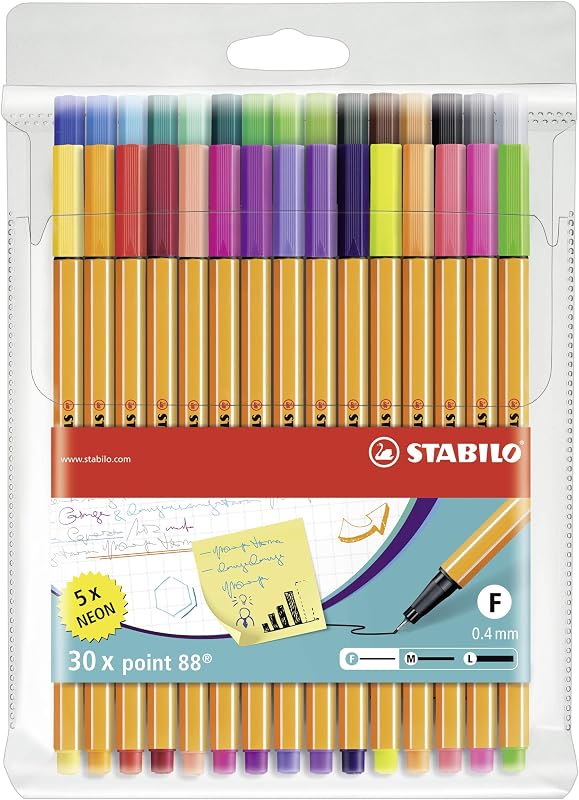
  2. 2STABILO point 88 Fineliner 30-Color Set — Best classic finelinerThirty assorted point 88 fineliners with a 0.4 mm line width and the brand's familiar metal-enclosed tip
  3. 3ARTEZA Inkonic Fineliner Pens 48-Color Set — Best large fineliner paletteA 48-color true-fineliner set with numbered barrels, 0.4 mm tips, and water-based ink
  4. 4Tombow TwinTone Marker Set Bright 12-Pack — Best compact dual tipTwelve bright water-based markers pairing a 0.3 mm extra-fine tip with a 0.8 mm bullet tip
  5. 5Crayola Fine Line Markers for Adults 40-Count — Best budget adult-coloring setForty unique fine-line colors specifically marketed for adult coloring, intricate doodles, and detailed artwork
  6. 6Ohuhu Paper-Friendly 60-Color Dual Brush & Fineliner Markers — Best for detail and coverageA 60-item water-based set combining 0.4 mm fineliner tips with 1-5 mm brush tips
  7. 7Aen Art 36 Dual Brush Markers — Best value dual tipThirty-six water-based dual-tip markers with a 0.4 mm fineliner and a flexible brush tip
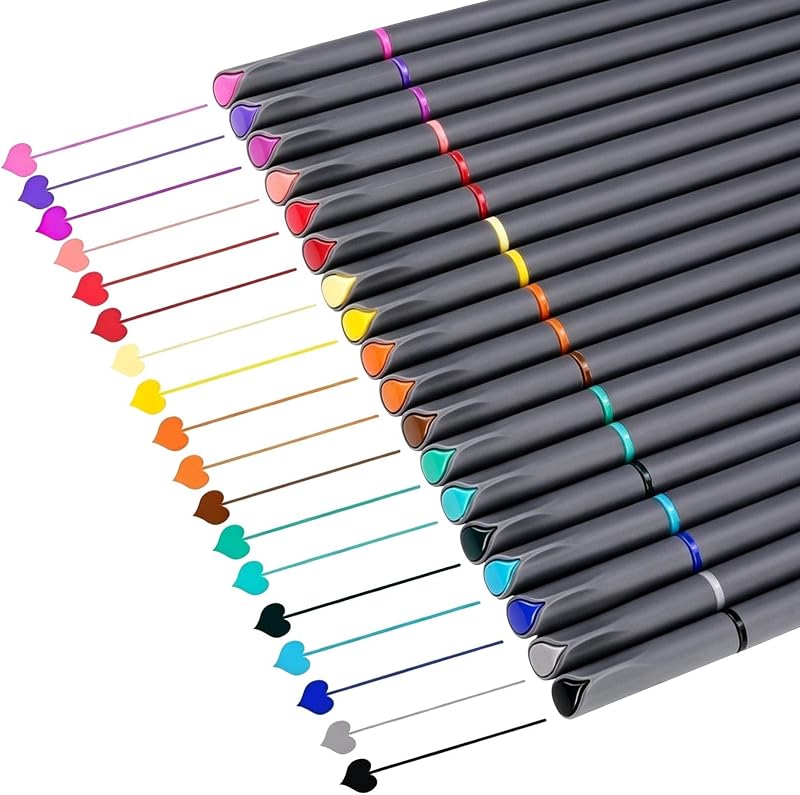
  8. 8iBayam 18-Color Fineliner Pens — Best compact budget finelinerAn 18-color water-based fineliner set with a 0.38 mm point for small intricate patterns
  9. 9Caliart 34 Double Tip Brush Pens — Best dual-color designThirty-four double-tip markers with a 0.4 mm fine end, a 1-5 mm brush end, and complementary colors across the two tips
  10. 10Artecho 120 Colors Dual Tip Markers — Best huge paletteA 120-color dual-tip set pairing 0.4 mm fine points with flexible 1-2 mm brush tips

Product comparison

ProductBest forWatch outPrice & shop
STAEDTLER Triplus Fineliner Johanna Basford 36-Color Set (opens Amazon in a new tab)STAEDTLER · 334 C36JB
Best overallResearch-based review
Intricate adult coloring books, mandalas, tiny patterns, and narrow enclosed shapesThe same superfine point that makes tiny details easier also makes large backgrounds and broad shapes slow to fill
STABILO point 88 Fineliner 30-Color Set (opens Amazon in a new tab)STABILO · point 88 30-Color Set
Best classic finelinerResearch-based review
Colorists who want a proven 0.4 mm fineliner format for outlines, patterns, and narrow shapesFine-only construction gives you no broader tip when the page opens into a large background or simple shape
ARTEZA Inkonic Fineliner Pens 48-Color Set (opens Amazon in a new tab)ARTEZA · Inkonic 48-Color 0.4 mm Set
Best large fineliner paletteResearch-based review
Adult colorists who want many shades while keeping every pen at a consistent 0.4 mm fine pointForty-eight fine-only pens still leave you without an efficient tool for large skies, walls, clothing panels, or other broad fills
Tombow TwinTone Marker Set Bright 12-Pack (opens Amazon in a new tab)Tombow · TwinTone Bright 12-Pack
Best compact dual tipResearch-based review
Small details plus slightly larger shapes without carrying a large brush-marker caseTwelve colors are limiting if you want subtle gradients, skin-tone variety, or a wide floral palette from one pack
Crayola Fine Line Markers for Adults 40-Count (opens Amazon in a new tab)Crayola · Fine Line Markers 40 Count
Best budget adult-coloring setResearch-based review
Beginners who want a large fine-line palette from a familiar brandThe current Amazon listing does not give a numeric tip width, so its precision cannot be compared as directly as the documented 0.3 and 0.4 mm options
Ohuhu Paper-Friendly 60-Color Dual Brush & Fineliner Markers (opens Amazon in a new tab)Ohuhu · 60-Color Paper-Friendly Dual Brush & Fineliner Set
Best for detail and coverageResearch-based review
Coloring books that mix intricate patterns with larger open shapesThe current listing specifically notes that the water-based ink may still bleed through thin paper, so paper testing remains necessary
Aen Art 36 Dual Brush Markers (opens Amazon in a new tab)Aen Art · 36-Color Dual Brush Marker Set
Best value dual tipResearch-based review
Budget-minded colorists who want both 0.4 mm detail control and a brush endThirty-six colors give less shade depth than the 60- and 120-color dual-tip sets, especially in closely related hues
iBayam 18-Color Fineliner Pens (opens Amazon in a new tab)iBayam · 18-Color 0.38 mm Fineliner Set
Best compact budget finelinerResearch-based review
Tiny details, planners, and colorists who prefer a narrow line over a huge paletteEighteen colors are enough for accents and compact projects but restrictive for full-page work with subtle shade changes
Caliart 34 Double Tip Brush Pens (opens Amazon in a new tab)Caliart · 34 Double Tip Brush Pens
Best dual-color designResearch-based review
Colorists who like getting complementary fine-tip and brush-tip colors from each barrelDifferent colors on the two ends can be less intuitive than a same-color dual-tip marker, so a swatch chart becomes especially important
Artecho 120 Colors Dual Tip Markers (opens Amazon in a new tab)Artecho · 120-Color Dual Tip Marker Set
Best huge paletteResearch-based review
Colorists who want maximum shade choice plus a dedicated fine tip in one large caseA 120-marker collection takes real storage space and requires more swatching, sorting, and maintenance than a compact fineliner set

Selection and testing methodology

This is a research-based guide, not a hands-on ranking. We compared 10 fine-tip marker and fineliner sets using current Amazon US product information checked on August 9, 2026. We prioritized documented tip width, color count, fine-only versus dual-tip design, water-based ink where stated, intended coloring use, and the practical trade-off between precision and coverage. We also confirmed that the selected Amazon listings were current at the time of research. KawaiiToons has not personally tested these exact sets yet, so we do not publish invented bleed-through scores, measured line consistency, dry-time rankings, tip durability results, or comfort scores. Recommendations remain labeled research-based until original testing is added.

Detailed product sections

Best overallResearch-based review

STAEDTLER Triplus Fineliner Johanna Basford 36-Color Set (opens Amazon in a new tab)

STAEDTLER · 334 C36JB

A 36-color water-based fineliner set with a 0.3 mm metal-clad tip built for very precise page work

Why it fits this guide

STAEDTLER is the most detail-focused all-around pick here because the 0.3 mm point is narrow enough for genuinely small coloring-book spaces while the 36-color assortment gives you much more range than a compact technical-pen set. The Johanna Basford-branded edition is also explicitly positioned around drawing and coloring rather than office writing alone.

Honest drawback

The same superfine point that makes tiny details easier also makes large backgrounds and broad shapes slow to fill

Best forIntricate adult coloring books, mandalas, tiny patterns, and narrow enclosed shapes

Pros

  • 0.3 mm metal-clad tip provides excellent control in very small spaces
  • Thirty-six water-based colors give useful variety for detailed pages
  • Triangular barrels are designed for a stable, controlled grip

Cons

  • Superfine point is inefficient for broad areas
  • Higher price band than many generic fineliner sets
Check price on Amazon (opens Amazon in a new tab)
Best classic finelinerResearch-based review

STABILO point 88 Fineliner 30-Color Set (opens Amazon in a new tab)

STABILO · point 88 30-Color Set

Thirty assorted point 88 fineliners with a 0.4 mm line width and the brand's familiar metal-enclosed tip

Why it fits this guide

STABILO point 88 is a straightforward choice when you do not need a brush tip and simply want consistent, narrow color placement. The 0.4 mm line is slightly broader than STAEDTLER's 0.3 mm point, which can make it a little less needle-fine while still remaining well suited to intricate printed pages.

Honest drawback

Fine-only construction gives you no broader tip when the page opens into a large background or simple shape

Best forColorists who want a proven 0.4 mm fineliner format for outlines, patterns, and narrow shapes

Pros

  • 0.4 mm point is well matched to detailed coloring and geometric work
  • Thirty colors give a practical middle-size palette
  • Metal-enclosed tip supports controlled line placement

Cons

  • No brush or broad tip for faster fills
  • Detailed line width can make large pages time-consuming
Check price on Amazon (opens Amazon in a new tab)
Best large fineliner paletteResearch-based review

ARTEZA Inkonic Fineliner Pens 48-Color Set (opens Amazon in a new tab)

ARTEZA · Inkonic 48-Color 0.4 mm Set

A 48-color true-fineliner set with numbered barrels, 0.4 mm tips, and water-based ink

Why it fits this guide

ARTEZA Inkonic offers one of the broadest palettes in this guide without changing the tool type from pen to pen. All 48 markers stay in the 0.4 mm fineliner format, which is useful if your books are consistently intricate and you prefer shade variety over brush-tip coverage.

Honest drawback

Forty-eight fine-only pens still leave you without an efficient tool for large skies, walls, clothing panels, or other broad fills

Best forAdult colorists who want many shades while keeping every pen at a consistent 0.4 mm fine point

Pros

  • Forty-eight colors provide strong shade variety for a fineliner-only set
  • 0.4 mm tips suit tight spaces and detailed patterns
  • Numbered barrels make a large palette easier to organize

Cons

  • Fine-only format is slow for large sections
  • Large palette benefits from a swatch chart before use
Check price on Amazon (opens Amazon in a new tab)
Best compact dual tipResearch-based review

Tombow TwinTone Marker Set Bright 12-Pack (opens Amazon in a new tab)

Tombow · TwinTone Bright 12-Pack

Twelve bright water-based markers pairing a 0.3 mm extra-fine tip with a 0.8 mm bullet tip

Why it fits this guide

Tombow TwinTone solves a common fine-marker problem without becoming a bulky brush marker. The 0.3 mm end handles tiny spaces, while the 0.8 mm bullet end gives you a faster way to fill medium details and strengthen outlines. It is a smart compact companion for travel or smaller coloring sessions.

Honest drawback

Twelve colors are limiting if you want subtle gradients, skin-tone variety, or a wide floral palette from one pack

Best forSmall details plus slightly larger shapes without carrying a large brush-marker case

Pros

  • 0.3 mm extra-fine end is highly controllable
  • 0.8 mm bullet end adds useful coverage flexibility
  • Compact 12-marker format is easy to store and carry

Cons

  • Only 12 colors in the Bright set
  • Neither end is broad enough for very large fills
Check price on Amazon (opens Amazon in a new tab)
Best budget adult-coloring setResearch-based review

Crayola Fine Line Markers for Adults 40-Count (opens Amazon in a new tab)

Crayola · Fine Line Markers 40 Count

Forty unique fine-line colors specifically marketed for adult coloring, intricate doodles, and detailed artwork

Why it fits this guide

Crayola's 40-count adult set gives beginners a lot of color choice without requiring them to understand specialist fineliner systems. The current listing explicitly positions the markers for adult coloring and detailed artwork, which makes this an easy entry point when you want fine lines first and technical specifications second.

Honest drawback

The current Amazon listing does not give a numeric tip width, so its precision cannot be compared as directly as the documented 0.3 and 0.4 mm options

Best forBeginners who want a large fine-line palette from a familiar brand

Pros

  • Forty unique colors give broad variety for the price band
  • Fine-line format is designed for detailed artwork and adult coloring
  • Familiar brand makes it an approachable starter choice

Cons

  • No numeric line width documented on the current listing
  • Still a fine-line tool rather than a fast background marker
Check price on Amazon (opens Amazon in a new tab)
Best for detail and coverageResearch-based review

Ohuhu Paper-Friendly 60-Color Dual Brush & Fineliner Markers (opens Amazon in a new tab)

Ohuhu · 60-Color Paper-Friendly Dual Brush & Fineliner Set

A 60-item water-based set combining 0.4 mm fineliner tips with 1-5 mm brush tips

Why it fits this guide

Ohuhu is the strongest choice here when your pages are not consistently intricate. The 0.4 mm end handles tiny details, but you can flip the marker and use the brush end for leaves, clothing, backgrounds, and larger motifs. That makes it more versatile than a true fineliner set for mixed-style coloring books.

Honest drawback

The current listing specifically notes that the water-based ink may still bleed through thin paper, so paper testing remains necessary

Best forColoring books that mix intricate patterns with larger open shapes

Pros

  • 0.4 mm fineliner handles small printed spaces
  • 1-5 mm brush tip is much faster on larger shapes
  • Large palette reduces the need to combine multiple marker sets

Cons

  • Thin paper may still show bleed-through
  • Larger dual-tip barrels take more storage than fineliners
Check price on Amazon (opens Amazon in a new tab)
Best value dual tipResearch-based review

Aen Art 36 Dual Brush Markers (opens Amazon in a new tab)

Aen Art · 36-Color Dual Brush Marker Set

Thirty-six water-based dual-tip markers with a 0.4 mm fineliner and a flexible brush tip

Why it fits this guide

Aen Art delivers the same basic fine-plus-brush concept as more expensive dual-tip sets but in a smaller, easier-to-manage 36-color case. The 0.4 mm end is the key reason it belongs in a fine-tip guide, while the brush end prevents the set from feeling overly specialized when the artwork includes larger sections.

Honest drawback

Thirty-six colors give less shade depth than the 60- and 120-color dual-tip sets, especially in closely related hues

Best forBudget-minded colorists who want both 0.4 mm detail control and a brush end

Pros

  • 0.4 mm fineliner is useful for precise outlines and small shapes
  • Brush end adds coverage and lettering versatility
  • Smaller case is easier to organize than very large sets

Cons

  • Less color variety than 60- and 120-color competitors
  • Paper performance still needs hands-on verification
Check price on Amazon (opens Amazon in a new tab)
Best compact budget finelinerResearch-based review

iBayam 18-Color Fineliner Pens (opens Amazon in a new tab)

iBayam · 18-Color 0.38 mm Fineliner Set

An 18-color water-based fineliner set with a 0.38 mm point for small intricate patterns

Why it fits this guide

iBayam makes sense when you mainly want precision and do not need dozens of near-duplicate shades. Its 0.38 mm tip sits between the 0.3 mm STAEDTLER and 0.4 mm options here, making it appropriately narrow for small coloring-book cells while keeping the set compact and inexpensive.

Honest drawback

Eighteen colors are enough for accents and compact projects but restrictive for full-page work with subtle shade changes

Best forTiny details, planners, and colorists who prefer a narrow line over a huge palette

Pros

  • 0.38 mm point gives precise control
  • Compact 18-color set is easy to organize and carry
  • Water-based format suits paper-focused creative use

Cons

  • Limited 18-color palette
  • Fine-only point is slow on broad sections
Check price on Amazon (opens Amazon in a new tab)
Best dual-color designResearch-based review

Caliart 34 Double Tip Brush Pens (opens Amazon in a new tab)

Caliart · 34 Double Tip Brush Pens

Thirty-four double-tip markers with a 0.4 mm fine end, a 1-5 mm brush end, and complementary colors across the two tips

Why it fits this guide

Caliart stands out because its two tips do more than change line width. The listing describes the fine and brush ends as complementary colors, which effectively increases the variety available from 34 barrels. That can be useful for quick contrast and paired-color schemes in patterned pages.

Honest drawback

Different colors on the two ends can be less intuitive than a same-color dual-tip marker, so a swatch chart becomes especially important

Best forColorists who like getting complementary fine-tip and brush-tip colors from each barrel

Pros

  • 0.4 mm fine end works for intricate coloring-book details
  • 1-5 mm brush end handles larger sections
  • Complementary colors across the two tips expand creative combinations

Cons

  • Different end colors can complicate shade selection
  • Best used with a swatch chart for quick reference
Check price on Amazon (opens Amazon in a new tab)
Best huge paletteResearch-based review

Artecho 120 Colors Dual Tip Markers (opens Amazon in a new tab)

Artecho · 120-Color Dual Tip Marker Set

A 120-color dual-tip set pairing 0.4 mm fine points with flexible 1-2 mm brush tips

Why it fits this guide

Artecho is the large-palette specialist in this shortlist. You get the same 0.4 mm detail size found on several smaller sets, but across 120 colors, with a 1-2 mm brush end available when the illustration opens up. It is aimed at colorists who would rather manage one large system than mix several smaller collections.

Honest drawback

A 120-marker collection takes real storage space and requires more swatching, sorting, and maintenance than a compact fineliner set

Best forColorists who want maximum shade choice plus a dedicated fine tip in one large case

Pros

  • 120 colors provide the broadest palette in this guide
  • 0.4 mm fine tips support detailed coloring and outlining
  • Brush tips add more efficient coverage for larger shapes

Cons

  • Large set takes significant storage space
  • Higher upfront cost and more swatching work
Check price on Amazon (opens Amazon in a new tab)

How to choose

  • Start with tip width. Around 0.3 to 0.4 mm is the most useful range in this shortlist for mandala cells, tiny leaves, patterned clothing, lettering, borders, and narrow spaces.
  • Decide whether you want a true fineliner or a dual-tip marker. Fine-only pens maximize precision and keep the barrel compact, while brush-and-fine markers let you move from tiny details to larger sections without changing sets.
  • Match palette size to the way you color. An 18-color pack is easy to manage, a 30- to 48-color set gives more shade choice, and 60- to 120-color dual-tip cases are better when you dislike switching between multiple collections.
  • Prefer water-based ink when thin coloring-book paper is a concern, but do not assume water-based means zero bleed-through. Paper thickness, repeated strokes, and ink load still matter.
  • Swatch every set before a finished page. Cap and barrel colors are only guides, and closely related shades can look different once they dry on your specific paper.

Common mistakes

  • Buying a marker labeled fine tip without checking whether the manufacturer actually documents a line width.
  • Choosing a 0.3 mm fineliner for a book full of large cozy-coloring shapes and then finding every background painfully slow to fill.
  • Assuming a dual-tip marker uses the same ink color at both ends; some sets, such as Caliart's 34-marker option, use complementary colors across the two tips.
  • Layering repeatedly on thin paper because the ink is water-based and assuming bleed-through cannot happen.
  • Skipping a swatch chart when working with 48, 60, or 120 colors and then struggling to find the same shade later.

FAQ

What tip size is best for detailed coloring books?

Around 0.3 to 0.4 mm is the sweet spot in this guide for intricate coloring-book details. A 0.3 mm point such as STAEDTLER Triplus or Tombow TwinTone gives maximum control in tiny cells, while 0.38 to 0.4 mm fineliners from iBayam, STABILO, ARTEZA, Ohuhu, Aen Art, Caliart, and Artecho remain narrow enough for most mandalas, borders, patterned clothing, and small botanical details.

Are fineliners good for adult coloring books?

Yes, especially for books with dense line art. Fineliners make it easier to stay inside tiny outlines and place color precisely around narrow shapes. Their weakness is speed: a 0.3 or 0.4 mm point can be tedious for large backgrounds. For mixed pages, dual-tip markers with both a fineliner and brush end can be more practical.

Are 0.3 mm or 0.4 mm markers better for coloring?

A 0.3 mm point gives slightly more precision in extremely small spaces, while a 0.4 mm point is still very fine but can feel a little less delicate for everyday coloring. The difference is small compared with the bigger decision between a fine-only pen and a marker that also gives you a brush or bullet end for larger sections.

Do water-based fine tip markers bleed through coloring books?

They can. Water-based markers are generally a better starting point than alcohol markers when bleed-through is a concern, but thin paper, repeated strokes, slow saturation, and heavy layering can still push ink through the page. Ohuhu's current listing even notes that its paper-friendly water-based ink may bleed through thin paper. Always test a spare or hidden area first.

What is the difference between a fineliner and a fine tip marker?

A fineliner usually refers to a narrow, relatively firm felt or fiber tip designed to create a consistent line, often around 0.3 to 0.4 mm. Fine tip marker is broader as a category and can include fineliners, bullet tips, and one end of a dual-tip brush marker. For detailed coloring, the documented line width matters more than the marketing label.

Are dual-tip markers better than fineliners for coloring books?

They are more versatile, not automatically better. A fine-only set such as STAEDTLER, STABILO, or ARTEZA is compact and predictable for intricate art. Dual-tip sets such as Ohuhu, Aen Art, Caliart, and Artecho are better when one page combines tiny details with large flowers, clothing, backgrounds, or other open shapes.

Which fine tip markers have the most colors?

Among the products in this guide, Artecho offers the largest overall palette at 120 dual-tip markers with 0.4 mm fine ends. Ohuhu offers 60 items in its dual-tip paper-friendly set, ARTEZA Inkonic provides 48 true fineliners, and Crayola offers 40 fine-line colors. More colors are useful only if you are willing to swatch and organize them.

Which fine tip markers are best for mandalas?

For dense mandalas, start with a true 0.3 to 0.4 mm fineliner. STAEDTLER Triplus 0.3 mm, STABILO point 88 0.4 mm, ARTEZA Inkonic 0.4 mm, and iBayam 0.38 mm are all research-based candidates because their narrow tips are easier to place inside small repeated cells than a broader marker.

Can fine tip markers be used for outlines and lettering too?

Yes. Fine tips are particularly useful for colored outlines, tiny lettering, doodles, patterned borders, planner-style accents, and small decorative marks. Dual-tip markers add even more flexibility because the broader end can handle headings, shadows, and filled shapes while the fine end handles the precise parts.

How do you prevent streaks when using fine markers?

Work in small sections, use light consistent strokes, and avoid repeatedly scrubbing the same area once the paper is saturated. Fine tips naturally make broad fills more prone to visible stroke direction because many narrow passes are required. If the page has large areas, switching to a brush end or colored pencil can produce a more efficient result.

Final recommendation

For detail-first coloring, our top research pick is the STAEDTLER Triplus Fineliner Johanna Basford 36-Color Set because its 0.3 mm metal-clad point and 36 water-based colors are closely matched to intricate printed art. Choose STABILO point 88 if you prefer a classic 0.4 mm fineliner, or ARTEZA Inkonic if you want a larger 48-color fine-only palette. Tombow TwinTone is the compact dual-tip choice because its 0.3 mm extra-fine end is paired with a 0.8 mm bullet point. If your coloring books mix tiny details with larger fills, Ohuhu's 60-color brush-and-fineliner set offers the strongest balance of precision and coverage, while Aen Art is the value dual-tip option, Caliart uses complementary colors across its two ends, and Artecho is the large 120-color choice. Test every marker on the actual book paper before layering heavily because we have not personally measured bleed-through or show-through for these exact SKUs.

Choosing the best fine tip markers for coloring books is mostly a question of scale. A marker that feels wonderfully precise on a planner can still be too broad for the smallest mandala cells, while a 0.3 mm fineliner that slips neatly between tiny outlines can feel painfully slow when the page opens into a large sky or sweater.

That is why this guide separates true fineliners from dual-tip markers instead of treating every product labeled “fine” as the same tool. The most precise options here use documented 0.3 to 0.4 mm points. They are built for narrow spaces, outlines, patterned clothing, tiny leaves, decorative borders, lettering, and other areas where staying inside the printed lines matters more than covering paper quickly.

Dual-tip markers solve the other half of the problem. Sets from Ohuhu, Aen Art, Caliart, and Artecho pair a 0.4 mm fine end with a brush tip, so you can move from tiny details to larger shapes without reaching for a second set. Tombow TwinTone takes a more compact approach, pairing a 0.3 mm extra-fine point with a 0.8 mm bullet tip rather than a brush.

This is a research-based buying guide. KawaiiToons checked current Amazon US product information for all 10 selections on August 9, 2026, but has not personally tested these exact SKUs. We therefore do not publish made-up bleed scores, “smoothest” rankings, durability claims, or measured dry times. Those should come from controlled original testing on the same coloring-book paper.

The short version: which fine tip markers should you choose?

If your coloring books are consistently intricate, start with the STAEDTLER Triplus Fineliner Johanna Basford 36-Color Set. Its 0.3 mm metal-clad point is the narrowest dedicated fineliner in our main recommendations, and 36 colors are enough to make it more than an outlining set. It is our top research pick for mandalas, detailed florals, patterned animals, tiny decorative motifs, and pages where precision is the first priority.

The STABILO point 88 30-Color Set is the classic 0.4 mm alternative. It gives you a slightly broader fine line while staying firmly in true-fineliner territory. If color count matters more, ARTEZA Inkonic increases the palette to 48 colors while retaining a 0.4 mm point across the set.

For a more versatile marker, Tombow TwinTone is the compact choice: one end is 0.3 mm for tiny details and the other is a 0.8 mm bullet point for medium-sized sections. If you want a much bigger step up in coverage, Ohuhu’s 60-color paper-friendly set combines a 0.4 mm fineliner with a 1-5 mm brush tip.

Budget buyers have two sensible routes. Crayola Fine Line Markers for Adults 40-Count offers a large fine-line palette from a familiar brand, while iBayam’s 18-color 0.38 mm set costs you shade variety in exchange for a very narrow point and compact storage.

At the large-palette end, Artecho 120 Colors Dual Tip Markers gives you the most colors in this shortlist, while Caliart 34 Double Tip Brush Pens is unusual because the fine and brush ends can use complementary colors rather than simply duplicating the same shade.

Why fine tip size matters more in a coloring book

A coloring book gives you fixed borders. Unlike sketching on blank paper, you are not deciding where the edge of the shape should be; the printed line has already made that decision for you. Your marker has to fit inside it.

That makes the difference between 0.3 mm, 0.4 mm, 0.8 mm, and a brush tip much more important than it might appear on a product page.

A 0.3 mm tip is useful when the artwork contains tiny repeating cells, narrow stems, feathers, lace, geometric patterns, hair strands, small petals, or miniature background elements. It gives you more room to place the line without touching the border, especially when you are adding colored outlines or working around black printed details.

A 0.4 mm tip is only slightly broader, but it remains narrow enough for most intricate adult coloring pages. It is a practical middle ground because many fineliner and dual-tip sets use this size, giving you more choice in palette and price.

A 0.8 mm bullet point is still controlled but begins to feel more like a small marker than a technical fineliner. That is why Tombow TwinTone works well as a compact two-in-one option: use the 0.3 mm end for the tightest spaces and the 0.8 mm end when a shape becomes large enough that repeated superfine strokes feel inefficient.

Brush tips are a different category. Their line width changes with pressure and angle, which makes them faster and more expressive but less predictable inside extremely tight boundaries. On a mixed coloring page, that flexibility is useful. On a dense mandala made entirely of tiny cells, a true fineliner can be easier to control.

True fineliners vs dual-tip fine markers

The biggest buying decision in this guide is not brand. It is tool architecture.

Choose true fineliners for consistent micro-detail work

STAEDTLER Triplus, STABILO point 88, ARTEZA Inkonic, and iBayam are the most straightforward choices here if you want a narrow point every time you uncap a pen.

There is no second brush end to make the barrel bulkier, no choice to make about which tip to use, and no temptation to force one marker to perform two very different jobs. This simplicity is useful for line art that remains intricate across most of the page.

A true fineliner also makes it easier to build habits. Once you know how a 0.3 or 0.4 mm tip responds on your book paper, your hand position and stroke length can stay consistent from color to color.

The cost is coverage. Fineliners are slow when you reach a large dress, cloud, wall, floor, sky, or background. You may need many parallel strokes, which can create visible direction changes and tempt you to press harder as your patience drops.

Choose dual-tip markers for mixed-size illustrations

Ohuhu, Aen Art, Caliart, and Artecho give you a 0.4 mm detail point at one end and a broader brush at the other. Tombow TwinTone uses a 0.3 mm extra-fine end and a 0.8 mm bullet end.

These sets are more adaptable when the illustration changes scale from one area to the next. You can use the fine tip around eyelashes, flower centers, jewelry, roof tiles, borders, and small patterned shapes, then flip the marker for leaves, clothing, walls, and other larger sections.

The trade-off is that dual-tip markers are physically larger and can encourage you to buy very large collections. A 60- or 120-color case is useful only if you are comfortable swatching, sorting, and storing it.

0.3 mm vs 0.4 mm: which is better for small details?

There is no universal winner, but the difference becomes easier to understand when you think about the artwork rather than the specification.

Choose 0.3 mm when your books contain genuinely tiny cells or when you like colored outlining. STAEDTLER Triplus and Tombow TwinTone are the two main 0.3 mm choices here. They give you maximum clearance from the printed border, which can be helpful on dense mandalas and highly patterned illustrations.

Choose 0.4 mm when you still want a fine line but prefer more product choices. STABILO point 88, ARTEZA Inkonic, Ohuhu, Aen Art, Caliart, and Artecho all use a documented 0.4 mm fine end or point in the Amazon information we checked.

The visual difference between 0.3 and 0.4 mm is much smaller than the difference between 0.4 mm and a 1-5 mm brush. For most colorists, the better question is whether they want fine-only consistency or fine-plus-broad versatility.

How many colors do you really need?

Fine tip marker sets range from compact 12- and 18-color packs to giant 120-color cases. More colors can be useful, but only if the shades solve a real problem for the way you color.

A smaller set such as Tombow TwinTone Bright 12 is easy to carry and quick to understand. You can see the entire palette at a glance, and there is little need for elaborate swatching. It works well as a precision companion to colored pencils or a larger marker collection.

The iBayam 18-color set takes the same compact approach with a 0.38 mm fine-only point. It is a better fit for detail-first users who care more about line placement than subtle shade transitions.

At 30 to 48 colors, the palette becomes much more self-contained. STABILO 30, STAEDTLER 36, Crayola 40, Aen Art 36, and ARTEZA 48 all give enough range to color complete pages without constantly reaching for another set, depending on the subject matter.

At 60 to 120 colors, organization becomes part of the experience. Ohuhu and Artecho can cover many more hue families, but you should create a swatch chart before beginning a complicated page. Barrel and cap colors rarely tell the full story, especially when several pinks, greens, blues, or browns look similar in storage.

Water-based ink helps, but it does not guarantee no bleed

Fine-tip markers are often chosen for thin coloring-book paper because many of them use water-based ink rather than alcohol-based ink. That is a reasonable starting point, but water-based is not the same as bleed-proof.

Paper thickness still matters. Repeated strokes can saturate a small area. Slow coloring can deposit more ink in one spot. Some books are printed on paper that shows color on the reverse side even when the ink does not fully pass through.

Ohuhu’s current Amazon listing is unusually clear about this distinction: its paper-friendly water-based ink is designed to avoid surface peeling, but the listing still notes that it may bleed through thin paper. That is a useful reminder for every product in this category.

Before using a new set on an important page, test it in one of three places: a publisher test page, a copyright or title page with similar paper, or a tiny hidden area near the binding. Place a clean sacrificial sheet behind the active page until you know how the ink behaves.

If your book is double-sided, be even more conservative. A marker that does not create a visible stain on the next sheet can still produce enough show-through to affect artwork printed on the reverse.

How we chose these fine tip markers

We started with one requirement: the fine point had to make sense for actual coloring-book detail work.

That meant giving priority to documented 0.3 to 0.4 mm fineliners and fine ends rather than simply collecting products with “fine” somewhere in the title. Crayola is the one notable exception because the current adult-coloring listing emphasizes a fine-line tip but does not publish a numeric line width; we keep that limitation visible rather than inventing one.

We then compared the shortlist across six factors:

  1. Tip width and control. Documented 0.3 to 0.4 mm points received the most weight for intricate pages.
  2. Fine-only versus dual-tip design. We separated precision specialists from more versatile brush-and-fine markers.
  3. Palette size. We looked at whether the number of colors was useful for complete pages or mainly for accent work.
  4. Ink type. Water-based ink was noted where the current listing documented it, without turning that into an unsupported no-bleed guarantee.
  5. Coloring-specific usefulness. Products marketed for drawing, detailed coloring, adult coloring, or intricate work were prioritized over office pens that happen to have a narrow point.
  6. Visible drawbacks. Every recommendation includes the main reason you might choose something else.

All 10 remain research-based until KawaiiToons runs them through the same paper, same pattern, same stroke-count, and same reverse-side inspection.

What to look for before buying fine tip markers for coloring books

Check the actual line width

“Fine” is a marketing word. 0.3 mm and 0.4 mm are useful specifications.

When a manufacturer publishes the line width, you can make a more meaningful comparison. STAEDTLER Triplus and Tombow TwinTone give you 0.3 mm detail ends. iBayam lists 0.38 mm. STABILO point 88, ARTEZA Inkonic, Ohuhu, Aen Art, Caliart, and Artecho all offer 0.4 mm precision in the specific sets included here.

Crayola’s adult Fine Line set is still a legitimate coloring option, but because the Amazon listing does not give a numeric width, we would not claim that it is finer than a documented 0.3 or 0.4 mm pen.

Decide how much of your page is actually tiny

Open three coloring books you use most and scan ten random pages. If most shapes are small, true fineliners make sense. If half the page consists of larger flowers, characters, rooms, or backgrounds, a dual-tip set will probably save time.

This simple check prevents one of the most common buying mistakes: choosing the most precise tool available and then discovering that precision is only useful on 20 percent of the artwork.

Count usable colors, not impressive packaging

A large palette is valuable when it gives you shades you will actually use. Skin tones, greens, browns, muted blues, floral pinks, purples, and neutral grays often matter more in coloring books than a large block of very bright novelty shades.

We have not personally swatched these sets, so we do not rank their shade balance. That is exactly the kind of judgment that should wait for original side-by-side evidence.

Think about barrel size and storage

True fineliners are usually slim and easy to hold in groups. Dual-tip brush markers take more room. The difference becomes substantial when you move from 18 or 36 pens to a 120-marker case.

If you color at a small desk or carry supplies between rooms, a compact 12-, 18-, 30-, or 36-color set may be more enjoyable than a giant palette that is technically more complete but awkward to use.

Plan for replacement rather than perfection

Fine felt and fiber tips are wear items. Repeated use on rough paper, pressing too hard, coloring over textured surfaces, or leaving caps loose can affect performance over time.

Until we have original durability tests, do not assume the most expensive set will automatically keep the sharpest point longest. Store pens as the manufacturer recommends, cap them promptly, and let the ink do the work instead of forcing the tip into the page.

Common mistakes with fine tip coloring markers

Pressing hard to make the color look darker

Fine points are designed for control, not pressure. Heavy pressure can wear or deform the tip and can emboss thin paper.

If you need a darker result, let the first pass settle and test a second light layer on scrap paper before repeating it on the artwork. Some papers tolerate layering better than others.

Using a fineliner to fill a huge background

A 0.3 or 0.4 mm pen can technically fill any shape. The question is whether it should.

Large areas require many narrow passes. That increases the chance of visible stroke bands and turns a relaxing page into repetitive labor. A brush marker, colored pencil, or broader water-based marker is often the better tool.

Assuming every dual-tip marker uses the same shade at both ends

Many dual-tip systems duplicate one ink color across a fine and broad point. Caliart’s 34-marker set is different: the listing describes complementary colors across the two ends.

That can be creatively useful, but it also means you should not grab a marker based only on one cap and assume the other end matches.

Trusting cap colors without swatching

Cap plastics are not standardized color references. The only reliable way to know what a marker does on your paper is to use it on your paper.

Number a swatch chart if the barrels are numbered, especially for large sets such as ARTEZA 48, Ohuhu 60, and Artecho 120.

Treating “water-based” as permission to saturate the page

Water-based ink is still liquid ink. If you repeatedly pass over the same thin area, the paper can soften, feather, show through, or bleed.

Use the smallest amount of ink needed for the effect you want and keep a protective sheet behind the active page until you know the book well.

Best fine tip markers for mandalas and geometric coloring

Mandalas are where true fineliners make the strongest case for themselves.

Repeated geometric cells reward a point that behaves predictably. You want to place color in one small area after another without constantly adjusting for a flexible tip. STAEDTLER Triplus 0.3 mm, STABILO point 88 0.4 mm, ARTEZA Inkonic 0.4 mm, and iBayam 0.38 mm all fit that basic requirement on paper.

The best palette size depends on the mandala style. If you like repeating a controlled set of colors around the design, an 18- or 30-color pack may already be more than enough. If you prefer gradual shade changes between rings or want each section to look different, 36 or 48 colors give you more room to experiment.

Dual-tip markers can still work, especially if the mandala includes large outer petals or background bands. In that case, the fine tip handles the center and the brush end speeds up the larger perimeter shapes.

Best fine tip markers for cozy coloring books

Cozy coloring books often use thicker outlines and larger objects than dense mandalas. You may still find tiny flowers, books, mugs, fabric patterns, window details, and facial features, but a large portion of the page can consist of furniture, clothing, walls, floors, and backgrounds.

For that style, a fine-only set can become limiting. Ohuhu 60, Aen Art 36, Caliart 34, or Artecho 120 make more sense because the 0.4 mm end is available when you need precision and the brush end can move through larger shapes more efficiently.

Tombow TwinTone is the middle ground. Its 0.8 mm bullet end is not a true broad marker, but it is faster than coloring an entire medium-size shape with a 0.3 mm point.

If you already own colored pencils or broader markers for large fills, then a dedicated fineliner set becomes more attractive again. Use the broad tool for the furniture and walls, then bring in STAEDTLER, STABILO, ARTEZA, or iBayam for the decorative details.

Fine tip markers for kids and family craft tables

Fine-tip pens require more controlled hand movement than broad washable markers, so they tend to make more sense for older children, teens, and adults who enjoy detail work.

That does not mean a child cannot use them. It means the buying priorities change. For a shared family table, check current age guidance, ink claims, cap design, and washability on the exact package you buy. Do not assume that every adult-coloring fineliner has the same child-safety or cleanup characteristics as a washable school marker.

If cleanup is the main concern, a dedicated washable-marker set may be the easier family choice. Fine-tip markers are strongest when the goal is careful coloring, doodling, journaling, patterned pages, and precise creative work rather than fast, messy fills.

Our final recommendation

For pure detail work, the STAEDTLER Triplus Fineliner Johanna Basford 36-Color Set is our top research pick. The combination of a documented 0.3 mm metal-clad tip, water-based ink, and 36 colors is closely aligned with the needs of intricate adult coloring pages.

Choose STABILO point 88 if you prefer the familiar 0.4 mm fineliner format, or ARTEZA Inkonic 48 if you want more shades while staying with true fine-only pens. iBayam 18 is the compact budget option when the narrow 0.38 mm point matters more than maximum color range.

For versatility, Tombow TwinTone is the compact dual-tip winner because it combines a 0.3 mm extra-fine end with a 0.8 mm bullet point. Ohuhu’s 60-color paper-friendly set is the better choice when your books regularly mix tiny details and large fills because it adds a 1-5 mm brush end to the 0.4 mm fineliner.

Aen Art 36 is the value brush-and-fine alternative, Caliart 34 is the unusual complementary-color dual-tip option, and Artecho 120 is the large-palette choice for colorists who want one extensive case.

The next step for this guide should be controlled original testing. Once KawaiiToons has used every set on the same thin and medium-weight coloring-book paper, photographed the reverse sides, measured real line widths, tracked tip wear, and compared repeated strokes in identical small shapes, the research ranking can be upgraded with first-hand evidence rather than assumptions.