
Quick picks
- Best first real sewing kitCraft-Tastic Let's Learn to Sew (opens Amazon in a new tab)
- Best repeatable craftMade By Me Ultimate Weaving Loom (opens Amazon in a new tab)


Product comparison
| Product | Best for | Watch out | Price & shop |
|---|---|---|---|
| Skillmatics Foil Fun - World of Animals (opens Amazon in a new tab) Best overallResearch-based review | Low-mess crafting with quick visual progress | It is more guided than open-ended, and the activity runs down as the included canvases, stickers and foil are used | |
| Creativity for Kids Glow in the Dark Rock Painting Kit (opens Amazon in a new tab) Best classic craftResearch-based review | Kids who already enjoy painting | Paint can stain or spill, and the project needs drying time before finished rocks can be handled freely | Budget-friendlyCheck price on Amazon (opens Amazon in a new tab) |
| Creativity for Kids Mini Garden: Unicorn (opens Amazon in a new tab) Best craft-and-grow projectResearch-based review | Kids who like decorating, plants and checking progress over several days | Soil, water and ongoing care make it less contained than a dry craft, and the growing result is not immediate | Budget-friendlyCheck price on Amazon (opens Amazon in a new tab) |
| Melissa & Doug Created by Me! Flower Fleece Quilt No-Sew Craft Kit (opens Amazon in a new tab) Best big finished projectResearch-based review | Patient kids who want to make something useful | Forty-eight squares make this a longer commitment, and an adult may need to help plan the layout and keep the rows organized | |
| Craft-Tastic Let's Learn to Sew (opens Amazon in a new tab) Best first real sewing kitResearch-based review | Seven- and eight-year-olds asking to learn hand sewing | Metal needles and pins mean adult supervision is appropriate, and it is not our default pick for a six-year-old | |
| Made By Me Ultimate Weaving Loom (opens Amazon in a new tab) Best repeatable craftResearch-based review | Kids who like patterns, repetition and making many small pieces | Starting and finishing each woven square can be fiddly, especially until the child understands how to secure the edges | Budget-friendlyCheck price on Amazon (opens Amazon in a new tab) |
| Imagimake Window Art - Princess (opens Amazon in a new tab) Best window artResearch-based review | Kids who enjoy squeeze paint and displaying finished crafts | Squeeze bottles take more hand control than markers, and the paint must dry before the pieces are displayed | |
| Crayola Marker Airbrush Spray Art Kit (opens Amazon in a new tab) Best gadget-style art kitResearch-based review | Kids who want a different effect from ordinary markers | Four AA batteries are not included, and spray art needs more table protection than a contained sticker or foil craft | |
| Creativity for Kids Big Gem Diamond Painting: Magical (opens Amazon in a new tab) Best quiet-focus craftResearch-based review | Kids who enjoy precise pick-and-place activities | There are still many loose gems to organize, and a bumped tray can quickly turn the craft into a cleanup job | |
| Melissa & Doug Created by Me! Decorate-Your-Own Wooden Race Car Craft Kit (opens Amazon in a new tab) Best craft-to-play projectResearch-based review | Kids who want to use the finished project as a toy | Paint and glue need drying time, and small parts or axle assembly may require light adult help | Budget-friendlyCheck price on Amazon (opens Amazon in a new tab) |
Detailed product sections
Skillmatics Foil Fun - World of Animals (opens Amazon in a new tab)
A peel-and-press foil activity with 10 animal canvases that avoids paint, wet glue and drying time

Why it fits this guide
Children reveal shiny foil on adhesive foam shapes and build animal scenes one piece at a time, so the basic action is easy to understand and each added piece creates visible progress. The kit's stated 4–9 age range comfortably covers ages 6–8.
Honest drawback
It is more guided than open-ended, and the activity runs down as the included canvases, stickers and foil are used
Best forLow-mess crafting with quick visual progress
Pros
- Low-mess peel-and-press process
- Ten picture canvases provide multiple projects
- No wet paint or glue drying stage
Cons
- Less open-ended than drawing or freeform craft supplies
- Small foam pieces and foil sheets need basic organization
Creativity for Kids Glow in the Dark Rock Painting Kit (opens Amazon in a new tab)
Ten rocks, colorful paint and glow details make this a straightforward decorate-and-display project for ages 6+

Why it fits this guide
Rock painting has a simple sequence—choose a rock, paint it, add details and let it dry—without a complicated construction step. The glow paint makes the finished pieces feel more special without making the underlying technique harder to understand.
Honest drawback
Paint can stain or spill, and the project needs drying time before finished rocks can be handled freely
Best forKids who already enjoy painting
Pros
- Easy-to-explain project with a clear finished result
- Ten rocks allow several designs or sharing between children
- Glow details add novelty to a familiar painting activity
Cons
- Work surface and clothing should be protected
- Drying interrupts the instant-finish feeling
Creativity for Kids Mini Garden: Unicorn (opens Amazon in a new tab)
A compact unicorn-themed garden combines decorating with planting quick-growing chia seeds

Why it fits this guide
The child gets an immediate decorating activity and then a reason to return to the project as the seeds sprout. That makes it a useful change from kits that are completely finished once the craft table is cleared.
Honest drawback
Soil, water and ongoing care make it less contained than a dry craft, and the growing result is not immediate
Best forKids who like decorating, plants and checking progress over several days
Pros
- Combines crafting with beginner plant care
- Compact finished garden is easy to display
- Creates a follow-up activity after the initial decorating session
Cons
- Potting mix and watering add cleanup
- Needs continued care after the first session
Melissa & Doug Created by Me! Flower Fleece Quilt No-Sew Craft Kit (opens Amazon in a new tab)
Pre-cut fringed fleece squares tie together into a roughly 4-by-5-foot blanket with no sewing required

Why it fits this guide
The technique avoids needles and machines while still producing something much larger than a typical desk craft. Once the knotting method is understood, children can work in short sessions and see the blanket grow square by square.
Honest drawback
Forty-eight squares make this a longer commitment, and an adult may need to help plan the layout and keep the rows organized
Best forPatient kids who want to make something useful
Pros
- No needle or sewing machine required
- Large usable result gives the project a strong sense of completion
- Repeating the same knotting method makes it easy to resume later
Cons
- Too long for children who only enjoy short craft sessions
- Layout and alignment can benefit from adult help
Craft-Tastic Let's Learn to Sew (opens Amazon in a new tab)
Nine progressive projects introduce real fabric, thread, buttons, metal needles and pins with a detailed instruction guide

Why it fits this guide
This is the most skill-building option in the shortlist because it teaches actual hand-sewing tools and techniques rather than only imitating sewing. The manufacturer rates it for ages 7+, making it a better fit for the upper half of this guide's age range.
Honest drawback
Metal needles and pins mean adult supervision is appropriate, and it is not our default pick for a six-year-old
Best forSeven- and eight-year-olds asking to learn hand sewing
Pros
- Nine projects provide a learning progression
- Uses reusable sewing tools and real materials
- Can build a skill that continues beyond the kit
Cons
- Rated for ages 7+, not the full 6–8 range
- Metal needles and pins require appropriate supervision
Made By Me Ultimate Weaving Loom (opens Amazon in a new tab)
A reusable square loom and hundreds of colorful loops turn one kit into many weaving sessions

Why it fits this guide
Weaving uses a repeatable over-under sequence, and the large supply of loops lets a child try different color patterns without starting a completely new kind of craft each time. The manufacturer's age guidance starts at 5+.
Honest drawback
Starting and finishing each woven square can be fiddly, especially until the child understands how to secure the edges
Best forKids who like patterns, repetition and making many small pieces
Pros
- Reusable loom offers better repeat value than a one-project kit
- Large loop supply supports many color combinations
- Easy to stop between projects and return later
Cons
- Edge finishing may need adult help at first
- Repetitive technique will not appeal to every child
Imagimake Window Art - Princess (opens Amazon in a new tab)
Paint-filled suncatcher pieces turn the finished project into colorful window decorations

Why it fits this guide
The kit gives children a defined shape to decorate, which is easier than inventing a picture from a blank page, but paint choices still leave room for personal combinations. The stated age guidance begins at 5+.
Honest drawback
Squeeze bottles take more hand control than markers, and the paint must dry before the pieces are displayed
Best forKids who enjoy squeeze paint and displaying finished crafts
Pros
- Finished pieces can be displayed on a window
- Multiple suncatcher projects extend the activity
- More color-choice freedom than a fixed sticker scene
Cons
- Requires drying time
- Paint flow can be harder for younger children to control neatly
Crayola Marker Airbrush Spray Art Kit (opens Amazon in a new tab)
A battery-powered sprayer, washable markers and stencils create spray-art effects for ages 6+

Why it fits this guide
The tool changes familiar markers into a new technique without requiring a child to learn a complex construction sequence. Reusable stencils give an easy starting point, while blank paper can keep the activity more open-ended later.
Honest drawback
Four AA batteries are not included, and spray art needs more table protection than a contained sticker or foil craft
Best forKids who want a different effect from ordinary markers
Pros
- Reusable sprayer makes ordinary marker art feel different
- Includes washable markers and reusable stencils
- Can support more projects after the included paper ideas are finished
Cons
- Requires four AA batteries
- Overspray makes setup and cleanup more important
Creativity for Kids Big Gem Diamond Painting: Magical (opens Amazon in a new tab)
Large 5 mm gems, self-adhesive designs and 14 small sticker or suncatcher projects adapt diamond painting for ages 6+

Why it fits this guide
The child repeats one simple action—pick up a gem and place it on the marked adhesive area—while the larger gems are easier to handle than tiny adult diamond-painting drills. Multiple small projects provide frequent completion points.
Honest drawback
There are still many loose gems to organize, and a bumped tray can quickly turn the craft into a cleanup job
Best forKids who enjoy precise pick-and-place activities
Pros
- Fourteen projects provide several quick finished pieces
- Self-adhesive surfaces avoid liquid glue
- Larger gems suit beginner hands better than very tiny drills
Cons
- Small loose pieces need a stable work area
- Repetitive placement can feel slow for children who prefer active crafts
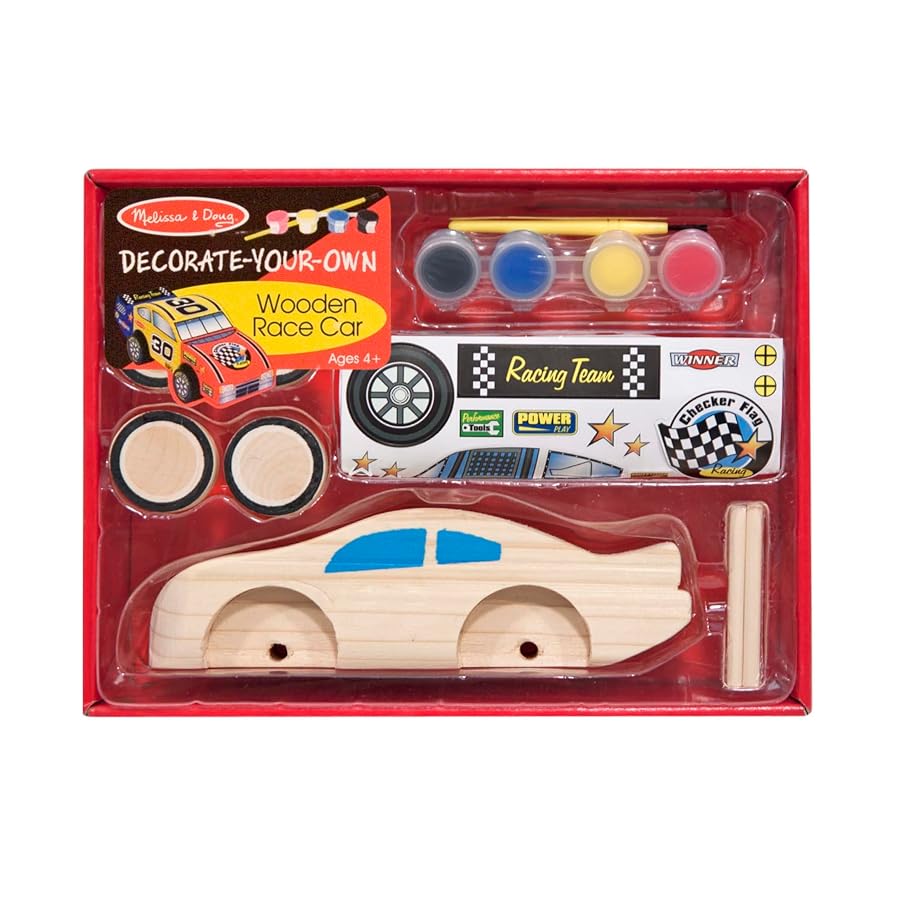
Melissa & Doug Created by Me! Decorate-Your-Own Wooden Race Car Craft Kit (opens Amazon in a new tab)
Paint, decorate and assemble a small wooden race car, then play with the finished vehicle after it dries
Why it fits this guide
The project mixes several familiar steps—painting, stickers and simple assembly—without becoming a large multi-day build. The finished car also has a purpose beyond sitting on a shelf, which can matter for children who are less motivated by display crafts.
Honest drawback
Paint and glue need drying time, and small parts or axle assembly may require light adult help
Best forKids who want to use the finished project as a toy
Pros
- Finished craft becomes a playable toy
- Mixes painting, decorating and simple construction
- Compact project has an obvious end goal
Cons
- Drying slows down the transition from crafting to playing
- Small parts and assembly can require adult assistance
Related guides
Best Air-Dry Clay Kits for Kids: 10 Easy Sculpting Sets for Beginners
Ten beginner-friendly air-dry clay kits for kids, compared by age, project style, tools, storage, drying workflow and honest adult-help needs.
Best Craft Kits for Kids: 12 Creative Screen-Free Picks
The best craft kits for kids, from preschool pom-pom art to sewing, painting, clay, jewelry and terrariums. Compare ages, mess and skill level.
Best Craft Kits for Tweens Ages 9–12: 10 Creative Projects That Aren't Too Childish
The best craft kits for tweens ages 9–12, from pottery and sewing to jewelry, crochet, string art and clay. Compare age fit, mess, skill level and finished projects.
Best Low-Mess Craft Kits for Kids: 10 Parent-Friendly Picks
Ten low-mess craft kits for kids, from foil and sticker art to water reveal, weaving and supervised sewing, with honest cleanup and age notes for parents.


