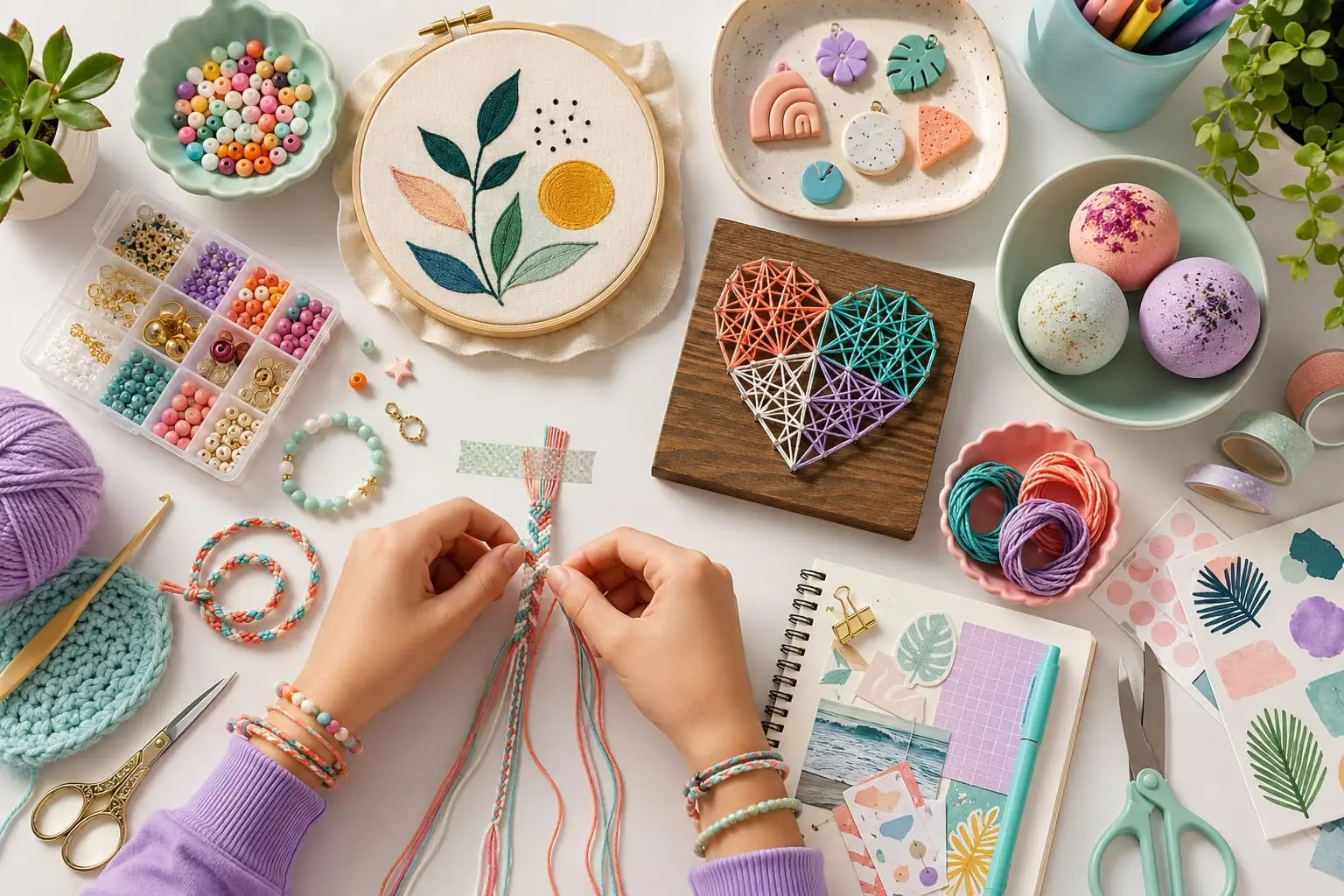
Best Craft Kits for Tweens Ages 9–12: 10 Creative Projects That Aren't Too Childish. The best craft kits for tweens ages 9–12, from pottery and sewing to jewelry, crochet, string art and clay. Compare age fit, mess, skill level and finished projects.. Type: Buying guide. Category: Crafts & Activities. Tags: craft-kits, tweens, ages-9-12, screen-free-activities, sewing-kits, jewelry-making, pottery, crochet, string-art, buying-guide, cluster-crafts-activities.

Buying guide

Best Craft Kits for Tweens Ages 9–12: 10 Creative Projects That Aren't Too Childish

Our recommendation

For a tween who wants a craft that feels like a real hobby, our top research pick is the NATIONAL GEOGRAPHIC Pottery Wheel for Kids because it combines a powered two-speed wheel, air-dry clay, sculpting tools and finishing supplies in a format recommended for ages 8+. Klutz Sew Mini Treats is the stronger choice for ages 10–12 who want to learn hand sewing, while the STMT DIY Beaded Jewelry Kit is an accessible 8+ option for personalized wearable projects. For a nine-year-old, prioritize the kits marked 8+ or 7+ rather than assuming every tween craft is suitable just because the overall guide covers ages 9–12.

Quick picks

Top recommendations

  1. 1NATIONAL GEOGRAPHIC Pottery Wheel for Kids — Best overallA powered two-speed pottery wheel with clay, tools and decorating supplies gives ages 9–12 a substantial project with room to improve
  2. 2Klutz Sew Mini Treats — Best sewing kitA multi-project felt kit that turns basic stitches into small plush treats while teaching a reusable sewing skill
  3. 3STMT DIY Beaded Jewelry Kit — Best jewelry kitMore than 700 beads, alphabet pieces, elastic and charms support up to 15 personalized accessories
  4. 4Klutz String Art — Best room-decor craftPins, string, project boards and a custom pushing tool turn a traditional craft into several room-ready designs
  5. 54M Easy-to-Do Crochet Art Kit — Best budget skill-builderAn affordable introduction to crochet with hooks, yarn, a needle and guided beginner projects
  6. 6Creativity for Kids Quick Knit Loom Kit — Best loom knitting kitA round loom, chunky yarn and simple accessories make a pom-pom hat and cup cozy approachable for first-time knitters
  7. 7Klutz Make Clay Charms — Best clay craftNine colors of clay plus findings and glaze turn small sculpting exercises into charms that can be worn, traded or gifted
  8. 8Klutz Make Your Own Bath Bombs — Best science-meets-craft kitA guided kit for making up to 12 shaped bath bombs combines a craft session with simple formulation and a finished product tweens can actually use
  9. 9Dan&Darci Diamond Art Kit for Kids — Best relaxing craftThousands of small gems decorate keychains, suncatchers and stickers in a straightforward placement craft that works well in short sessions
  10. 10Make It Real Juicy Couture Pink & Precious Bracelets — Best fashion-focused kitA Juicy Couture-themed bracelet kit gives fashion-focused tweens wearable projects with an older-looking presentation

Product comparison

ProductBest forWatch outPrice & shop
NATIONAL GEOGRAPHIC Pottery Wheel for Kids (opens Amazon in a new tab)NATIONAL GEOGRAPHIC · NGPWHEEL
Best overallResearch-based review
Tweens who want a craft that feels like a real creative hobbyIt is the priciest pick in this shortlist and clay plus paint creates more setup and cleanup than compact table crafts
Klutz Sew Mini Treats (opens Amazon in a new tab)Klutz · Sew Mini Treats
Best sewing kitResearch-based review
Ages 10–12 who want to learn real hand sewingThe recommended age starts at 10 and the real needles make this a poor choice for a younger or careless crafter without supervision
STMT DIY Beaded Jewelry Kit (opens Amazon in a new tab)STMT · 223086 Jewelry Making Kit
Best jewelry kitResearch-based review
Tweens who like wearable crafts and personalizationThe value depends on genuine interest in jewelry making, and the many tiny pieces are easy to scatter
Klutz String Art (opens Amazon in a new tab)Klutz · String Art
Best room-decor craftResearch-based review
Ages 10–12 who want to make displayable wall artIt is recommended for ages 10+ and the large number of pins means setup, storage and cleanup need care
4M Easy-to-Do Crochet Art Kit (opens Amazon in a new tab)4M · 3625
Best budget skill-builderResearch-based review
Tweens who want to learn a yarn craft they can keep doing laterCrochet can be frustrating at the beginning because dropped stitches and uneven tension are harder to fix than mistakes in simple placement crafts
Creativity for Kids Quick Knit Loom Kit (opens Amazon in a new tab)Creativity for Kids · Quick Knit Loom Kit
Best loom knitting kitResearch-based review
Tweens who want a wearable yarn project without starting on knitting needlesLoom knitting is its own technique, so success here does not automatically teach a tween how to knit with two needles
Klutz Make Clay Charms (opens Amazon in a new tab)Klutz · Make Clay Charms
Best clay craftResearch-based review
Tweens who like sculpting tiny objects and wearable miniaturesThe clay must be baked, so an adult needs to take over that step even if the tween handles the sculpting independently
Klutz Make Your Own Bath Bombs (opens Amazon in a new tab)Klutz · Make Your Own Bath Bombs
Best science-meets-craft kitResearch-based review
Ages 10–12 who enjoy mixing, measuring and making something usableThe manufacturer minimum age is 10, and powders plus fragrance make this a messier, more supervised activity than dry crafts
Dan&Darci Diamond Art Kit for Kids (opens Amazon in a new tab)Dan&Darci · Gem Diamond Painting
Best relaxing craftResearch-based review
Tweens who prefer calm, precise projects over learning a difficult techniqueIt is more about careful placement than developing a transferable craft skill, and the tiny gems can become a cleanup problem if spilled
Make It Real Juicy Couture Pink & Precious Bracelets (opens Amazon in a new tab)Make It Real · 4408
Best fashion-focused kitResearch-based review
Tweens who already like bracelets, charms and a polished pink fashion aestheticThe strong branded pink aesthetic makes it a risky blind gift if you do not already know the tween likes that look

Selection and testing methodology

This is a research-based guide, not a hands-on ranking. We compared 10 craft kits using product information checked on August 24, 2026, focusing on official age guidance, how complete the kit is, whether the finished project feels age-appropriate for a tween, the amount of adult help likely to be needed, mess and cleanup, repeat-project potential, and whether the activity teaches a skill that can continue beyond the box. We also checked that the selected products still had active Amazon product pages or marketplace purchase options when researched. KawaiiToons has not personally tested these kits yet, so we do not publish invented completion times, difficulty scores, durability ratings or claims about how independently a child will finish them.

Detailed product sections

Best overallResearch-based review

NATIONAL GEOGRAPHIC Pottery Wheel for Kids (opens Amazon in a new tab)

NATIONAL GEOGRAPHIC · NGPWHEEL

A powered two-speed pottery wheel with clay, tools and decorating supplies gives ages 9–12 a substantial project with room to improve

Why it fits this guide

Pottery avoids the “little-kid craft” problem because the process itself is a recognizable art skill. This kit is recommended for ages 8+ and includes a powered wheel, 2 lb of air-dry clay, sculpting tools, paint and an apron, so a tween can move from shaping to decorating without the experience feeling like a basic molding toy.

Honest drawback

It is the priciest pick in this shortlist and clay plus paint creates more setup and cleanup than compact table crafts

Best forTweens who want a craft that feels like a real creative hobby

Pros

  • Two-speed powered wheel gives the activity a more authentic pottery feel
  • Includes clay, sculpting tools, paints and an apron
  • Recommended age covers the full 9–12 range

Cons

  • Higher upfront cost than most craft kits
  • Messier to set up, use and clean
Check price on Amazon (opens Amazon in a new tab)
Best sewing kitResearch-based review

Klutz Sew Mini Treats (opens Amazon in a new tab)

Klutz · Sew Mini Treats

A multi-project felt kit that turns basic stitches into small plush treats while teaching a reusable sewing skill

Why it fits this guide

Sewing feels more purposeful than simple assembly, and this kit includes the patterns, felt, embroidery floss, needles, stuffing and decorative pieces needed to work through many small designs. The projects are cute without relying on a preschool-style format, and the underlying skill can carry into future sewing projects.

Honest drawback

The recommended age starts at 10 and the real needles make this a poor choice for a younger or careless crafter without supervision

Best forAges 10–12 who want to learn real hand sewing

Pros

  • Teaches hand sewing instead of only decorating a pre-made object
  • Includes materials for many small felt projects
  • Finished pieces can be customized once the basics are learned

Cons

  • Not recommended for most nine-year-olds
  • Needles and small parts require careful handling
Check price on Amazon (opens Amazon in a new tab)
Best jewelry kitResearch-based review

STMT DIY Beaded Jewelry Kit (opens Amazon in a new tab)

STMT · 223086 Jewelry Making Kit

More than 700 beads, alphabet pieces, elastic and charms support up to 15 personalized accessories

Why it fits this guide

The project is easy to understand but has enough choice to avoid feeling like a toddler bead set. Tweens can follow the booklet first, then change colors, words and combinations to make bracelets that feel more personal. Its 8+ age guidance also makes it one of the easier recommendations for nine-year-olds in this list.

Honest drawback

The value depends on genuine interest in jewelry making, and the many tiny pieces are easy to scatter

Best forTweens who like wearable crafts and personalization

Pros

  • Materials support many finished pieces
  • Alphabet beads encourage personalization
  • Beginner-friendly age guidance starts at 8+

Cons

  • Small beads need organized storage
  • Less compelling for tweens who do not wear or gift jewelry
Check price on Amazon (opens Amazon in a new tab)
Best room-decor craftResearch-based review

Klutz String Art (opens Amazon in a new tab)

Klutz · String Art

Pins, string, project boards and a custom pushing tool turn a traditional craft into several room-ready designs

Why it fits this guide

String art has a more graphic, decor-oriented finish than many children's craft boxes. The kit teaches a small set of techniques that can be reused across multiple boards, then gives tweens room to change backgrounds, colors and layouts rather than simply copying one template.

Honest drawback

It is recommended for ages 10+ and the large number of pins means setup, storage and cleanup need care

Best forAges 10–12 who want to make displayable wall art

Pros

  • Finished projects can be displayed in a bedroom or study area
  • Includes supplies for multiple boards
  • Teaches reusable string-art techniques

Cons

  • Recommended age starts at 10
  • Loose pins are less forgiving than soft craft materials
Check price on Amazon (opens Amazon in a new tab)
Best budget skill-builderResearch-based review

4M Easy-to-Do Crochet Art Kit (opens Amazon in a new tab)

4M · 3625

An affordable introduction to crochet with hooks, yarn, a needle and guided beginner projects

Why it fits this guide

Crochet is a genuine hobby rather than an age-limited craft theme. The kit gives a tween the core tools and enough yarn to practice several simple projects, which makes it a useful low-cost test before investing in a larger yarn collection.

Honest drawback

Crochet can be frustrating at the beginning because dropped stitches and uneven tension are harder to fix than mistakes in simple placement crafts

Best forTweens who want to learn a yarn craft they can keep doing later

Pros

  • Teaches a transferable craft skill
  • Recommended for ages 8+
  • Lower-cost way to see whether crochet holds a tween's interest

Cons

  • Steeper learning curve than gem or bead placement
  • Starter yarn supply is limited once the included projects are complete
Check price on Amazon (opens Amazon in a new tab)
Best loom knitting kitResearch-based review

Creativity for Kids Quick Knit Loom Kit (opens Amazon in a new tab)

Creativity for Kids · Quick Knit Loom Kit

A round loom, chunky yarn and simple accessories make a pom-pom hat and cup cozy approachable for first-time knitters

Why it fits this guide

The loom removes some of the hand coordination that makes traditional knitting frustrating for beginners, while the finished hat feels more substantial than a decorative mini craft. It is also recommended from age 7+, making it accessible across the full 9–12 range.

Honest drawback

Loom knitting is its own technique, so success here does not automatically teach a tween how to knit with two needles

Best forTweens who want a wearable yarn project without starting on knitting needles

Pros

  • Lowers the barrier to a successful first yarn project
  • Finished hat is wearable rather than purely decorative
  • Age guidance comfortably includes nine-year-olds

Cons

  • Does not replace learning traditional knitting needles
  • Extra yarn is needed for continued projects
Check price on Amazon (opens Amazon in a new tab)
Best clay craftResearch-based review

Klutz Make Clay Charms (opens Amazon in a new tab)

Klutz · Make Clay Charms

Nine colors of clay plus findings and glaze turn small sculpting exercises into charms that can be worn, traded or gifted

Why it fits this guide

Polymer-clay charms combine open-ended sculpting with a clear finished purpose. The step-by-step designs help a beginner get started, but the format leaves plenty of room for original characters, foods and tiny objects once the basic shaping techniques make sense.

Honest drawback

The clay must be baked, so an adult needs to take over that step even if the tween handles the sculpting independently

Best forTweens who like sculpting tiny objects and wearable miniatures

Pros

  • Recommended for ages 8+
  • Includes clay, glaze and jewelry findings
  • Easy to move from guided designs to original ideas

Cons

  • Baking requires adult involvement
  • Very small details can be fiddly
Check price on Amazon (opens Amazon in a new tab)
Best science-meets-craft kitResearch-based review

Klutz Make Your Own Bath Bombs (opens Amazon in a new tab)

Klutz · Make Your Own Bath Bombs

A guided kit for making up to 12 shaped bath bombs combines a craft session with simple formulation and a finished product tweens can actually use

Why it fits this guide

Bath bombs feel closer to DIY beauty and simple kitchen science than to a conventional children's craft. The process gives older tweens a sequence to follow, room to enjoy color and fragrance, and a finished item that can be used or given away.

Honest drawback

The manufacturer minimum age is 10, and powders plus fragrance make this a messier, more supervised activity than dry crafts

Best forAges 10–12 who enjoy mixing, measuring and making something usable

Pros

  • Makes multiple usable finished bath bombs
  • Mixes creativity with a simple science-style process
  • Finished pieces can double as handmade gifts

Cons

  • Not recommended for most nine-year-olds
  • Ingredient handling and cleanup benefit from adult oversight
Check price on Amazon (opens Amazon in a new tab)
Best relaxing craftResearch-based review

Dan&Darci Diamond Art Kit for Kids (opens Amazon in a new tab)

Dan&Darci · Gem Diamond Painting

Thousands of small gems decorate keychains, suncatchers and stickers in a straightforward placement craft that works well in short sessions

Why it fits this guide

Diamond art gives tweens a visually satisfying project without a steep learning curve. This set produces several usable or displayable pieces instead of one large picture, and its age range extends through 12, which keeps it relevant to younger tweens who still enjoy gem crafts.

Honest drawback

It is more about careful placement than developing a transferable craft skill, and the tiny gems can become a cleanup problem if spilled

Best forTweens who prefer calm, precise projects over learning a difficult technique

Pros

  • Easy to start without mastering stitches or tools
  • Includes several types of finished projects
  • Suitable across the full 9–12 range

Cons

  • Tiny gems are easy to spill
  • Less skill-building than sewing, crochet or pottery
Check price on Amazon (opens Amazon in a new tab)
Best fashion-focused kitResearch-based review

Make It Real Juicy Couture Pink & Precious Bracelets (opens Amazon in a new tab)

Make It Real · 4408

A Juicy Couture-themed bracelet kit gives fashion-focused tweens wearable projects with an older-looking presentation

Why it fits this guide

This is the most style-specific option in the shortlist, which is exactly why it can work for the right tween. The beads, chains and charms create accessories rather than generic children's crafts, and the recommended 8–15 range comfortably spans the target ages.

Honest drawback

The strong branded pink aesthetic makes it a risky blind gift if you do not already know the tween likes that look

Best forTweens who already like bracelets, charms and a polished pink fashion aesthetic

Pros

  • Recommended age range spans ages 9–12
  • Finished projects are wearable and giftable
  • Fashion styling feels more tween-oriented than preschool craft themes

Cons

  • Very specific visual style
  • Small findings are easy to lose
Check price on Amazon (opens Amazon in a new tab)

How to choose

  • Match the kit to the tween's current interests before looking at the age number. A sophisticated jewelry kit is still a bad gift for a child who would rather sculpt, sew or make room decor.
  • Treat the age recommendation as a floor, not a promise of independence. Several of the strongest kits here start at age 10 because they use needles, pins or more involved processes.
  • Look for a finished result worth keeping, wearing, using or displaying. Tweens are often more motivated by a real object than by a craft that exists only to occupy 20 minutes.
  • Decide whether you want a quick success or a skill-building project. Diamond art is easier to start; crochet, sewing and pottery have more learning curve but can open the door to a lasting hobby.
  • Check what happens after the box is opened. Clay, paint, powders, loose beads and pins create very different supervision and cleanup needs.
  • Favor kits that include the specialist materials needed for the first project. A supposedly complete craft loses momentum quickly if you discover that a hook, needle, baking step or basic household item was not anticipated.

Common mistakes

  • Buying by the words “kids craft” without checking whether the design, colors and finished object will feel too young for a 10-, 11- or 12-year-old.
  • Assuming a kit labeled 8+ will be equally engaging for an eight-year-old and a twelve-year-old. Age safety and age appeal are not the same thing.
  • Choosing the most impressive-looking kit without considering patience. Crochet and detailed sewing can be rewarding, but they are poor matches for a tween who wants an instant result.
  • Ignoring supervision requirements. Sewing needles, string-art pins, baking clay and bath-bomb ingredients all call for more oversight than sticker-style crafts.
  • Buying a one-and-done activity for a child who is actively looking for a new hobby. Skill-based kits such as crochet, sewing and pottery provide a clearer next step after the included materials are gone.
  • Forgetting storage. Beads, gems, pins, charms and small findings are easier to enjoy when there is a tray, container or dedicated workspace to keep pieces from disappearing.

FAQ

What are the best craft kits for tweens ages 9–12?

The best kit depends on the tween's interests and patience. In this research-based shortlist, the NATIONAL GEOGRAPHIC Pottery Wheel is our best overall pick for a substantial hands-on project, Klutz Sew Mini Treats is a strong choice for ages 10–12 who want to learn sewing, and the STMT DIY Beaded Jewelry Kit is an easier 8+ option for wearable, personalized projects. Crochet, loom knitting, string art and clay are better fits when the goal is learning a repeatable craft skill rather than simply filling time.

What craft kits are good for a 9-year-old?

Start with products whose recommended age begins below 10. The NATIONAL GEOGRAPHIC Pottery Wheel, STMT DIY Beaded Jewelry Kit, 4M Easy-to-Do Crochet, Creativity for Kids Quick Knit Loom, Klutz Make Clay Charms, Dan&Darci Diamond Art Kit and Make It Real Pink & Precious Bracelets all have age guidance that includes nine-year-olds. The sewing, string-art and bath-bomb picks in this guide start at age 10 and should not be treated as default choices for age 9.

What craft kits are good for 10- to 12-year-olds without feeling babyish?

Look for crafts that produce something wearable, useful or displayable and that use a real technique. Pottery, hand sewing, crochet, loom knitting, polymer-clay sculpting, string art and jewelry making all have a clearer skill or finished-object payoff than many younger children's sticker, foam or pre-cut assembly kits.

Are craft kits good screen-free gifts for tweens?

Yes, especially when the project matches an existing interest. A craft kit gives the recipient a defined starting point and the materials to begin immediately. For a stronger gift, choose a project with a finished result the tween can wear, display, use or give away rather than relying only on a large piece count or flashy packaging.

Should I buy a craft kit rated 8+ for a 12-year-old?

An 8+ safety label does not automatically mean the project is too young for a 12-year-old. Look at the technique and finished result. Pottery, crochet, jewelry making and polymer clay can remain interesting well beyond the minimum age because there is room to improve and personalize. By contrast, a heavily scripted craft with no creative choices may feel young even if the box technically includes older ages.

Which tween craft kits teach a real skill?

Sewing, crochet, pottery, loom knitting, string art and polymer-clay sculpting have the clearest skill-building paths in this shortlist. They can lead naturally to new projects after the original kit is finished. Jewelry making also develops design and fine-motor skills, while diamond art is more focused on careful placement and relaxation than on a broad craft technique.

Which craft kit is easiest for an impatient tween?

A placement or assembly activity such as the Dan&Darci Diamond Art Kit or a straightforward bead-jewelry project usually has a lower initial learning curve than crochet or sewing. Crochet can be especially frustrating in the first session if stitches are missed, while pottery has more setup and cleanup even when the shaping itself is fun.

How much adult supervision do tween craft kits need?

It varies by project rather than age alone. Sewing needles and string-art pins need careful handling, polymer clay needs adult help for baking, and bath-bomb ingredients are better used with kitchen oversight. Pottery may need help with setup and cleanup. Beading, diamond art and loom knitting can often be more independent once the workspace is organized and the tween understands the instructions.

Final recommendation

If you want one kit with broad 9–12 appeal and a finished result that does not feel preschool-like, the NATIONAL GEOGRAPHIC Pottery Wheel for Kids is our top research pick. It has the strongest “real hobby” feel in this shortlist, although it is also the most expensive and one of the messiest. For ages 10–12, Klutz Sew Mini Treats is a strong lower-cost alternative because it teaches actual hand sewing across multiple projects. For a nine-year-old or a tween who wants fast personalization, the STMT DIY Beaded Jewelry Kit, 4M Easy-to-Do Crochet, Creativity for Kids Quick Knit Loom, Klutz Make Clay Charms and Make It Real Pink & Precious Bracelets all start below age 10. Match the project to the child first; the best tween craft kit is the one they will still want to work on after the novelty of opening the box has worn off.

Shopping for the best craft kits for tweens ages 9–12 is surprisingly different from shopping for younger kids. At this age, a box covered in cartoon stickers and pre-cut foam shapes can feel babyish before the project even starts. Go too far in the other direction, though, and an adult craft kit can turn a relaxing afternoon into a frustrating lesson in missing tools, vague instructions or techniques that assume years of practice.

The sweet spot is a project that feels real. Tweens are old enough to care whether the finished object is worth keeping. A bracelet they can wear, a clay charm they can give to a friend, a hat they made themselves or a piece of string art for their room has more staying power than a craft designed only to keep small hands busy.

For this guide, we focused on kits with a clear creative payoff: pottery, sewing, jewelry making, string art, crochet, loom knitting, polymer clay, bath bombs and diamond art. We also paid close attention to age guidance. Some of the most appealing “older kid” projects start at age 10, so they are not automatically appropriate for every nine-year-old just because this guide covers ages 9–12.

This is a research-based guide. KawaiiToons has not personally tested these kits yet, so we have not invented completion times, mess scores, difficulty ratings or claims about how independently a tween will finish them. The recommendations are based on the product information checked on August 24, 2026, including age guidance, included materials, project type, likely supervision needs and the practical trade-offs of each format.

The short version: which craft kit should you choose?

If you want the most substantial all-around project, start with the NATIONAL GEOGRAPHIC Pottery Wheel for Kids. A powered wheel, clay, sculpting tools and decorating supplies make it feel closer to trying a real art hobby than opening a simple activity box. It is also recommended for ages 8+, so it covers the full 9–12 range. The trade-off is obvious: it costs more and creates more mess.

For a tween who wants to learn a real hand skill, choose Klutz Sew Mini Treats for ages 10–12 or the 4M Easy-to-Do Crochet Art Kit for ages 9–12. Both can lead naturally to new projects once the included materials are gone. Sewing has an easier connection between each stitch and the finished object; crochet has a steeper early learning curve but an enormous hobby path if it clicks.

For wearable projects, the STMT DIY Beaded Jewelry Kit gives tweens lots of room to personalize colors and words, while Make It Real Juicy Couture Pink & Precious Bracelets is the more style-specific pick for someone who already loves that fashion aesthetic.

For room decor, Klutz String Art is a good fit for ages 10–12 who like patient, patterned projects. For something quieter and easier to dip into for 15 or 20 minutes at a time, the Dan&Darci Diamond Art Kit is the lowest-friction option here.

For yarn crafts without traditional knitting needles, the Creativity for Kids Quick Knit Loom Kit turns chunky yarn into a wearable hat using a round loom. For small sculpting, Klutz Make Clay Charms produces wearable miniatures. And for a project that sits somewhere between crafting and simple kitchen science, Klutz Make Your Own Bath Bombs is a 10+ option with a usable finished result.

Why craft kits for ages 9–12 need a different shortlist

Nine to twelve is an awkward shopping range because the developmental spread is large. A nine-year-old who is new to crafts may want quick visible progress and straightforward instructions. A twelve-year-old may already be capable of following multi-step patterns, managing small tools and rejecting anything that looks designed for little kids.

That is why minimum age is only one filter. A box can be safe for ages 8+ and still look too young for an older tween. The opposite can also happen: a fashionable or sophisticated-looking craft may contain needles, pins, hot-water steps, baking or fine techniques that make it inappropriate for a younger child without help.

We therefore looked for three things beyond the number printed on the box.

First, the finished result should have a purpose. Wear it, display it, use it, gift it or build on the skill. Tweens are often more willing to push through a fiddly step when they care about what they are making.

Second, the project should have some creative ownership. Copying a first example is useful, but the better kits make it possible to change colors, words, shapes, patterns or designs after the basic technique makes sense.

Third, the activity should offer an appropriate challenge-to-success ratio. A project that is impossible without an adult doing half the work is not a great tween craft. Neither is a project so automatic that the child feels finished before they have made a meaningful decision.

Best craft kits for tweens ages 9–12

1. NATIONAL GEOGRAPHIC Pottery Wheel for Kids — Best overall

Pottery is one of the easiest ways to make a craft kit feel less childish because the underlying activity is the same kind of making adults do: centering clay, shaping a form, refining the surface and deciding how to finish it.

The NATIONAL GEOGRAPHIC Pottery Wheel for Kids includes a two-speed powered wheel, 2 lb of air-dry clay, sculpting tools, paints and an apron. The recommended age starts at 8, so a nine-year-old is not automatically excluded from the experience.

The main appeal is depth. A tween can make more than a decorative trinket; they can practice how hand pressure changes a shape and learn that the first wobbly pot is part of getting better. That gives the kit more “real hobby” energy than a tightly scripted craft where every child ends with the exact same object.

Best for: Tweens who like clay, tactile art or projects that feel substantial.

Why it does not feel too childish: The wheel and sculpting process are recognizable art tools rather than preschool-style craft components.

Watch out for: Pottery is messy. Clay residue, wet hands, paint and an electric wheel need more space and cleanup than a bracelet or yarn kit. It is also the premium-priced option in this shortlist.

2. Klutz Sew Mini Treats — Best sewing kit

For ages 10–12, Klutz Sew Mini Treats offers one of the clearest bridges from “craft kit” to an actual practical skill. The box includes felt, embroidery floss, needles, stuffing, patterns and small decorative pieces for sewing miniature food-themed plush designs.

The projects are intentionally cute, but the process is not just decoration. A tween has to thread, stitch, line up pieces, stuff the shape and finish it. Once those basics make sense, the same hand-sewing skills can carry into repairs, embroidery, felt toys and other textile projects.

That repeatability matters. A good tween craft should ideally leave the child thinking, “What else could I make?” rather than, “The box is empty, so I am done.”

Best for: Patient ages 10–12 who like small detailed projects and want to learn hand sewing.

Why it does not feel too childish: It uses real sewing techniques and leaves room to customize designs after learning the patterns.

Watch out for: The recommended age starts at 10, and the kit uses real needles. For most nine-year-olds, choose an 8+ option in this guide instead unless you have a clear reason and appropriate supervision.

3. STMT DIY Beaded Jewelry Kit — Best jewelry kit

Jewelry making works well for tweens because the finished project can immediately become part of how they express themselves. The STMT DIY Beaded Jewelry Kit includes more than 700 beads, alphabet beads, elastic, charms, a toggle clasp and a project booklet, with enough material to create up to 15 pieces.

The useful difference between this and a very young bead set is customization. A tween can start by following the illustrated designs, then switch to names, initials, short phrases, color combinations and friendship bracelets that actually reflect the person making them.

Its recommended age begins at 8, so this is also one of the easier choices for a nine-year-old who is ready to keep track of lots of small components.

Best for: Tweens who already wear bracelets, trade friendship jewelry or like personalized accessories.

Why it does not feel too childish: The finished pieces are designed to be worn, mixed, gifted and personalized rather than simply displayed as a children’s craft.

Watch out for: The many tiny beads are easy to spill, and the kit is a weak fit if the child is not already interested in jewelry.

4. Klutz String Art — Best room-decor craft

Klutz String Art turns pins, colorful string and sturdy project boards into graphic designs that can be displayed afterward. It includes a custom pin-pushing tool, more than 500 pins, craft string, project boards, background papers and tracing paper, along with guided techniques.

This format works especially well for tweens because the result looks like decor rather than a classroom exercise. Once the basic fan, zigzag and wrapping ideas click, there is room to change colors, choose backgrounds and eventually design original patterns.

The process also rewards patience. String art is repetitive enough to feel calming, but a child still has to follow the shape and make decisions about how the lines build up.

Best for: Ages 10–12 who enjoy pattern-based crafts and want something to hang in their room.

Why it does not feel too childish: The final pieces look like graphic wall art and the technique can be reused outside the kit.

Watch out for: The age guidance starts at 10, and hundreds of pins create an obvious storage and cleanup issue. This is a table craft, not something to open on the sofa or carpet.

5. 4M Easy-to-Do Crochet Art Kit — Best budget skill-builder

A crochet kit is a strong answer to “what can I buy that they will not outgrow immediately?” because crochet is not a children’s-only activity. 4M Easy-to-Do Crochet gives beginners hooks, yarn, a plastic needle and an illustrated booklet, with enough material to make several simple starter projects.

The kit is recommended for ages 8+, which makes it viable throughout the 9–12 range. It is also a sensible way to find out whether the child enjoys the rhythm of crochet before buying multiple hooks and full-size yarn skeins.

The trade-off is the learning curve. A tween has to understand how the hook catches the yarn, how tension affects the stitch and what to do when something goes wrong. That can be satisfying for a child who likes mastering a skill and annoying for one who wants a result in five minutes.

Best for: Tweens who enjoy learning techniques and may want a hobby they can continue cheaply.

Why it does not feel too childish: The skill is the same core craft used for scarves, bags, plushies, garments and home projects.

Watch out for: Crochet can produce an ugly first attempt. Choose this for a child who can tolerate practice rather than one who expects every project to work immediately.

6. Creativity for Kids Quick Knit Loom Kit — Best loom knitting kit

Traditional knitting can be a lot to coordinate at first. The Creativity for Kids Quick Knit Loom Kit uses a round loom and hook instead, with chunky yarn, pom poms and materials for projects including a hat and cup cozy.

For a tween, the biggest advantage is an achievable wearable result. A hat feels more substantial than a small decorative craft, while the loom reduces the amount of needle coordination needed to get started. The recommended age is 7+, so it also works across the entire 9–12 range.

This can be a smart choice for a child who likes yarn crafts but bounced off knitting needles before. It introduces the logic of building fabric loop by loop without requiring exactly the same hand motions as standard knitting.

Best for: Tweens who want a cozy wearable project with a gentler learning curve than traditional knitting.

Why it does not feel too childish: The finished hat is useful, and the technique can continue with more yarn after the starter supply is gone.

Watch out for: Loom knitting is not the same as knitting with two needles. If the long-term goal is specifically traditional knitting, this is a side door rather than a complete replacement.

7. Klutz Make Clay Charms — Best clay craft

Klutz Make Clay Charms combines small-scale sculpting with jewelry making. The kit includes nine colors of clay, glaze, shaping tools, bracelet findings and step-by-step projects for miniature charms.

This is a particularly good tween format because tiny clay objects are easy to personalize. A child can start with the guided food, animal or object designs, then invent their own shapes once they understand how much clay to use and how details are attached.

The finished pieces can be turned into a bracelet, traded with friends or used as small handmade gifts. That gives the sculpting an obvious purpose beyond simply practicing with modeling clay.

Best for: Tweens who like miniatures, character design, sculpting or collectible charms.

Why it does not feel too childish: The creative challenge comes from shaping and designing tiny objects, not from assembling pre-cut pieces.

Watch out for: The clay needs baking. An adult should take responsibility for the oven step, so this is not an entirely independent project from start to finish.

8. Klutz Make Your Own Bath Bombs — Best science-meets-craft kit

For an older tween who likes mixing and experimenting, Klutz Make Your Own Bath Bombs feels closer to DIY bath and body making than to a traditional children’s craft. The kit includes the core ingredients, molds and instructions for making up to 12 bath bombs in multiple shapes.

There is a satisfying sequence to the project: measure, combine, mold, wait and then use the result. That makes it especially appealing to a child who likes both creative projects and simple science-style processes.

The manufacturer minimum age is 10, so this is best treated as a 10–12 recommendation within this guide rather than stretched downward to fit nine-year-olds.

Best for: Ages 10–12 who like recipes, experiments and usable handmade products.

Why it does not feel too childish: The result is a real bath product that can be used or given as a small handmade gift.

Watch out for: Powders, fragrance and kitchen-style measuring make this messier than a dry table craft. Adult oversight is sensible, especially for ingredient handling and cleanup.

9. Dan&Darci Diamond Art Kit for Kids — Best relaxing craft

Not every tween wants to master a difficult new technique. The Dan&Darci Diamond Art Kit is the calmer option here, using a stylus and wax to place small gems onto keychains, suncatchers and stickers.

The value is in the low barrier to entry. There is no stitch tension to learn, no wheel to control and no baking step. A tween can understand the basic action quickly, put on music or an audiobook and work through the designs in manageable chunks.

Because the kit creates several kinds of small finished objects rather than one large picture, it also offers some variety before the activity starts to feel repetitive.

Best for: Tweens who like precise, relaxing crafts and visible progress without a steep learning curve.

Why it does not feel too childish: The activity is closer to a detailed mosaic-style placement craft than a simple coloring or sticker sheet.

Watch out for: It builds patience more than a broad craft skill. Thousands of tiny gems can also become a major nuisance if the tray tips over.

10. Make It Real Juicy Couture Pink & Precious Bracelets — Best fashion-focused kit

The Make It Real Juicy Couture Pink & Precious Bracelets kit is the most style-specific recommendation here. That is a weakness if you are buying blind, but a strength when the recipient already likes pink accessories, charms and branded fashion.

The recommended age range of 8–15 spans the entire tween window. The project centers on wearable bracelets using beads, chains and charms, which gives it a more older-kid feel than basic plastic bead threading.

This is the kind of kit to buy because you recognize the tween’s taste, not because the box happens to say the right age.

Best for: Fashion-focused tweens who already like bracelets and charm jewelry.

Why it does not feel too childish: The finished pieces are styled as accessories rather than classroom crafts.

Watch out for: The strong pink Juicy Couture look is not neutral. If the recipient does not like that aesthetic, choose the more customizable STMT kit or a completely different craft category.

Best craft kits for 9-year-olds

A nine-year-old sits at the bottom of the tween range, so age guidance matters more here than it does for an eleven- or twelve-year-old. Do not buy a 10+ kit simply because an older sibling can handle it.

The strongest age-compatible options in this shortlist are the NATIONAL GEOGRAPHIC Pottery Wheel, STMT DIY Beaded Jewelry Kit, 4M Easy-to-Do Crochet, Creativity for Kids Quick Knit Loom, Klutz Make Clay Charms, Dan&Darci Diamond Art Kit and Make It Real Pink & Precious Bracelets.

Which one is best depends on temperament. For a child who wants quick progress, start with diamond art or beading. For a nine-year-old who enjoys learning new skills, crochet or loom knitting has more long-term value. For tactile, messy creativity, pottery or clay charms gives them more freedom to shape something from scratch.

Best craft kits for 10- to 12-year-olds

Once a child reaches 10, the shortlist expands. Klutz Sew Mini Treats, Klutz String Art and Klutz Make Your Own Bath Bombs become age-appropriate options alongside all of the 8+ and 7+ products.

This is also the age range where “not too childish” becomes more important. A twelve-year-old may care far more about what the box looks like and whether they can actually use the finished project than a younger child does.

For a 10- to 12-year-old, our favorite direction is a kit that introduces a real technique: sewing, pottery, crochet, loom knitting, sculpting or string art. Even if the child never becomes deeply serious about the hobby, they finish with a clearer sense of how something is made.

How to choose a craft kit a tween will actually use

Start with the project, not the age label

Age labels are necessary for safety and difficulty, but they do not tell you what a child will enjoy. A 12-year-old who loves miniatures may happily spend hours sculpting tiny clay charms. Another 12-year-old may see the same kit and never open it.

Ask what they have been making or watching recently. Do they draw outfits? Make friendship bracelets? Save crochet videos? Shape things from clay? Decorate their room? The best clue is usually already in their interests.

Look for a finished result with social value

“Social value” does not mean social media. It means the object can enter the tween’s world: a bracelet can be worn or exchanged, a hat can be used, a bath bomb can be gifted, and string art can go on a bedroom wall.

That can make the project feel less like homework. The child has a reason to care about the finish because the result goes somewhere after the session ends.

Decide how much frustration is productive

Some craft kits are almost instantly understandable. Others involve a real learning curve.

If the tween gets discouraged easily, diamond art, beading or loom knitting can provide an earlier feeling of progress. If they actively enjoy mastering techniques, crochet, sewing and pottery create more room to fail, adjust and improve.

Neither type is automatically better. The goal is the right amount of challenge for the person using it.

Check the “adult help” step before gifting

A kit can be marketed to children and still contain a stage that is not truly independent. Polymer clay needs baking. Bath bombs involve ingredients and cleanup. Sewing uses needles. String art uses pins. Pottery has an electric component and wet clay everywhere.

If the intended gift is supposed to occupy a tween independently while an adult works nearby, favor a kit whose tricky steps match that household’s comfort level.

Think about what happens after the included supplies run out

Skill-building kits have a built-in next step. More yarn keeps crochet or loom knitting going. Felt and thread extend sewing. New clay expands charm making. Pottery can continue with more compatible clay.

A placement kit such as diamond art is more self-contained. That can be exactly what you want for a holiday, rainy weekend or sleepover, but it is less likely to become a long-term hobby without buying another project set.

Crafts that feel less childish for tweens

If your main concern is avoiding a craft that gets an immediate “that’s for little kids,” focus on the type of making rather than trying to guess which licensed character or color palette looks old enough.

Sewing and crochet feel mature because they are real textile skills. Pottery and polymer clay let a tween shape an original object. Jewelry making gives them something tied to personal style. String art produces room decor. Bath bombs create a usable product. Even loom knitting has the appeal of making something wearable.

This does not mean every craft needs to be serious. Cute is fine. Kawaii mini food, colorful charms and playful patterns can still appeal to older kids. What often makes a kit feel childish is not the cuteness; it is a process with no real decisions, no skill progression and a result the child has no reason to keep.

What parents should know about mess and supervision

The least messy kits in this guide are the ones where the material stays dry and contained: crochet, loom knitting, sewing and string art. They still have loose pieces, but cleanup is mostly about gathering yarn, thread, pins or needles.

Beading and diamond art create a different kind of mess. The individual pieces are tiny, so one spill can spread across the floor. A shallow tray or compartment box is more useful than a giant craft table.

Clay charms and pottery need a wipeable workspace. Bath bombs need even more kitchen-style discipline because the project involves powders, molds and fragrance.

Supervision also changes by kit. A 12-year-old may be comfortable sewing independently once the setup is clear, while an adult should still handle the oven for polymer clay. Age does not eliminate the need to check what the process actually involves.

Common mistakes when buying craft kits for tweens

Buying a “big kit” instead of a good project

Hundreds or thousands of pieces look impressive on a product page, but piece count is not the same as creative depth. A compact kit that teaches crochet can offer more long-term value than a huge box of decorative bits the child never learns to use.

Assuming 8+ means perfect for age 12

An 8+ minimum tells you the product is intended to be suitable from that age upward. It does not guarantee the styling, challenge or finished result will interest an older tween. Read what the child actually makes.

Choosing the craft you wish they liked

A pottery wheel is a poor gift for a child who hates messy hands. A jewelry kit is a poor gift for someone who never wears accessories. A crochet kit is a poor gift for a tween who becomes furious when a loop does not behave.

Match the project to the real child, not the version of them you hope will suddenly become crafty.

Underestimating the first 10 minutes

Many crafts fail at setup. A knot slips. The yarn is confusing. The pin pattern looks intimidating. The clay is firmer than expected.

A small amount of calm adult help at the beginning can make the difference between “I hate this” and an independent hour of making afterward. The goal is not to take over the project; it is to remove avoidable startup friction.

Our final recommendation

For most families shopping specifically for a craft that feels creative, substantial and not too childish, the NATIONAL GEOGRAPHIC Pottery Wheel for Kids is our top research pick. It covers the full target age range, uses a recognizable art process and gives tweens room to improve rather than simply complete a predetermined assembly task.

It is not the universal answer. If you want less mess and a lower price, Klutz Sew Mini Treats is a strong skill-focused choice for ages 10–12, while 4M Easy-to-Do Crochet gives ages 9–12 a low-cost entry into a hobby that can grow with them. For a tween who wants something wearable and social, STMT DIY Beaded Jewelry is the more flexible jewelry recommendation.

Most importantly, do not treat ages 9–12 as one personality. A nine-year-old beginner and a twelve-year-old who already makes things for friends may need completely different levels of challenge. Start with what they want to create, check the age guidance and adult-only steps, and then choose the kit that gives them enough structure to succeed without making every creative decision for them.