Best Friendship Bracelet Kits for Kids & Tweens: 10 Easy Starter Sets. Ten friendship bracelet kits for kids and tweens, compared by age guidance, technique, strand control, project count, small parts and adult-help needs.. Type: Buying guide. Category: Crafts & Activities. Tags: friendship-bracelet-kits, bracelet-making-kits, crafts-for-kids, crafts-for-tweens, screen-free-activities, gifts-for-tweens, jewelry-making, buying-guide, cluster-crafts-activities.

Buying guide

Best Friendship Bracelet Kits for Kids & Tweens: 10 Easy Starter Sets

Our recommendation

Creativity for Kids Best Friends Bracelets is our top research pick for a first kit from age six because its double-sided wheel holds the floss, introduces two clear pattern styles and includes materials for more than 10 bracelets without overwhelming the table. Loopdedoo is the better choice for an eight-year-old who wants quick wrapped-floss results, while Make It Real Friendship Bracelet Maker is the stronger skill-building pick for ages 8+ ready to practice four real knots. For a bead-focused group activity, choose the Rainbow Bead Jewelry Jar. Every recommendation is research-based, not hands-on tested, and links to the exact Amazon.com detail page reviewed for this guide.

Quick picks

Top recommendations

  1. 1Creativity for Kids Best Friends Bracelets Mini Craft Kit — Best overall starter kitA double-sided weaving wheel organizes eight floss colors while illustrated guidance introduces two approachable bracelet styles
  2. 2Loopdedoo Spinning Loom Friendship Bracelet Maker — Best for fast floss braceletsA hand-powered spinning loom wraps ordinary cotton floss into varied bracelets with visible progress after only a few turns
  3. 3Make It Real Friendship Bracelet Maker — Best for learning real knotsAn enclosed pattern roll and strand slots turn multi-row macrame designs into a more readable step-by-step process
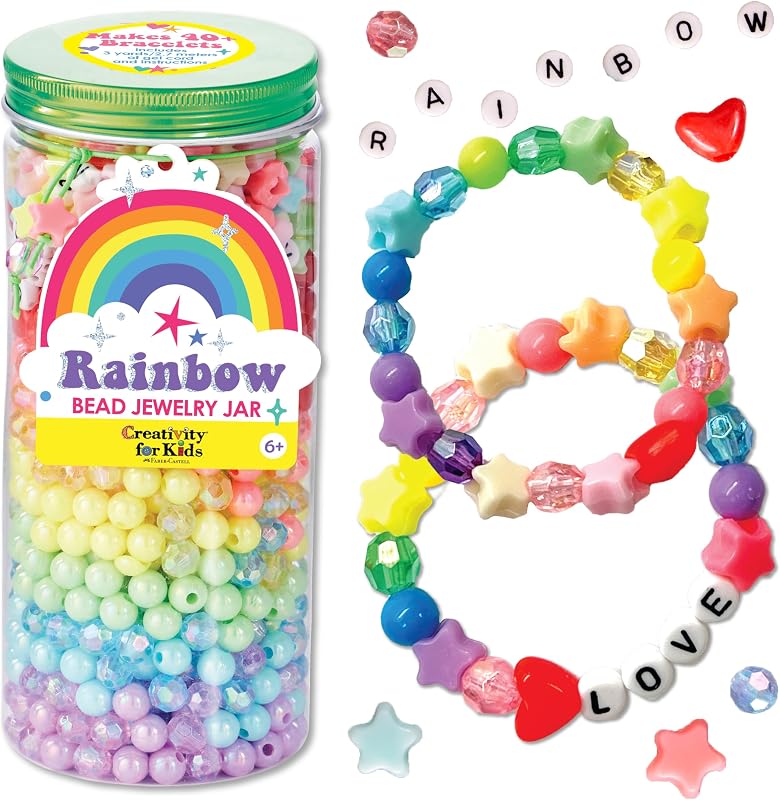
  4. 4Creativity for Kids Rainbow Bead Jewelry Jar — Best for a groupMore than 900 beads and 10 yards of gel cord support over 40 simple bracelets without sharing one specialized tool
  5. 5Creativity for Kids Quick Knit Charm Bracelets — Best soft yarn techniqueA reusable wooden spool tool turns colorful yarn into 10 soft cords that can be finished with charms and gems
  6. 6Make It Real Swift Clicks Heishi Bracelet Maker — Best heishi-bead helperA 16-color rotating carousel clicks heishi beads onto elastic cord for up to 23 bracelet designs
  7. 7Cool Maker PopStyle Bracelet Maker — Best for redesigningPop-on beads and reusable elastic bands let a child make and remake 10 bracelets from the same organized set
  8. 8Horizon Group USA Squishmallows Bracelet Design Set — Best licensed bead setMore than 1,000 beads, character charms and enough cord for 25+ accessories make the theme useful beyond one project
  9. 9Rainbow Loom Loomi-Pals Mega Set — Best repeat-use loom systemA full RL2.0 board, portable Happy Looms, 5,600 bands, 60 charms and beads support many sessions in one case
  10. 10Klutz Harry Potter Friendship Bracelets — Best book-led fandom kitA 48-page Klutz book supplies themed instruction and materials for more than six official Harry Potter bracelets

Product comparison

ProductBest forWatch outPrice & shop
Creativity for Kids Best Friends Bracelets Mini Craft Kit (opens Amazon in a new tab)Creativity for Kids · Best Friends Bracelets Mini Craft Kit
Best overall starter kitResearch-based review
Ages 6+ who need a compact holder and a gentle first patternIt is a small introductory set with two main guided patterns, not a complete course in chevrons, alpha designs or advanced knot combinations.
Loopdedoo Spinning Loom Friendship Bracelet Maker (opens Amazon in a new tab)Loopdedoo · LUEEAAT
Best for fast floss braceletsResearch-based review
Ages 8+ who want quick wrapped designs instead of slow row-by-row knottingThe spinning technique creates wrapped cords rather than traditional chevrons, diamonds or alpha patterns, so it is not a shortcut to mastering classic knots.
Make It Real Friendship Bracelet Maker (opens Amazon in a new tab)Make It Real · 1457
Best for learning real knotsResearch-based review
Ages 8+ ready to follow color-coded patterns and practice four knot typesPattern tracking and consistent tension still require patience; the tool organizes the task but does not make a detailed design instant.
Creativity for Kids Rainbow Bead Jewelry Jar (opens Amazon in a new tab)Creativity for Kids · Rainbow Bead Jewelry Jar 6478000
Best for a groupResearch-based review
Ages 6+ making easy personalized bracelets at a party or playdateThe jar teaches planning, stringing and finishing rather than woven friendship-bracelet knots, and hundreds of loose beads can create a difficult spill.
Creativity for Kids Quick Knit Charm Bracelets (opens Amazon in a new tab)Creativity for Kids · Quick Knit Charm Bracelets
Best soft yarn techniqueResearch-based review
Ages 9+ who want to learn simple spool knittingThe official age guidance begins at nine, and the finished cords do not resemble flat chevron or name-pattern friendship bracelets.
Make It Real Swift Clicks Heishi Bracelet Maker (opens Amazon in a new tab)Make It Real · 1459
Best heishi-bead helperResearch-based review
Ages 8+ who like flat clay-style beads but dislike repetitive hand-threadingThe proprietary-style maker is specialized, and loading 2,040 small beads into a carousel can create its own cleanup problem if the tool tips.
Cool Maker PopStyle Bracelet Maker (opens Amazon in a new tab)Cool Maker · PopStyle Bracelet Maker
Best for redesigningResearch-based review
Ages 7+ who want to change bracelets without knots, cutting or claspsThe snap-on format teaches accessory arrangement, not knotting, weaving or conventional bead-stringing technique.
Horizon Group USA Squishmallows Bracelet Design Set (opens Amazon in a new tab)Horizon Group USA · 231920
Best licensed bead setResearch-based review
Ages 6+ Squishmallows fans making charm bracelets with friendsThe darker metallic palette and character-specific charms are a poor value when the recipient would prefer pastel, rainbow or unlicensed bracelets.
Rainbow Loom Loomi-Pals Mega Set (opens Amazon in a new tab)Rainbow Loom · Loomi-Pals Mega Set with RL2.0 Board
Best repeat-use loom systemResearch-based review
Ages 7+ who already enjoy rubber-band bracelets and want a deep organized supplyThe huge piece count creates a storage responsibility, and rubber-band looming is separate from embroidery-floss friendship-bracelet skills.
Klutz Harry Potter Friendship Bracelets (opens Amazon in a new tab)Klutz · ISBN 9781546169628
Best book-led fandom kitResearch-based review
Ages 7–10 who will follow a guide because they love Harry PotterIt makes fewer projects than the bead jars and loom sets, and its value depends heavily on the recipient already liking the franchise.

Selection and testing methodology

This is a research-based buying guide, not a hands-on test. On August 26, 2026, we checked the exact Amazon US detail page, ASIN, current offer evidence and matching direct Amazon CDN image for every recommendation. Product facts came from current manufacturer pages, official instruction or catalog materials and the exact Amazon listing. We prioritized explicit age guidance, a manageable first action, strand or bead control, understandable instructions, complete core supplies, storage and a clear reason to choose each technique. We did not measure cord strength, knot consistency, tool durability, real completion time, independent use, bracelet fit or child engagement. Amazon stock, selected variants and package warnings can change, so recheck the linked page and physical box before use.

Detailed product sections

Best overall starter kitResearch-based review

Creativity for Kids Best Friends Bracelets Mini Craft Kit (opens Amazon in a new tab)

Creativity for Kids · Best Friends Bracelets Mini Craft Kit

A double-sided weaving wheel organizes eight floss colors while illustrated guidance introduces two approachable bracelet styles

Why it fits this guide

The wheel addresses a common first-session problem by holding and separating the working strands. The kit stays focused enough for a younger beginner, but letter beads and two pattern faces leave room to personalize more than 10 bracelets.

Honest drawback

It is a small introductory set with two main guided patterns, not a complete course in chevrons, alpha designs or advanced knot combinations.

Specifications

  • Exact Amazon US ASIN and direct product image checked August 26, 2026
  • Manufacturer recommendation begins at age 6
  • Eight colorful flosses, double-sided weaving wheel, letter beads, ruler and instructions

Best forAges 6+ who need a compact holder and a gentle first pattern

Pros

  • Holder reduces loose-strand frustration
  • Compact setup is easy to contain
  • Makes more than 10 bracelets

Cons

  • Small beads need careful handling
  • Limited pattern range
Check price on Amazon (opens Amazon in a new tab)
Best for fast floss braceletsResearch-based review

Loopdedoo Spinning Loom Friendship Bracelet Maker (opens Amazon in a new tab)

Loopdedoo · LUEEAAT

A hand-powered spinning loom wraps ordinary cotton floss into varied bracelets with visible progress after only a few turns

Why it fits this guide

Loopdedoo is useful when the recipient loves the look and ritual of thread bracelets but is likely to lose patience with long knot charts. Color, thickness and looping style can change without introducing batteries or a screen.

Honest drawback

The spinning technique creates wrapped cords rather than traditional chevrons, diamonds or alpha patterns, so it is not a shortcut to mastering classic knots.

Specifications

  • Exact ASIN, current Amazon US import offer and matching image checked August 26, 2026
  • Manufacturer recommendation begins at age 8
  • Hand-powered loom, built-in drawer and 18 skeins of cotton embroidery thread

Best forAges 8+ who want quick wrapped designs instead of slow row-by-row knotting

Pros

  • Faster visible progress than classic knotting
  • Refillable with ordinary embroidery floss
  • Storage drawer is built into the loom

Cons

  • Long tool takes more storage space
  • Does not teach standard friendship-bracelet knots
Check price on Amazon (opens Amazon in a new tab)
Best for learning real knotsResearch-based review

Make It Real Friendship Bracelet Maker (opens Amazon in a new tab)

Make It Real · 1457

An enclosed pattern roll and strand slots turn multi-row macrame designs into a more readable step-by-step process

Why it fits this guide

This is the strongest bridge from a guided tool to transferable bracelet skills. The maker controls the work while the child still performs the knots, and the official system teaches four rather than replacing them with a machine-made join.

Honest drawback

Pattern tracking and consistent tension still require patience; the tool organizes the task but does not make a detailed design instant.

Specifications

  • Exact Amazon US ASIN showed an in-stock offer on August 26, 2026
  • Manufacturer recommendation begins at age 8
  • Bracelet maker, color-coded pattern templates, assorted thread, beads, buttons and instructions

Best forAges 8+ ready to follow color-coded patterns and practice four knot types

Pros

  • Teaches reusable knotting skills
  • Pattern roll makes rows easier to follow
  • Internal storage keeps supplies together

Cons

  • More setup than a basic clip
  • Detailed patterns still demand focus
Check price on Amazon (opens Amazon in a new tab)
Best for a groupResearch-based review

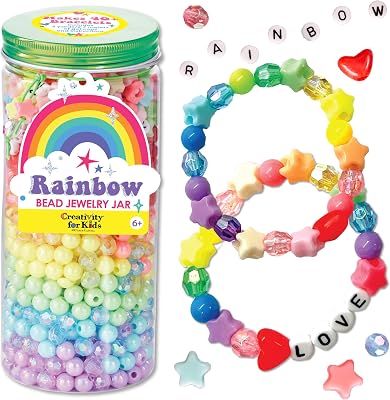
Creativity for Kids Rainbow Bead Jewelry Jar (opens Amazon in a new tab)

Creativity for Kids · Rainbow Bead Jewelry Jar 6478000

More than 900 beads and 10 yards of gel cord support over 40 simple bracelets without sharing one specialized tool

Why it fits this guide

Several makers can choose colors and spell short names at the same time. The reusable jar makes more sense for an open shared table than a single loom that children must take turns using.

Honest drawback

The jar teaches planning, stringing and finishing rather than woven friendship-bracelet knots, and hundreds of loose beads can create a difficult spill.

Specifications

  • Exact Amazon US ASIN, offer evidence and direct image checked August 26, 2026
  • Manufacturer recommendation begins at age 6
  • More than 900 assorted beads, alphabet beads, 10 yards of gel cord and reusable jar

Best forAges 6+ making easy personalized bracelets at a party or playdate

Pros

  • High project count for shared use
  • Multiple bead shapes and letters
  • Resealable storage jar

Cons

  • No knot or weaving lesson
  • Large spill potential
Check price on Amazon (opens Amazon in a new tab)
Best soft yarn techniqueResearch-based review

Creativity for Kids Quick Knit Charm Bracelets (opens Amazon in a new tab)

Creativity for Kids · Quick Knit Charm Bracelets

A reusable wooden spool tool turns colorful yarn into 10 soft cords that can be finished with charms and gems

Why it fits this guide

Quick Knit offers a different first fiber craft when tiny floss knots are not appealing. The repeated wrap-and-hook motion can become a foundation for other spool-knitted cords after the included bracelets are finished.

Honest drawback

The official age guidance begins at nine, and the finished cords do not resemble flat chevron or name-pattern friendship bracelets.

Specifications

  • Exact Amazon US ASIN and matching direct image checked August 26, 2026
  • Manufacturer recommendation begins at age 9
  • Wooden knitting tool, colorful yarn, charms, gems and materials for 10 bracelets

Best forAges 9+ who want to learn simple spool knitting

Pros

  • Teaches a reusable fiber technique
  • Soft finished bracelets
  • Clear alternative to small beads

Cons

  • Not intended for the youngest children in this guide
  • Finishing may need adult help
Check price on Amazon (opens Amazon in a new tab)
Best heishi-bead helperResearch-based review

Make It Real Swift Clicks Heishi Bracelet Maker (opens Amazon in a new tab)

Make It Real · 1459

A 16-color rotating carousel clicks heishi beads onto elastic cord for up to 23 bracelet designs

Why it fits this guide

Swift Clicks addresses one specific friction point: placing hundreds of thin beads onto cord one by one. The funnel, alignment tool and storage center give the bead-loading process more structure than an open tray.

Honest drawback

The proprietary-style maker is specialized, and loading 2,040 small beads into a carousel can create its own cleanup problem if the tool tips.

Specifications

  • Exact Amazon US ASIN, current offer and direct image checked August 26, 2026
  • Manufacturer recommendation begins at age 8
  • Bead carousel, base, threading stem, funnel, aligning tool, cord and 2,040 heishi beads

Best forAges 8+ who like flat clay-style beads but dislike repetitive hand-threading

Pros

  • Speeds repetitive bead threading
  • Sixteen colors stay separated in the carousel
  • Designed for 23 bracelets

Cons

  • Specialized rather than open-ended
  • Many tiny beads still need careful storage
Check price on Amazon (opens Amazon in a new tab)
Best for redesigningResearch-based review

Cool Maker PopStyle Bracelet Maker (opens Amazon in a new tab)
Cool Maker · PopStyle Bracelet Maker

Pop-on beads and reusable elastic bands let a child make and remake 10 bracelets from the same organized set

Why it fits this guide

PopStyle is forgiving for a maker who changes their mind halfway through a design. The bracelet can be rebuilt rather than cut apart, making experimentation the main activity instead of a mistake to avoid.

Honest drawback

The snap-on format teaches accessory arrangement, not knotting, weaving or conventional bead-stringing technique.

Specifications

  • Exact Amazon US ASIN, offer evidence and direct image checked August 26, 2026
  • Manufacturer recommendation begins at age 7
  • Bracelet maker with storage, 170 beads, 22 elastic bands and four sticker sheets

Best forAges 7+ who want to change bracelets without knots, cutting or clasps

Pros

  • Designs can be remade repeatedly
  • No cutting or knot tying
  • Supplies store in the maker

Cons

  • Limited transferable craft skill
  • Uses a specialized bracelet format
Check price on Amazon (opens Amazon in a new tab)
Best licensed bead setResearch-based review

Horizon Group USA Squishmallows Bracelet Design Set (opens Amazon in a new tab)

Horizon Group USA · 231920

More than 1,000 beads, character charms and enough cord for 25+ accessories make the theme useful beyond one project

Why it fits this guide

The licensed characters are integrated as durable-looking enamel and slider charms rather than appearing only on the box. A large supply lets siblings or friends make coordinated pieces without copying one exact design.

Honest drawback

The darker metallic palette and character-specific charms are a poor value when the recipient would prefer pastel, rainbow or unlicensed bracelets.

Specifications

  • Exact Amazon US ASIN, current offer and matching image checked August 26, 2026
  • Current product guidance begins at age 6
  • Metallic, matte, alphabet and disc beads, elastic cord, enamel charms and slider beads

Best forAges 6+ Squishmallows fans making charm bracelets with friends

Pros

  • Makes more than 25 accessories
  • Character charms create a strong theme
  • Suitable for a small-group session

Cons

  • Theme limits broad appeal
  • Numerous small pieces can scatter
Check price on Amazon (opens Amazon in a new tab)
Best repeat-use loom systemResearch-based review

Rainbow Loom Loomi-Pals Mega Set (opens Amazon in a new tab)

Rainbow Loom · Loomi-Pals Mega Set with RL2.0 Board

A full RL2.0 board, portable Happy Looms, 5,600 bands, 60 charms and beads support many sessions in one case

Why it fits this guide

This is the most expandable craft system in the shortlist. The child can use the large board at home, bring a Happy Loom to a smaller table and keep colors divided among 23 case compartments.

Honest drawback

The huge piece count creates a storage responsibility, and rubber-band looming is separate from embroidery-floss friendship-bracelet skills.

Specifications

  • Exact Amazon US ASIN, current offer and direct image checked August 26, 2026
  • Manufacturer recommendation begins at age 7
  • RL2.0 board, Happy Looms, hooks, 5,600 bands, 60 charms, alpha beads, pony beads and case

Best forAges 7+ who already enjoy rubber-band bracelets and want a deep organized supply

Pros

  • Extensive repeat-use supplies
  • Full-size and portable loom options
  • Organized carrying case

Cons

  • Thousands of small bands require careful cleanup
  • Different technique from floss knotting
Check price on Amazon (opens Amazon in a new tab)
Best book-led fandom kitResearch-based review

Klutz Harry Potter Friendship Bracelets (opens Amazon in a new tab)

Klutz · ISBN 9781546169628

A 48-page Klutz book supplies themed instruction and materials for more than six official Harry Potter bracelets

Why it fits this guide

A patient reader can work from a physical book instead of switching between a craft and a video. The official theme may provide the motivation to finish several different designs rather than one novelty bracelet.

Honest drawback

It makes fewer projects than the bead jars and loom sets, and its value depends heavily on the recipient already liking the franchise.

Specifications

  • Exact Amazon.com ISBN-ASIN and direct product image checked August 26, 2026
  • Scholastic lists the kit for ages 7–10
  • 48-page book and materials for more than six themed bracelets

Best forAges 7–10 who will follow a guide because they love Harry Potter

Pros

  • Physical book supports screen-free instruction
  • Official theme can sustain attention
  • Multiple bracelet projects are included

Cons

  • Lower project count than large supply kits
  • Narrow fandom appeal
Check price on Amazon (opens Amazon in a new tab)

How to choose

  • Choose the technique before the theme. Knotted floss, wrapped floss, spool-knitted yarn, stretch beads, snap-on beads and rubber-band looms build different skills and produce different bracelets.
  • Match the first action to the maker. A wheel or loom that holds strands is helpful when keeping tension is the barrier; a bead jar is easier when the goal is quick personalization rather than learning knots.
  • Treat age guidance as a starting point, not a promise of independence. Reading patterns, measuring wrists, tying final knots and handling many small pieces may still need adult help.
  • Count projects realistically. A claim such as 40+ bracelets assumes the cord and beads are divided efficiently; larger, more elaborate designs use more material.
  • Check the finishing step. A tool can simplify weaving or threading while still leaving an adult to cut cord, secure a knot, attach a charm or fit the bracelet safely.
  • Decide how much storage the household can support. Thousands of bands or hundreds of beads need a stable tray and a container that can be closed between sessions.
  • Buy a licensed kit only when the theme will genuinely motivate the recipient. A familiar character can sustain attention, but it should not replace an age-appropriate teaching format.

Common mistakes

  • Buying a huge bead count for a child who actually wants to learn chevrons and woven floss patterns.
  • Expecting a fast machine-assisted bracelet to teach the same knots as a traditional friendship-bracelet pattern.
  • Opening every bead compartment before putting a rimmed tray or cloth under the work area.
  • Cutting all strands before checking the pattern, wrist measurement and finishing allowance.
  • Pulling every knot as tightly as possible, which can curl a band and make the next row difficult to read.
  • Assuming a kit is travel-friendly because the box is small even though the activity has loose beads, charms or many cut strands.
  • Giving a child scissors and hundreds of small parts without following the exact package warnings and household supervision rules.

FAQ

What is the easiest friendship bracelet kit for a six-year-old?

Creativity for Kids Best Friends Bracelets is the gentlest first pick in this research shortlist because its double-sided wheel holds the floss and the official age guidance begins at six. The Rainbow Bead Jewelry Jar is even simpler at the technique level, but it involves many more loose pieces and teaches stringing rather than weaving.

What is the best friendship bracelet kit for a tween beginner?

For a tween who wants classic skill-building, Make It Real Friendship Bracelet Maker is the strongest starting point here because it teaches four knots with a color-coded pattern system. A tween who wants faster results may prefer Loopdedoo, while a bead-focused tween may prefer Swift Clicks.

Are friendship bracelet kits really screen-free?

The making itself can be screen-free, and Klutz centers a physical book. Several other brands provide optional videos or online pattern help. Save any access information before discarding packaging, but do not assume a video is required unless the current instructions say so.

Are bead bracelet kits safer for younger kids than floss kits?

Not automatically. Bead sets replace difficult knots with easier stringing, but beads and charms are small parts that can spill or create a choking hazard. Follow the exact package age guidance and warnings, keep supplies away from younger siblings and supervise finishing tools.

What is the difference between Loopdedoo and a traditional friendship bracelet maker?

Loopdedoo spins and wraps floss around a core to create cords quickly. A traditional knotting maker holds strands while the child ties forward, backward or macrame-style knots row by row. Both create wearable thread bracelets, but the techniques and finished patterns are different.

How do I stop friendship bracelet thread from tangling?

Cut only the strands needed for one project, separate each strand into a slot or clip, and keep the unused length loosely bundled rather than spread across the floor. Pause with the work still secured to the tool, and untwist individual strands before pulling the next knot tight.

Do friendship bracelet kits fit every wrist?

No. Use the kit's measuring guide and leave the required finishing allowance before cutting. Children should not sleep, bathe or play sports in a bracelet that could tighten, snag or become uncomfortable; remove it if fit or skin comfort changes.

Final recommendation

Creativity for Kids Best Friends Bracelets is the most balanced first purchase for ages 6+ in this research shortlist because the double-sided wheel controls loose floss and the two guided patterns offer a clear starting point. Choose Loopdedoo for faster wrapped-floss bracelets, Make It Real Friendship Bracelet Maker for an eight-year-old or older tween who wants to learn four knots, and Quick Knit Charm Bracelets for a nine-year-old interested in a softer yarn technique. Rainbow Bead Jewelry Jar is the practical group pick, while Swift Clicks reduces repetitive heishi-bead threading. PopStyle emphasizes redesigning, Squishmallows emphasizes licensed charms, Rainbow Loom offers the deepest repeat-use system, and Klutz Harry Potter is the book-led fandom choice.

Friendship bracelets sit in an unusually wide craft category. One box may teach a six-year-old to move floss around a numbered wheel. Another may ask a tween to read knot directions row by row. A third simply supplies elastic and enough beads for everyone at a sleepover.

Those are not easier and harder versions of the same project. They are different projects.

The best first kit gives the maker a satisfying result while leaving room to grow. For one child, that means a holder that stops eight strands from sliding across the table. For another, it means skipping knots and spelling a friend’s name with beads. A patient older tween may prefer the opposite: a tool that organizes the strands but still teaches the knots.

This guide separates the ten picks by what the child actually does, not by which finished bracelets look cutest on the box.

Start with the technique

Knotted floss: slow, portable and genuinely skill-building

Classic friendship bracelets are made from repeated forward and backward knots. Stripes arrive first; chevrons, diamonds and letter patterns build from the same foundation. The supplies are inexpensive and portable, but the learning curve is real. A beginner has to keep the strand order, pull each knot in the intended direction and maintain enough tension to keep the band flat.

The Make It Real Friendship Bracelet Maker is the closest match in this guide. It holds the work and provides color-coded patterns while leaving the knotting to the child. The Creativity for Kids Best Friends Bracelets wheel is a gentler introduction for age six and up, with two simpler guided structures.

Wrapped floss: faster progress, different skills

Loopdedoo uses a hand-powered spinning loom. The thread wraps into a colorful cord, so a maker sees progress much faster than when tying a flat bracelet row by row.

That speed can be the reason a child stays interested. It is also important to describe the result honestly: a wrapped Loopdedoo bracelet is not a machine-made chevron. Buy it because the recipient wants quick, varied floss accessories—not because you expect it to teach every classic knot.

Beads on elastic: easiest to personalize

Bead bracelets give beginners immediate control over color and words. There is no row chart to lose and no directional knot to reverse. The main skills are choosing a sequence, stringing small holes, measuring the wrist and securing the final elastic.

The Rainbow Bead Jewelry Jar is the flexible group choice. Swift Clicks reduces repetitive heishi-bead threading with a carousel. The Squishmallows Bracelet Design Set supplies licensed charms, while PopStyle lets a child take designs apart and rebuild them.

The hidden difficulty is cleanup. A jar of 900 beads is easy to understand and hard to recover from a rug. Put a rimmed tray or folded cloth under the project before opening the container.

Spool knitting: soft cords with a repeatable motion

Quick Knit Charm Bracelets uses a wooden spool tool and soft yarn. The maker wraps and hooks the yarn repeatedly until a cord emerges. This does not create a flat friendship-bracelet pattern, but it introduces a real fiber technique that can continue beyond the included charms.

Its age guidance begins at nine, making it a better tween-leaning option than a default choice for early elementary ages.

Rubber-band looming: the deepest repeat-use system

Rainbow Loom Loomi-Pals Mega Set is almost its own craft ecosystem. The large board supports complex layouts, the Happy Looms make smaller projects portable, and the case contains enough bands and decorative pieces for many sessions.

Choose it for a child who already likes linked rubber-band bracelets or clearly wants a reusable system. Do not choose it merely because 5,600 bands look like better value. A large piece count is useful only when the family can store and sort it.

The best friendship bracelet kits by age

Ages 6–7: make the first action obvious

For this age, the Best Friends Bracelets Mini Craft Kit is the clearest floss start. The wheel separates the colors, the project count is manageable and the two guided pattern styles reduce decision fatigue.

The Rainbow Bead Jewelry Jar and Squishmallows Bracelet Design Set also begin at six in current guidance. They are simpler at the making stage but more demanding at the storage stage. Expect to help measure cord, tie a secure finishing knot and keep small pieces contained.

PopStyle begins at seven and removes knots and cutting from the core activity. That makes it forgiving, but it is accessory design rather than a traditional fiber-craft lesson. The Rainbow Loom set also begins at seven; its large supply is better for a child who already knows they enjoy the format.

Ages 8–10: choose speed or deeper skill

At eight, the product range opens. Loopdedoo prioritizes quick visible progress. Make It Real Friendship Bracelet Maker prioritizes learning knots. Swift Clicks prioritizes efficient heishi-bead stringing.

None is universally best. Ask what the recipient admires:

  • Flat chevrons and woven patterns point toward the knotting maker.
  • Rounded, colorful thread cords point toward Loopdedoo.
  • Stacks of flat pastel bead bracelets point toward Swift Clicks.

The Klutz Harry Potter Friendship Bracelets book-and-kit is officially aimed at ages 7–10. It suits a child who enjoys following a physical book and will be motivated by the franchise. A child indifferent to Harry Potter will get more freedom from a general-purpose kit.

Ages 11–12: avoid kits that feel solved too quickly

Older tweens can still enjoy the easy bead and pop-on options, especially for a party. For an individual gift, look for a technique with somewhere to go next.

The Make It Real knotting system can lead into loose floss and more advanced patterns. Quick Knit can lead into spool-knitted cords and small yarn projects. Rainbow Loom has an established progression of board patterns. Loopdedoo remains useful when output and color experimentation matter more than formal knot skills.

The right tween kit should feel like the beginning of a hobby, not a box that performs the interesting part on the maker’s behalf.

How the ten starter sets compare

1. Creativity for Kids Best Friends Bracelets: the calmest first start

This compact kit earns the top position because it solves the most common beginner problem without taking over the whole craft. The double-sided wheel holds and separates the floss. The child still moves the strands, watches the pattern build and adds letter beads when wanted.

More than 10 bracelets is enough repetition to learn without turning the first purchase into a storage commitment. The age recommendation begins at six, but an adult should still help with measuring, finishing and small-piece safety.

Choose it when you want a focused introduction. Skip it when the recipient is already asking to make multi-row chevrons or name bracelets from charts.

2. Loopdedoo: the best answer to “this takes too long”

Loopdedoo makes thread bracelets through spinning and wrapping. Thickness, color order and looping style change the result, so the process still allows real choices even though it moves quickly.

The loom includes a storage drawer and 18 skeins of cotton embroidery thread. Ordinary floss can keep the tool useful after those supplies run out.

The honest dividing line is the finished structure. If the child wants the familiar flat V shapes of a chevron bracelet, choose a knotting system. If they want to turn colors into wearable cords quickly, Loopdedoo is a better fit.

3. Make It Real Friendship Bracelet Maker: the stronger skill bridge

The Make It Real maker organizes several parts of traditional knotting at once. Strands stay in place, the active row remains visible and color-coded patterns provide the sequence. The manufacturer builds the system around four knots.

That makes it more educational than a tool that simply loads beads or wraps cord, but also less instant. An eight-year-old who dislikes detailed directions will not suddenly love them because they roll through a window.

Buy it for a patient maker who wants to improve. Keep an adult nearby for setup and recovery when a row is tied in the wrong direction.

4. Rainbow Bead Jewelry Jar: the playdate pick

More than 900 beads sounds excessive for one first bracelet. It makes sense when several children are choosing colors at the same table or when one child returns to the activity repeatedly.

The jar includes alphabet beads and 10 yards of gel cord, with materials advertised for over 40 bracelets. Treat that number as an estimate: longer wrists, dense designs and wasted cord reduce the total.

This is the easiest kit to share and the easiest to spill. Use shallow bowls for active colors and leave the rest in the jar.

5. Quick Knit Charm Bracelets: the soft fiber alternative

Quick Knit replaces tiny directional knots with a repeated wrap-and-hook motion around a wooden spool. The resulting cords are soft and dimensional, then finished with charms and gems.

Official guidance begins at age nine. That makes sense: the motion is repetitive, but dropping a loop or finishing the cord can be confusing without patience.

This is a good gift for a tween who likes yarn and wants a real technique but is not drawn to flat floss patterns. It is not a substitute for a classic friendship-bracelet book.

6. Swift Clicks: the heishi-bead shortcut

Heishi bracelets look simple because each flat bead is simple. The time comes from threading hundreds of those beads. Swift Clicks changes that step with a rotating carousel: align a color, click a bead onto the cord and repeat.

The set contains 2,040 beads in 16 colors and is designed for 23 bracelets. A funnel and aligning tool support reloading.

The tradeoff is commitment to a specialized tool. A plain bead jar works with any hand-threaded design, while Swift Clicks earns its space by making one repetitive job faster.

7. PopStyle: the most forgiving redesign system

PopStyle uses elastic bands and pop-on beads, so a child can change a bracelet without cutting cord or undoing a finishing knot. The kit makes and remakes 10 bracelets with 170 beads and 22 elastic bands.

That reversibility is valuable for a perfectionist or an experimenter. A color choice can be changed instead of treated as a mistake.

The limitation is equally clear: the system teaches arranging and editing, not a conventional jewelry-making technique. Choose it for creative play and repeat redesigns.

8. Squishmallows Bracelet Design Set: the licensed party kit

This Horizon Group USA set includes metallic, matte, alphabet and disc beads plus Squishmallows enamel and slider charms. Current product information describes enough materials for more than 25 accessories.

Unlike a kit that relies only on branded packaging, the license remains visible in the finished bracelets. That is a strength for a fan and unnecessary cost for everyone else.

The palette leans more metallic and character-led than the Rainbow Bead Jar. Let the recipient’s existing taste decide between them.

9. Rainbow Loom Loomi-Pals Mega Set: the repeat-use commitment

The Mega Set contains an RL2.0 board, portable Happy Looms, hooks, 5,600 bands, 60 charms, alpha beads, pony beads and a 23-compartment case. It is the only recommendation here that arrives as a genuinely deep system rather than a short introduction.

That depth is worthwhile for a child who already uses rubber-band looms or has been asking for one. For a completely unknown interest, it may be too much product.

Rubber bands should stay away from pets and younger siblings, and the case should be closed whenever the session pauses.

10. Klutz Harry Potter Friendship Bracelets: the book-first fandom choice

Klutz combines a 48-page physical book with materials for more than six official Harry Potter bracelets. Scholastic lists it for ages 7–10.

The book format is the main reason to choose it. A child can keep the instructions beside the work without navigating a phone, and the themed projects provide a reason to turn the page.

It is not the project-count winner, and it should not be bought for a child who only mildly recognizes the characters. For an enthusiastic reader and fan, the narrative around each design can be more motivating than a larger anonymous supply box.

Set up the first session for success

Before opening anything, cover the table with a light, plain cloth or a shallow tray. The background makes dark thread easier to see, keeps beads from rolling and lets you lift the whole project out of the way when dinner arrives.

Then do less than the box suggests:

  1. Pick one bracelet, not the full project gallery.
  2. Put out only the colors and parts required for that design.
  3. Read the finishing step before cutting the first strand.
  4. Measure the wrist with comfortable room, following the kit’s guide.
  5. Let the first result be uneven.

The first bracelet is useful even when it curls, changes width or ends with an adult-tied knot. It tells you whether the maker enjoys the motion enough to try again.

Safety and wear notes

Age labels vary from 6+ to 9+ across this shortlist. Use the current physical package—not this article—as the final source for warnings. Many kits contain beads, charms, elastic bands or other small parts. Some projects also need scissors even when scissors are not included.

Keep small supplies away from children below the package age, younger siblings and pets. Count tools when the session ends. Do not leave long cords around unsupervised young children.

A finished bracelet should feel comfortable and release normally. Remove it if it becomes tight, catches on play equipment, irritates skin or cannot be taken off easily. Bracelets are better removed before sleep, bathing and sports.

Final recommendation

Start with Creativity for Kids Best Friends Bracelets for most first-time makers age six and up. It gives the hands somewhere clear to work, keeps the material count sensible and creates enough bracelets to find out whether the interest will last.

Move to Loopdedoo when fast floss results matter, or to Make It Real Friendship Bracelet Maker when learning actual knots is the goal. Pick Rainbow Bead Jewelry Jar for a shared table, Quick Knit for a yarn-loving tween and Rainbow Loom for a child ready to commit to a repeat-use system.

The best kit is the one whose core action the recipient wants to repeat. Choose that action first, then choose the colors and characters.