Best Journals for Beginners: 10 Easy Notebooks to Start Journaling. The best journals for beginners, from simple lined notebooks to guided and dot-grid picks. Compare paper, layout, size, and ease of use.. Type: Buying guide. Category: Journaling. Tags: journals, beginner-journaling, lined-journals, dotted-journals, guided-journals, notebooks, journaling-stationery, buying-guide, cluster-journaling-stationery.

Buying guide

Best Journals for Beginners: 10 Easy Notebooks to Start Journaling

Our recommendation

The best journal for a beginner is easy enough that you will actually open it and write. Our top research pick is the PAPERAGE Lined Journal Notebook because its familiar ruled pages, 100 GSM paper, lay-flat binding, pocket, bookmark, and elastic closure give a first-time journaler useful quality without requiring a special journaling system. Amazon Basics is the lower-cost choice, RETTACY adds numbered lined pages for easier organization, and the Five Minute Journal is the better option if blank pages stop you from getting started. If you want to experiment with bullet journaling, EMSHOI offers 320 numbered dot-grid pages, while Field Notes is the least intimidating pocket-size option for short entries.

Quick picks

Top recommendations

  1. 1PAPERAGE Lined Journal Notebook — Best overallA balanced 5.6 x 8 inch lined journal with 100 GSM paper, lay-flat binding and the everyday extras beginners actually use
  2. 2Amazon Basics Classic Lined Writing Notebook — Best budget journalA plain 240-page hardcover lined notebook that covers the core journal features without a premium price tier
  3. 3RETTACY Lined Journal Notebook — Best value with numbered pagesA 192-page A5 lined journal with numbered pages, 100 GSM paper, two bookmarks, a pen loop and a lay-flat hardcover
  4. 4Intelligent Change The Five Minute Journal — Best guided journalAn undated guided journal built around short morning and evening gratitude and reflection prompts
  5. 5LEUCHTTURM1917 Hardcover Medium A5 Ruled Notebook — Best for organized journalingA premium A5 hardcover with 251 numbered ruled pages, a table of contents, two ribbons and perforated sheets
  6. 6Moleskine Classic Medium Ruled Notebook — Best compact hardcoverA 4.5 x 7 inch 208-page ruled hardcover with the familiar elastic closure, ribbon bookmark and inner pocket
  7. 7EMSHOI Dotted Journal Notebook — Best dot-grid starterA 320-page A5 dot-grid hardcover with numbered 100 GSM pages and a full set of daily-use accessories
  8. 8Dingbats* Wildlife A5 Dotted Journal — Best eco-minded premium pickA 192-page A5 dotted journal with fountain-pen-friendly cream paper, lay-flat binding, pen holder and vegan-certified cover materials
  9. 9Field Notes Pitch Black Ruled Memo Books — Best pocket journalThree 3.5 x 5.5 inch ruled memo books with 48 pages each and 90 GSM acid-free paper
  10. 10Midori MD Note A5 Horizontal Ruled Notebook — Best minimalist writing experienceA minimalist A5 ruled notebook centered on Midori MD cream paper and a thread binding that opens about 185 degrees

Product comparison

ProductBest forWatch outPrice & shop
PAPERAGE Lined Journal Notebook (opens Amazon in a new tab)PAPERAGE · Lined Hardcover Journal, Black, 160 Pages, 5.6 x 8 in
Best overallResearch-based review
First-time journalers who want a straightforward lined hardcover with thicker paperAt 160 pages, it gives you less total writing space than several larger notebooks in this guide
Amazon Basics Classic Lined Writing Notebook (opens Amazon in a new tab)Amazon Basics · Classic Lined Hardcover Notebook, Black, 240 Pages, 5 x 8.25 in
Best budget journalResearch-based review
Beginners who want the lowest-friction way to test a journaling habit before spending moreThe current Amazon listing does not clearly state a paper-weight specification or numbered pages
RETTACY Lined Journal Notebook (opens Amazon in a new tab)RETTACY · Lined Hardcover Journal, Brown, 192 Numbered Pages, A5 5.7 x 8.3 in
Best value with numbered pagesResearch-based review
Beginners who like lined writing but want an index-friendly notebook for ideas, reflections and notesIts extra accessories add complexity that a minimalist journaler may not need
Intelligent Change The Five Minute Journal (opens Amazon in a new tab)Intelligent Change · The Five Minute Journal, Original Guided Gratitude Journal
Best guided journalResearch-based review
People who want to journal but never know what to write on a blank pageThe prompt structure is deliberately narrow and will feel limiting if you want long-form diary entries or creative layouts
LEUCHTTURM1917 Hardcover Medium A5 Ruled Notebook (opens Amazon in a new tab)LEUCHTTURM1917 · Medium A5 Hardcover, Ruled, Ink, 251 Numbered Pages
Best for organized journalingResearch-based review
Beginners who want page numbers, an index and a notebook they can keep as a long-term referenceIts 80 GSM paper is thinner than the 100 GSM options from PAPERAGE, RETTACY, EMSHOI and Dingbats*
Moleskine Classic Medium Ruled Notebook (opens Amazon in a new tab)Moleskine · Classic Hard Cover, Medium 4.5 x 7 in, Ruled, Black, 208 Pages
Best compact hardcoverResearch-based review
Journalers who want a classic hardbound notebook that takes less bag space than a full A5 journalThe 70 GSM paper is relatively thin, and the compact page can feel cramped if you write large or use wet inks
EMSHOI Dotted Journal Notebook (opens Amazon in a new tab)EMSHOI · Dotted Hardcover Journal, Green, 320 Numbered Pages, A5 5.7 x 8.3 in
Best dot-grid starterResearch-based review
Beginners curious about bullet journaling, trackers and flexible layoutsDot-grid flexibility can create more setup pressure than a normal lined journal, especially if you are prone to overdesigning pages
Dingbats* Wildlife A5 Dotted Journal (opens Amazon in a new tab)Dingbats* Notebooks · Wildlife A5 Dotted Hardcover, Brown Bear, 192 Pages
Best eco-minded premium pickResearch-based review
Beginners who want smooth 100 GSM cream paper, a dot grid and sustainability-focused materialsYou pay more for the materials and finish, while a ruled beginner may not benefit from the dot-grid format
Field Notes Pitch Black Ruled Memo Books (opens Amazon in a new tab)Field Notes · Pitch Black 3-Pack, Ruled, 48 Pages Each, 3.5 x 5.5 in
Best pocket journalResearch-based review
Beginners who want short, low-pressure entries and a notebook they can carry everywhereThe 48-page capacity and small writing area are limiting for long-form daily journaling
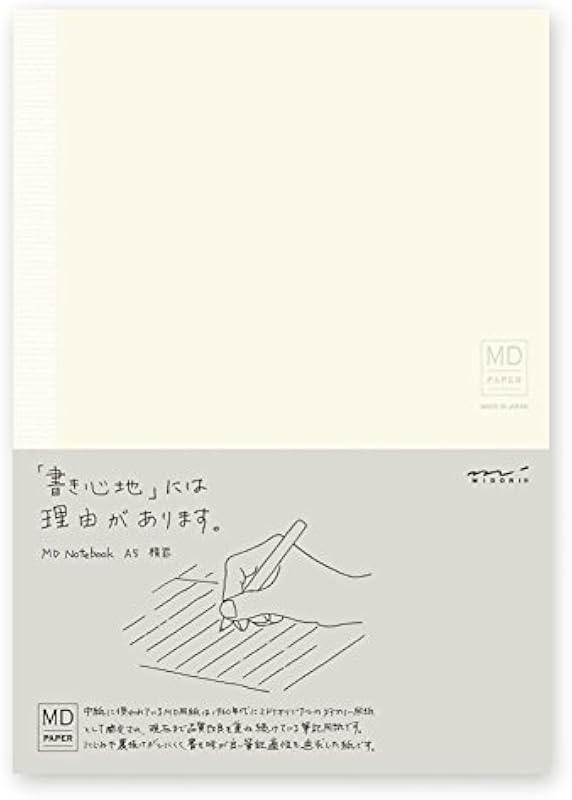
Midori MD Note A5 Horizontal Ruled Notebook (opens Amazon in a new tab)Midori · MD Note A5 Horizontal Ruled, White
Best minimalist writing experienceResearch-based review
Beginners who care more about paper feel and fountain-pen writing than pockets, elastic bands or a hard coverYou do not get the protective hardcover, pocket or elastic closure found on most of the other full-size picks

Selection and testing methodology

This is a research-based guide, not a hands-on notebook test. We compared 10 beginner-friendly journals using current Amazon US product information checked on August 11, 2026, focusing on page ruling, page count, paper weight where documented, notebook size, numbered-page organization, binding, portability, included storage and bookmarks, and whether a guided format genuinely reduces the friction of starting. KawaiiToons has not personally tested these exact journals yet, so we do not publish invented pen-bleed scores, ghosting measurements, binding-durability tests, paper-feel rankings, or long-term wear claims. Recommendations will remain labeled research-based until original testing evidence is added.

Detailed product sections

Best overallResearch-based review

PAPERAGE Lined Journal Notebook (opens Amazon in a new tab)

PAPERAGE · Lined Hardcover Journal, Black, 160 Pages, 5.6 x 8 in

A balanced 5.6 x 8 inch lined journal with 100 GSM paper, lay-flat binding and the everyday extras beginners actually use

Why it fits this guide

PAPERAGE is the easiest all-around recommendation here because it asks almost nothing from a beginner. Open to a ruled page and write. The 100 GSM paper is thicker than the paper documented for the Moleskine and LEUCHTTURM1917 picks, while the ribbon, elastic and expandable pocket add convenience without turning the notebook into a complicated planning system.

Honest drawback

At 160 pages, it gives you less total writing space than several larger notebooks in this guide

Best forFirst-time journalers who want a straightforward lined hardcover with thicker paper

Pros

  • 160 college-ruled pages on 100 GSM acid-free paper
  • Thread-bound lay-flat design is comfortable for everyday writing
  • Includes an expandable pocket, ribbon bookmark, elastic closure and labels

Cons

  • Fewer pages than the 192-, 240-, 251- and 320-page options here
  • Fixed lined ruling is less flexible for visual trackers and custom bullet-journal layouts
Check price on Amazon (opens Amazon in a new tab)
Best budget journalResearch-based review

Amazon Basics Classic Lined Writing Notebook (opens Amazon in a new tab)

Amazon Basics · Classic Lined Hardcover Notebook, Black, 240 Pages, 5 x 8.25 in

A plain 240-page hardcover lined notebook that covers the core journal features without a premium price tier

Why it fits this guide

A first journal does not need to be aspirational or elaborate. Amazon Basics gives you 240 ruled pages, a hardcover, bookmark, elastic closure and inner pocket in a familiar 5 x 8.25 inch format. That makes it easy to discover whether you actually enjoy daily or weekly writing before paying for premium paper or a specialist layout.

Honest drawback

The current Amazon listing does not clearly state a paper-weight specification or numbered pages

Best forBeginners who want the lowest-friction way to test a journaling habit before spending more

Pros

  • 240 line-ruled pages provide plenty of room for daily entries
  • Includes an expandable inner pocket, bookmark and elastic closure
  • Straightforward format is easy to start without learning a journaling system

Cons

  • Paper weight is not clearly specified on the current listing
  • Pages are not presented as numbered, which is less convenient for indexing
Check price on Amazon (opens Amazon in a new tab)
Best value with numbered pagesResearch-based review

RETTACY Lined Journal Notebook (opens Amazon in a new tab)

RETTACY · Lined Hardcover Journal, Brown, 192 Numbered Pages, A5 5.7 x 8.3 in

A 192-page A5 lined journal with numbered pages, 100 GSM paper, two bookmarks, a pen loop and a lay-flat hardcover

Why it fits this guide

RETTACY sits between a basic diary and a fully flexible bullet journal. You still get ordinary 7 mm ruled lines, so there is no setup learning curve, but the numbered pages make it much easier to create a simple contents page or reference old entries. The 100 GSM paper and accessory set also make it feel more complete than a bare notebook.

Honest drawback

Its extra accessories add complexity that a minimalist journaler may not need

Best forBeginners who like lined writing but want an index-friendly notebook for ideas, reflections and notes

Pros

  • 192 numbered pages make it easier to build an index or find past entries
  • 100 GSM acid-free paper and 180-degree lay-flat design suit regular writing
  • Includes pen holder, elastic closure, two ribbon bookmarks, inner pocket and sticky notes

Cons

  • More feature-heavy than a basic lined notebook
  • Smaller page count than the 240-, 251- and 320-page options in this shortlist
Check price on Amazon (opens Amazon in a new tab)
Best guided journalResearch-based review

Intelligent Change The Five Minute Journal (opens Amazon in a new tab)

Intelligent Change · The Five Minute Journal, Original Guided Gratitude Journal

An undated guided journal built around short morning and evening gratitude and reflection prompts

Why it fits this guide

The Five Minute Journal solves a different beginner problem: not notebook quality, but blank-page paralysis. Its fixed prompts tell you what to write in the morning and evening, so the habit has a clear beginning and end. Because it is undated, missing a day does not leave an obvious empty dated page.

Honest drawback

The prompt structure is deliberately narrow and will feel limiting if you want long-form diary entries or creative layouts

Best forPeople who want to journal but never know what to write on a blank page

Pros

  • Guided morning and evening prompts remove the need to invent a topic each day
  • Undated format lets beginners start any time and resume after missed days
  • Linen hardcover, lay-flat binding and ribbon bookmark create a polished daily-use format

Cons

  • Prompt structure is restrictive if you prefer free writing
  • Costs more than a basic blank or lined notebook
Check price on Amazon (opens Amazon in a new tab)
Best for organized journalingResearch-based review

LEUCHTTURM1917 Hardcover Medium A5 Ruled Notebook (opens Amazon in a new tab)

LEUCHTTURM1917 · Medium A5 Hardcover, Ruled, Ink, 251 Numbered Pages

A premium A5 hardcover with 251 numbered ruled pages, a table of contents, two ribbons and perforated sheets

Why it fits this guide

LEUCHTTURM1917 is a strong choice when your journal may become more than a diary. Numbered pages and a blank table of contents make it practical for mixing reflections, lists, project notes and reference pages without losing track of them. Two ribbon markers also let you keep a current page and a frequently used reference section open.

Honest drawback

Its 80 GSM paper is thinner than the 100 GSM options from PAPERAGE, RETTACY, EMSHOI and Dingbats*

Best forBeginners who want page numbers, an index and a notebook they can keep as a long-term reference

Pros

  • 251 numbered pages and a blank table of contents support easy indexing
  • Thread-bound notebook opens flat and includes two ribbon page markers
  • Expandable back pocket, elastic closure and perforated detachable sheets add useful organization

Cons

  • 80 GSM paper is thinner than the 100 GSM options in this shortlist
  • Premium price is unnecessary if you only need plain lined pages
Check price on Amazon (opens Amazon in a new tab)
Best compact hardcoverResearch-based review

Moleskine Classic Medium Ruled Notebook (opens Amazon in a new tab)

Moleskine · Classic Hard Cover, Medium 4.5 x 7 in, Ruled, Black, 208 Pages

A 4.5 x 7 inch 208-page ruled hardcover with the familiar elastic closure, ribbon bookmark and inner pocket

Why it fits this guide

The Medium Moleskine makes sense when portability matters more than maximum writing area. It is larger than a true pocket memo book but meaningfully smaller than A5, which makes it easier to keep with you. For beginners who journal in cafés, on commutes or while traveling, a notebook you actually carry can be more useful than a larger one left at home.

Honest drawback

The 70 GSM paper is relatively thin, and the compact page can feel cramped if you write large or use wet inks

Best forJournalers who want a classic hardbound notebook that takes less bag space than a full A5 journal

Pros

  • Compact 4.5 x 7 inch size is easy to carry for journaling away from home
  • 208 ruled pages provide more room than a pocket memo book
  • Elastic closure, ribbon bookmark, expandable pocket and lay-flat design cover the classic journal essentials

Cons

  • 70 GSM paper is thinner than many 100 GSM beginner notebooks
  • Smaller page dimensions can feel cramped for large handwriting or long entries
Check price on Amazon (opens Amazon in a new tab)
Best dot-grid starterResearch-based review

EMSHOI Dotted Journal Notebook (opens Amazon in a new tab)

EMSHOI · Dotted Hardcover Journal, Green, 320 Numbered Pages, A5 5.7 x 8.3 in

A 320-page A5 dot-grid hardcover with numbered 100 GSM pages and a full set of daily-use accessories

Why it fits this guide

EMSHOI gives a beginner enough structure to draw straight-ish layouts without forcing every entry onto ruled lines. The numbered dot-grid pages can handle diary writing, habit trackers, simple calendars, collections and sketches in the same book. The unusually high page count also gives you space to experiment without feeling that every page must be perfect.

Honest drawback

Dot-grid flexibility can create more setup pressure than a normal lined journal, especially if you are prone to overdesigning pages

Best forBeginners curious about bullet journaling, trackers and flexible layouts

Pros

  • 320 numbered pages provide substantial room for a long-running journal
  • 100 GSM acid-free paper supports writing, planning and light sketching
  • Pen holder, inner pocket, elastic closure and 180-degree lay-flat binding are useful for daily carry

Cons

  • Dot-grid pages can feel less intuitive than lines for first-time journalers
  • High page count makes it bulkier than compact notebooks
Check price on Amazon (opens Amazon in a new tab)
Best eco-minded premium pickResearch-based review

Dingbats* Wildlife A5 Dotted Journal (opens Amazon in a new tab)

Dingbats* Notebooks · Wildlife A5 Dotted Hardcover, Brown Bear, 192 Pages

A 192-page A5 dotted journal with fountain-pen-friendly cream paper, lay-flat binding, pen holder and vegan-certified cover materials

Why it fits this guide

Dingbats* is the more premium dot-grid option in this shortlist. Its 100 GSM cream pages, micro-perforation, pen holder and lay-flat A5 format are practical for journaling, while FSC-certified paper and vegan-certified materials give it a distinct materials story. It is a good fit when the feel of the notebook itself helps make writing appealing.

Honest drawback

You pay more for the materials and finish, while a ruled beginner may not benefit from the dot-grid format

Best forBeginners who want smooth 100 GSM cream paper, a dot grid and sustainability-focused materials

Pros

  • 192 micro-perforated 100 GSM cream pages are designed for smooth writing
  • Lay-flat A5 format includes pen holder, inner pocket, bookmark and elastic closure
  • FSC-certified paper and vegan-certified materials add an eco-minded angle

Cons

  • Premium price compared with basic lined notebooks
  • Dotted ruling takes more setup if you only want straightforward paragraph writing
Check price on Amazon (opens Amazon in a new tab)
Best pocket journalResearch-based review

Field Notes Pitch Black Ruled Memo Books (opens Amazon in a new tab)

Field Notes · Pitch Black 3-Pack, Ruled, 48 Pages Each, 3.5 x 5.5 in

Three 3.5 x 5.5 inch ruled memo books with 48 pages each and 90 GSM acid-free paper

Why it fits this guide

A huge blank journal can make a new habit feel more serious than it needs to be. Field Notes takes the opposite approach. Each small 48-page book is easy to finish, easy to replace and easy to keep in a pocket. That makes it well suited to one-sentence entries, observations, gratitude notes, ideas and travel moments rather than long nightly essays.

Honest drawback

The 48-page capacity and small writing area are limiting for long-form daily journaling

Best forBeginners who want short, low-pressure entries and a notebook they can carry everywhere

Pros

  • 3.5 x 5.5 inch size is genuinely pocketable
  • Three separate 48-page books reduce the commitment of starting a large journal
  • 90 GSM acid-free paper and sturdy cardstock covers suit everyday carry

Cons

  • Only 48 pages per notebook
  • Paperback construction offers less protection than a hardcover journal
Check price on Amazon (opens Amazon in a new tab)
Best minimalist writing experienceResearch-based review

Midori MD Note A5 Horizontal Ruled Notebook (opens Amazon in a new tab)

Midori · MD Note A5 Horizontal Ruled, White

A minimalist A5 ruled notebook centered on Midori MD cream paper and a thread binding that opens about 185 degrees
Why it fits this guide

Midori MD strips away many of the features that make modern journals look impressive and focuses on the writing surface. The warm cream paper is designed for comfortable writing, including fountain pens, and the binding opens almost flat. For a beginner who already owns a pen they love, that simplicity can make the act of writing the main event.

Honest drawback

You do not get the protective hardcover, pocket or elastic closure found on most of the other full-size picks

Best forBeginners who care more about paper feel and fountain-pen writing than pockets, elastic bands or a hard cover

Pros

  • Original MD paper is designed for comfortable writing and fountain pen use
  • A5 size provides a familiar balance between desk space and portability
  • Thread binding opens about 185 degrees for easy two-page writing

Cons

  • Minimal cover offers less protection than a hardcover notebook
  • Horizontal ruling is less conventional than ordinary full-width lined pages
Check price on Amazon (opens Amazon in a new tab)

How to choose

  • Start with the page layout you already understand. Lined pages are easiest for diary-style writing, dotted pages offer more freedom for trackers and bullet journaling, and guided journals are best when you struggle to decide what to write.
  • Pick a size you will actually keep nearby. A5 and near-A5 notebooks balance writing room with portability, while compact and pocket notebooks trade space for convenience.
  • Compare paper weight only when it is documented, and do not treat GSM as a complete quality score. Heavier paper can feel more substantial, but ink behavior also depends on coating, absorbency, pen type, and how heavily you write.
  • Consider whether numbered pages, an index, multiple bookmarks, a pen loop, or an inner pocket will make the notebook easier to use rather than simply more complicated.
  • Avoid buying an expensive journal because you think it will force you to build a habit. A low-cost lined notebook can be the better beginner tool if it makes you less afraid of wasting a page.

Common mistakes

  • Choosing a dot-grid bullet journal because it looks creative online when you actually prefer simple paragraph writing.
  • Buying such a beautiful or expensive notebook that you become nervous about making the first imperfect entry.
  • Assuming thicker paper automatically means no show-through with every fountain pen, marker, or wet ink.
  • Choosing a journal that is too large or heavy to keep where you normally write.
  • Turning journaling into a complicated daily performance with elaborate layouts, long prompts, and strict streaks before the basic writing habit exists.

FAQ

What is the best journal for a beginner?

For most first-time journalers, a medium lined notebook is the easiest place to start because it requires no layout system or setup. Our top research pick is the PAPERAGE Lined Journal Notebook because it combines familiar ruled pages with 100 GSM paper, lay-flat binding, a ribbon bookmark, elastic closure, and inner pocket. If a blank page feels intimidating, a guided option such as the Five Minute Journal can be easier to maintain.

Should a beginner use a lined, dotted, or blank journal?

Choose lined pages if you mainly want to write paragraphs, memories, reflections, or daily notes. Choose dotted pages if you want to mix writing with trackers, lists, calendars, diagrams, or bullet-journal layouts. Blank pages offer the most freedom but the least guidance, so they are usually better for people who already know they want to sketch or use free-form layouts.

Is A5 a good size for a first journal?

Yes. A5 and near-A5 notebooks are popular beginner sizes because they provide enough room for normal handwriting while still fitting into many bags. Smaller books such as the Moleskine Medium or Field Notes are easier to carry, while larger journals provide more writing space but are less convenient away from a desk.

What paper weight is good for journaling?

Around 80 to 100 GSM is common in many everyday journals, and 100 GSM can feel more substantial for mixed pen use. GSM is not a guarantee against ghosting or bleed-through, however. Paper finish, ink formulation, nib size, pressure, and how much ink you lay down can all change the result, so test your actual pen on a back page before assuming compatibility.

Do I need numbered pages in a beginner journal?

No. Numbered pages are optional for simple diary writing, but they become useful if you want an index or expect to mix reflections, ideas, lists, goals, and reference notes in one notebook. RETTACY, LEUCHTTURM1917, and EMSHOI are useful examples of beginner-friendly notebooks with numbered pages.

Is a guided journal better for beginners?

A guided journal can be better when the hardest part is deciding what to write. A fixed prompt gives each session a clear task and can reduce blank-page anxiety. The trade-off is freedom: if you want long entries, sketches, free writing, or changing topics, a normal lined or dotted notebook will be more flexible.

Is bullet journaling good for beginners?

It can be, as long as you begin simply. A dot-grid notebook such as EMSHOI or Dingbats* lets you combine writing with trackers and simple layouts, but you do not need decorative spreads or complex systems. Start with a basic date, a few notes, and one useful tracker before adding more structure.

Do I need an expensive notebook to start journaling?

No. A beginner journal only needs to be comfortable enough that you will use it consistently. A budget notebook can actually reduce perfectionism because a crossed-out sentence or messy page feels less costly. Premium notebooks make more sense when you already know you value specific paper, binding, indexing, or design features.

Can I use a fountain pen in these journals?

Some listings specifically emphasize fountain-pen compatibility, including Dingbats* and Midori MD, while other notebooks document heavier 100 GSM paper. Actual performance still varies by ink and nib, and KawaiiToons has not run controlled fountain-pen tests on these exact products. Test a back page before using a very wet pen throughout the journal.

How do I start journaling if I have never done it before?

Make the first habit smaller than you think it needs to be. Write the date and two or three sentences about what happened, what you noticed, what you are grateful for, or what you want to remember. Do not worry about filling a page, writing every day, or making the notebook look polished. A journal becomes useful through repeated honest entries, not perfect pages.

Final recommendation

For most beginners, start with the PAPERAGE Lined Journal Notebook. Its normal ruled pages keep the learning curve close to zero, while 100 GSM paper, lay-flat binding, an expandable pocket, ribbon bookmark, and elastic closure give you the practical features of a good everyday journal. Choose Amazon Basics if price and simplicity matter most, RETTACY if you want numbered lined pages, and the Five Minute Journal if you want prompts instead of a blank page. EMSHOI is the strongest starting point for dot-grid experimentation, LEUCHTTURM1917 is better for indexed long-term organization, Moleskine is more compact, Dingbats* offers a more premium dot-grid build, Field Notes is ideal for short pocket entries, and Midori MD is the minimalist choice for people who care most about the writing surface. None of these exact SKUs has been hands-on tested by KawaiiToons yet, so pen compatibility and long-term durability should be verified in original testing before stronger comparative claims are published.

Choosing the best journal for beginners is less about finding the most luxurious notebook and more about removing reasons not to write. A first journal should feel easy to open, easy to understand, and forgiving enough that a crossed-out sentence or half-filled page does not feel like a failure.

For most people, that means starting with a familiar lined notebook. You can date the page, write a few sentences, close the cover, and come back when you have something else to say. There is no key to learn, no layout to draw, and no expectation that every page should look like a finished social-media spread.

But not every beginner gets stuck in the same place. Some people need prompts because a blank page feels too open. Others want a dot grid because journaling is partly about habit trackers, lists, goals, and simple visual organization. A frequent traveler may get more value from a pocket notebook than a beautiful A5 hardcover that stays on the desk.

That is why this guide includes several kinds of beginner journals rather than ranking 10 nearly identical lined notebooks. The goal is to help you choose the format that makes the first entry easier.

This guide is research-based. We checked current Amazon US product information for all 10 selections on August 11, 2026, but KawaiiToons has not personally tested these exact notebooks yet. We therefore do not publish made-up paper scores, measured bleed-through rankings, durability grades, or claims about how a notebook feels after months of use.

The short version: which beginner journal should you choose?

If you want a normal journal and do not yet have strong preferences, start with the PAPERAGE Lined Journal Notebook. Its 5.6 x 8 inch size is compact enough for everyday use, while 160 ruled pages and 100 GSM paper give you a more substantial writing surface than many basic notebooks. The thread-bound lay-flat design, ribbon bookmark, elastic closure, labels, and expandable pocket are practical without forcing you into a particular journaling method.

If you want to spend less while finding out whether the habit sticks, the Amazon Basics Classic Lined Writing Notebook is the simplest recommendation. You get 240 ruled pages, a hardcover, inner pocket, bookmark, and elastic closure without paying for specialized paper or a structured planning system.

If you like the idea of organization but still want ordinary lines, choose RETTACY. Its 192 pages are numbered, so you can make a simple index at the front and record where you wrote about a trip, goal, project, book, or recurring theme.

If your problem is not the notebook but the question “What am I supposed to write?”, the Intelligent Change Five Minute Journal is the better starting format. Its undated morning and evening prompts give each session a fixed shape, removing most of the blank-page decision-making.

For dot-grid journaling, EMSHOI is the beginner pick because it gives you 320 numbered 100 GSM pages and enough room to experiment with simple trackers and layouts. LEUCHTTURM1917 is the more premium choice for organized long-term journaling, Moleskine Medium is the compact classic, Dingbats* is the eco-minded premium dot-grid option, Field Notes is the low-pressure pocket pick, and Midori MD is for writers who would rather pay for a focused paper-and-binding experience than a long list of accessories.

What actually makes a journal beginner-friendly?

A beginner-friendly journal does not need beginner branding. It needs to reduce friction.

The first form of friction is page anxiety. A notebook with expensive paper, elaborate decoration, or a premium cover can be wonderful, but it can also make a first-time journaler feel as though every entry needs to deserve the page. A plain notebook can be psychologically easier because mistakes feel cheap.

The second form is format friction. Lined pages tell you where to write. Dot grids invite you to decide where everything goes. Blank pages give you almost no visual guidance. Guided journals go in the opposite direction and tell you what kind of content to write. None is universally better; the best beginner format is the one that removes the particular decision that normally stops you.

The third form is physical friction. A journal that will not stay open, is too heavy to carry, has a tiny writing area, or uses paper you dislike can quietly make the habit annoying. Features such as lay-flat binding, a bookmark, elastic closure, pen loop, or pocket are useful when they solve a real daily problem.

A good first journal therefore feels almost boringly easy to use. That is a strength.

Lined, dotted, blank, or guided: which page style should you start with?

Lined journals are easiest for ordinary diary writing

If your mental picture of journaling is writing about your day, recording thoughts, working through ideas, keeping travel memories, or reflecting on a decision, lined pages are the safest starting point.

PAPERAGE, Amazon Basics, RETTACY, LEUCHTTURM1917, Moleskine, and Midori MD all keep writing aligned in some form. You do not have to design the page before using it. Add a date and begin.

Lined journals are also forgiving when your entries vary in length. One day can be three sentences, another can be three pages, and nothing about the notebook makes one entry look more “correct” than the other.

The limitation is visual flexibility. Lines remain visible when you draw boxes, sketch, make trackers, or split a page into custom sections. If you already know you enjoy planning and visual organization, dots may suit you better.

Dot-grid journals are flexible but invite more decisions

Dot grids became closely associated with bullet journaling because they provide subtle alignment without locking the page into horizontal paragraphs. You can write on them, draw tables, make calendars, create habit trackers, sketch simple diagrams, or divide a page into sections.

The EMSHOI Dotted Journal is our easier dot-grid starter because its 320 numbered pages give you plenty of room to experiment. The Dingbats Wildlife* notebook is the more premium alternative, with 100 GSM cream paper and a built-in pen holder.

The main beginner risk is turning flexibility into pressure. You do not need decorative headers, hand-drawn monthly calendars, color-coded keys, or perfect tracker grids to “do” bullet journaling correctly. A date, a few bullets, and one useful list are enough.

Guided journals solve blank-page anxiety

Some beginners do not need more page freedom; they need less.

The Five Minute Journal uses a fixed morning and evening structure. Rather than deciding whether to write about work, relationships, goals, emotions, or the day’s events, you respond to short prompts. The journal is undated, so it is easier to stop and restart without creating a visible trail of missed calendar dates.

A guided journal is especially useful if you have bought blank notebooks before and left them empty. The trade-off is that the prompts determine the shape of the practice. If you later want long-form writing, keep a separate lined notebook or move to one after the guided habit becomes automatic.

Blank journals offer freedom, but freedom is not always beginner-friendly

A completely blank notebook can be excellent for art journaling, collage, sketching, handwriting experiments, mind maps, and mixed-media pages. It can also leave a new journaler with too many choices.

For a first writing journal, we generally prefer lines, dots, or prompts because each gives you at least one visual cue about what to do next.

Does paper weight matter for a first journal?

Paper weight is useful information, but it is easy to overvalue.

Several picks here document 100 GSM paper, including PAPERAGE, RETTACY, EMSHOI, and Dingbats*. Field Notes lists 90 GSM paper, LEUCHTTURM1917 lists 80 GSM, and the Moleskine comparison information for this classic line lists 70 GSM.

Higher GSM usually means more paper mass per square meter, so a 100 GSM sheet often feels more substantial than a 70 or 80 GSM sheet. That does not create a universal ranking of writing quality. Two papers at the same GSM can handle ink differently because of surface sizing, coating, fiber, absorbency, and manufacturing.

Your pen matters too. A dry ballpoint, gel pen, wet rollerball, broad fountain-pen nib, brush pen, and marker all put very different amounts of ink onto the page.

For beginners, the practical rule is to avoid turning paper specifications into a research project. If you use ordinary ballpoints, pencils, or many gel pens, most everyday notebook paper may be adequate. If you already love fountain pens or wetter inks, a notebook marketed around fountain-pen writing, such as Midori MD or Dingbats*, deserves more attention.

Because KawaiiToons has not tested these notebooks side by side, we would still test the exact pen on the back page before committing to a full journal.

What journal size is easiest to use?

A journal has to fit your writing environment.

A5 and near-A5 sizes are the practical middle ground. RETTACY, LEUCHTTURM1917, EMSHOI, Dingbats*, and Midori MD all sit in or around this familiar notebook footprint, while PAPERAGE is similarly compact at 5.6 x 8 inches. These notebooks give you enough width for comfortable sentences without becoming large desk-bound books.

The Moleskine Medium at 4.5 x 7 inches is more compact. That is useful for cafés, commuting, travel, and smaller bags, although large handwriting can feel crowded.

The Field Notes Pitch Black books are smaller again at 3.5 x 5.5 inches. They are not the best choice for three-page evening reflections, but they are excellent for making journaling something you can do anywhere. A short entry written when the thought occurs can be more valuable than a long entry you never sit down to write.

Size also changes how serious the notebook feels. A 320-page hardcover can suggest a long commitment. A 48-page pocket book can feel disposable in the best possible way. Beginners who are afraid of “ruining” notebooks may benefit from starting smaller.

How we chose these journals

We started with a beginner-specific question: what makes it easier to begin and continue writing? That led us to compare more than page count or brand recognition.

We evaluated the 10 selections across six practical factors:

  1. Page format. Lined, dot-grid, guided, and specialty ruled layouts create very different levels of structure.
  2. Paper information. We recorded GSM and pen-compatibility claims only where the current listing documented them.
  3. Size and portability. A notebook that fits your routine has a better chance of being used.
  4. Organization. Numbered pages, indexes, bookmarks, pockets, pen loops, and perforated sheets matter when they reduce friction.
  5. Commitment level. A pocket memo book and a 320-page hardcover create very different psychological starting points.
  6. Visible trade-offs. Every recommendation keeps its main drawback beside the reason we selected it.

All 10 journals remain research-based recommendations. We have not yet run a controlled test with identical pens, measured show-through, timed dry performance, repeatedly flexed the bindings, or carried the notebooks long enough to compare cover wear.

What to look for before buying your first journal

Choose the easiest first entry, not the most impressive notebook

Imagine the first five minutes with the notebook.

With a lined journal, you can write the date and a sentence. With a dot-grid journal, you may feel tempted to make a title, margin, tracker, or key. With a guided journal, the prompt is already waiting.

The best layout is the one that makes that first five minutes feel obvious.

Decide whether you need page numbers

Page numbers are unnecessary if you write chronologically and rarely look for a specific old entry. They become useful when your journal mixes topics.

For example, you can reserve the first two pages for an index and write entries such as “Trip ideas — 24,” “Books to read — 47,” or “2027 goals — 86.” RETTACY, LEUCHTTURM1917, and EMSHOI make this easier because their pages are already numbered.

If indexing sounds like work rather than help, skip it.

Treat accessories as tools, not selling points

An inner pocket is useful if you keep receipts, tickets, stickers, or loose notes. A pen loop matters if you carry the journal. Multiple ribbons are useful if you regularly jump between a current page and a reference page.

If you always journal at the same desk with a pen cup beside you, those extras may add very little.

Consider whether you want to carry the journal

A journal that lives on your bedside table can be larger and heavier than one you expect to use on trains, flights, cafés, or during a lunch break.

If portability is central, Moleskine Medium and Field Notes make stronger cases than the high-page-count EMSHOI. If you write only at home, the larger page inventory can be more valuable than pocketability.

Leave room for your journaling style to change

A beginner does not need to know whether they are a gratitude journaler, bullet journaler, travel journaler, morning-pages writer, or planner-journal hybrid.

Your first notebook is partly an experiment. That is another reason not to overinvest before you know what you like.

Common mistakes beginners make when choosing a journal

Buying a notebook that feels too precious to use

The purpose of a journal is to collect real writing, not remain perfect on a shelf. If a premium cover makes you hesitate before crossing something out, the notebook is working against you.

Choose a price and finish that let you be messy.

Starting with an elaborate bullet-journal system

Dot-grid notebooks look flexible because they are. The trap is assuming flexibility requires decoration.

Do not spend 40 minutes drawing a weekly spread if the actual goal is to reflect for five minutes. Add structure only when it saves time or helps you notice something useful.

Setting a daily minimum that is too ambitious

A beginner does not need to fill a page every night. One paragraph, three bullets, or even one sentence can keep the practice alive.

A journal should be able to absorb irregular life without becoming evidence that you “failed” a streak.

Ignoring where the journal will be used

A beautiful A5 hardcover may be ideal at a desk and annoying in a small bag. A pocket notebook may be perfect for quick observations and frustrating for long reflective writing.

Buy for the place where you are most likely to write, not the desk setup you imagine having.

Assuming every pen works the same on every paper

Paper weight is not a complete pen-compatibility test. Wet inks can behave differently even on relatively heavy paper, while a simple ballpoint may work perfectly on thinner stock.

If your pen matters to you, test it.

Best lined journals for beginners

For straightforward journaling, lined pages remain the easiest recommendation.

The PAPERAGE Lined Journal Notebook is our top pick because the basic format and the upgraded paper specification are well balanced. You do not have to learn anything before writing, but you still get 100 GSM acid-free paper, a lay-flat thread binding, a bookmark, elastic closure, labels, and a back pocket.

The Amazon Basics Classic Lined Writing Notebook is the more economical choice. Its biggest advantage is that it removes the sense that you need “the perfect journal” before starting. With 240 ruled pages, it can last a long time even if your early entries are inconsistent.

The RETTACY Lined Journal Notebook is better when you want to build a simple index. It keeps normal ruled pages but adds numbering, which creates a bridge between diary writing and organized notebook use.

The LEUCHTTURM1917 Medium A5 goes further with numbered pages, a table of contents, two ribbons, perforated sheets, an expandable pocket, and an elastic closure. It is the strongest choice when you expect your journal to become a long-term reference rather than only a chronological diary.

The Moleskine Classic Medium trades paper weight and writing area for portability and the familiar classic-notebook format. It is a useful choice when the most important feature is actually having the notebook with you.

Best dot-grid journals for beginners

A dot grid is worth choosing when you want to combine writing with visual organization.

The EMSHOI Dotted Journal is our beginner dot-grid pick because the 320 numbered pages give you permission to experiment. You can try a habit tracker for a month, abandon it, write normal paragraphs for 20 pages, then add a simple travel list without running out of room immediately.

The Dingbats Wildlife A5* is the more premium version of that idea. Its 100 GSM cream paper, micro-perforated pages, pen holder, inner pocket, elastic closure, bookmark, and lay-flat construction create a more finished journaling object. It is especially appealing if sustainability-focused materials are part of the purchase decision.

For either notebook, begin with function before decoration. Draw only the boxes, lines, or trackers that help you use the page.

Best guided journal for someone who does not know what to write

The Five Minute Journal is the outlier in this guide because it is not a blank notebook waiting for you to invent a system. It is a structured gratitude and reflection journal with short morning and evening prompts.

That makes it particularly relevant to beginners who have already tried blank notebooks and stopped because the question “What should I write?” appears every time they open one.

The undated format also matters. If you miss Tuesday, you do not have to stare at a Tuesday-shaped empty page on Wednesday. You simply continue with the next entry.

The drawback is exactly the feature that makes it easy: the prompts are fixed. If your idea of journaling is recording a difficult conversation, writing through a career decision, documenting a trip, or filling two pages with whatever is on your mind, a regular lined notebook will give you more space.

Best beginner journal for carrying everywhere

Portability can be a journaling feature, not just a notebook specification.

The Field Notes Pitch Black Memo Books are only 3.5 x 5.5 inches, and each book contains 48 pages. That small capacity is a limitation for long-form writing, but it also makes the notebook feel finishable. You can give one book a purpose — summer notes, things my child said, travel observations, small wins, ideas — and replace it when it fills.

The Moleskine Medium is the better compromise if you want a hard cover and more room. At 4.5 x 7 inches with 208 ruled pages, it remains relatively compact without reducing each entry to memo-book scale.

The right choice depends on whether you want a journal that travels or a journal that invites long sessions. Those are not always the same notebook.

Best journal for fountain-pen-focused beginners

If the pen is part of why you want to journal, Midori MD Note A5 deserves a different kind of recommendation.

The design is intentionally minimal. Instead of a hard cover, elastic band, pocket, and accessory list, the notebook emphasizes its original warm cream writing paper and thread binding. The current product description specifically positions the paper for fountain-pen writing and says the notebook opens about 185 degrees.

Dingbats* is the more feature-rich alternative if you want 100 GSM paper in a hardbound dot-grid notebook with a pen holder and pocket.

We have not performed our own fountain-pen tests on either, so this is still a research-based distinction rather than a measured paper-performance ranking.

Our final recommendation

The best first journal is the one that makes your next entry feel easy.

For most beginners, that is the PAPERAGE Lined Journal Notebook. The normal ruled pages eliminate setup, while the 100 GSM paper, lay-flat binding, bookmark, elastic closure, and pocket make it feel like a journal you can keep using after the novelty of starting wears off.

Choose Amazon Basics if you want to spend as little mental and financial energy as possible on the notebook itself. Choose RETTACY if numbered lined pages will help you stay organized. Choose the Five Minute Journal if you need prompts more than blank space.

If your journaling will include trackers, lists, calendars, and flexible layouts, EMSHOI is the easiest dot-grid starting point, while Dingbats* is the more premium materials-focused option. Choose LEUCHTTURM1917 for an indexed long-term notebook, Moleskine Medium for a smaller classic hardcover, Field Notes for genuinely pocketable low-pressure entries, and Midori MD when the writing surface matters more than built-in accessories.

You do not need to choose the journal you will use forever. Your first notebook only needs to teach you what makes you want to open the next one.