
Best Travel Journals: 10 Compact Notebooks for Trips & Memories. The best travel journals for trips and memories, from pocket notebooks to guided planners. Compare size, pages, prompts, covers, storage, and refillability.. Type: Buying guide. Category: Journaling. Tags: travel-journals, travel-notebooks, travel-planners, journaling, vacation-planning, memory-keeping, travel-stationery, buying-guide, cluster-journaling-stationery.

Buying guide

Best Travel Journals: 10 Compact Notebooks for Trips & Memories

Our recommendation

The best travel journal for most travelers is the Clever Fox Travel Journal Pocket because its 3.7 by 6.7 inch format combines trip planning, packing support, practical travel-reference pages, and memory keeping without becoming a full-size planner. If you prefer a simpler keepsake notebook, the Peter Pauper Press Travel Journal gives you 144 lightly lined pages plus a rear pocket for small mementos. The TRAVELER'S Notebook Passport Size is our premium refillable pick for frequent travelers, while the Moleskine Classic Pocket and LEUCHTTURM1917 Pocket A6 suit people who would rather build their own freeform travel log. For hiking, camping, or wet-weather trips, the 3 by 5 inch Rite in the Rain No. 735 is the practical weatherproof choice.

Quick picks

Top recommendations

  1. 1Clever Fox Travel Journal Pocket — Best overallA 3.7 by 6.7 inch guided travel journal that combines planning, packing support, travel-reference pages, and trip memories
  2. 2Peter Pauper Press Travel Journal — Best budget keepsakeA compact 144-page lined journal with a protective cover, magnetic foldover panel, and expandable back pocket
  3. 3TRAVELER'S Notebook Passport Size Brown — Best premium refillableA passport-size leather notebook cover built around replaceable inserts that can be archived trip by trip
  4. 4Moleskine Classic Pocket Notebook — Best minimalist pocket notebookA classic 3.5 by 5.5 inch hardcover notebook with 192 ruled pages for flexible daily travel notes
  5. 5LEUCHTTURM1917 Pocket A6 Dotted Notebook — Best dot-grid notebookA compact A6 dotted hardcover notebook with 187 numbered pages for building your own travel-journal system
  6. 6Rite in the Rain Weatherproof Top Spiral Notebook No. 735 — Best weatherproofA tiny 3 by 5 inch top-spiral notebook made with all-weather paper for rougher travel conditions
  7. 7newestor Pocket Travelers Notebook — Best leather valueA refillable leather travel notebook designed around 3.5 by 5.5 inch inserts, with one insert included
  8. 8JUBTIC Travel Journal & Planner — Best for planning and budgetsAn A5 guided travel planner built to organize up to six trips with practical planning and diary sections
  9. 9Kunitsa Co. Travel Journal — Best guided multi-trip journalA 224-page linen-bound guided journal designed to cover up to 12 trips and store small mementos
  10. 10Compendium Everywhere You Go Guided Travel Journal — Best reflective promptsA 112-page soft-cover guided journal that focuses on noticing and reflecting while still including practical travel-note sections

Product comparison

ProductBest forWatch outPrice & shop
Clever Fox Travel Journal Pocket (opens Amazon in a new tab)Clever Fox · Pocket Travel Journal, Sandstone
Best overallResearch-based review
Travelers who want compact trip planning and memory keeping in the same notebookThe structured pages sacrifice some open writing space, and the compact format can feel restrictive if you routinely write several pages per day
Peter Pauper Press Travel Journal (opens Amazon in a new tab)Peter Pauper Press · Compact Journal Series Travel Journal
Best budget keepsakeResearch-based review
Travelers who want simple lined pages plus a place to save small tickets and receiptsIt behaves more like a compact diary than a full travel planner, so you will need to create your own itinerary, budget, and checklist pages
TRAVELER'S Notebook Passport Size Brown (opens Amazon in a new tab)TRAVELER'S · Passport Size Brown
Best premium refillableResearch-based review
Frequent travelers who want one reusable notebook system for many future tripsThe system costs more upfront than a basic notebook, and buying extra inserts or accessories increases the total cost over time
Moleskine Classic Pocket Notebook (opens Amazon in a new tab)Moleskine · Classic Pocket Hardcover Ruled, Black
Best minimalist pocket notebookResearch-based review
Travelers who prefer straightforward ruled pages without prompts or planning templatesIt provides no travel-specific structure, so itinerary planning and memory organization depend entirely on your own system
LEUCHTTURM1917 Pocket A6 Dotted Notebook (opens Amazon in a new tab)LEUCHTTURM1917 · Hardcover Pocket A6, Dotted, Black
Best dot-grid notebookResearch-based review
Travelers who want custom layouts, numbered pages, lists, trackers, and small sketchesYou have to build every travel-planning section yourself, which takes more setup than a preprinted guided journal
Rite in the Rain Weatherproof Top Spiral Notebook No. 735 (opens Amazon in a new tab)Rite in the Rain · No. 735, 3 x 5 Inch Black
Best weatherproofResearch-based review
Hiking, camping, rainy destinations, field notes, and outdoor travelThe utilitarian 3 by 5 inch format is excellent for field notes but too small and plain for travelers who want a rich scrapbook-style memory book
newestor Pocket Travelers Notebook (opens Amazon in a new tab)newestor · Refillable Leather Pocket Travelers Notebook
Best leather valueResearch-based review
Travelers who want a reusable genuine-leather cover with common pocket-size refillsA leather cover plus replaceable inserts is thicker than a single notebook, and the writing experience will depend heavily on the refill you choose
JUBTIC Travel Journal & Planner (opens Amazon in a new tab)JUBTIC · A5 Travel Journal & Planner, Rose Gold
Best for planning and budgetsResearch-based review
Travelers who want itineraries, checklists, budget tracking, and trip memories in one A5 bookThe A5 format takes more bag space than the pocket picks, and travelers who dislike prompts may find the structure too prescriptive
Kunitsa Co. Travel Journal (opens Amazon in a new tab)Kunitsa Co. · Guided Travel Journal, Basil Green
Best guided multi-trip journalResearch-based review
Travelers who want one substantial keepsake for planning and reflecting on many vacationsThe extra pages and hardcover make it one of the less pocketable options in a guide focused on compact travel stationery
Compendium Everywhere You Go Guided Travel Journal (opens Amazon in a new tab)Compendium · Everywhere You Go
Best reflective promptsResearch-based review
Travelers who want prompts that help capture sensory details, feelings, and observationsAt 5.75 by 8.5 inches it is not a true pocket notebook, and the soft cover offers less crush protection than a hardcover in a packed bag

Selection and testing methodology

This is a research-based guide, not a hands-on ranking. We compared 10 compact travel journals and notebooks using current Amazon US product information checked on August 11, 2026. We focused on physical size, page count where documented, guided versus freeform layout, binding and cover format, keepsake storage, refillability, trip-planning features, and how realistically each notebook can travel in a day bag or pocket. We also checked that each selected Amazon listing had an active purchase path when reviewed, including marketplace buying options where a featured Amazon offer was not shown. KawaiiToons has not personally carried or written in these exact products yet, so we do not publish measured paper-quality scores, pen bleed-through tests, binding-durability rankings, water-resistance tests, or long-term leather-aging claims.

Detailed product sections

Best overallResearch-based review

Clever Fox Travel Journal Pocket (opens Amazon in a new tab)

Clever Fox · Pocket Travel Journal, Sandstone

A 3.7 by 6.7 inch guided travel journal that combines planning, packing support, travel-reference pages, and trip memories

Why it fits this guide

Clever Fox is the best all-round fit in this shortlist because it stays much closer to pocket-journal dimensions than a typical A5 planner while still doing more than a plain notebook. The guided format can help organize a trip before departure and capture what happened once you are there, which reduces the need to carry a separate itinerary notebook and diary.

Honest drawback

The structured pages sacrifice some open writing space, and the compact format can feel restrictive if you routinely write several pages per day

Best forTravelers who want compact trip planning and memory keeping in the same notebook

Pros

  • Compact 3.7 by 6.7 inch format
  • Combines planning and memory keeping
  • Includes practical travel-oriented pages such as packing and safety support

Cons

  • Less freeform than a plain ruled or dotted notebook
  • Small pages can feel cramped for long entries
Check price on Amazon (opens Amazon in a new tab)
Best budget keepsakeResearch-based review

Peter Pauper Press Travel Journal (opens Amazon in a new tab)

Peter Pauper Press · Compact Journal Series Travel Journal

A compact 144-page lined journal with a protective cover, magnetic foldover panel, and expandable back pocket

Why it fits this guide

Peter Pauper Press keeps the format simple enough for everyday travel notes while adding one feature that matters to memory keepers: a rear expandable pocket. That makes it easy to keep a museum ticket, train receipt, café card, or other flat souvenir with the written memory instead of storing everything separately.

Honest drawback

It behaves more like a compact diary than a full travel planner, so you will need to create your own itinerary, budget, and checklist pages

Best forTravelers who want simple lined pages plus a place to save small tickets and receipts

Pros

  • 144 lightly lined writing pages
  • Expandable pocket for small mementos
  • Compact matte hardcover format

Cons

  • Limited built-in trip-planning structure
  • Small pages are not ideal for large photos or elaborate scrapbooking
Check price on Amazon (opens Amazon in a new tab)
Best premium refillableResearch-based review

TRAVELER'S Notebook Passport Size Brown (opens Amazon in a new tab)

TRAVELER'S · Passport Size Brown

A passport-size leather notebook cover built around replaceable inserts that can be archived trip by trip

Why it fits this guide

The TRAVELER'S Notebook Passport Size solves a different problem from a normal bound journal: you do not have to retire the entire notebook when the pages fill up. A traveler can dedicate inserts to separate trips or purposes, archive finished refills at home, and keep using the same outer cover.

Honest drawback

The system costs more upfront than a basic notebook, and buying extra inserts or accessories increases the total cost over time

Best forFrequent travelers who want one reusable notebook system for many future trips

Pros

  • Highly portable passport-size format
  • Replaceable inserts support long-term reuse
  • Leather cover can become a personal travel object over time

Cons

  • Higher upfront cost than a simple bound journal
  • Small inserts limit space for long entries and large sketches
Check price on Amazon (opens Amazon in a new tab)
Best minimalist pocket notebookResearch-based review

Moleskine Classic Pocket Notebook (opens Amazon in a new tab)

Moleskine · Classic Pocket Hardcover Ruled, Black

A classic 3.5 by 5.5 inch hardcover notebook with 192 ruled pages for flexible daily travel notes

Why it fits this guide

Moleskine is the cleanest choice here for someone who already knows how they like to journal. Instead of allocating pages to budgets, packing lists, or reflection prompts, it gives you a compact ruled book that can become a diary, restaurant log, sketch-and-note book, language notebook, or all of those at once.

Honest drawback

It provides no travel-specific structure, so itinerary planning and memory organization depend entirely on your own system

Best forTravelers who prefer straightforward ruled pages without prompts or planning templates

Pros

  • 3.5 by 5.5 inch pocket format
  • 192 ruled pages
  • Hardcover construction suits bag carry better than a thin paper cover

Cons

  • No travel prompts or planning sections
  • Limited page area for maps, photos, and large sketches
Check price on Amazon (opens Amazon in a new tab)
Best dot-grid notebookResearch-based review

LEUCHTTURM1917 Pocket A6 Dotted Notebook (opens Amazon in a new tab)

LEUCHTTURM1917 · Hardcover Pocket A6, Dotted, Black

A compact A6 dotted hardcover notebook with 187 numbered pages for building your own travel-journal system

Why it fits this guide

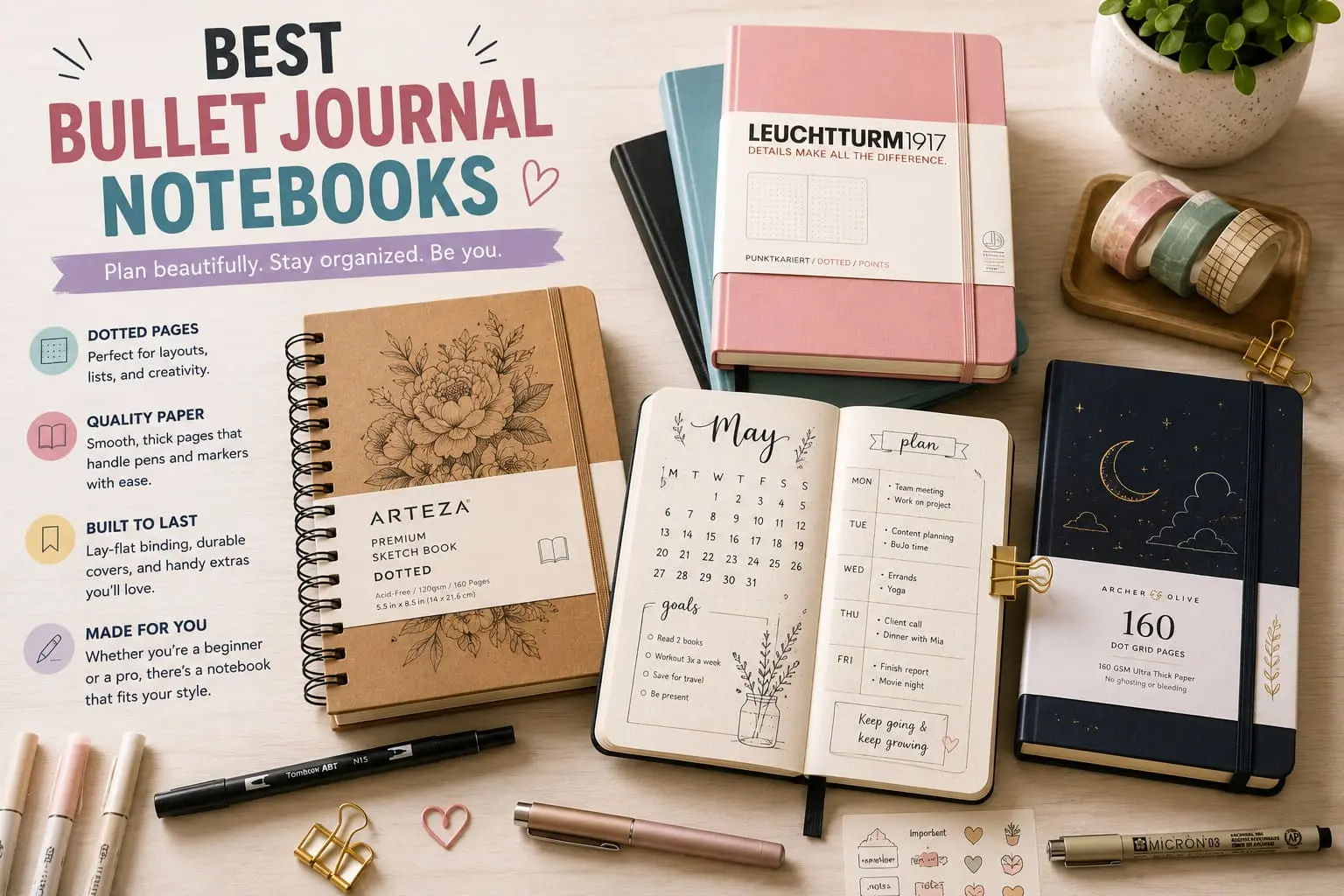
LEUCHTTURM1917 is the strongest fit for travelers who like bullet-journal-style flexibility. The dots give enough guidance for lists and neat layouts without locking each page into one purpose, while numbered pages make it easier to create your own index for restaurants, expenses, day logs, or destination notes.

Honest drawback

You have to build every travel-planning section yourself, which takes more setup than a preprinted guided journal

Best forTravelers who want custom layouts, numbered pages, lists, trackers, and small sketches

Pros

  • 187 numbered pages
  • Dot grid works for writing, trackers, lists, and simple sketches
  • Pocket A6 hardcover format remains travel-friendly

Cons

  • Requires more setup than a guided travel planner
  • Compact pages reward concise layouts rather than expansive journaling
Check price on Amazon (opens Amazon in a new tab)
Best weatherproofResearch-based review

Rite in the Rain Weatherproof Top Spiral Notebook No. 735 (opens Amazon in a new tab)

Rite in the Rain · No. 735, 3 x 5 Inch Black

A tiny 3 by 5 inch top-spiral notebook made with all-weather paper for rougher travel conditions

Why it fits this guide

Rite in the Rain earns its place because ordinary travel journals are designed mainly for dry indoor writing. The No. 735 is built around all-weather paper that is intended to handle water, sweat, grease, and mud, making it far more practical for trail notes, campsite logs, wildlife observations, or wet-weather itineraries.

Honest drawback

The utilitarian 3 by 5 inch format is excellent for field notes but too small and plain for travelers who want a rich scrapbook-style memory book

Best forHiking, camping, rainy destinations, field notes, and outdoor travel

Pros

  • Extremely portable 3 by 5 inch size
  • All-weather paper is designed for wet and dirty conditions
  • Top spiral makes quick standing notes easier

Cons

  • Very little space for long-form diary entries
  • No guided prompts, keepsake pocket, or decorative memory features
Check price on Amazon (opens Amazon in a new tab)
Best leather valueResearch-based review

newestor Pocket Travelers Notebook (opens Amazon in a new tab)

newestor · Refillable Leather Pocket Travelers Notebook

A refillable leather travel notebook designed around 3.5 by 5.5 inch inserts, with one insert included

Why it fits this guide

newestor offers the appeal of a reusable leather travel notebook without requiring a proprietary guided format. Its compatibility with common 3.5 by 5.5 inch inserts gives you more freedom to choose ruled, blank, grid, or other refills as your travel style changes.

Honest drawback

A leather cover plus replaceable inserts is thicker than a single notebook, and the writing experience will depend heavily on the refill you choose

Best forTravelers who want a reusable genuine-leather cover with common pocket-size refills

Pros

  • Refillable genuine-leather cover
  • Designed for common 3.5 by 5.5 inch inserts
  • Includes one notebook insert

Cons

  • Bulkier than a simple pocket notebook
  • Refill quality and layout can vary
Check price on Amazon (opens Amazon in a new tab)
Best for planning and budgetsResearch-based review

JUBTIC Travel Journal & Planner (opens Amazon in a new tab)

JUBTIC · A5 Travel Journal & Planner, Rose Gold

An A5 guided travel planner built to organize up to six trips with practical planning and diary sections

Why it fits this guide

JUBTIC is the better choice when the planning side of travel matters as much as the memory side. Its structure puts itineraries, budget tracking, and checklists into the same book as trip records, which is useful for travelers who otherwise scatter plans across notes apps, printed confirmations, and separate notebooks.

Honest drawback

The A5 format takes more bag space than the pocket picks, and travelers who dislike prompts may find the structure too prescriptive

Best forTravelers who want itineraries, checklists, budget tracking, and trip memories in one A5 book

Pros

  • Planning space for up to six trips
  • Includes budget tracking and checklist functions
  • A5 pages give more room for detailed planning

Cons

  • Less pocketable than smaller travel notebooks
  • Structured pages reduce freeform flexibility
Check price on Amazon (opens Amazon in a new tab)
Best guided multi-trip journalResearch-based review

Kunitsa Co. Travel Journal (opens Amazon in a new tab)

Kunitsa Co. · Guided Travel Journal, Basil Green

A 224-page linen-bound guided journal designed to cover up to 12 trips and store small mementos

Why it fits this guide

Kunitsa Co. makes sense for someone who wants one attractive home archive rather than a tiny notebook for only the current trip. Its large page count, guided planning and reflection sections, lay-flat binding, and memory-keeper pocket are all oriented toward revisiting multiple trips after you return.

Honest drawback

The extra pages and hardcover make it one of the less pocketable options in a guide focused on compact travel stationery

Best forTravelers who want one substantial keepsake for planning and reflecting on many vacations

Pros

  • 224 ivory pages
  • Structured for planning and reflecting on up to 12 trips
  • Lay-flat hardcover and rear memory pocket support keepsake use

Cons

  • Bulkier than pocket and passport-size notebooks
  • Guided layout is not ideal for completely freeform journaling
Check price on Amazon (opens Amazon in a new tab)
Best reflective promptsResearch-based review

Compendium Everywhere You Go Guided Travel Journal (opens Amazon in a new tab)

Compendium · Everywhere You Go

A 112-page soft-cover guided journal that focuses on noticing and reflecting while still including practical travel-note sections

Why it fits this guide

Compendium's Everywhere You Go is less about managing reservations and more about remembering what a trip actually felt like. Its prompts encourage observations about the experience, while practical spaces for packing lists, notes, addresses, and things to remember stop it from becoming purely introspective.

Honest drawback

At 5.75 by 8.5 inches it is not a true pocket notebook, and the soft cover offers less crush protection than a hardcover in a packed bag

Best forTravelers who want prompts that help capture sensory details, feelings, and observations

Pros

  • Reflective prompts focus on richer travel memories
  • Includes practical spaces for packing lists, notes, and addresses
  • Ribbon marker helps keep your place

Cons

  • Larger than the true pocket options in this guide
  • Soft cover is less protective in crowded luggage
Check price on Amazon (opens Amazon in a new tab)

How to choose

  • Decide how portable you really need the journal to be. Passport, 3 by 5 inch, and 3.5 by 5.5 inch notebooks disappear into small bags more easily, while A5 and 5.75 by 8.5 inch journals give you noticeably more room for writing and planning.
  • Choose between guided and freeform pages before choosing a cover design. Guided journals help with itineraries, packing, budgets, and prompts; ruled or dotted notebooks give you more freedom for diary entries, sketches, lists, and custom layouts.
  • Think about whether one notebook should hold one trip or many. Bound journals are simple and self-contained, while refillable systems let you archive individual inserts and keep the same outer cover for years.
  • Look for practical memory-keeping details if you save physical souvenirs. A back pocket is useful for receipts, tickets, transit cards, labels, and other flat keepsakes that would otherwise float loose in your bag.
  • Match the notebook to the environment. A beautiful linen journal is excellent for hotels and cafés, but a weatherproof field notebook makes more sense for hiking, camping, boating, rainy destinations, or notes taken outdoors.

Common mistakes

  • Buying the smallest notebook possible and then discovering that the pages are too cramped for the amount you like to write.
  • Choosing a heavily guided planner when you actually want blank space for sketches, long diary entries, or spontaneous layouts.
  • Buying a large keepsake journal for a carry-everywhere role and then leaving it at the hotel because it feels too bulky.
  • Assuming a refillable leather cover includes every insert, pocket, folder, or accessory shown in lifestyle photos without checking the exact listing contents.
  • Treating any notebook as weatherproof without checking whether the paper and cover are specifically designed for wet conditions.

FAQ

What is the best travel journal for most people?

Our top research pick is the Clever Fox Travel Journal Pocket because it balances portability with useful structure. Its 3.7 by 6.7 inch size is compact enough for a small bag, while the guided pages cover both planning and memory keeping. If you already have your own journaling system, a plain pocket notebook such as the Moleskine Classic Pocket may be a better fit.

What size travel journal is best?

For something you will carry all day, passport size, 3 by 5 inches, 3.5 by 5.5 inches, and similar pocket formats are easiest to bring everywhere. A5 and roughly 5.75 by 8.5 inch journals provide more room for long entries, budgets, photos, and detailed planning but are more likely to live in a backpack or hotel room rather than a clothing pocket.

Is a guided travel journal better than a blank notebook?

A guided journal is better if prompts help you remember what to record or if you want built-in itinerary, packing, budget, and reflection sections. A blank, ruled, or dotted notebook is better if you sketch, write long diary entries, create custom layouts, or dislike being told how much space to give each part of a trip.

What should I write in a travel journal?

Useful entries include where you went, what you ate, people you met, small surprises, prices you want to remember, transport details, favorite moments, mistakes, phrases in the local language, and how a place felt. Short sensory details often become more valuable later than a perfect hour-by-hour record.

Are refillable travel journals worth it?

They can be worthwhile for frequent travelers because you keep the outer cover and replace only the filled insert. Systems such as the TRAVELER'S Notebook Passport Size and newestor Pocket Travelers Notebook also make it easier to archive individual trips separately. A simple bound journal is cheaper and easier if you travel occasionally or prefer each finished book to remain self-contained.

Is hardcover or softcover better for travel?

Hardcover journals resist bending better inside a crowded day bag and give you a firmer surface when you are writing away from a desk. Softcover journals are lighter and can flex into tight spaces. Neither is automatically better; choose based on how rough your bag gets and whether you prioritize protection or low weight.

Do I need a weatherproof travel notebook?

Most city travelers do not. A normal notebook works well for airports, trains, cafés, museums, and hotels. Weatherproof paper becomes more useful when you hike, camp, work outdoors, travel by boat, visit very rainy destinations, or need to take notes when keeping the notebook dry is difficult.

How do I save tickets and receipts in a travel journal?

Choose a journal with a rear pocket if you regularly keep paper souvenirs. Peter Pauper Press and Kunitsa Co. both include pocket-style storage in their travel-journal designs. For notebooks without storage, keep flat items in a separate envelope until you can attach or archive them without overstuffing the binding.

How many pages should a travel journal have?

There is no single ideal count. A short city break can fit comfortably in a thin pocket notebook, while a multi-week trip or a journal intended to hold several vacations benefits from 100-plus pages. More pages also add thickness, so page count should be balanced against how often you plan to carry the journal during the day.

Can I use a regular notebook as a travel journal?

Yes. A regular ruled or dotted notebook can be an excellent travel journal if you do not need preprinted prompts. The Moleskine Classic Pocket and LEUCHTTURM1917 Pocket A6 are included precisely because a flexible notebook can work better than a purpose-built planner for travelers who already know what they want to record.

Final recommendation

For most trips, our top research pick is the Clever Fox Travel Journal Pocket because it fits a useful mix of planning and memory keeping into a compact 3.7 by 6.7 inch format. Choose the Peter Pauper Press Travel Journal if you want a simpler lined keepsake with a rear pocket, or the TRAVELER'S Notebook Passport Size if you want a premium refillable system that can follow you across years of travel. The Moleskine Classic Pocket is the straightforward ruled option, while the LEUCHTTURM1917 Pocket A6 is better for dot-grid layouts and numbered-page organization. Rite in the Rain No. 735 is the specialist pick for wet and outdoor trips, newestor offers a more accessible refillable leather format, JUBTIC is strongest for itineraries and budgets, Kunitsa Co. is the multi-trip guided keepsake, and Compendium Everywhere You Go is the choice for reflective prompts. Because we have not personally tested these exact notebooks, paper feel, pen compatibility, long-term binding durability, and real-world weather performance should remain research-based claims until original KawaiiToons testing is added.

Choosing the best travel journal is less about finding the prettiest notebook and more about finding the one you will actually carry, open, and write in during a trip. A journal can look perfect on a desk and still fail as travel stationery if it is too large for your day bag, too structured for the way you write, or too small for the memories you want to preserve.

The best options fall into a few distinct groups. Some are guided travel journals with itinerary, packing, budget, and reflection pages. Others are simply excellent compact notebooks that let you decide what each page becomes. Refillable passport-size systems suit frequent travelers who want one cover for years, while weatherproof field notebooks make more sense for hiking and wet conditions than a decorative keepsake book.

That distinction matters because a week in Tokyo, a three-day city break, and a rainy trekking trip do not ask the same thing from a notebook. The right journal should match both how you travel and how you remember.

This guide is research-based. We checked current Amazon US product information for all 10 selections on August 11, 2026. KawaiiToons has not personally traveled with these exact notebooks yet, so we do not invent paper-quality scores, pen bleed-through results, durability rankings, or first-hand claims about how the covers age in a suitcase.

The short version: which travel journal should you choose?

For most travelers, start with the Clever Fox Travel Journal Pocket. Its 3.7 by 6.7 inch format is small enough to travel easily but still gives you more structure than a plain notebook. It combines trip planning, packing support, travel-reference pages, and memory keeping, which makes it the most balanced one-book solution in this shortlist.

If you want something simpler, the Peter Pauper Press Travel Journal is a strong compact keepsake. Its 144 lightly lined pages leave you free to write your own story, while the expandable back pocket is useful for the kind of paper souvenirs that accumulate on a trip: museum tickets, transit receipts, business cards, and small notes.

Frequent travelers should look at a refillable system. The TRAVELER’S Notebook Passport Size is the premium choice because the leather cover can stay with you while individual inserts are replaced and archived. The newestor Pocket Travelers Notebook takes a similar refillable idea and is designed around common 3.5 by 5.5 inch inserts.

For completely freeform writing, choose between the Moleskine Classic Pocket and LEUCHTTURM1917 Pocket A6. Moleskine gives you a familiar ruled notebook with 192 pages. LEUCHTTURM1917’s dotted pages and numbering make more sense if you like lists, trackers, custom spreads, and bullet-journal-style organization.

If your trip involves trails, campsites, rain, mud, or field notes, the Rite in the Rain No. 735 is the specialist choice. At 3 by 5 inches it is tiny, and its all-weather paper is designed for conditions where an ordinary travel diary is a poor match.

For more planning space, JUBTIC Travel Journal & Planner is built around itineraries, budgets, checklists, and up to six trips. Kunitsa Co. Travel Journal takes a more substantial multi-trip keepsake approach with 224 pages and planning/reflection space for up to 12 trips. Compendium Everywhere You Go is the pick for travelers who want reflective prompts that help capture what a place looked, sounded, tasted, and felt like.

What makes a good travel journal?

A travel journal has to do two jobs that often compete with each other.

First, it needs to be portable enough to stay with you. Memories happen on trains, in cafés, at airports, on trails, and during ten quiet minutes before bed. A journal that is always back at the hotel is less useful than a smaller notebook you are willing to carry every day.

Second, it needs enough space and structure to make writing easy. An ultra-small notebook is wonderful for quick observations but can become frustrating when you want to describe a memorable meal, sketch a street, tape in a ticket, or write a full-page reflection.

The best size is therefore not simply “the smallest.” It is the smallest format that still supports the way you want to document a trip.

A third factor is what happens before and after the journey. A travel planner such as Clever Fox or JUBTIC can help before departure because the pages are designed around preparation. A keepsake-focused journal such as Kunitsa Co. becomes more valuable after the trip because it is designed to preserve several journeys in one physical archive. A refillable notebook handles both differently: you can carry only the current insert and archive it when you come home.

Guided travel journal or blank notebook?

This is the most important choice in the whole guide.

Choose a guided travel journal when you want prompts

Guided journals reduce blank-page friction. Instead of deciding what to write every time, you can respond to a prompt, fill an itinerary, record a budget, check a packing list, or capture a favorite moment.

The Clever Fox Travel Journal Pocket is the most portable guided option here. It is designed to cover planning as well as memories without expanding to a large desk-planner format.

The JUBTIC Travel Journal & Planner gives planning more room. Its A5 format is better when you care about budgets, checklists, and organizing several trips, but it is also less likely to fit into a tiny crossbody bag.

The Kunitsa Co. Travel Journal is a larger keepsake commitment. With 224 pages and space intended for up to 12 trips, it makes more sense as a multi-trip archive than a minimalist pocket diary.

Compendium Everywhere You Go uses prompts differently. Rather than centering on logistics, it encourages reflection and observation. That can be especially useful if your previous travel journals have turned into dry lists of where you went without capturing what the experience felt like.

Choose a ruled or dotted notebook when you want freedom

A regular notebook can make an excellent travel journal.

The Moleskine Classic Pocket gives you 192 ruled pages in a 3.5 by 5.5 inch hard-cover format. There are no trip templates to ignore and no predetermined amount of space for each day. You can write three lines about one afternoon and five pages about another.

The LEUCHTTURM1917 Pocket A6 is more flexible visually because of its dotted pages. You can create a trip index, expense tracker, restaurant list, miniature map, daily log, or sketch without the page feeling as rigid as traditional ruled paper.

Freeform notebooks work best for travelers who already know what they like to record. If prompts are what get you writing, the freedom can become another version of the blank-page problem.

How compact should a travel journal be?

“Compact” covers a surprisingly wide range of notebooks.

3 by 5 inches: true field-pocket size

The Rite in the Rain No. 735 sits at the smallest end of this guide. A 3 by 5 inch notebook is easy to keep in a pocket and excellent for quick notes.

The trade-off is obvious once you start writing. Long paragraphs, sketches, pasted souvenirs, and detailed daily summaries need more space than a tiny field page provides.

This format works best when the journal is a capture tool: jot down the name of a restaurant, a trail observation, a phrase you heard, the number of a bus, or a thought you want to expand later.

Passport and pocket size: the everyday-carry sweet spot

The TRAVELER’S Notebook Passport Size, Moleskine Classic Pocket, LEUCHTTURM1917 Pocket A6, and newestor Pocket Travelers Notebook all live around this highly portable category.

These notebooks are still small enough for most day bags, but they give you enough page area to write real entries. They also suit travelers who like to journal in short bursts during the day instead of doing one long session at night.

The Clever Fox Travel Journal Pocket is slightly taller at 3.7 by 6.7 inches, but it remains compact enough to fit the same general use case while making room for guided sections.

A5 and small-journal size: better writing, more bag space

The JUBTIC planner uses A5 pages, while Compendium Everywhere You Go measures about 5.75 by 8.5 inches. These formats are still easy to travel with in a backpack, tote, or larger handbag, but they are not clothing-pocket notebooks.

The advantage is writing comfort. Budgets, itineraries, prompts, and longer reflections all benefit from more page area. If you mostly journal at breakfast or in the hotel each evening, the larger size may be worth carrying.

Hardcover, softcover, or leather refillable cover?

A cover changes how a travel journal behaves in luggage.

Hardcover for bag protection

Hardcovers such as the Moleskine, LEUCHTTURM1917, Peter Pauper Press, and Kunitsa Co. resist bending better than thin paper covers. That is useful when a notebook shares a bag with chargers, sunglasses cases, snacks, and everything else a trip accumulates.

The trade-off is weight and rigidity. A hard cover does not compress into odd spaces as easily as a soft notebook.

Softcover for lighter packing

The Compendium journal uses a soft-cover format. A softer book is easier to flex into a full bag and can feel lighter in use.

It also has less structural protection. If you care about keeping a travel journal pristine for years, you may want to pack a softcover more carefully than a hardbound keepsake.

Refillable leather for long-term use

The TRAVELER’S Notebook Passport Size and newestor Pocket Travelers Notebook are different because the outer cover is meant to remain while the writing insert changes.

That creates a useful travel archive. One insert can represent Seoul, another Switzerland, another a family road trip. When an insert is full, you remove it, store it at home, and continue using the same cover.

The downside is that a refillable cover plus insert is usually thicker than carrying one simple notebook. Accessories and replacement refills also affect the total cost.

Why a keepsake pocket matters more than it sounds

Digital tickets have reduced the amount of paper we carry, but travel still produces physical fragments worth saving.

A tiny café card can remind you of a morning better than a generic photo. A museum ticket fixes a memory to a specific day. A handwritten recommendation from a hotel employee may become the reason you found a favorite restaurant.

The Peter Pauper Press Travel Journal includes an expandable back pocket, while the Kunitsa Co. Travel Journal includes a memory-keeper pocket. These are small features, but they solve a real organizational problem: keeping flat souvenirs with the journal instead of scattering them through a suitcase.

Do not turn the pocket into a storage box. Thick stacks of receipts, coins, bulky pins, or multiple postcards can distort a binding. Keep it for flat, lightweight pieces and move larger memorabilia into a separate scrapbook when you get home.

How we chose these travel journals

We started with one practical question: would this notebook still make sense once you leave the desk and start moving through a real trip?

We compared the 10 selections across seven factors:

  1. Portability. We favored genuinely compact formats and included a few slightly larger journals only when the extra page space supports useful guided planning or reflection.
  2. Page structure. Guided, ruled, dotted, and field-notebook formats suit different travelers, so this is not a ranking where one page style automatically wins.
  3. Planning value. We considered whether a journal adds itineraries, budgets, checklists, packing support, or practical travel-reference pages.
  4. Memory value. Prompts, keepsake pockets, multiple-trip organization, and free writing space matter after the journey is over.
  5. Refillability. Replaceable inserts can make a notebook system more useful for frequent travelers than a single permanently bound book.
  6. Environment. Weatherproof field paper solves a specific problem that decorative journals do not.
  7. Clear trade-offs. Every product recommendation keeps its main limitation beside the reason to choose it.

All recommendations remain research-based until KawaiiToons has original travel testing. We have not used these exact notebooks side by side with the same pens, packed them for the same number of days, exposed them to identical bag wear, or measured real-world paper performance.

What to look for before buying a travel journal

Decide where you will actually write

Picture the moment, not the product photo.

If you expect to make notes while walking, waiting for a train, or sitting on a park bench, a pocket notebook is easier to use. If your routine is to write for 20 minutes at the hotel every night, A5 may feel much better.

A journal that suits your writing location is more likely to become a habit.

Estimate how much you write per travel day

A traveler who records five bullet points a day can use a tiny notebook for weeks. Someone who writes a detailed diary every evening can fill the same notebook quickly.

Page count alone does not tell the whole story because page area changes how much fits on each sheet. The 192 pages in a Moleskine Pocket still provide less writing area per page than an A5 planner.

If you are unsure, take a notebook you already own and write one typical travel-day entry. That sample tells you more than a generic page-count recommendation.

Decide whether planning belongs in the same book

Some people want one physical source of truth for the whole trip. In that case, a guided journal with itinerary, checklist, and budget pages is useful.

Other travelers already keep confirmations and schedules on their phones. For them, repeating logistics in a paper journal may waste pages that could have been used for memories.

Choose the journal around your existing travel workflow rather than forcing a new one.

Think about what happens when the notebook is full

A bound journal becomes a finished object. That can be emotionally satisfying: one book, one period of travel.

A refillable notebook creates a different archive. You keep the cover and store the inserts. This works particularly well if you want one familiar notebook in your bag but prefer each trip to have a separate booklet at home.

Neither system is better. They simply create different kinds of travel history.

Match paper claims to the pens you actually use

Do not assume that a premium-looking travel journal will behave perfectly with every pen. Paper can react differently to gel ink, fineliners, fountain pens, markers, and heavy sketching.

Because we have not personally tested the paper in these exact products, this guide does not claim that one notebook has the “best” fountain-pen performance or the least ghosting.

If pen compatibility is critical, test a back page first before committing to the main journal.

Common mistakes when starting a travel journal

Waiting for enough time to write a perfect entry

The biggest enemy of a travel journal is not bad handwriting. It is postponing every entry until you have enough time to write something polished.

Write the small thing now: the smell of the bakery, the wrong train you took, the song playing in the taxi, the price of a snack, the phrase your child kept repeating, the unexpected view from the hotel window.

Those details are easy to expand later and difficult to reconstruct from photos alone.

Turning the journal into a second itinerary app

A little planning can make the journal more useful, but copying every confirmation number and timetable may turn a memory book into paperwork.

Use the pages for information that benefits from being visible offline or for details you genuinely want to remember. Let your phone handle rapidly changing logistics when that is more convenient.

Choosing a journal for the life you imagine instead of the trip you take

A large linen keepsake may fit the idea of romantic travel writing. A 3 by 5 inch weatherproof notebook may fit the reality of your hiking trip much better.

Likewise, a minimalist blank notebook sounds freeing until you realize prompts are what actually help you write.

Buy for your real behavior.

Overstuffing a keepsake pocket

A rear pocket is for flat memorabilia, not a full travel archive. Too much material adds stress to the spine and makes the journal harder to close.

Photograph bulky items or move them into a separate memory box after the trip.

Buying a refillable system without checking what is included

Refillable travel notebooks can appear in product photos with several inserts, folders, bands, pockets, clips, or pen loops.

Check the exact current listing before assuming every pictured accessory is part of the base package. The value of the system depends partly on how much you need to add separately.

Best travel journal for a city break

For a short city trip, portability usually matters more than huge page capacity.

The Clever Fox Travel Journal Pocket is a good guided choice because you can plan and journal without carrying an A5 organizer. The Peter Pauper Press Travel Journal is better when you mainly want daily writing plus a place for small tickets and receipts.

If you prefer to improvise, the Moleskine Classic Pocket and LEUCHTTURM1917 Pocket A6 are easy to carry from breakfast to the last train home. The ruled Moleskine suits diary-style writing, while the dotted LEUCHTTURM1917 is better for mixing lists, notes, small sketches, and custom layouts.

A useful city-break routine is to write little and often. Record a sentence while waiting for coffee, the name of a dish after lunch, and one surprise on the train back to the hotel. A handful of these fragments can preserve a day more vividly than a rushed page written from memory at midnight.

Best travel journal for backpacking and long trips

Longer travel changes the equation.

A single bound notebook can work, but refillability becomes more attractive when you do not know how quickly you will fill the pages. The TRAVELER’S Notebook Passport Size lets you replace an insert without replacing the cover, while the newestor Pocket Travelers Notebook is designed around 3.5 by 5.5 inch refills.

This also gives you a practical archival strategy. Instead of carrying months of old pages, you can mail or store completed inserts and continue with a fresh one.

If you want one bound record of several vacations rather than a rolling backpacker’s notebook, the Kunitsa Co. Travel Journal takes the opposite approach: more pages, more structure, and a multi-trip keepsake format.

Best travel notebook for hiking and outdoor trips

For outdoor travel, beauty matters less than whether the notebook can handle the environment.

The Rite in the Rain No. 735 is only 3 by 5 inches, but its all-weather paper is specifically designed for exposure to water, sweat, grease, and mud. That makes it a better fit for trail notes, campsite observations, route details, or field sketches than an ordinary decorative journal.

Its limitation is equally clear: this is not the notebook for full-page reflective essays or a scrapbook of restaurant receipts. Think of it as a durable capture notebook.

You can also use a two-stage system. Carry the Rite in the Rain outdoors, then transfer the memories you want to keep into a larger journal when you are dry and settled for the evening.

Best travel journal for memories and reflection

If the primary goal is to remember how a trip felt, prompts can be more useful than planning templates.

Compendium Everywhere You Go encourages reflective observations rather than only logistics. That can help you notice tastes, sounds, feelings, and small discoveries that do not always show up in a camera roll.

The Kunitsa Co. Travel Journal also emphasizes reflection but gives you a longer multi-trip framework and a place for physical mementos. It is better suited to someone building a bookshelf of travel memories rather than trying to carry the smallest notebook possible.

Whichever journal you choose, do not chase completeness. A travel journal is not a legal record. You do not need every meal, attraction, or train. Select the details that will transport you back.

A simple travel-journaling routine that is easy to keep

A good routine can make a modest notebook more useful than an elaborate journal you rarely open.

Before the trip, reserve a page for places you are excited about, another for practical notes you may need offline, and a small space for questions you want the trip to answer.

During the day, capture short fragments. Names, prices, overheard phrases, tiny sketches, funny mistakes, and sensory details take seconds.

At night, choose three things: the best moment, the most surprising moment, and one detail you do not want to forget.

After the trip, add one closing entry. Write what you would do differently, what you would return for, and what the destination changed about your expectations.

That final reflection is often the page that becomes most interesting years later.

Our final recommendation

If you want one compact travel journal that can handle both the practical and emotional sides of a trip, our top research pick is the Clever Fox Travel Journal Pocket. Its 3.7 by 6.7 inch size keeps it substantially more portable than a full planner, while the guided structure covers planning, packing support, travel-reference pages, and memories.

Choose the Peter Pauper Press Travel Journal if you want fewer prompts and a useful pocket for paper keepsakes. Choose the TRAVELER’S Notebook Passport Size if you want a premium refillable system that can stay with you for years.

For freeform writing, the Moleskine Classic Pocket is the straightforward ruled choice, while the LEUCHTTURM1917 Pocket A6 is better for custom dot-grid layouts. The Rite in the Rain No. 735 is the specialist notebook for hiking and wet conditions, and the newestor Pocket Travelers Notebook offers a reusable leather format around common pocket refills.

If you plan trips on paper, JUBTIC gives you more room for itineraries, budgets, and checklists. If you want a substantial multi-trip keepsake, Kunitsa Co. provides the larger guided archive. If reflection matters more than logistics, Compendium Everywhere You Go is the prompt-led option.

The next step for this guide should be original travel testing. Once KawaiiToons has carried these notebooks in the same kind of day bag, written in them with the same pens, compared real page capacity, tested pocket storage, and documented wear after actual trips, the research-based recommendations can be upgraded with first-hand evidence.