
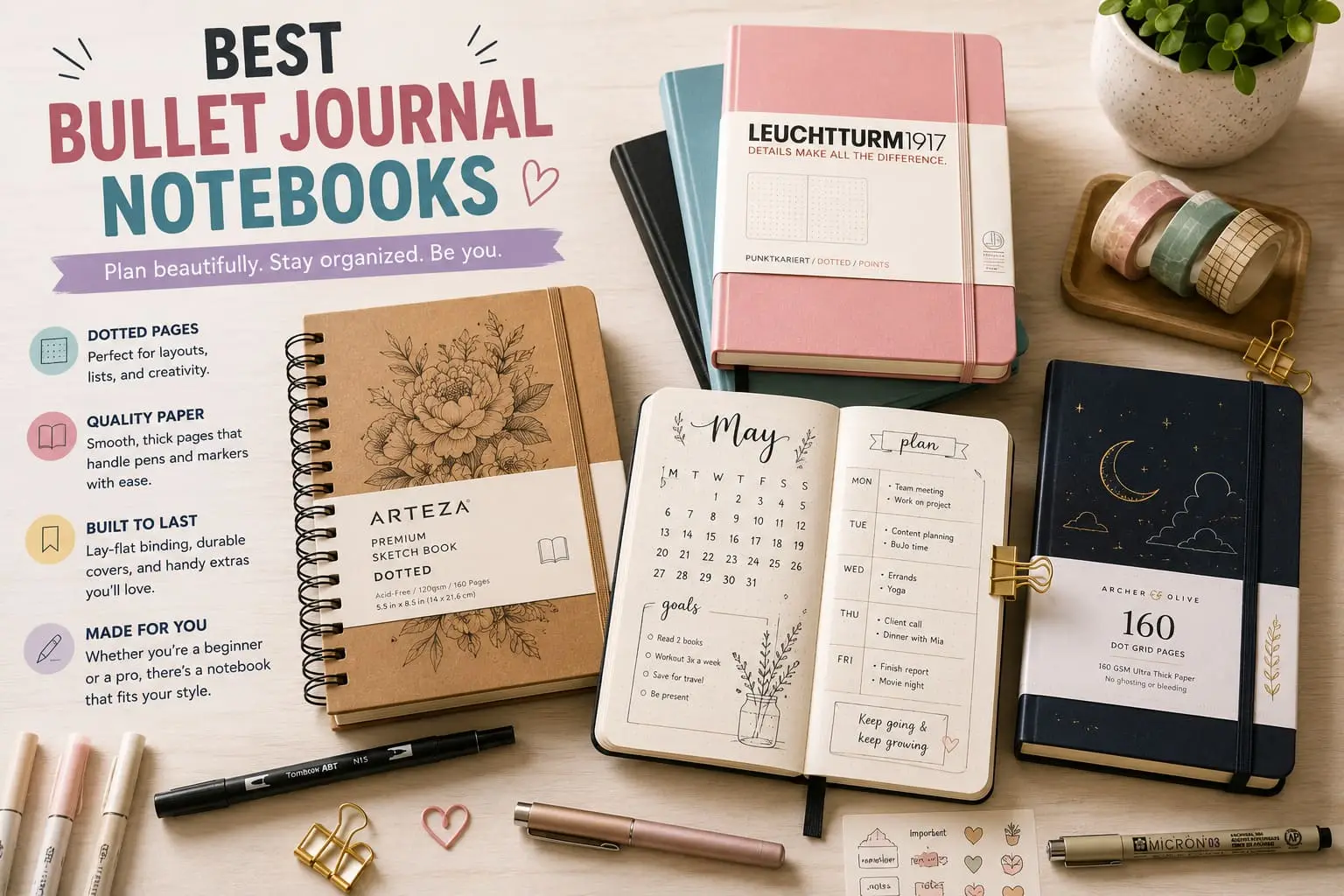
Quick picks
- Best overall for beginnersYop & Tom Bullet Dotted Journal A5 – Moon and Stars (opens Amazon in a new tab)
- Best for creative planningScribbles That Matter VIVID SCRIBBLES A5 Bullet Dotted Journal (opens Amazon in a new tab)
- Best budget starterPAPERAGE Dotted Journal Notebook (opens Amazon in a new tab)
- Best high-page-count valueRETTACY Dotted Journal Notebook, 256 Pages (opens Amazon in a new tab)
- Best premium planning notebookLEUCHTTURM1917 120G Special Edition Medium A5 Dotted Notebook (opens Amazon in a new tab)


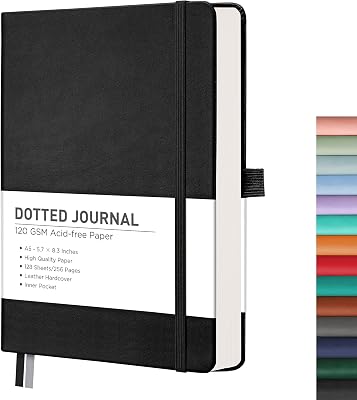

Product comparison
| Product | Best for | Watch out | Price & shop |
|---|---|---|---|
| Yop & Tom Bullet Dotted Journal A5 – Moon and Stars (opens Amazon in a new tab) Best overall for beginnersResearch-based review | Beginners who want useful setup pages and thick paper without designing every support page from scratch | The 160-page count is lower than several planning-first alternatives, so heavy daily loggers may fill it sooner. | |
| Scribbles That Matter VIVID SCRIBBLES A5 Bullet Dotted Journal (opens Amazon in a new tab) Best for creative planningResearch-based review | Creative journalers who want heavyweight paper without giving up too much page count | It sits in a higher price tier and is heavier than simpler 100- or 120 GSM notebooks. | |
| PAPERAGE Dotted Journal Notebook (opens Amazon in a new tab) Best budget starterResearch-based review | First-time bullet journalers who want a practical notebook before investing in premium paper | The thinner paper calls for more caution with wet markers, heavy layering and very saturated ink. | Budget-friendlyCheck price on Amazon (opens Amazon in a new tab) |
| RETTACY Dotted Journal Notebook, 256 Pages (opens Amazon in a new tab) Best high-page-count valueResearch-based review | Daily loggers and long-term planners who want one notebook to last longer | The extra pages make the notebook thicker, while 120 GSM is still less substantial than the 150- and 160 GSM creative picks. | Budget-friendlyCheck price on Amazon (opens Amazon in a new tab) |
| SeQeS A5 Bullet Dotted Journal Notebook (opens Amazon in a new tab) Best for marker-heavy layoutsResearch-based review | Decorative planners who regularly use brush pens, highlighters and layered color | Only 160 pages are included, so you trade capacity for heavier paper. | |
| Dingbats* Wildlife A5 Dotted Hardcover Notebook (opens Amazon in a new tab) Best premium writing feelResearch-based review | Writers and fountain-pen users who prefer cream paper and a premium classic notebook experience | The 100 GSM paper is thinner than the 160 GSM art-focused picks, so marker-heavy spreads need more caution. | |
| Mr. Pen Dotted Journal Notebook A5 (opens Amazon in a new tab) Best ultra-budget pickResearch-based review | Curious beginners who want to experiment with dotted planning for very little money | It lacks the planning-specific setup pages and heavier paper found in more expensive options. | Budget-friendlyCheck price on Amazon (opens Amazon in a new tab) |
| TIEFOSSI A5 Dotted Journal Notebook, 190 Numbered Pages (opens Amazon in a new tab) Best thick-paper capacityResearch-based review | Creative planners who want 160 GSM paper and more than the common 160-page limit | The combination of 160 GSM paper and 190 pages makes it a thick notebook to carry every day. | |
| LEUCHTTURM1917 120G Special Edition Medium A5 Dotted Notebook (opens Amazon in a new tab) Best premium planning notebookResearch-based review | Minimalist planners who want numbered pages, premium paper and more writing capacity than most 160 GSM journals | The premium price is difficult to justify if you only need a basic dotted notebook, and the paper is not as heavy as 160 GSM creative journals. | |
| Moleskine Classic Large Dotted Soft Cover Notebook (opens Amazon in a new tab) Best lightweight classicResearch-based review | Minimalists who want a flexible notebook for simple logs, notes and portable planning | It is not the right choice if your priority is thick paper for saturated markers, paint-like pens or heavy decorative layering. |
Detailed product sections
Yop & Tom Bullet Dotted Journal A5 – Moon and Stars (opens Amazon in a new tab)
A beginner-friendly 160 GSM A5 journal with Key, Index and Pen Test pages plus numbered dot-grid pages

Why it fits this guide
Yop & Tom earns the top beginner spot because its useful setup pages remove several decisions that make a first bullet journal feel intimidating. The 160 GSM paper, stitched lay-flat construction, numbered pages, back envelope, bookmark and elastic closure also leave plenty of room to experiment with planning and decorative spreads.
Honest drawback
The 160-page count is lower than several planning-first alternatives, so heavy daily loggers may fill it sooner.
Best forBeginners who want useful setup pages and thick paper without designing every support page from scratch
Pros
- Includes dedicated Key, Index and Pen Test pages
- 160 GSM paper supports decorative planning and mixed pen use
- Numbered pages, back envelope, bookmark and elastic closure simplify setup
Cons
- 160 pages provide less capacity than 190- to 256-page notebooks
- Thick paper makes the notebook bulkier for the amount of writing space
Scribbles That Matter VIVID SCRIBBLES A5 Bullet Dotted Journal (opens Amazon in a new tab)
A 160 GSM dotted hardcover with 200 numbered pages, lay-flat construction and a pen loop

Why it fits this guide
This Scribbles That Matter listing stands out because it combines 160 GSM paper with 200 numbered pages. Many heavyweight journals stop around 160 pages, so the extra capacity is useful if you want detailed trackers, collections, monthly spreads and decorative pages in the same book.
Honest drawback
It sits in a higher price tier and is heavier than simpler 100- or 120 GSM notebooks.
Best forCreative journalers who want heavyweight paper without giving up too much page count
Pros
- 200 numbered dot-grid pages give more room than many 160 GSM journals
- 160 GSM paper is designed for creative journaling and heavier pen use
- Lay-flat hardcover and pen loop suit desk-based planning
Cons
- Premium price compared with basic A5 dotted notebooks
- Heavy paper increases notebook weight and thickness
PAPERAGE Dotted Journal Notebook (opens Amazon in a new tab)
A simple 100 GSM dotted hardcover with 160 pages and the core accessories most beginners need

Why it fits this guide
PAPERAGE makes sense when you want to learn the bullet-journal method before paying for thick specialty paper. The 100 GSM pages keep the book relatively light, while the lay-flat design, ribbon, elastic closure and expandable pocket cover the basics for daily logs, collections and simple trackers.
Honest drawback
The thinner paper calls for more caution with wet markers, heavy layering and very saturated ink.
Best forFirst-time bullet journalers who want a practical notebook before investing in premium paper
Pros
- 100 GSM acid-free paper keeps the notebook lighter than heavyweight journals
- Lay-flat design, ribbon bookmark, elastic closure and expandable pocket cover the basics
- Budget-friendly way to try bullet journaling before buying a premium notebook
Cons
- 160 pages are fewer than several higher-capacity picks
- Thinner paper is less forgiving for very wet or heavily layered media
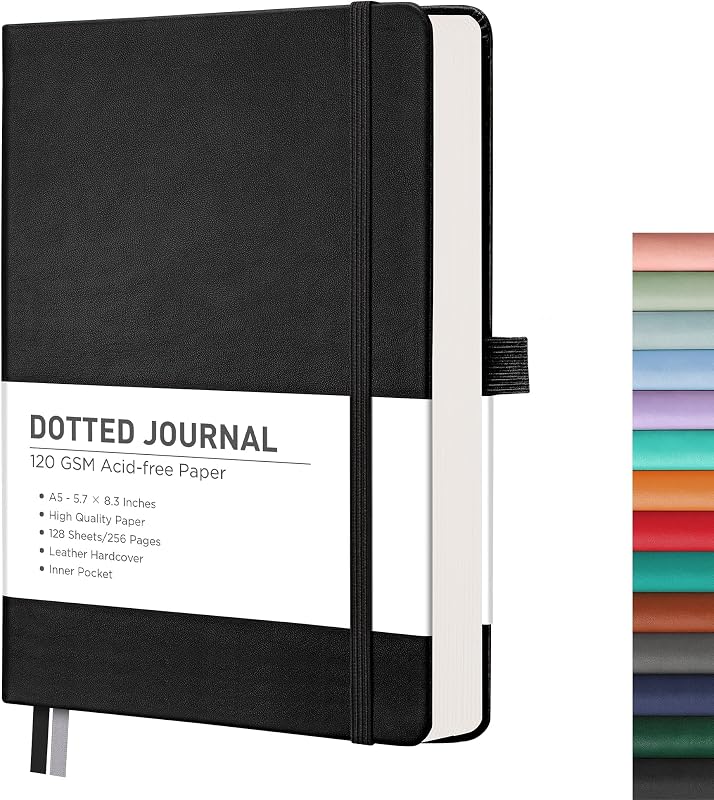
RETTACY Dotted Journal Notebook, 256 Pages (opens Amazon in a new tab)
A 256-page A5 journal that uses 120 GSM paper to balance capacity and paper substance
Why it fits this guide
RETTACY has the highest page count in this shortlist. Its 256 pages are especially useful if you write long daily logs, maintain many collections or dislike migrating to a new notebook every few months, while 120 GSM paper provides a middle ground between basic notebook stock and ultra-heavy art-journal paper.
Honest drawback
The extra pages make the notebook thicker, while 120 GSM is still less substantial than the 150- and 160 GSM creative picks.
Best forDaily loggers and long-term planners who want one notebook to last longer
Pros
- 256 pages provide the highest page count in this shortlist
- 120 GSM paper balances capacity with more substance than basic thin notebook paper
- A5 5.7 x 8.3 inch format and 180-degree lay-flat design suit daily planning
Cons
- Bulkier than lower-page-count A5 journals
- Not as heavyweight as 150- or 160 GSM creative-journaling paper
SeQeS A5 Bullet Dotted Journal Notebook (opens Amazon in a new tab)
A 160-page dot-grid journal built around 160 GSM paper and lay-flat creative planning

Why it fits this guide
SeQeS is aimed squarely at creative journaling. The 160 GSM paper and numbered pages give you a sturdy canvas for colorful trackers, headers and decorative spreads, while the lay-flat binding is useful when a weekly or monthly layout spans both pages.
Honest drawback
Only 160 pages are included, so you trade capacity for heavier paper.
Best forDecorative planners who regularly use brush pens, highlighters and layered color
Pros
- 160 GSM paper is a strong fit for decorative spreads and heavier ink use
- 160 numbered pages make indexing and migration easier
- Lay-flat binding helps with two-page weekly and monthly spreads
Cons
- Lower page count than several planning-first alternatives
- Heavyweight pages add bulk without increasing writing capacity
Dingbats* Wildlife A5 Dotted Hardcover Notebook (opens Amazon in a new tab)
A 192-page premium A5 journal with 100 GSM cream paper, micro-perforation and a full set of practical accessories

Why it fits this guide
Dingbats is the writing-first premium choice rather than the thickest art journal. Its 192 cream pages, lay-flat construction, pen holder, inner pocket, bookmark and elastic closure suit daily logging and long-form notes, and the brand positions the paper for fountain-pen use.
Honest drawback
The 100 GSM paper is thinner than the 160 GSM art-focused picks, so marker-heavy spreads need more caution.
Best forWriters and fountain-pen users who prefer cream paper and a premium classic notebook experience
Pros
- 192 pages offer strong capacity for a premium A5 journal
- Cream 100 GSM paper is marketed as fountain-pen friendly
- Micro-perforation, pen holder, pocket, bookmark and elastic closure add practical utility
Cons
- Premium price despite thinner paper than creative-art journals
- Cream paper changes the appearance of some highlighter and marker colors
Mr. Pen Dotted Journal Notebook A5 (opens Amazon in a new tab)
A no-frills 160-page, 100 GSM A5 dotted notebook that keeps the cost of starting low

Why it fits this guide
Mr. Pen is useful precisely because it lowers the commitment. If you are unsure whether you will keep up a bullet journal, a simple 100 GSM, 160-page notebook lets you test daily logs, habit trackers and collections before paying for a heavier premium journal.
Honest drawback
It lacks the planning-specific setup pages and heavier paper found in more expensive options.
Best forCurious beginners who want to experiment with dotted planning for very little money
Pros
- Very low cost makes it easy to try bullet journaling
- 100 GSM paper and 160 pages keep the notebook relatively light
- Fabric hardcover gives a more finished feel than a basic exercise book
Cons
- Fewer planning-specific extras than premium journals
- 100 GSM paper requires more care with wet markers and heavy layering
TIEFOSSI A5 Dotted Journal Notebook, 190 Numbered Pages (opens Amazon in a new tab)
A 190-page 160 GSM A5 journal with a 5 mm grid, numbering, pen loop, pocket and elastic closure

Why it fits this guide
TIEFOSSI fills a useful middle ground: it keeps the heavyweight 160 GSM paper favored for decorative bullet journaling but stretches capacity to 190 numbered pages. The documented 5 mm grid also makes standard calendar boxes, trackers and spacing calculations easier to plan.
Honest drawback
The combination of 160 GSM paper and 190 pages makes it a thick notebook to carry every day.
Best forCreative planners who want 160 GSM paper and more than the common 160-page limit
Pros
- 190 numbered pages provide unusually strong capacity for a 160 GSM journal
- 5 mm dot grid supports standard bullet-journal layouts
- Pen loop, elastic closure, ribbon and back pocket cover practical planning needs
Cons
- Thicker and heavier than 100- or 120 GSM alternatives
- Decorative fabric cover may not appeal to readers who want a minimal professional look
LEUCHTTURM1917 120G Special Edition Medium A5 Dotted Notebook (opens Amazon in a new tab)
A premium A5 dotted hardcover with 203 numbered pages on 120 GSM paper

Why it fits this guide
LEUCHTTURM1917 120G is the planning-first premium option. Its 203 numbered pages give you more room for months of logs and collections, while 120 GSM paper avoids some of the bulk of 160 GSM journals. It is a strong fit if your bullet journal is mainly writing, fineliners and moderate highlighting rather than marker-heavy artwork.
Honest drawback
The premium price is difficult to justify if you only need a basic dotted notebook, and the paper is not as heavy as 160 GSM creative journals.
Best forMinimalist planners who want numbered pages, premium paper and more writing capacity than most 160 GSM journals
Pros
- 203 numbered pages support long-term collections and daily logs
- 120 GSM paper balances a substantial feel with better page capacity than many 160 GSM books
- Minimal premium design works for personal or professional planning
Cons
- Premium price tier
- Not the thickest choice for heavy marker or mixed-media spreads
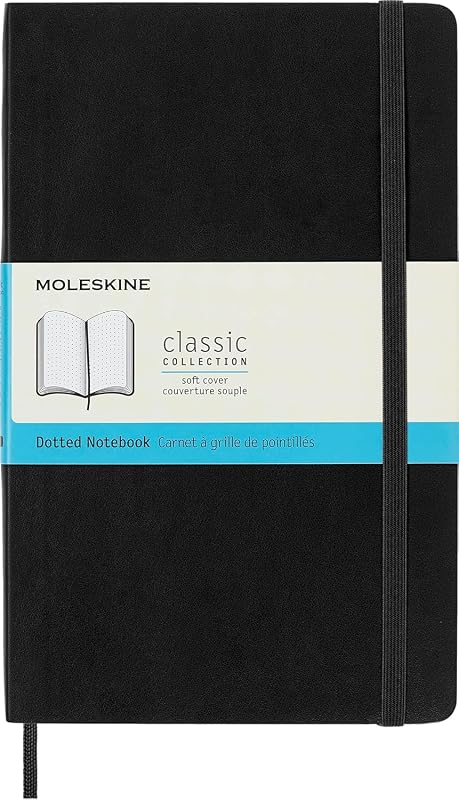
Moleskine Classic Large Dotted Soft Cover Notebook (opens Amazon in a new tab)
A flexible 192-page dotted softcover that prioritizes portability over heavyweight art-journal paper
Why it fits this guide
Moleskine is the most familiar minimalist option in the group. The large 5 x 8.25 inch format is close to A5, and the 192 dotted pages, soft cover, ribbon, elastic closure and expandable pocket work well for a stripped-back planning system that travels easily.
Honest drawback
It is not the right choice if your priority is thick paper for saturated markers, paint-like pens or heavy decorative layering.
Best forMinimalists who want a flexible notebook for simple logs, notes and portable planning
Pros
- 192 dotted pages provide useful capacity without a rigid bulky cover
- Soft cover is easier to carry and flex in a bag
- Simple layout works well for minimalist logs, collections and planning
Cons
- Less protective than a hard cover
- Not designed around heavyweight mixed-media bullet journaling
Related guides
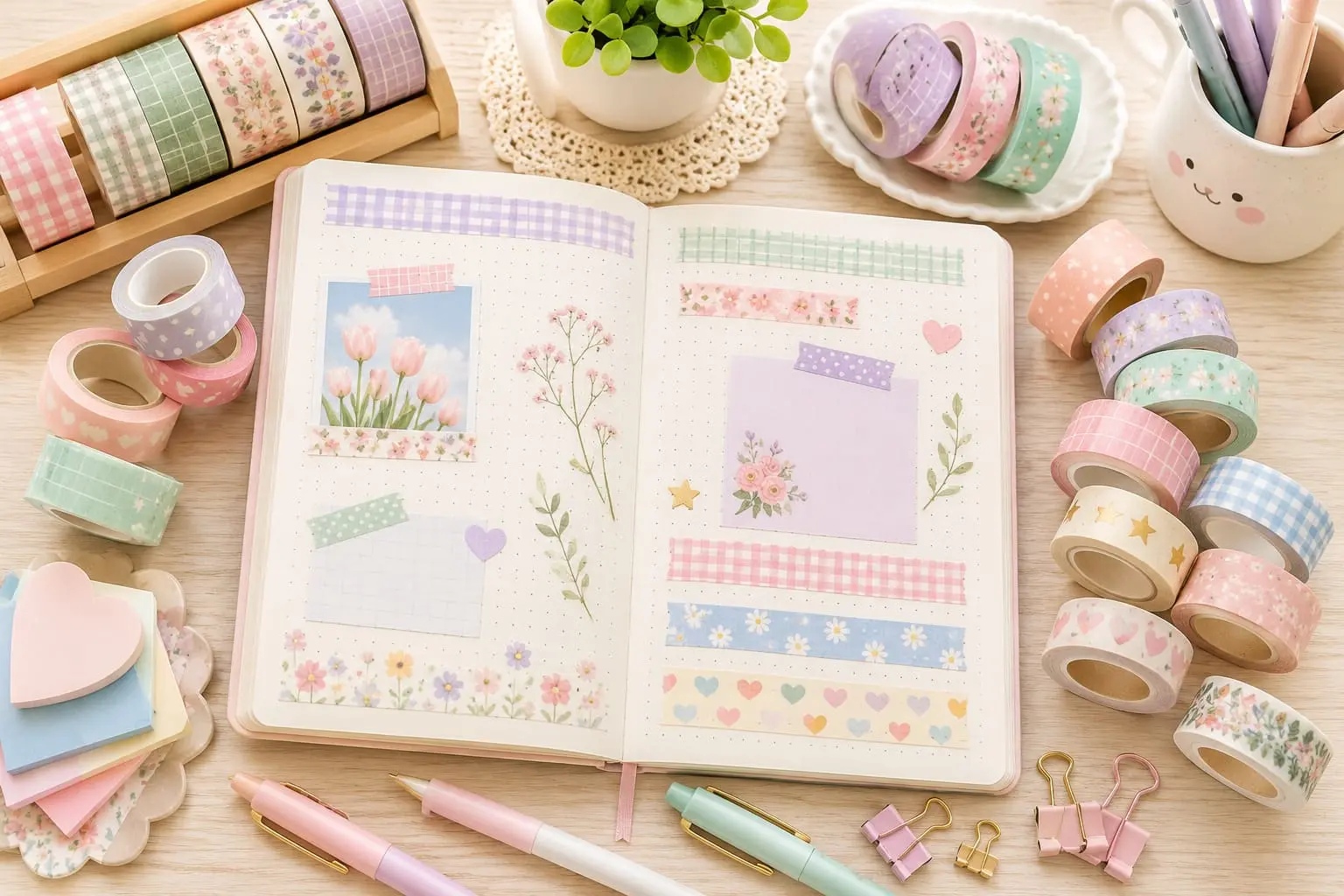
Best Washi Tape for Journaling: 10 Cute & Versatile Sets
The best washi tape for journaling, from kawaii animals and pastel florals to grid, vintage, skinny, and foil sets. Compare roll count, width, length, and style.
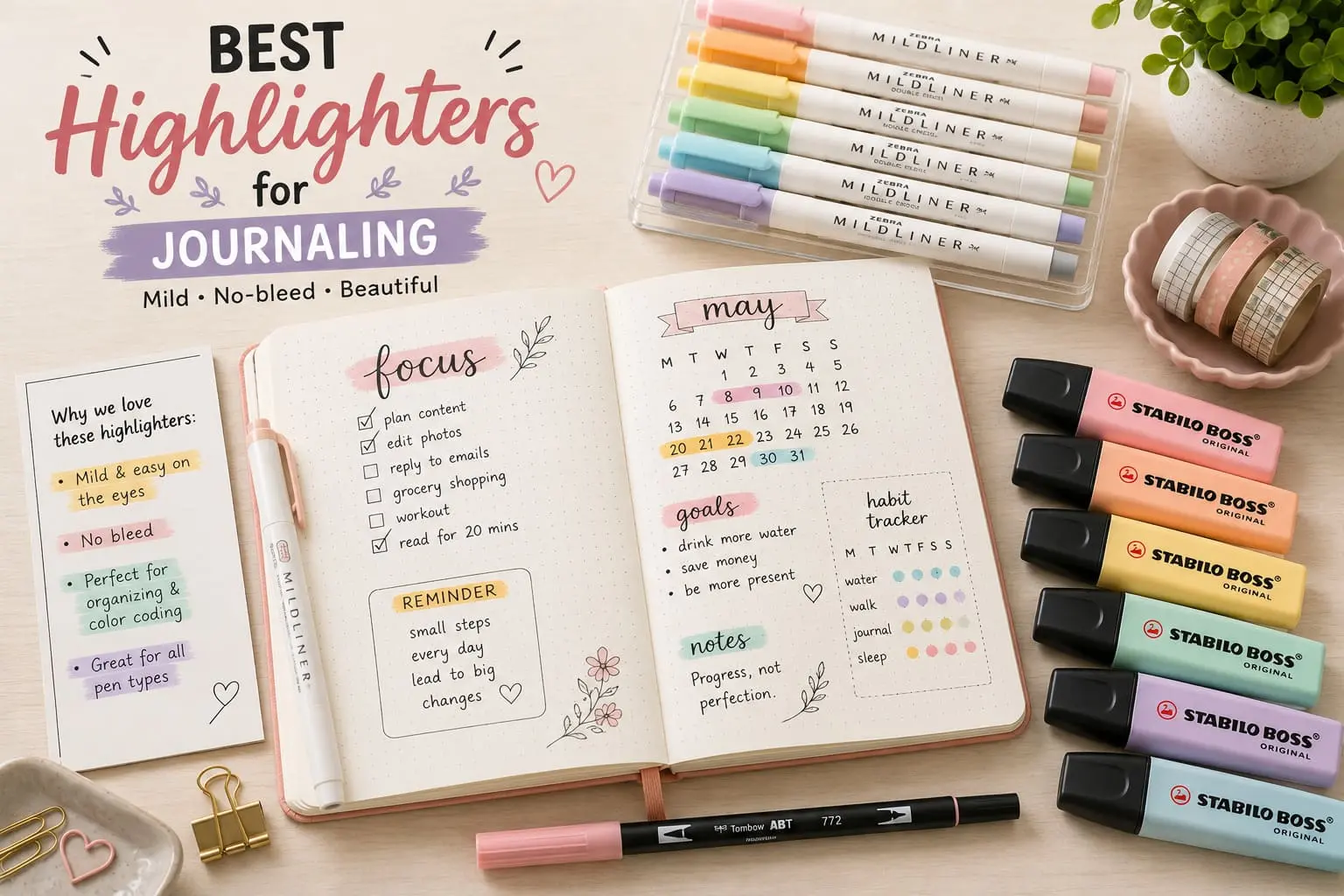
Best Highlighters for Journaling: 10 Mild, No-Bleed Picks
The best highlighters for journaling, from mild pastel markers to no-bleed gel picks. Compare tips, colors, erasability, and thin-paper use.
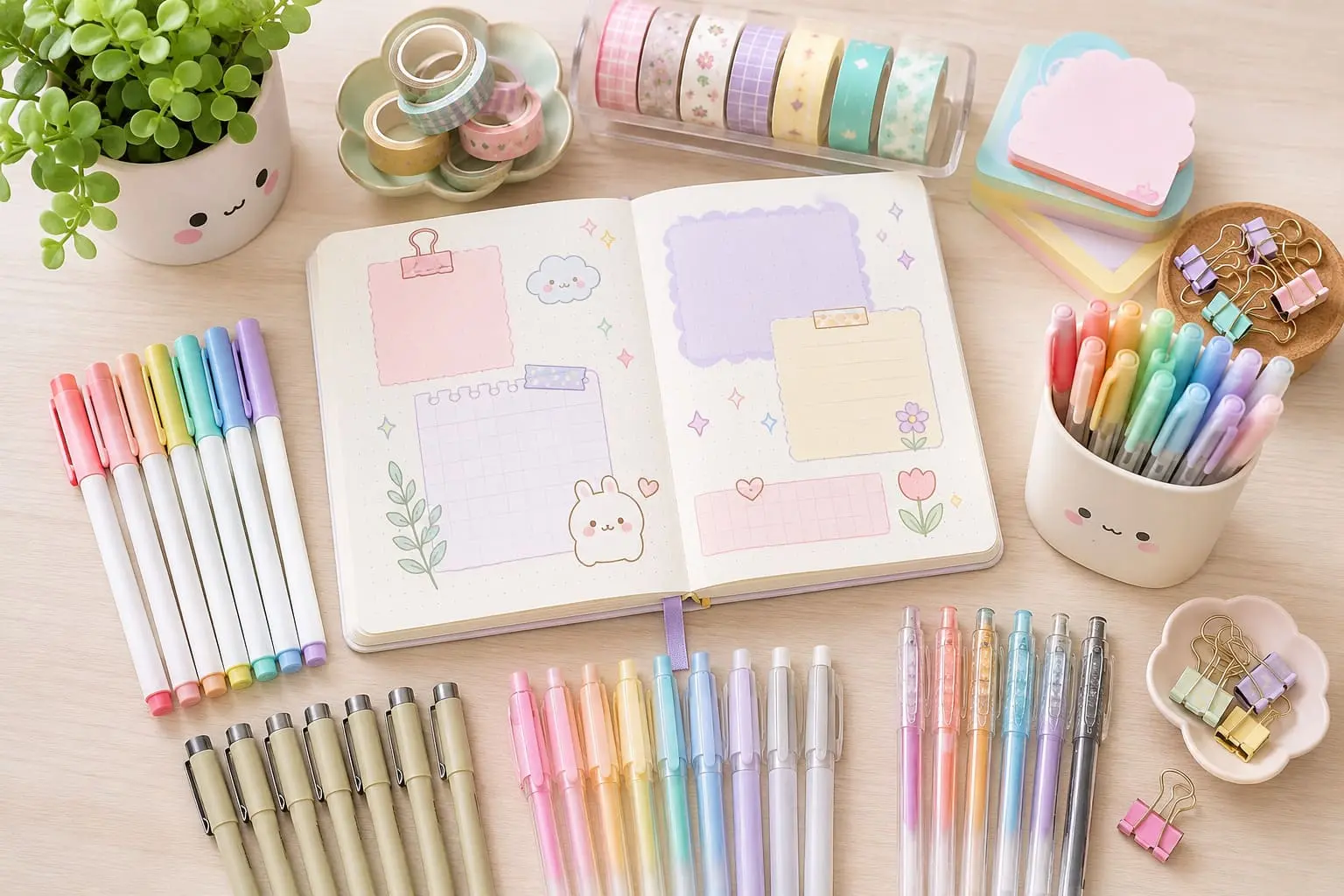
Best Pens for Journaling: 10 Smooth, No-Bleed Picks
Best pens for journaling compared: quick-dry gel pens, no-bleed felt tips and archival fineliners, with picks for left-handed writers and thin paper.

Best Travel Journals and Travel Notebooks
Compare 10 travel journal and travel notebook picks, from pocket and refillable notebooks to guided trip planners and weatherproof field notebooks.


