
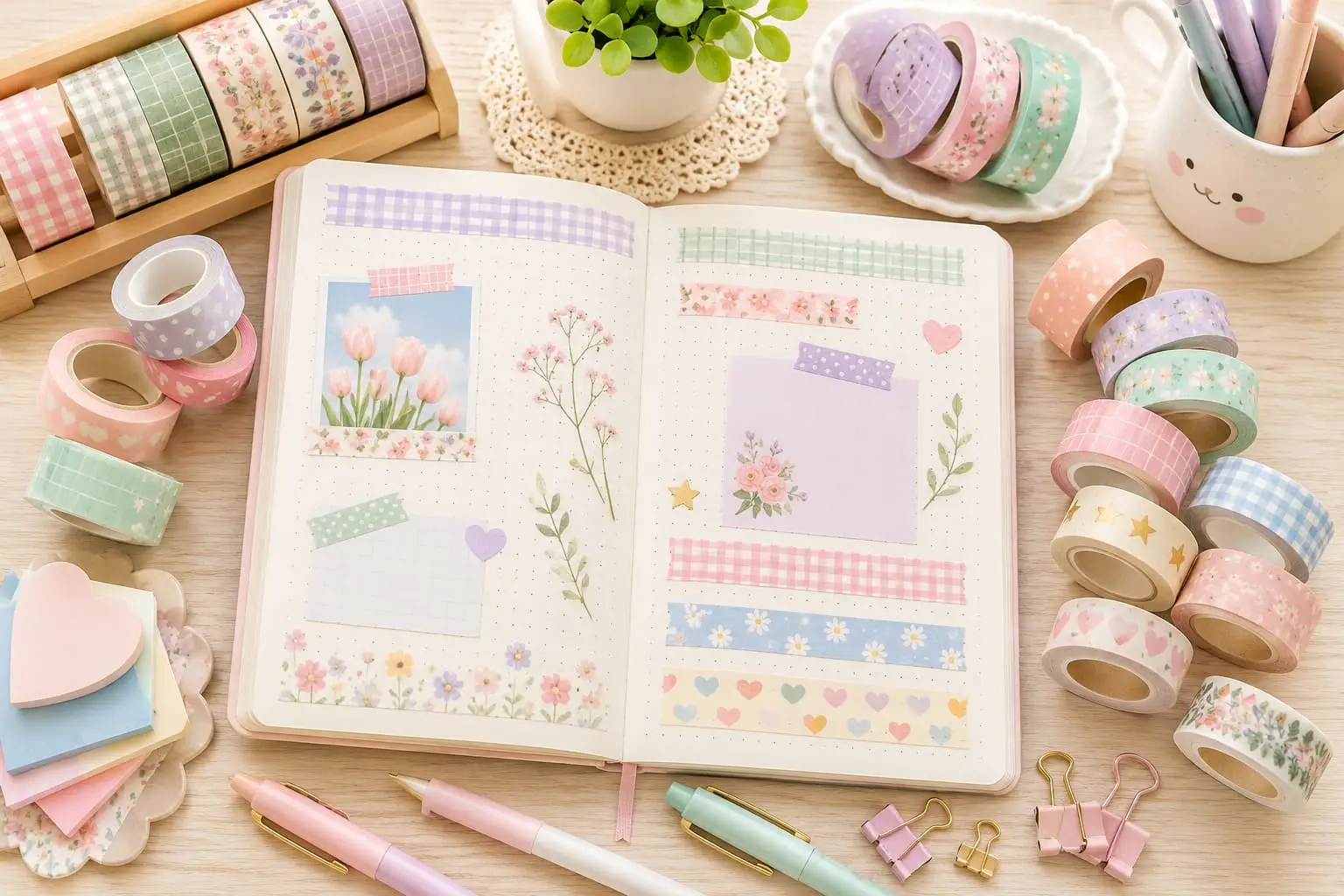
Quick picks
- Best floral varietyMr. Pen Washi Tape Set, 21 Rolls (opens Amazon in a new tab)
- Best kawaii animalsWAPETASHI Cute Washi Tape Set, 24 Rolls (opens Amazon in a new tab)


Product comparison
| Product | Best for | Watch out | Price & shop |
|---|---|---|---|
| KUNMINGER 40 Rolls Washi Tape Set (opens Amazon in a new tab) Best overallResearch-based review | Beginners who want a broad mix of cute, graphic and everyday patterns | The single 15 mm width is convenient but gives you less freedom for ultra-thin dividers and layered skinny borders | Budget-friendlyCheck price on Amazon (opens Amazon in a new tab) |
| Mr. Pen Washi Tape Set, 21 Rolls (opens Amazon in a new tab) Best floral varietyResearch-based review | Floral journals, memory keeping and romantic planner spreads | The floral-heavy design language is less adaptable to minimalist, geometric or professional-looking layouts | Budget-friendlyCheck price on Amazon (opens Amazon in a new tab) |
| Knaid Grid Washi Tape Set, 14 Rolls (opens Amazon in a new tab) Best minimalistResearch-based review | Bullet journals, trackers and clean study or work layouts | The 14 grid designs are intentionally restrained, so there is much less illustrative variety than in mixed or kawaii sets | Budget-friendlyCheck price on Amazon (opens Amazon in a new tab) |
| DIVERSEBEE Pastel Washi Tape Set, 5 Rolls (opens Amazon in a new tab) Best pastel setResearch-based review | Soft, coordinated spreads with a calm color palette | Only five patterns are included, so the set has far less visual variety than bulk assortments | |
| YUBBAEX 60 Rolls Skinny Washi Tape Set (opens Amazon in a new tab) Best skinny tapeResearch-based review | Borders, dividers, habit trackers and layered planner details | The 3 mm width is too narrow for broad headers, photo anchoring or large collage blocks | |
| Ieebee 52 Rolls Gold & Silver Foil Washi Tape Set (opens Amazon in a new tab) Best foil varietyResearch-based review | Metallic accents, celestial spreads and layered decorative pages | The metallic and celestial styling can dominate very restrained or purely functional journal spreads | Budget-friendlyCheck price on Amazon (opens Amazon in a new tab) |
| WT Summer Slim Washi Tape Set, 20 Rolls (opens Amazon in a new tab) Best artist-designed slim setResearch-based review | Decorative journalers who value detailed artwork and refined slim accents | Slim rolls are less useful for broad headings, large collage strips and photo-edge coverage than standard 15 mm tape | |
| WAPETASHI Cute Washi Tape Set, 24 Rolls (opens Amazon in a new tab) Best kawaii animalsResearch-based review | Cute journals, playful planners and giftable stationery collections | The character-driven designs are less flexible for formal, neutral or minimalist notebooks | Budget-friendlyCheck price on Amazon (opens Amazon in a new tab) |
| Hwook 30 Rolls Gold Foil Washi Tape (opens Amazon in a new tab) Best gold-foil valueResearch-based review | Journalers who want many standard-width metallic patterns on a budget | All rolls use the same width, and the metallic look is less subtle than plain matte tape | Budget-friendlyCheck price on Amazon (opens Amazon in a new tab) |
| Knaid Vintage Washi Tape Set, 5 Rolls (opens Amazon in a new tab) Best vintage starter setResearch-based review | Travel diaries, junk journals and antique-inspired collage pages | Five rolls provide much less design variety than the large mixed and foil collections in this guide | Budget-friendlyCheck price on Amazon (opens Amazon in a new tab) |
Detailed product sections
KUNMINGER 40 Rolls Washi Tape Set (opens Amazon in a new tab)
A 40-roll, 15 mm assortment that covers cute icons, leaves, geometry, cartoon motifs and solid-color looks without making you choose one narrow aesthetic.

Why it fits this guide
KUNMINGER is the most versatile starting point in this shortlist because the 40 rolls give you enough variety for weekly spreads, memory pages, headers and collage accents while keeping every roll at an easy-to-understand 15 mm width. It is a useful first purchase when you do not yet know whether you prefer cute, botanical, geometric or simpler tape.
Honest drawback
The single 15 mm width is convenient but gives you less freedom for ultra-thin dividers and layered skinny borders
Best forBeginners who want a broad mix of cute, graphic and everyday patterns
Pros
- 40-roll assortment offers broad pattern variety
- Consistent 15 mm width works well for headers, collage edges and decoration
- Mix includes cute icons, leaves, geometry, cartoon motifs and solid colors
Cons
- No skinny widths for fine tracker lines or narrow borders
- Mixed themes are less visually cohesive than a curated floral or grid set
Mr. Pen Washi Tape Set, 21 Rolls (opens Amazon in a new tab)
Twenty-one floral rolls in assorted sizes for journalers who want a coordinated botanical collection rather than a random mix.

Why it fits this guide
Mr. Pen is the stronger choice when your journal already leans floral, soft or vintage. The assortment uses multiple sizes, which makes it easier to combine a main decorative strip with narrower supporting accents instead of repeating one width throughout the page.
Honest drawback
The floral-heavy design language is less adaptable to minimalist, geometric or professional-looking layouts
Best forFloral journals, memory keeping and romantic planner spreads
Pros
- 21 patterned rolls give you more depth than a tiny accent pack
- Assorted sizes support layering and varied page layouts
- Floral and vintage-inspired designs suit journals, planners and scrapbooks
Cons
- Floral styling will not suit every journaling aesthetic
- Less useful if you mainly want plain grids, neutral solids or functional divider tape
Knaid Grid Washi Tape Set, 14 Rolls (opens Amazon in a new tab)
A 14-roll grid set that adds visual structure without competing with handwriting, tables or habit trackers.

Why it fits this guide
Knaid Grid earns its place because washi tape does not have to be the focal point. Simple grid graphics work especially well in bullet journals where the page still needs to feel functional. The 15 mm width can frame headings, mark sections or add a quiet background strip beneath labels.
Honest drawback
The 14 grid designs are intentionally restrained, so there is much less illustrative variety than in mixed or kawaii sets
Best forBullet journals, trackers and clean study or work layouts
Pros
- Simple grid patterns pair easily with handwriting and planning layouts
- 15 mm width is versatile for headers, page edges and section markers
- Cohesive look makes it easier to build repeatable bullet-journal themes
Cons
- Only 14 designs compared with larger mixed sets
- Minimalist graphics are less playful if you want kawaii characters or florals
DIVERSEBEE Pastel Washi Tape Set, 5 Rolls (opens Amazon in a new tab)
Five long pastel rolls in a consistent 15 mm width for journalers who would rather repeat a cohesive palette than manage dozens of designs.

Why it fits this guide
DIVERSEBEE takes the opposite approach from a 40- or 60-roll bundle. You get only five designs, but each roll is long and the colors belong together. That makes the set useful for monthly themes, study journals and memory pages where consistency matters more than constant novelty.
Honest drawback
Only five patterns are included, so the set has far less visual variety than bulk assortments
Best forSoft, coordinated spreads with a calm color palette
Pros
- Soft pastel palette is easy to coordinate across a full spread
- 15 mm width works for headings, page edges and layered decoration
- Longer rolls are practical when you repeatedly use the same theme
Cons
- Only five rolls are included
- Higher cost per design than many bulk assortments
YUBBAEX 60 Rolls Skinny Washi Tape Set (opens Amazon in a new tab)
Sixty ultra-narrow 3 mm rolls for creating crisp lines, small borders and layered details without covering much of the page.

Why it fits this guide
YUBBAEX is the specialist pick for journalers who use tape as a layout tool. The 3 mm width is far narrower than standard 15 mm washi, so it can divide columns, edge a tracker or build a multi-line border while leaving room for writing. Many of the rolls add gold-foil detail for a more decorative finish.
Honest drawback
The 3 mm width is too narrow for broad headers, photo anchoring or large collage blocks
Best forBorders, dividers, habit trackers and layered planner details
Pros
- 60 narrow rolls provide extensive color and pattern choice
- 3 mm width is ideal for borders, dividers and tracker details
- Set includes many gold-foil accents for decorative layering
Cons
- Too narrow for broad headers, photo mounting or large collage blocks
- Large roll count requires more storage and organization
Ieebee 52 Rolls Gold & Silver Foil Washi Tape Set (opens Amazon in a new tab)
A large 52-roll collection with gold and silver foil details plus four assorted widths for more flexible layering.
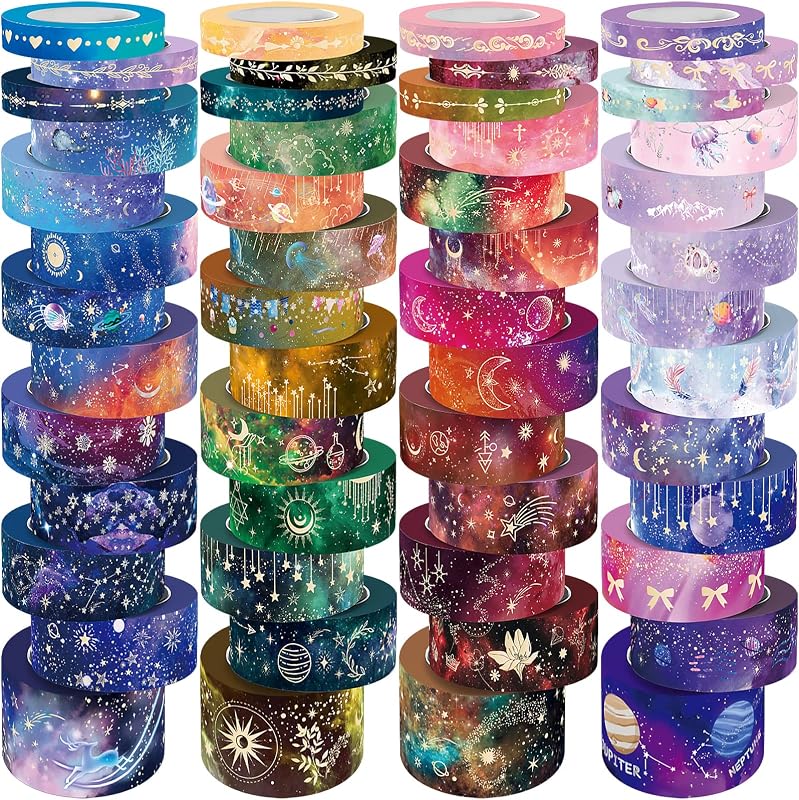
Why it fits this guide
Ieebee is the stronger bulk choice when you specifically want shine. Its mix of widths gives you more layout freedom than a same-width set, while the gold and silver details can be used selectively around headings, borders, stars, photos and decorative clusters.
Honest drawback
The metallic and celestial styling can dominate very restrained or purely functional journal spreads
Best forMetallic accents, celestial spreads and layered decorative pages
Pros
- 52-roll assortment provides strong decorative variety
- Four assorted widths are more flexible than a single-width bulk set
- Gold and silver foil details make highlights and borders stand out
Cons
- Foil-heavy styling is less neutral than matte grid or solid tape
- Large set can be excessive if you use washi only occasionally
WT Summer Slim Washi Tape Set, 20 Rolls (opens Amazon in a new tab)
Twenty slim artist-designed rolls with printed detail and foil accents for layered borders and small decorative touches.

Why it fits this guide
The Washi Tape Shop set is more curated than a typical bulk assortment. The slim format is useful when you want detailed artwork to behave like an accent rather than a full-width block, and it pairs naturally with stickers, photos, labels and handwritten notes.
Honest drawback
Slim rolls are less useful for broad headings, large collage strips and photo-edge coverage than standard 15 mm tape
Best forDecorative journalers who value detailed artwork and refined slim accents
Pros
- Artist-designed patterns create a more curated look
- Slim width is useful for borders, layering and small accents
- Foil details add visual interest without needing a full-width metallic tape
Cons
- Slim rolls are less versatile for photo edges and broad headers
- Smaller design family than large mixed assortments
WAPETASHI Cute Washi Tape Set, 24 Rolls (opens Amazon in a new tab)
Twenty-four animal-themed rolls using 7.5 mm and 15 mm widths, with gold-foil accents for playful layered spreads.

Why it fits this guide
WAPETASHI is the most directly kawaii option here. The animal motifs give a page instant personality, while the two widths are genuinely useful: 15 mm can carry the main pattern and 7.5 mm can sit beside it as a narrow accent or divider.
Honest drawback
The character-driven designs are less flexible for formal, neutral or minimalist notebooks
Best forCute journals, playful planners and giftable stationery collections
Pros
- Kawaii animal motifs fit playful journaling themes
- Includes both 7.5 mm and 15 mm rolls for more flexible layering
- Gold-foil accents add a decorative finish
Cons
- Cute character styling will not match every notebook aesthetic
- Less suitable for understated work or study planners
Hwook 30 Rolls Gold Foil Washi Tape (opens Amazon in a new tab)
Thirty 15 mm rolls that keep the format simple while giving you a broad range of cute gold-foil patterns.

Why it fits this guide
Hwook is straightforward: one versatile width, plenty of patterns and a consistent gold-foil visual theme. It works well if you want your pages to feel coordinated but still want more pattern choice than a five- or ten-roll set can provide.
Honest drawback
All rolls use the same width, and the metallic look is less subtle than plain matte tape
Best forJournalers who want many standard-width metallic patterns on a budget
Pros
- 30 rolls give you broad pattern choice
- 15 mm width is versatile for general journaling and planning
- Gold-foil accents create a consistent decorative theme
Cons
- All rolls use the same standard width
- Metallic finish is less subtle than plain matte tape
Knaid Vintage Washi Tape Set, 5 Rolls (opens Amazon in a new tab)
A focused five-roll vintage set that pairs naturally with kraft paper, tickets, labels, botanical ephemera and memory-keeping layouts.

Why it fits this guide
Knaid Vintage is a sensible small-set alternative to a giant assortment. The antique-inspired designs make it easy to build a cohesive travel or memory page without sorting through dozens of bright unrelated rolls, and the limited palette is approachable for a first junk-journal kit.
Honest drawback
Five rolls provide much less design variety than the large mixed and foil collections in this guide
Best forTravel diaries, junk journals and antique-inspired collage pages
Pros
- Cohesive vintage styling is easy to pair with collage ephemera
- Small set is manageable for beginners who do not want dozens of rolls
- Works naturally with travel, memory-keeping and junk-journal themes
Cons
- Only five rolls are included
- Less flexible for bright kawaii, pastel or minimalist layouts
Related guides
Best Bullet Journal Notebooks: 10 Picks for Beginners & Creative Planning
The best bullet journal notebooks for beginners and creative planning. Compare paper weight, page count, dot grids, binding, and setup features.
Best Highlighters for Journaling: 10 Mild, No-Bleed Picks
The best highlighters for journaling, from mild pastel markers to no-bleed gel picks. Compare tips, colors, erasability, and thin-paper use.
Best Journaling Supplies for Beginners: 10 Essentials to Start With
The best journaling supplies for beginners, from journals and pens to highlighters, washi tape, stencils and adhesive. Build a simple starter kit.
Best Pens for Journaling: 10 Smooth, No-Bleed Picks
Best pens for journaling compared: quick-dry gel pens, no-bleed felt tips and archival fineliners, with picks for left-handed writers and thin paper.


