
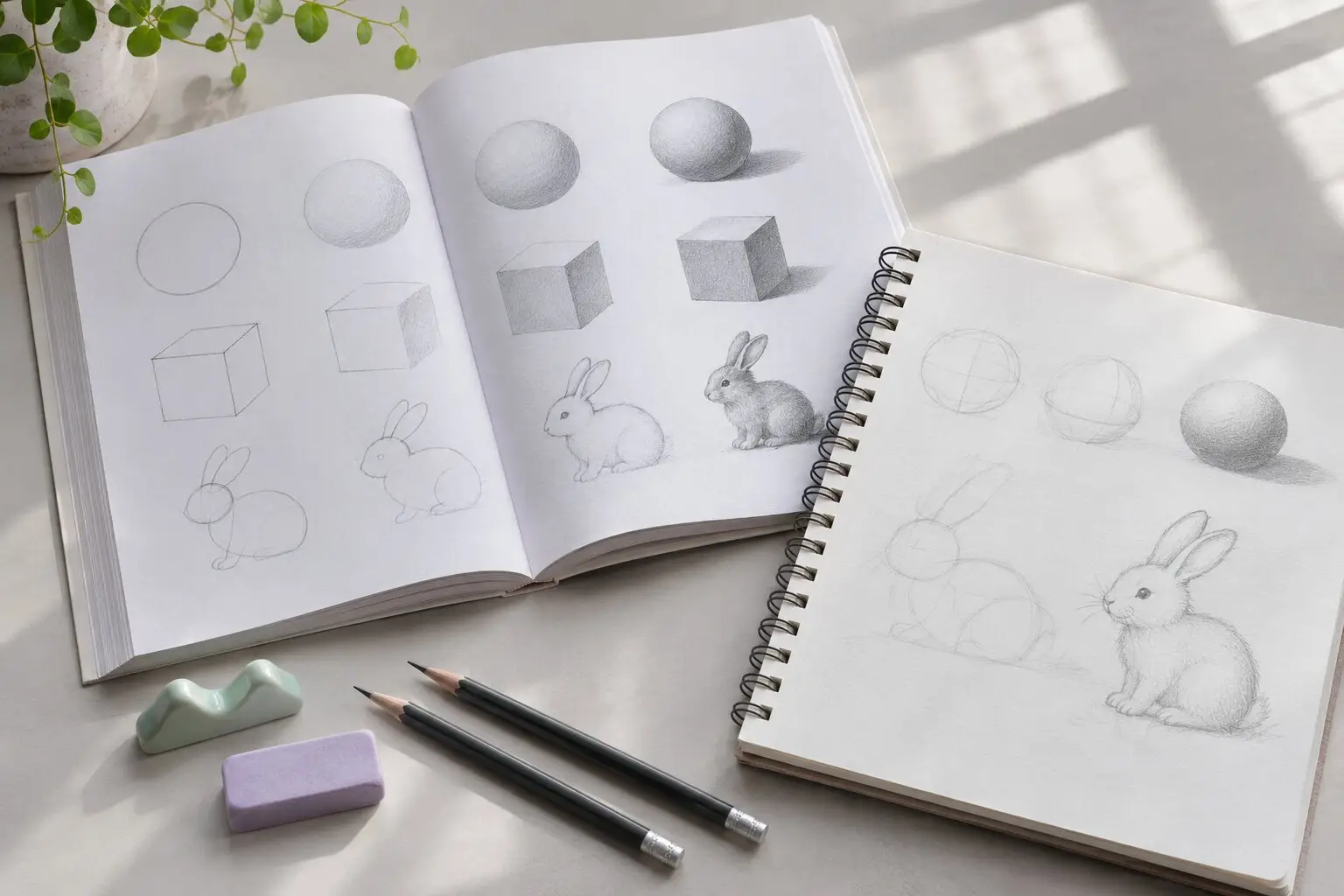
Quick answer
Pick a drawing book based on what you want to draw during your first few practice sessions.
- Best for starting from scratch: You Can Draw in 30 Days builds from basic forms to more complex subjects.
- Best for kawaii doodles: Kawaii Doodle Class breaks little characters into steps and gives you expressions to try.
- Best animal book for kids: Ed Emberley’s Drawing Book of Animals turns familiar shapes into playful creatures.
Choose by use case
If you wantAdults and teens who want a clear lesson sequence

You Can Draw in 30 Days
Best for starting from scratchResearch-based reviewBuild three-dimensional forms one lesson at a time.
If you wantAdults and teens who want to sketch real subjects

Keys to Drawing
Best for observational drawingResearch-based reviewPractice noticing shapes, edges and tonal differences in the things in front of you.
If you wantBeginners who want cute characters for journals and cards

Kawaii Doodle Class
Best for kawaii doodlesResearch-based reviewTurn foods, plants and everyday objects into expressive little characters.
If you wantTeens and adults who want to draw expressive figures

Manga for the Beginner
Best for manga charactersResearch-based reviewMove from heads and eyes to full figures and action poses.
If you wantKids ages 7 and up who like drawing animals

Ed Emberley's Drawing Book of Animals
Best animal book for kidsResearch-based reviewBuild recognizable cartoon animals from familiar shapes.
If you wantBeginners who prefer a practice page beside the instructions

Drawing on the Right Side of the Brain Workbook
Best write-in workbookResearch-based reviewFollow guided observation exercises and draw directly in the workbook.
Product comparison
| Product | Best for | Watch out | Price & shop |
|---|---|---|---|
| You Can Draw in 30 Days (opens Amazon in a new tab) Best for starting from scratchResearch-based review | Best for starting from scratch | The demonstrations emphasize building form in stages. A learner whose main goal is drawing a likeness from life will want more direct observation practice. | |
| Keys to Drawing (opens Amazon in a new tab) Best for observational drawingResearch-based review | Best for observational drawing | The exercises ask you to look closely and assess your own work. Readers who want numbered steps for a particular subject may prefer Kistler or Emberley. | |
| Kawaii Doodle Class (opens Amazon in a new tab) Best for kawaii doodlesResearch-based review | Best for kawaii doodles | Most examples are small stylized subjects. Pick a fundamentals book if you want detailed instruction on realistic shading and perspective. | |
| Manga for the Beginner (opens Amazon in a new tab) Best for manga charactersResearch-based review | Best for manga characters | The later poses and perspective exercises are a jump in difficulty. Repeat a head or torso from a second angle before taking on an action scene. | |
| Ed Emberley's Drawing Book of Animals (opens Amazon in a new tab) Best animal book for kidsResearch-based review | Best animal book for kids | It is a short cartoon-animal book. Children asking how to shade fur or draw an animal realistically will outgrow the scope. | |
| Drawing on the Right Side of the Brain Workbook (opens Amazon in a new tab) Best write-in workbookResearch-based review | Best write-in workbook | The workbook accompanies a separate book, and some exercises call for media beyond pencil. Use a separate sketchbook if you want to repeat the same page several times. |
How we chose
- Compared 6 research-based picks from current product listings.
- Product listings checked on November 13, 2026.
- What each book teaches, from construction and observation to doodling, manga and shape-based animals.
- How the learner practices, including ordered lessons, copy-along diagrams, and exercises with room to draw.
- Hands-on testing: none — all picks are research-based
- Product listings checked
- Hands-on testing
- None of the 6 picks — all are research-based
- Labels explained
- How we test and label products
We compared publisher descriptions, edition details and exercise formats for six books, then checked each corresponding Amazon.com listing for a US purchase option and matching cover. The recommendations are research-based.
What we compared
- What each book teaches, from construction and observation to doodling, manga and shape-based animals.
- How the learner practices, including ordered lessons, copy-along diagrams, and exercises with room to draw.
- Edition, binding, verified page count and publisher age guidance where available.
What we did not test
- Paper performance, binding wear, and how long individual readers take to complete exercises.
Testing status by pick
- You Can Draw in 30 DaysResearch-based review
- Keys to DrawingResearch-based review
- Kawaii Doodle ClassResearch-based review
- Manga for the BeginnerResearch-based review
- Ed Emberley's Drawing Book of AnimalsResearch-based review
- Drawing on the Right Side of the Brain WorkbookResearch-based review
Sources
- You Can Draw in 30 Days edition and lesson format — Balance
- Keys to Drawing edition and lesson format — North Light Books
- Kawaii Doodle Class edition and lesson format — Race Point Publishing
- Manga for the Beginner edition and lesson format — Watson-Guptill
- Ed Emberley's Drawing Book of Animals edition and lesson format — LB Kids
- Drawing on the Right Side of the Brain Workbook edition and lesson format — Tarcher
Product details and drawbacks
You Can Draw in 30 Days (opens Amazon in a new tab)
Build three-dimensional forms one lesson at a time.

Why it fits this guide
Kistler, a drawing teacher and former PBS host, starts with simple forms and builds toward subjects such as buildings and hands. If shading and depth feel mysterious, you can practice them first on a sphere where there are few details to juggle.
Honest drawback
The demonstrations emphasize building form in stages. A learner whose main goal is drawing a likeness from life will want more direct observation practice.
Specifications
- 256-page paperback
- Sequential lessons on form, light and depth
Best forAdults and teens who want a clear lesson sequence
Pros
- A predictable order for short practice sessions
Cons
- Limited focus on drawing from direct observation
Keys to Drawing (opens Amazon in a new tab)
Practice noticing shapes, edges and tonal differences in the things in front of you.

Why it fits this guide
Dodson, an illustrator and former drawing instructor, pairs short exercises with explanations of how to suggest light, depth and texture. Try a mug handle to see how closely the empty shape inside your drawing matches the one you see.
Honest drawback
The exercises ask you to look closely and assess your own work. Readers who want numbered steps for a particular subject may prefer Kistler or Emberley.
Specifications
- 224-page paperback
- Short observational exercises and drawing principles
Best forAdults and teens who want to sketch real subjects
Pros
- Skills you can apply to a new subject
Cons
- Requires more self-assessment than a copy-along book
Kawaii Doodle Class (opens Amazon in a new tab)
Turn foods, plants and everyday objects into expressive little characters.

Why it fits this guide
Khan, the artist behind Pic Candle, illustrates 75 doodles in steps and includes ideas for faces and accessories. Start with a snack or teacup, then swap its expression to see how a tiny change alters the character.
Honest drawback
Most examples are small stylized subjects. Pick a fundamentals book if you want detailed instruction on realistic shading and perspective.
Specifications
- 144-page paperback
- 75 step-by-step doodles plus expression and accessory ideas
Best forBeginners who want cute characters for journals and cards
Pros
- Subjects fit small journal spaces
Cons
- Little emphasis on realistic rendering
Manga for the Beginner (opens Amazon in a new tab)
Move from heads and eyes to full figures and action poses.

Why it fits this guide
Drawing and cartooning author Christopher Hart starts with heads and bodies before moving into clothing, action and effects. There is room to grow if you want to take a face sketch and eventually turn it into a figure in motion.
Honest drawback
The later poses and perspective exercises are a jump in difficulty. Repeat a head or torso from a second angle before taking on an action scene.
Specifications
- 192-page paperback
- Step-by-step character demonstrations from heads to action
Best forTeens and adults who want to draw expressive figures
Pros
- Covers both expressions and full-body movement
Cons
- Later exercises require more patience
Ed Emberley's Drawing Book of Animals (opens Amazon in a new tab)
Build recognizable cartoon animals from familiar shapes.

Why it fits this guide
Emberley, a Caldecott Medal-winning illustrator, shows how to assemble animals from simple marks and shapes. A child can pick a frog, mouse or bird and get going without working through earlier chapters.
Honest drawback
It is a short cartoon-animal book. Children asking how to shade fur or draw an animal realistically will outgrow the scope.
Specifications
- 32-page paperback
- Shape-by-shape animal demonstrations
Best forKids ages 7 and up who like drawing animals
Pros
- Easy to open to a favorite animal
Cons
- Focused on cartoon animals
Drawing on the Right Side of the Brain Workbook (opens Amazon in a new tab)
Follow guided observation exercises and draw directly in the workbook.

Why it fits this guide
Edwards, an art professor emerita, gives 40 exercises with examples, drawing space and prompts for reviewing your work. The spiral binding makes it convenient to keep the page open while you draw.
Honest drawback
The workbook accompanies a separate book, and some exercises call for media beyond pencil. Use a separate sketchbook if you want to repeat the same page several times.
Specifications
- 176-page spiral-bound second edition
- 40 guided exercises with space to draw
Best forBeginners who prefer a practice page beside the instructions
Pros
- Built-in practice space and follow-up prompts
Cons
- Some exercises use ink, charcoal or Conté crayon
Corrections
Spotted an error or outdated detail? Read how we handle corrections.
Related guides
Best Drawing Kits for Beginners: 10 Starter Sets That Are Actually Useful
Best drawing kit for beginners: Prina’s 50-piece set leads our research picks. Compare graphite, charcoal, blending tools and sketchbooks without filler.
Best Drawing Pencils for Beginners: 10 Sets for Sketching & Shading
Compare the best drawing pencils for beginners for sketching and shading, including graphite grades, starter tools, accessories, and practical trade-offs.
Best Sketchbooks for Pencil Drawing: 10 Picks for Sketching & Shading
Compare 10 of the best sketchbooks for pencil drawing, from budget spiral pads to premium heavyweight and toned paper picks for shading.
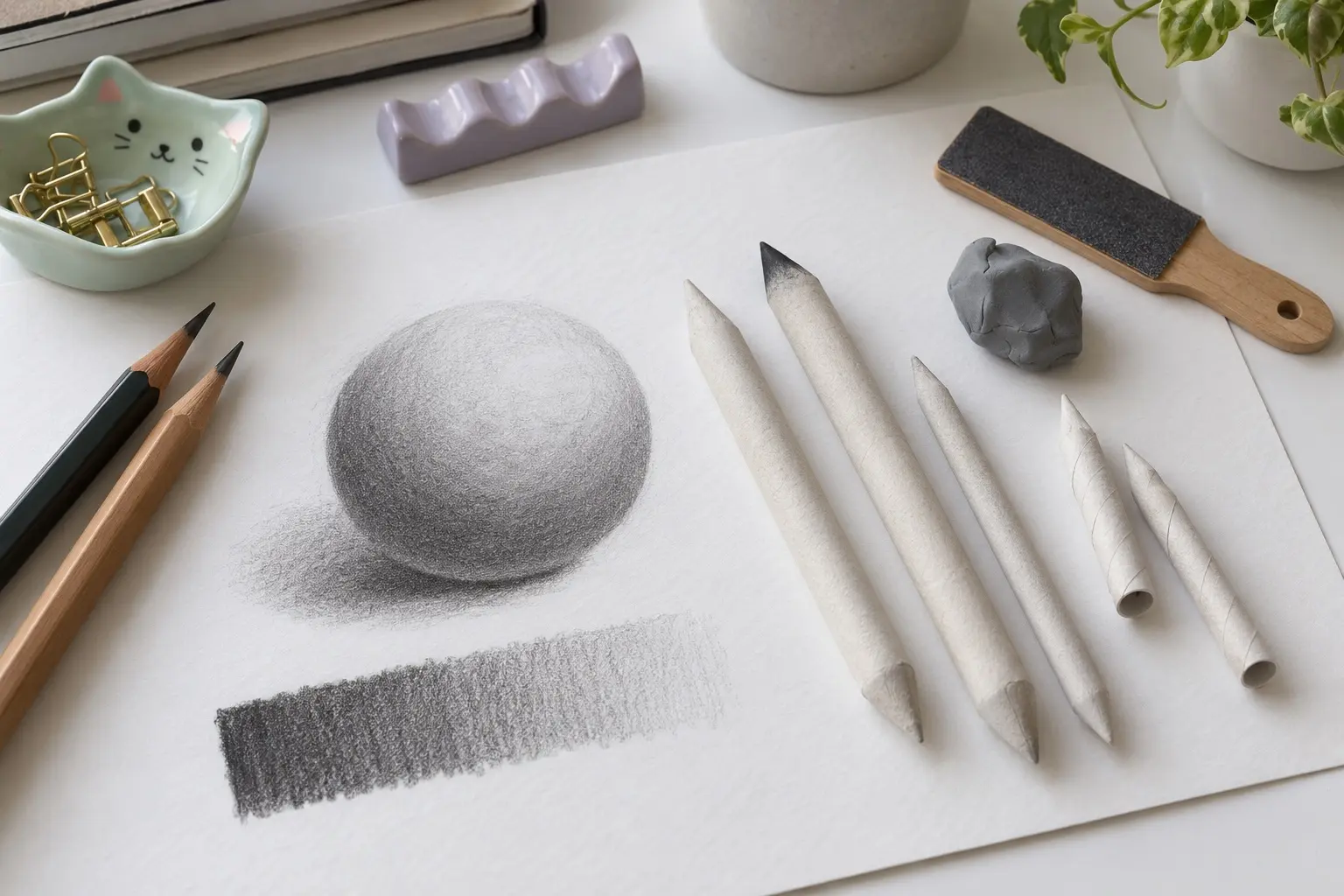
Blending Stumps and Tortillons: How to Use Them (and Which to Buy)
Learn what blending stumps and tortillons are, how to use and clean them for graphite and charcoal shading, and which beginner-friendly sets to buy first.
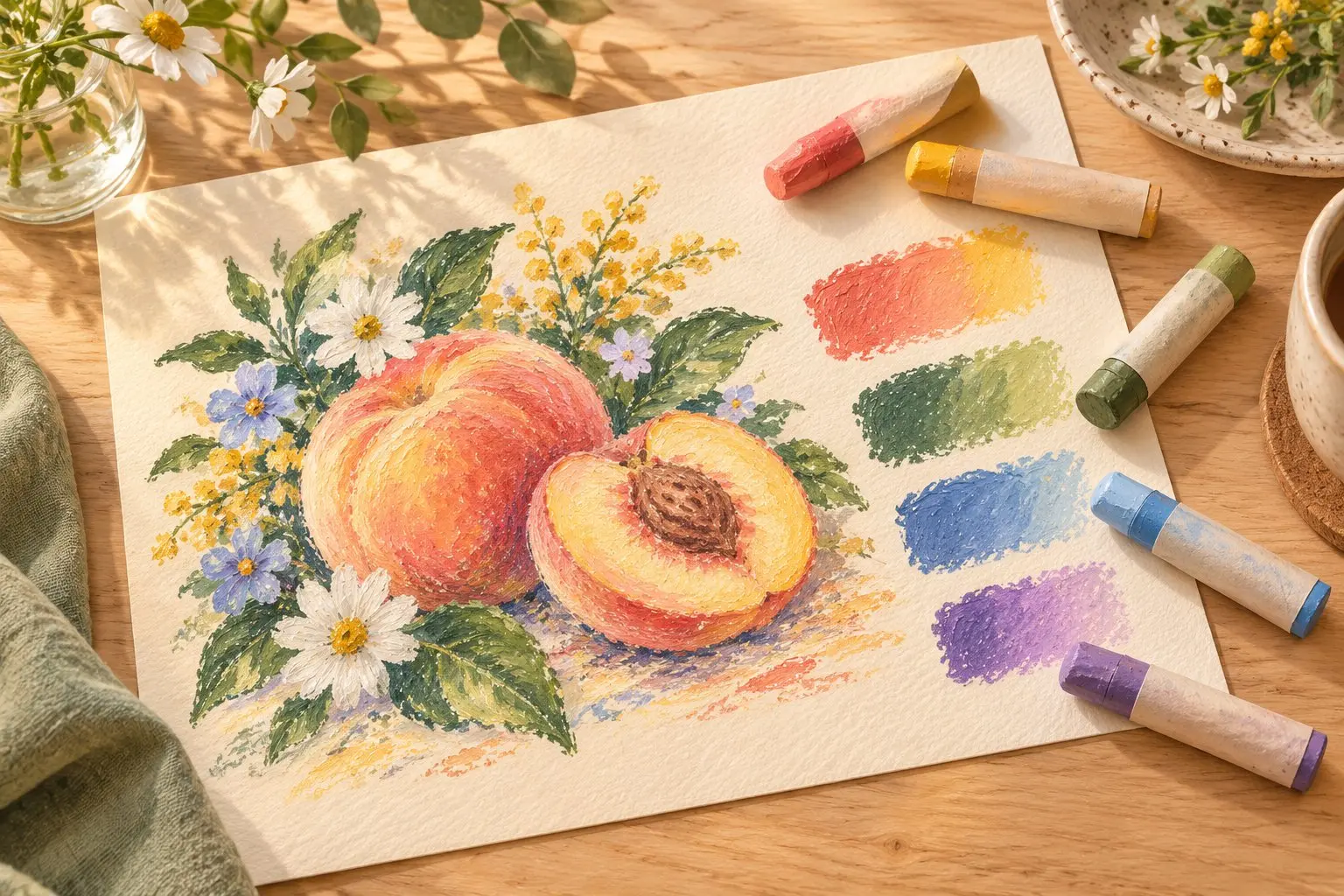
Best Oil Pastels for Beginners: 10 Smooth and Blendable Sets
Compare 10 beginner oil pastel sets by palette, range and storage, with research-based picks, exact Amazon US variants and practical blending advice.
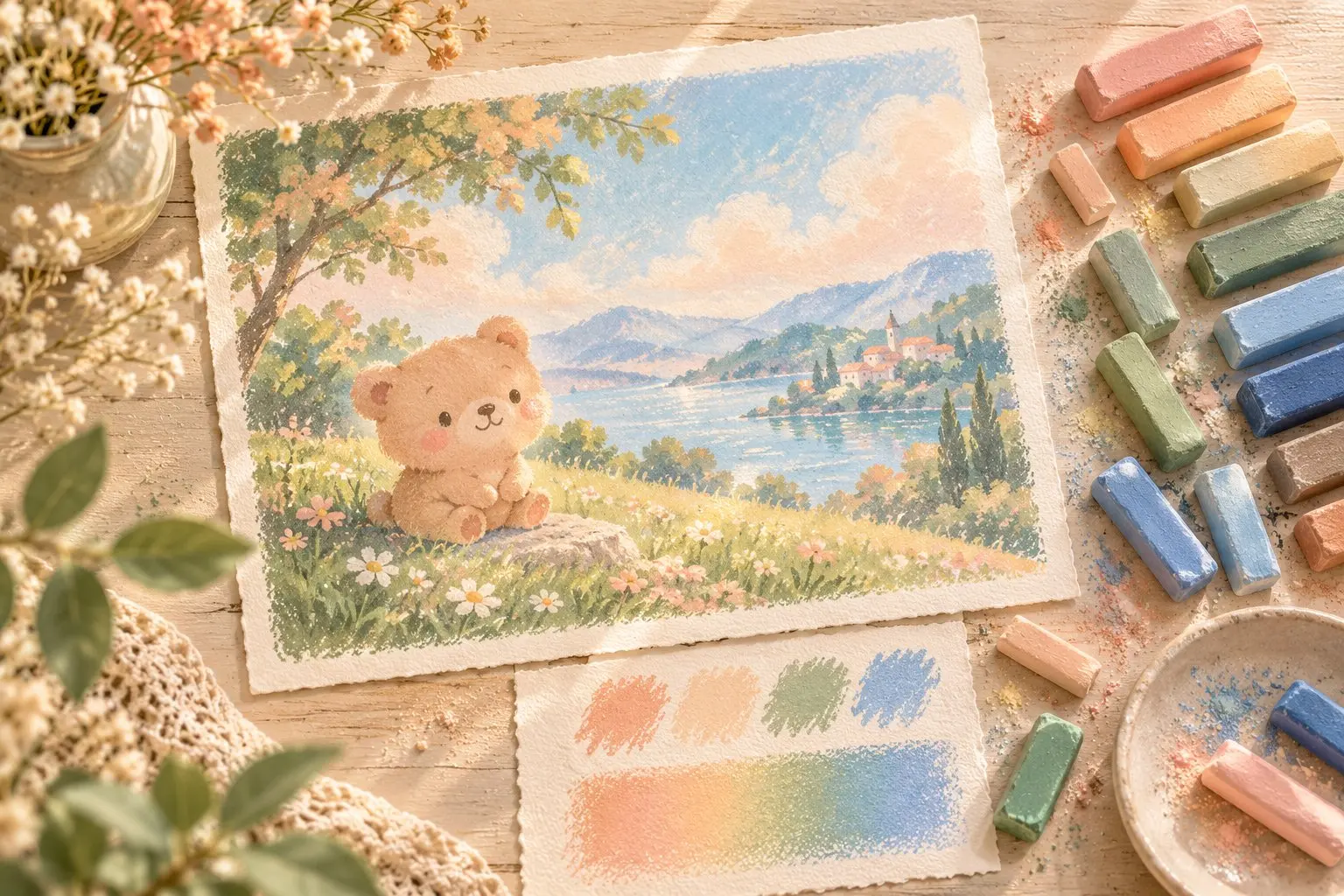
Best Soft Pastels for Beginners: 10 Sets for Drawing and Blending
Compare 10 beginner soft pastel sets by palette, stick format and practical tradeoffs, with research-based picks and advice on paper, blending and storage.


Latest guides
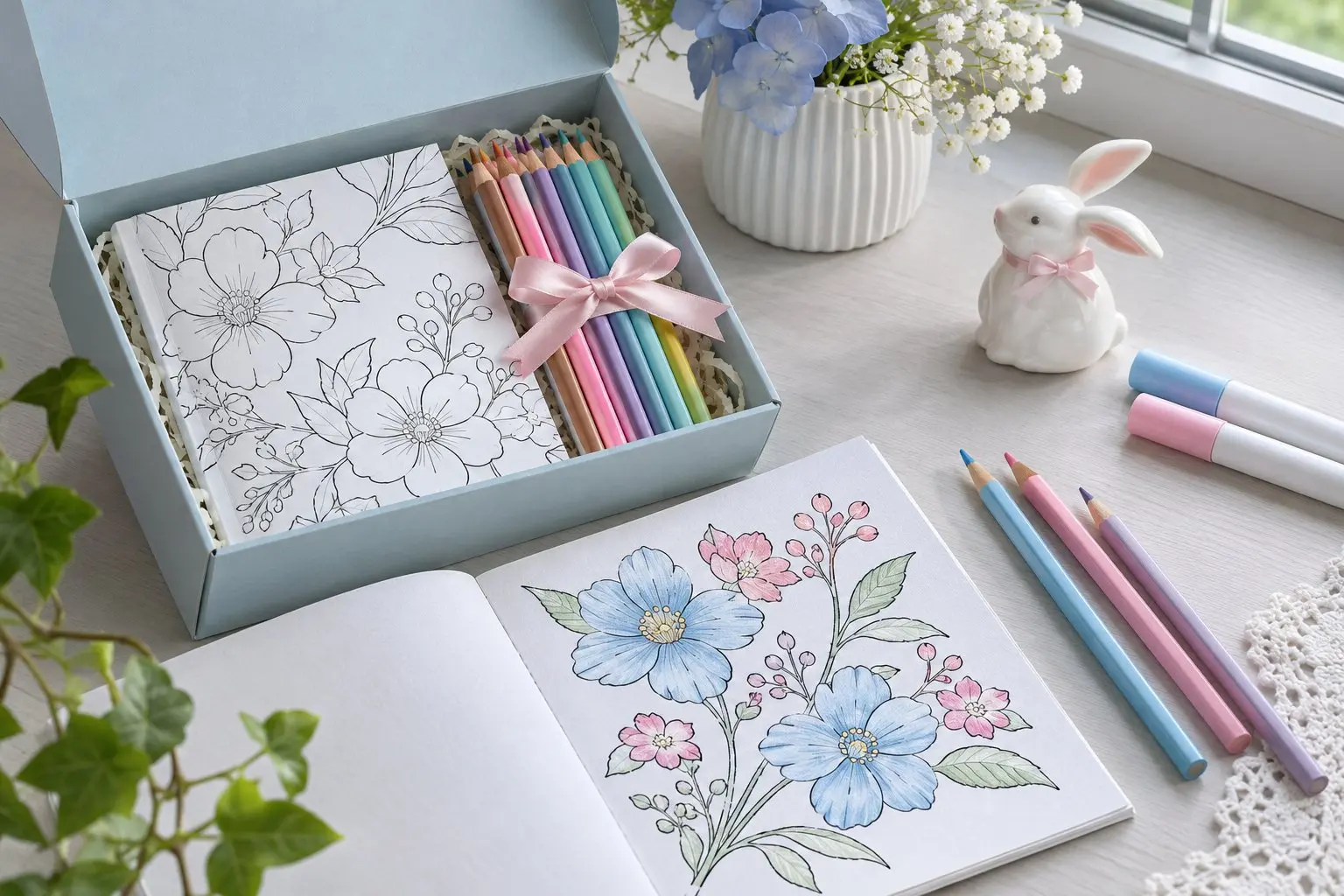
Gift Ideas for People Who Love Coloring
Thoughtful gift ideas for adults who love coloring, from marker sets and coloring books to lap desks, lamps and storage, sorted by budget and style.
Best Fountain Pens for Beginners
Compare beginner-friendly fountain pens for journaling and everyday writing, with tips on nib sizes, cartridges vs converters, ink and paper.
Best Cute Pens and Kawaii Gel Pens
Cute and kawaii pens for notes and journals, from a bunny gel pen to pastel and multi-color pens, with clear ink, tip-size and refill comparisons.
Best Paper for Colored Pencils
Find the best paper for colored pencils, comparing tooth, weight and surface for layering and blending, with picks for beginners and detail art.
Best Travel Watercolor Sets and Pocket Palettes
Compare travel watercolor sets and pocket palettes for sketching on the go, with tips on pan count, water brushes, size and travel sketchbooks.
Best Watercolor Brush Pens and Watercolor Markers
Compare watercolor brush pens and markers that blend with water, with tips on paper, water brushes and using them safely in your coloring books.


