
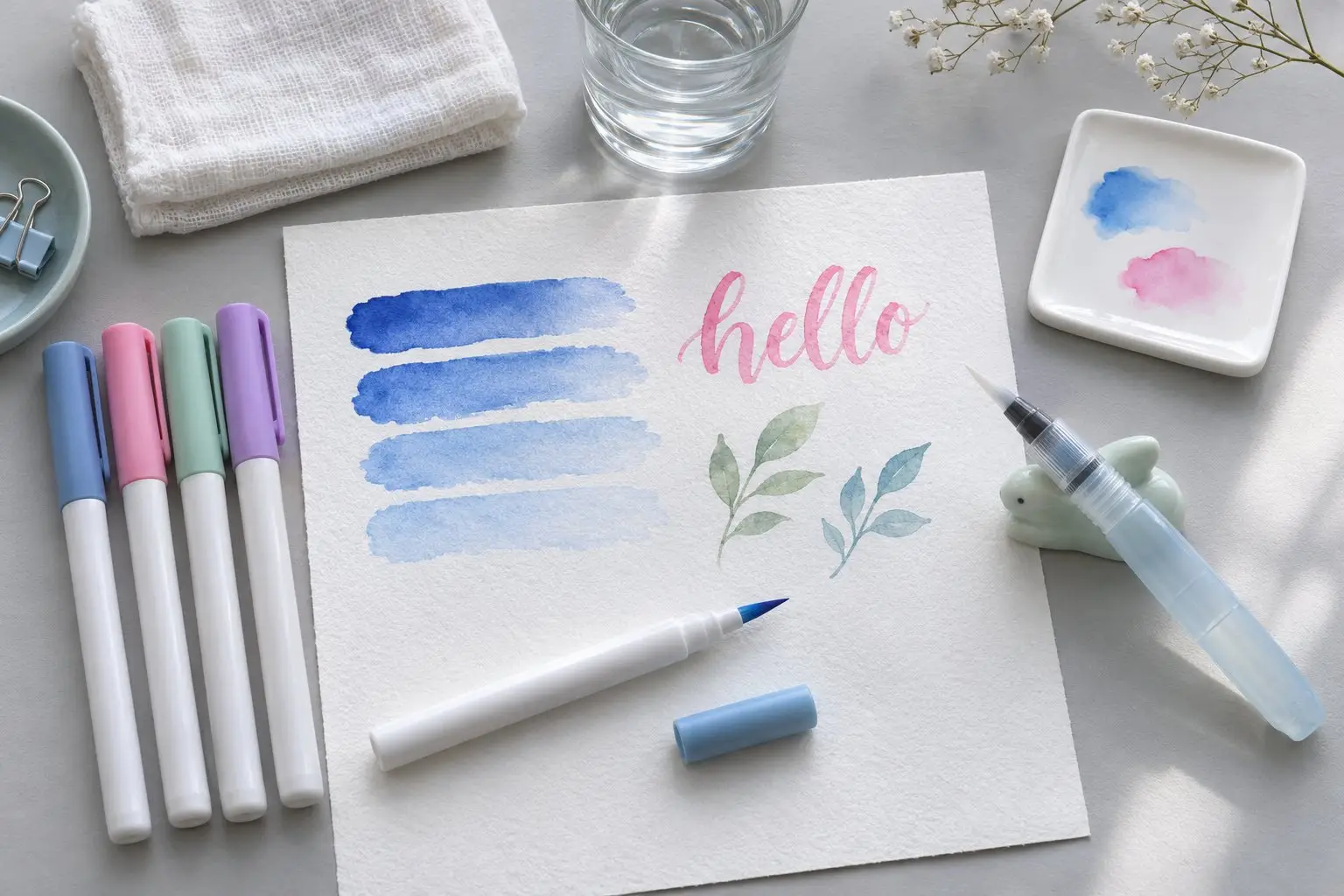
Quick answer
Buy for the effect you want, then match the paper to the amount of water.
- Best real-brush pick: ZIG 24 combines a bristle tip with water-based dye ink.
- Best for detailed coloring: Goldfaber Aqua 12 adds a fine point alongside its brush nib.
- Best guided starter kit: Chromatek includes color pens, water brushes and a tutorial pad.
Choose by use case
If you wantSmall illustrations, leaves and expressive brush strokes

Kuretake ZIG Clean Color Real Brush, 24 Colors
Best real-brush pickResearch-based reviewTwenty-four color pens pair flexible nylon bristles with water-based dye ink.
If you wantSmall printed shapes on paper intended for wet media

Faber-Castell Goldfaber Aqua Dual Markers, 12 Colors
Best for detailed coloringResearch-based reviewTwelve water-soluble markers combine a brush nib with a 0.6 mm fine point.
If you wantLetterers who also want to paint with ink from a palette

Tombow Dual Brush Marker 10-Piece Set: Primary
Best for lettering and washesResearch-based reviewA 10-piece Primary set offers a flexible brush nib and a fine end.
If you wantColorists who prefer more ready-made shades

STAEDTLER Double-Ended Watercolour Brush Pens 36-Pack
Best larger dual-tip paletteResearch-based reviewThirty-six water-soluble colors add variety without giving up a fine tip.
If you wantBeginners who want a first lesson and its materials together

Chromatek 30-Pen Watercolor Tutorial Set, 27 Colors and 3 Aqua Brushes
Best guided starter kitResearch-based reviewA 30-pen bundle contains 27 colors, three aqua brushes and a tutorial pad.
If you wantPeople who already own water-reactive pens or paints

Pentel Arts Aquash Water Brushes, Assorted Tips, Pack of 3
Best water-only accessoryResearch-based reviewThree refillable water brushes supply clean water through nylon tips.
Color pens, real brushes and water brushes compared
Five color sets and one water-only accessory serve different jobs. Piece count is not always color count.
| Exact set | Color supply | Tip format | Water-blending setup |
|---|---|---|---|
| ZIG Clean Color Real Brush 24 | 24 color pens | Flexible nylon bristles | Add a damp brush and suitable paper |
| Goldfaber Aqua 12 | 12 color pens | Brush nib plus 0.6 mm fine point | Add a damp brush and suitable paper |
| Tombow Primary 10-piece | 10-pen Primary set | Flexible brush nib plus fine tip | Use a palette for washes; water brush separate |
| STAEDTLER 3001 TB36 | 36 color pens | Flexible brush nib plus fine tip | Watercolor paper and separate damp brush |
| Chromatek 30-pen tutorial set | 27 color pens | Real-brush tips | 3 aqua brushes and 15-page tutorial pad included |
| Pentel Aquash FRHBFMBP3 | No colored ink | 3 assorted nylon brush tips | Fill reservoirs with clean water; color pens separate |
Exact Amazon.com variants and manufacturer information reviewed November 21, 2026. Confirm the selected set contents before ordering. We did not measure line widths or test blending.
Product comparison
| Product | Best for | Watch out | Price & shop |
|---|---|---|---|
| Kuretake ZIG Clean Color Real Brush, 24 Colors (opens Amazon in a new tab) Best real-brush pickResearch-based review | Best real-brush pick | Moving bristles need a light touch. There is no separate fine-point end or included water brush in this 24-color set. | |
| Faber-Castell Goldfaber Aqua Dual Markers, 12 Colors (opens Amazon in a new tab) Best for detailed coloringResearch-based review | Best for detailed coloring | Twelve colors offer fewer ready-made shades than the larger sets. A maker's no-bleed claim does not establish that a wet wash will leave every thin printed page intact. | |
| Tombow Dual Brush Marker 10-Piece Set: Primary (opens Amazon in a new tab) Best for lettering and washesResearch-based review | Best for lettering and washes | Rough watercolor paper and a direct marker stroke are not the same experience as lettering on smooth paper. For textured sheets, transfer the ink from a palette instead. | |
| STAEDTLER Double-Ended Watercolour Brush Pens 36-Pack (opens Amazon in a new tab) Best larger dual-tip paletteResearch-based review | Best larger dual-tip palette | More colors mean more pens to store and swatch. The larger count does not solve paper absorbency or guarantee a smoother blend. | |
| Chromatek 30-Pen Watercolor Tutorial Set, 27 Colors and 3 Aqua Brushes (opens Amazon in a new tab) Best guided starter kitResearch-based review | Best guided starter kit | It is not a 30-color set. The pad is a finite practice supply, and included lessons are not a guarantee of progress or proof of professional-grade performance. | |
| Pentel Arts Aquash Water Brushes, Assorted Tips, Pack of 3 (opens Amazon in a new tab) Best water-only accessoryResearch-based review | Best water-only accessory | There is no colored ink. Reservoir pressure takes practice, and a regular brush plus water cup may be all you need at a desk. Skip this extra purchase if your kit already includes suitable water brushes. |
How we chose
- Compared 6 research-based picks from current product listings.
- Product listings checked on November 21, 2026.
- Documented use with water, rather than treating every brush-shaped marker as a watercolor pen.
- Different useful roles for bristle tips, dual-tip coloring, lettering, a larger palette, a guided kit and a water-only accessory.
- Hands-on testing: none — all picks are research-based
- Product listings checked
- Hands-on testing
- None of the 6 picks — all are research-based
- Labels explained
- How we test and label products
We compared manufacturer information on water-reactivity, tip construction and set contents, then reviewed the exact Amazon.com variants for purchase offers and matching listing images. These are research-based recommendations. We have not swatched these sets, compared them on identical paper or physically tested the water brushes.
What we compared
- Documented use with water, rather than treating every brush-shaped marker as a watercolor pen.
- Different useful roles for bristle tips, dual-tip coloring, lettering, a larger palette, a guided kit and a water-only accessory.
- Exact color and accessory counts, plus the paper and tools needed to start.
- Manufacturer paper advice and practical limits of adding water to printed coloring pages.
What we did not test
- Blend smoothness, reactivation after drying, fading, ink yield, nib durability, leakage and performance in particular coloring books.
Testing status by pick
- Kuretake ZIG Clean Color Real Brush, 24 ColorsResearch-based review
- Faber-Castell Goldfaber Aqua Dual Markers, 12 ColorsResearch-based review
- Tombow Dual Brush Marker 10-Piece Set: PrimaryResearch-based review
- STAEDTLER Double-Ended Watercolour Brush Pens 36-PackResearch-based review
- Chromatek 30-Pen Watercolor Tutorial Set, 27 Colors and 3 Aqua BrushesResearch-based review
- Pentel Arts Aquash Water Brushes, Assorted Tips, Pack of 3Research-based review
Sources
- ZIG 24-color set and water-based dye ink — Kuretake
- Goldfaber Aqua 12-color format and dual nibs — Faber-Castell USA
- Dual Brush Pen tips and paper guidance — Tombow USA
- Palette-based watercolor technique with Dual Brush Pens — Tombow USA
- 3001 watercolor brush pen format and paper suitability — STAEDTLER
- 30-piece kit color, brush and tutorial-pad contents — Chromatek
- Aquash reservoir and nylon brush construction — Pentel
Product details and drawbacks
Kuretake ZIG Clean Color Real Brush, 24 Colors (opens Amazon in a new tab)
Twenty-four color pens pair flexible nylon bristles with water-based dye ink.

Why it fits this guide
Kuretake identifies this set as brush-type color pens whose dye ink supports gradients and blurring with a water brush. Choose it when you want the tip itself to behave like a small brush, rather than just a pointed marker nib.
Honest drawback
Moving bristles need a light touch. There is no separate fine-point end or included water brush in this 24-color set.
Specifications
- 24 colors
- RB-6000AT/24V
- Flexible nylon brush tip
Best forSmall illustrations, leaves and expressive brush strokes
Pros
- Real-bristle format
- Maker documents water blending
Cons
- No second fine tip
- Paper and water brush separate
Faber-Castell Goldfaber Aqua Dual Markers, 12 Colors (opens Amazon in a new tab)
Twelve water-soluble markers combine a brush nib with a 0.6 mm fine point.

Why it fits this guide
Faber-Castell documents fully water-soluble ink and two nibs. The fine end is useful for narrow spaces while the brush end lays down color for a small wash. This makes a compact option for coloring on suitable watercolor stock.
Honest drawback
Twelve colors offer fewer ready-made shades than the larger sets. A maker's no-bleed claim does not establish that a wet wash will leave every thin printed page intact.
Specifications
- 12 colors, FC164612
- Brush nib and 0.6 mm fine point
- Water-soluble ink
Best forSmall printed shapes on paper intended for wet media
Pros
- Separate tip for details
- Compact color selection
Cons
- Smaller palette
- Water brush and paper separate
Tombow Dual Brush Marker 10-Piece Set: Primary (opens Amazon in a new tab)
A 10-piece Primary set offers a flexible brush nib and a fine end.

Why it fits this guide
Tombow's water-based Dual Brush ink supports watercolor techniques, including transferring ink from a blending palette with a damp brush. The same pens suit dry brush lettering on smooth paper. Use that two-workflow approach when lettering is your main hobby.
Honest drawback
Rough watercolor paper and a direct marker stroke are not the same experience as lettering on smooth paper. For textured sheets, transfer the ink from a palette instead.
Specifications
- Primary 10-piece edition
- Brush and fine tips
- Water-based ink
Best forLetterers who also want to paint with ink from a palette
Pros
- Two useful tip formats
- Manufacturer watercolor tutorials available
Cons
- Limited starting palette
- Palette and water brush separate
STAEDTLER Double-Ended Watercolour Brush Pens 36-Pack (opens Amazon in a new tab)
Thirty-six water-soluble colors add variety without giving up a fine tip.

Why it fits this guide
STAEDTLER describes the 3001 range as flexible brush and fine-tip pens for watercolor effects on watercolor paper. The 36-color wallet suits projects where choosing a ready-made shade is more appealing than mixing every hue on a palette.
Honest drawback
More colors mean more pens to store and swatch. The larger count does not solve paper absorbency or guarantee a smoother blend.
Specifications
- 36 colors, 3001 TB36
- Brush and fine tips
- Water-soluble ink
Best forColorists who prefer more ready-made shades
Pros
- Broad ready-made palette
- Fine end for smaller shapes
Cons
- More storage than a small set
- Water brush and paper separate
Chromatek 30-Pen Watercolor Tutorial Set, 27 Colors and 3 Aqua Brushes (opens Amazon in a new tab)
A 30-pen bundle contains 27 colors, three aqua brushes and a tutorial pad.

Why it fits this guide
Chromatek confirms 27 unique colors, three blending brushes and a 15-page pad linked to an online course. That combination reduces the number of separate supplies to choose and gives a first session a clear starting point.
Honest drawback
It is not a 30-color set. The pad is a finite practice supply, and included lessons are not a guarantee of progress or proof of professional-grade performance.
Specifications
- 27 colors plus 3 aqua brushes
- 15-page tutorial pad
- Online lesson series
Best forBeginners who want a first lesson and its materials together
Pros
- Water brushes included
- Paper and structured lessons included
Cons
- Fewer colors than the headline piece count
- Practice paper will need replacing
Pentel Arts Aquash Water Brushes, Assorted Tips, Pack of 3 (opens Amazon in a new tab)
Three refillable water brushes supply clean water through nylon tips.

Why it fits this guide
Aquash uses a squeezable reservoir and nylon brush point. This assorted three-pack provides small, medium and large tips for different areas, so it complements an existing color set instead of duplicating one.
Honest drawback
There is no colored ink. Reservoir pressure takes practice, and a regular brush plus water cup may be all you need at a desk. Skip this extra purchase if your kit already includes suitable water brushes.
Specifications
- 3 assorted tips
- FRHBFMBP3
- Refillable water reservoirs; no color pens
Best forPeople who already own water-reactive pens or paints
Pros
- Three brush sizes
- Refillable water supply
Cons
- Requires a separate color source
- Flow depends on squeeze control
Corrections
Spotted an error or outdated detail? Read how we handle corrections.
Related guides
Best Brush Markers for Coloring Books: 10 Picks for Shading & Blending
Find the best brush markers for coloring books, including water-based and alcohol picks for shading, blending, fine details, and bold fills.
How to Blend Colored Pencils Smoothly
Learn how to blend colored pencils with light layers, burnishing and blender pencils, plus solvent precautions, coloring-book tips and fixes for grainy color.
How to Use Alcohol Markers (Beginner Guide)
Learn how to use alcohol markers with the right paper, simple blending and layering steps, fixes for streaks and bleed-through, and a first practice project.
Best Acrylic Paint Markers for Coloring and Crafts
Compare acrylic paint markers for coloring books, rock painting and crafts, with tips on tip sizes, opacity, dark paper and which surfaces they suit.
Best Adult Coloring Books for Beginners: Easy, Enjoyable Designs
Five research-based adult coloring books for beginners, compared by artwork density, page format, paper details, portability and theme.
Best Alcohol Markers for Coloring Books: 10 Sets for Smooth Blending
Are alcohol markers good for coloring books? Compare 10 sets, from Ohuhu and Caliart to Copic, by tips, blending and bleed-through, plus how to stop it.


Latest guides
Gift Ideas for People Who Love Coloring
Thoughtful gift ideas for adults who love coloring, from marker sets and coloring books to lap desks, lamps and storage, sorted by budget and style.
Best Fountain Pens for Beginners
Compare beginner-friendly fountain pens for journaling and everyday writing, with tips on nib sizes, cartridges vs converters, ink and paper.
Best Cute Pens and Kawaii Gel Pens
Cute and kawaii pens for notes and journals, from a bunny gel pen to pastel and multi-color pens, with clear ink, tip-size and refill comparisons.
Best Paper for Colored Pencils
Find the best paper for colored pencils, comparing tooth, weight and surface for layering and blending, with picks for beginners and detail art.
Best Travel Watercolor Sets and Pocket Palettes
Compare travel watercolor sets and pocket palettes for sketching on the go, with tips on pan count, water brushes, size and travel sketchbooks.
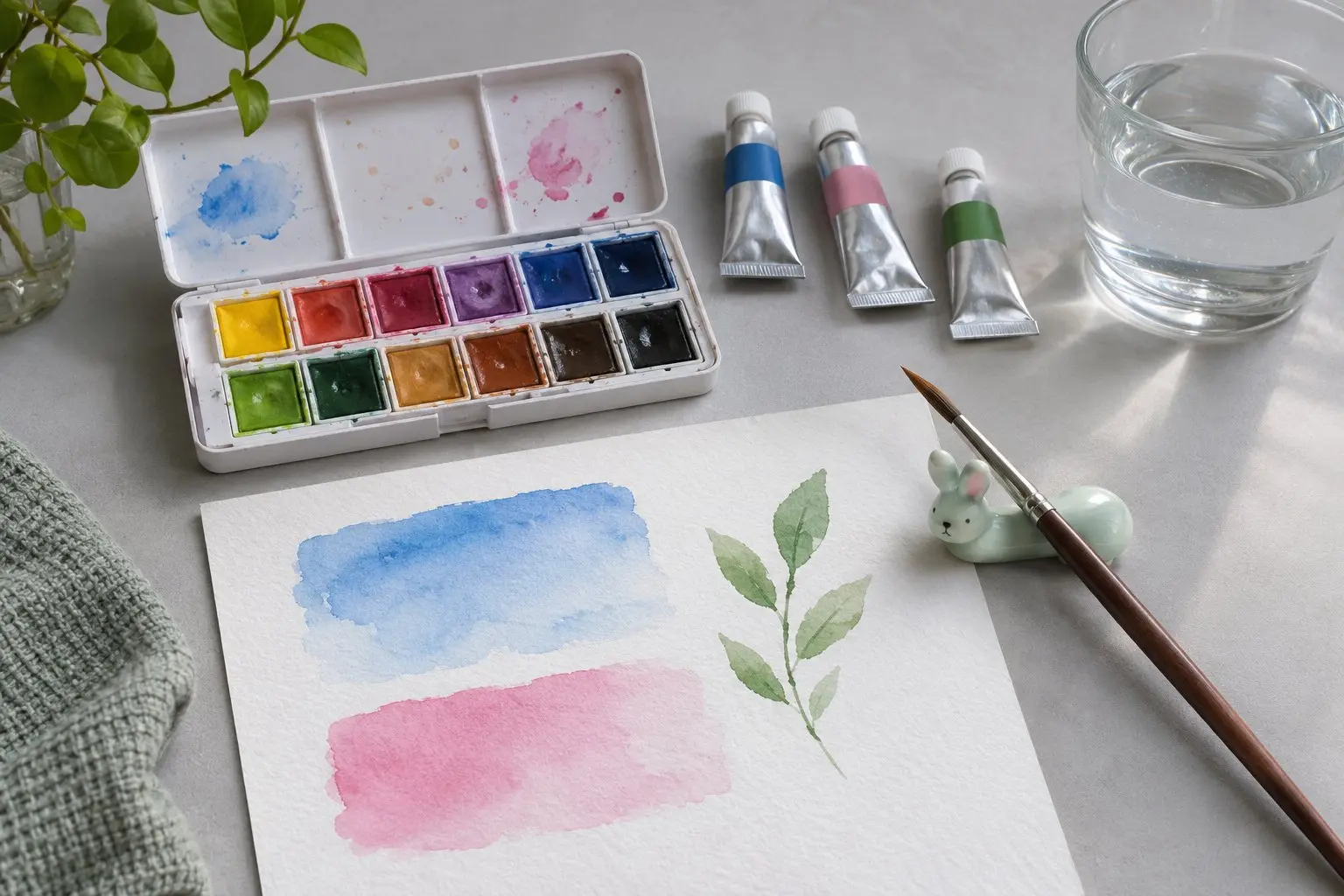
Best Watercolor Paints and Sets for Beginners
Compare beginner watercolor paint sets, from student pan sets to artist-grade starters, with advice on pans vs tubes, brushes, paper and what to buy first.


